Repairs · Henry Farm
Garage Door Tune-Up in Henry Farm
The door lands with a thud you can feel through the kitchen floor, and sometimes it bounces back up a few centimetres before settling.
In plain words
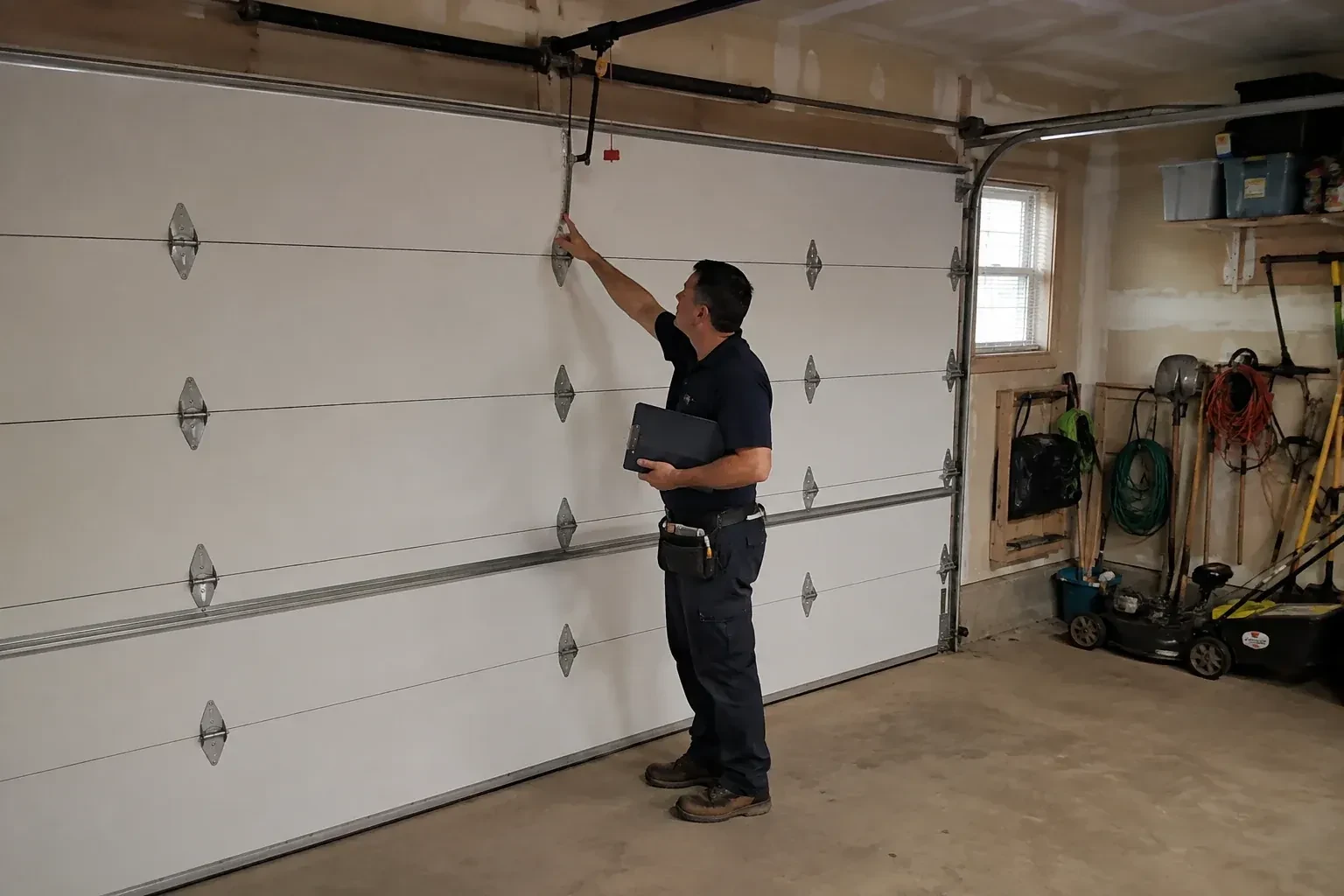
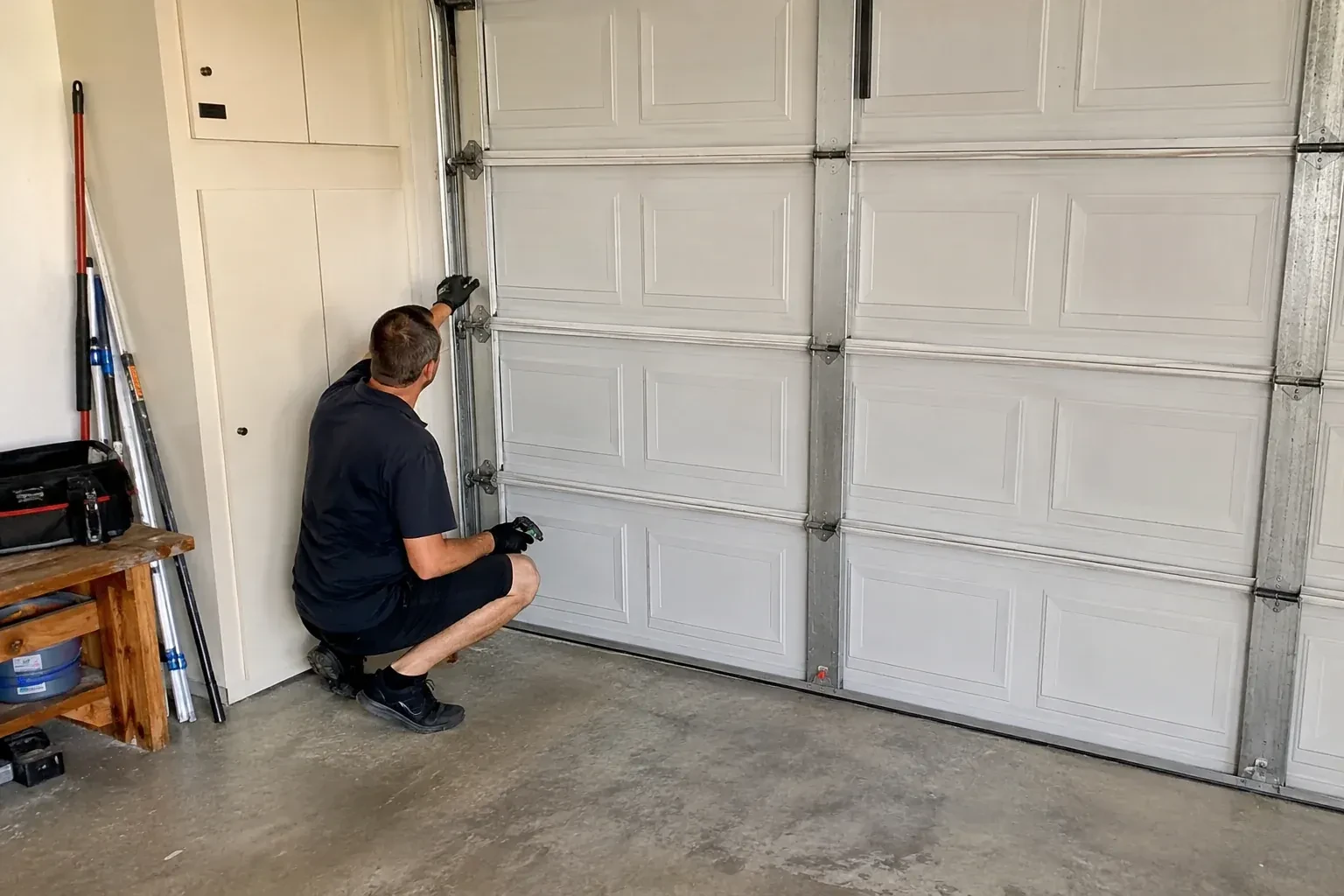
The visit follows a set order. First the technician watches a full cycle, up and down, from a safe distance, noting where the noise, shaking or hesitation lives. Then the door is closed and inspected hardware by hardware, from the bottom brackets to the torsion shaft. The manual release is pulled and the door is lifted by hand to feel the balance. Only then does the work start: fasteners, lubrication, opener adjustments and sensor alignment. A second cycle and the reversal tests close the visit, and the difference between the first run and the last is the measure of the tune-up.
How the visit goesYou moved in a few months ago and have no idea when the garage door was last looked at. The previous owners left the remotes on the counter and no paperwork, and the door works, but it works loudly and unevenly.
Garage Door Tune-Up
How the visit goes
Sorting the sounds by where they live
Noise is the most common reason a tune-up is booked, and every sound has an address. A high squeak that repeats with each section movement points to dry hinge pins. A rumbling that follows the door up and down usually comes from roller bearings. A sharp rattle at the top of travel is often a loose track bracket or hinge screw. A rhythmic slap along the ceiling is a slack chain on the opener rail. A pop or crack as the door starts is worth a closer look at the springs and drums. The technician places each sound, then checks that spot directly rather than lubricating everything and hoping.
Rollers and hinges that have earned attention
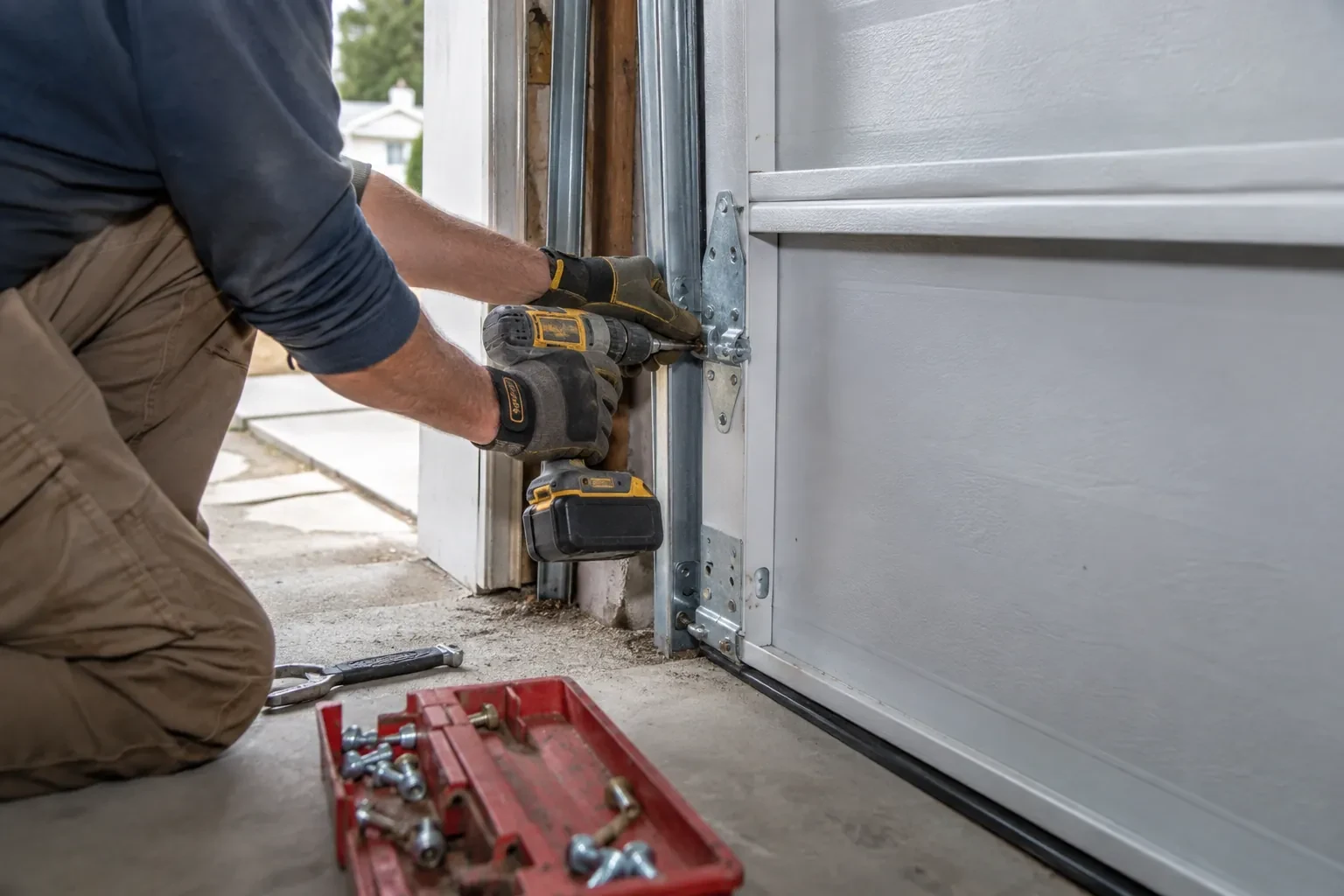
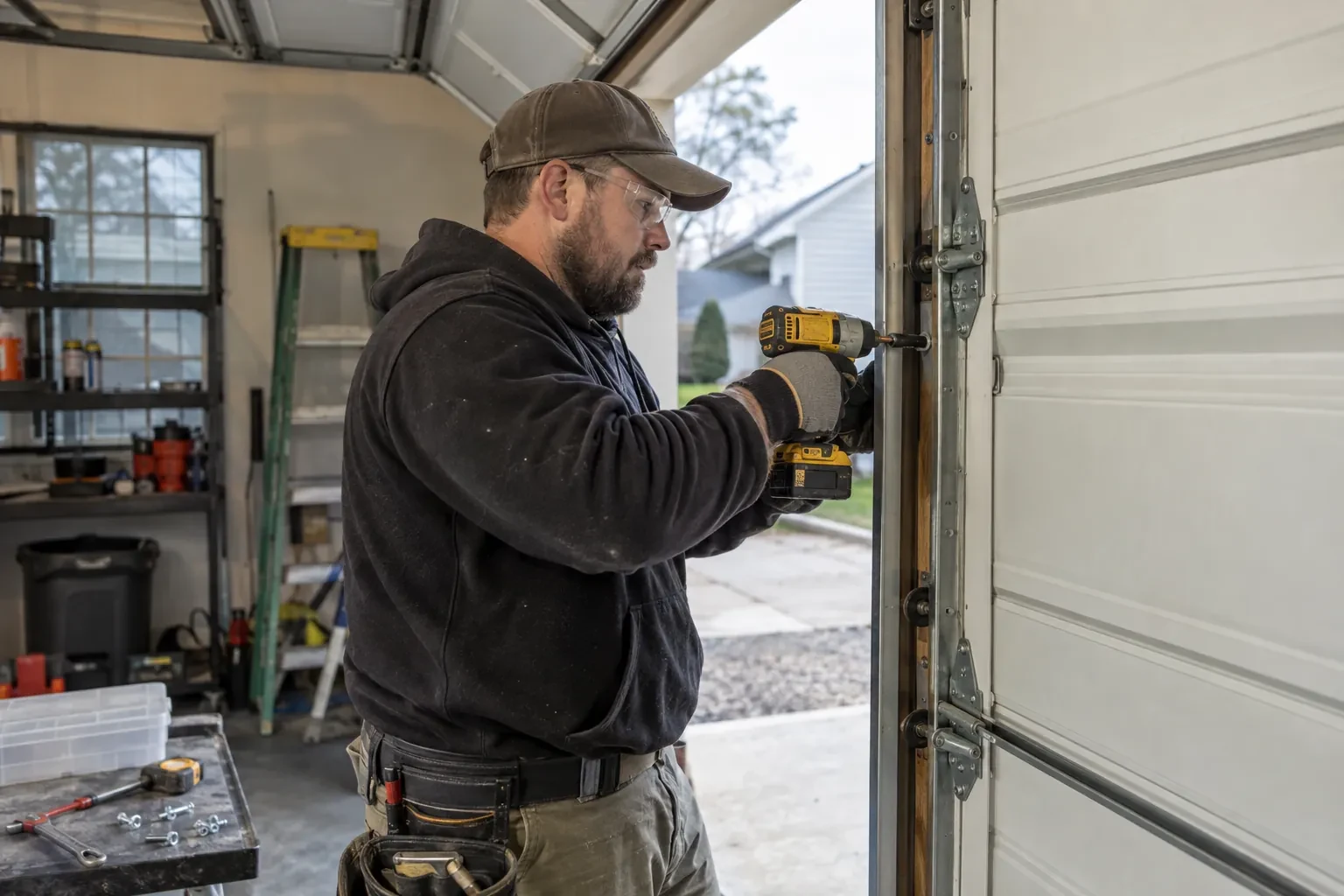
Sometimes the inspection finds a roller with a flat spot, a bearing that grinds even when lubricated, or a hinge with a cracked knuckle, and these are the small parts that make a door loud and rough. Where the customer agrees, a worn roller or hinge on the middle sections can be changed during the visit: the door is clamped to the track so it cannot move, the hinge is unbolted, the roller stem is drawn out and the new part goes in with fresh fasteners. Rollers at the bottom section stay with the tension-bearing hardware and are handled separately. Even a single replaced roller can remove the loudest sound in the cycle.
Two safety tests you can repeat every month
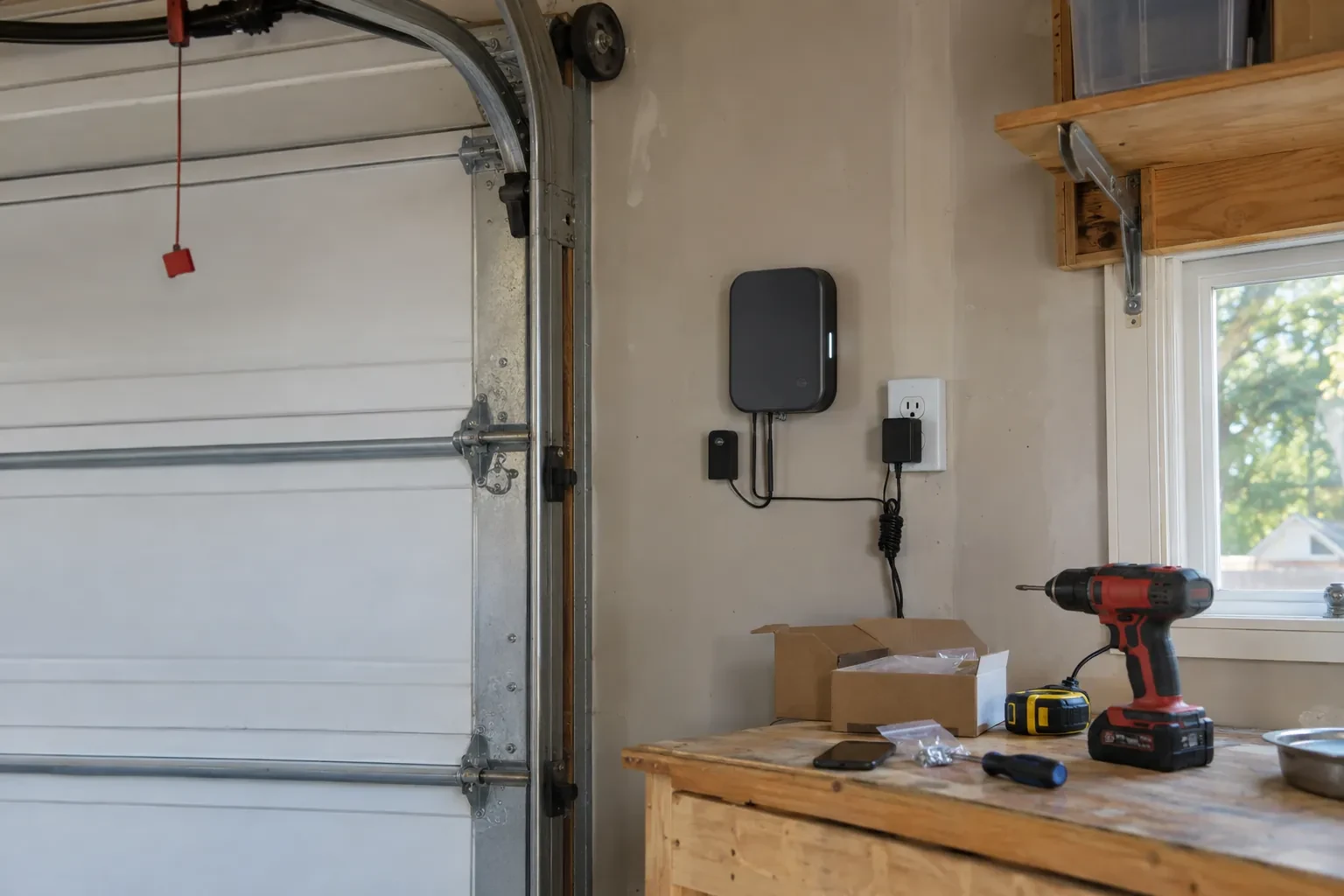
You leave knowing how to run the same two tests the technician ran. With the door open, start it closing and wave a broom handle through the photo-eye beam: the door should stop and return fully open. Then lay a 2x4 flat on the floor under the centre of the door and close it: the door should reverse when it touches the board. Manufacturers ask for both tests monthly and after any adjustment. A door that stops on the board rather than reversing needs its down travel or force reset, which the record explains, and a door that fails again is a reason to call. The tests take two minutes and are the heart of a safe opener.
Garage Door Tune-Up
In the van
Jamb and header weatherstrip
Hinge screws and track bolts
Socket set and drivers
Photo-eye brackets and wire
Replacement steel or nylon rollers
Garage Door Tune-Up
What affects the quote
Photo-eye and wiring work
Cleaning and realigning sensors is routine. A bent bracket, a chafed wire or a sensor that has failed means a part or a rewire, which is named separately.
Time since the last service
A door serviced last year needs a lighter touch than one that has never been looked at, where every fastener may want attention and the sensors and limits are far from where they should be.
Condition of rollers and hinges
Worn rollers or a cracked hinge found during inspection can be replaced on the spot if you choose, and each replaced part is listed as its own line on the quote.
What to have ready
- What have you noticed: noise, shaking, hesitation, slamming, or reversing on its own?
- Can you lift the door by hand with the opener disconnected, and does it stay up?
- Can vehicles and stored items be moved clear of the door and tracks before the visit?
Garage Door Tune-Up: questions
QuestionsWhat does a garage door tune-up actually include?
A full cycle observed before any work, a hands-on inspection of hinges, rollers, tracks, springs, cables, drums, brackets and the opener's attachments, tightening of the accessible fasteners, lubrication of the moving points with a garage door lubricant, a balance check with the door disconnected from the opener, adjustment of the opener's travel and force, cleaning and alignment of the photo-eyes, both reversal tests, a look at the seals, and a written record of the findings.
Should I lubricate the tracks?
No. Tracks should be clean and dry. Rollers are meant to roll along the track on their own bearings, and a film of lubricant on the track collects grit, thickens in the cold and makes the rollers slide and drag instead. Wipe the tracks with a rag and put the lubricant where it belongs: on the hinge pins, the roller bearings, the spring coils and the bearing plates at the ends of the torsion shaft.
Do you adjust the springs during a tune-up?
Springs are inspected and lubricated during a tune-up, and the balance test tells us whether they are carrying the door's weight properly. Changing their tension is a separate, deliberate job: the door is clamped to the track, winding bars are used on a torsion spring, and the technician works from a stable position. If the balance check shows the springs need adjustment or replacement, you receive that as its own recommendation with its own quote.
Related services
- Off-Track Garage Door ResetA delivery van backed into the shop's overhead door this afternoon.
- Garage Door Panel ReplacementA stray ball went through one of the window panes in the top section.
- Garage Door Bottom Seal ReplacementAfter a spring rain there is a puddle inside the door that reaches the tires.