Repairs · Toronto
Garage Door Panel Replacement
A stray ball went through one of the window panes in the top section.
In plain words
Winter is hard on the bottom section. Meltwater collects under the seal and freezes the door to the slab; the opener then pulls on a door that is anchored at the floor, and the bottom section bows or a hinge tears out of its stile. Road salt and slush finish the job by rusting the lower edge. Replacing that section restores a flat, sealed bottom edge and gives the door a new set of bottom brackets and seal retainer. Because the lift cables attach at the bottom, the springs are unloaded first, then reloaded and balanced once the new section is in, so the door runs as it should.
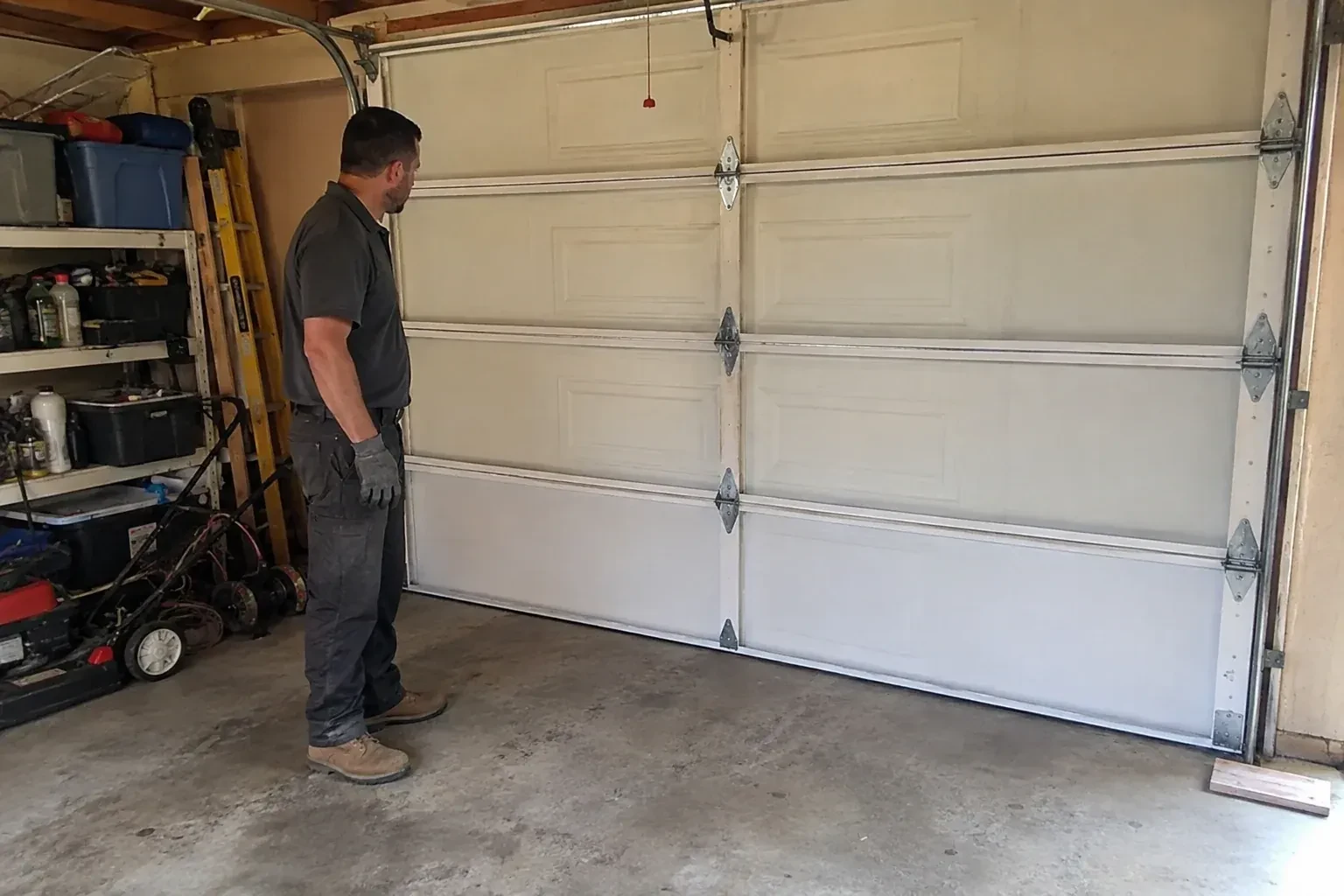
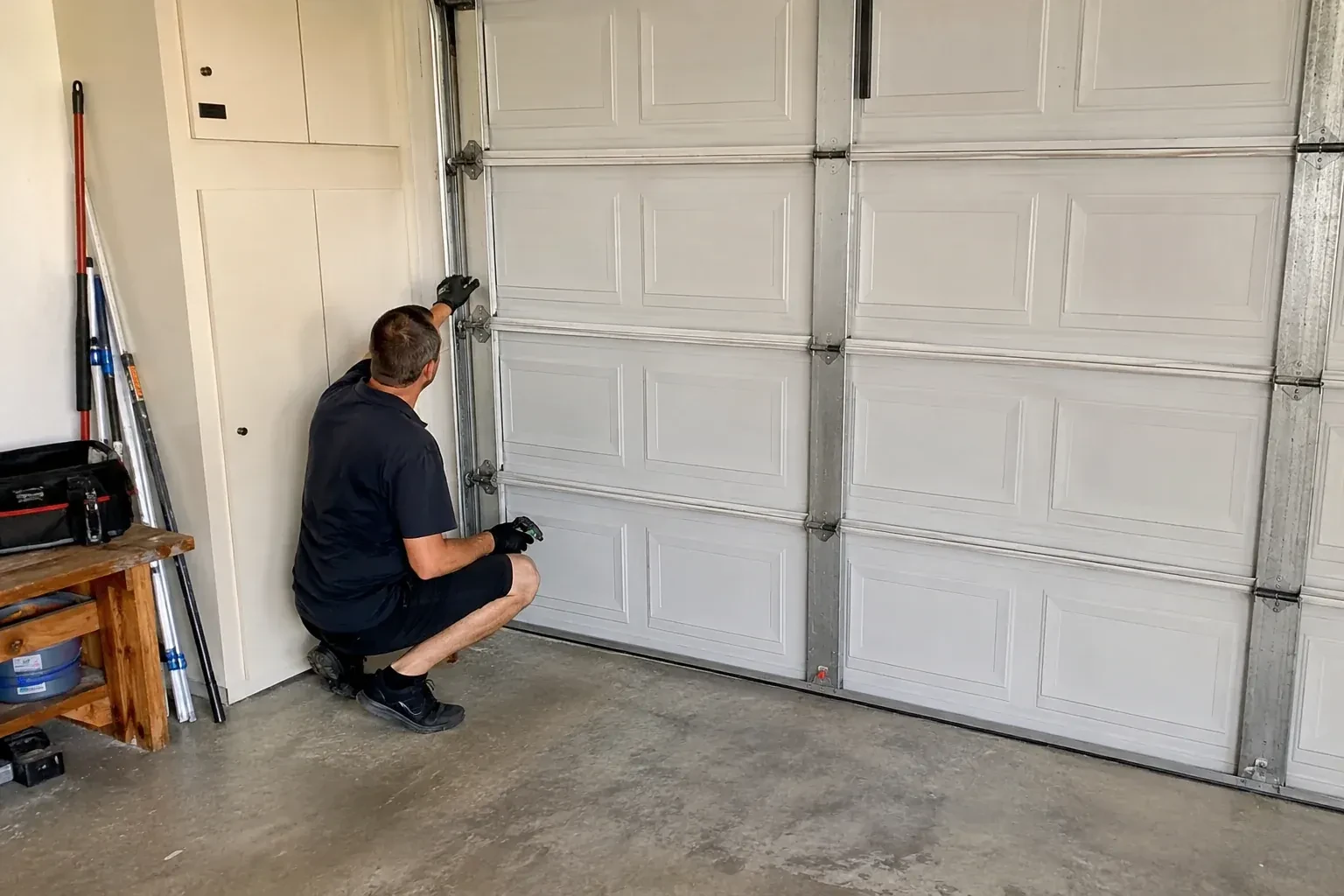
How the visit goesRust has crept along the bottom edge of the lowest section. What began as bubbling paint is now a soft, flaking strip, the seal retainer is working loose, and a screwdriver pressed against the worst spot goes through the steel.
Garage Door Panel Replacement
How the visit goes
Keeping the door safe until the new section arrives
Because a section is ordered rather than pulled from a shelf, the first visit ends with the door in a safe state for the wait. If the damage is cosmetic, the door can usually stay in normal service. If a section is folded, a hinge has torn out or a cable has gone slack, the technician braces the section, disconnects the opener so it cannot pull on a weakened door, and secures the door in the closed position. Sometimes a temporary strut will let a bowed section run until its replacement comes. You are told plainly which of these applies and what to avoid doing in the meantime.
Releasing tension for a bottom section
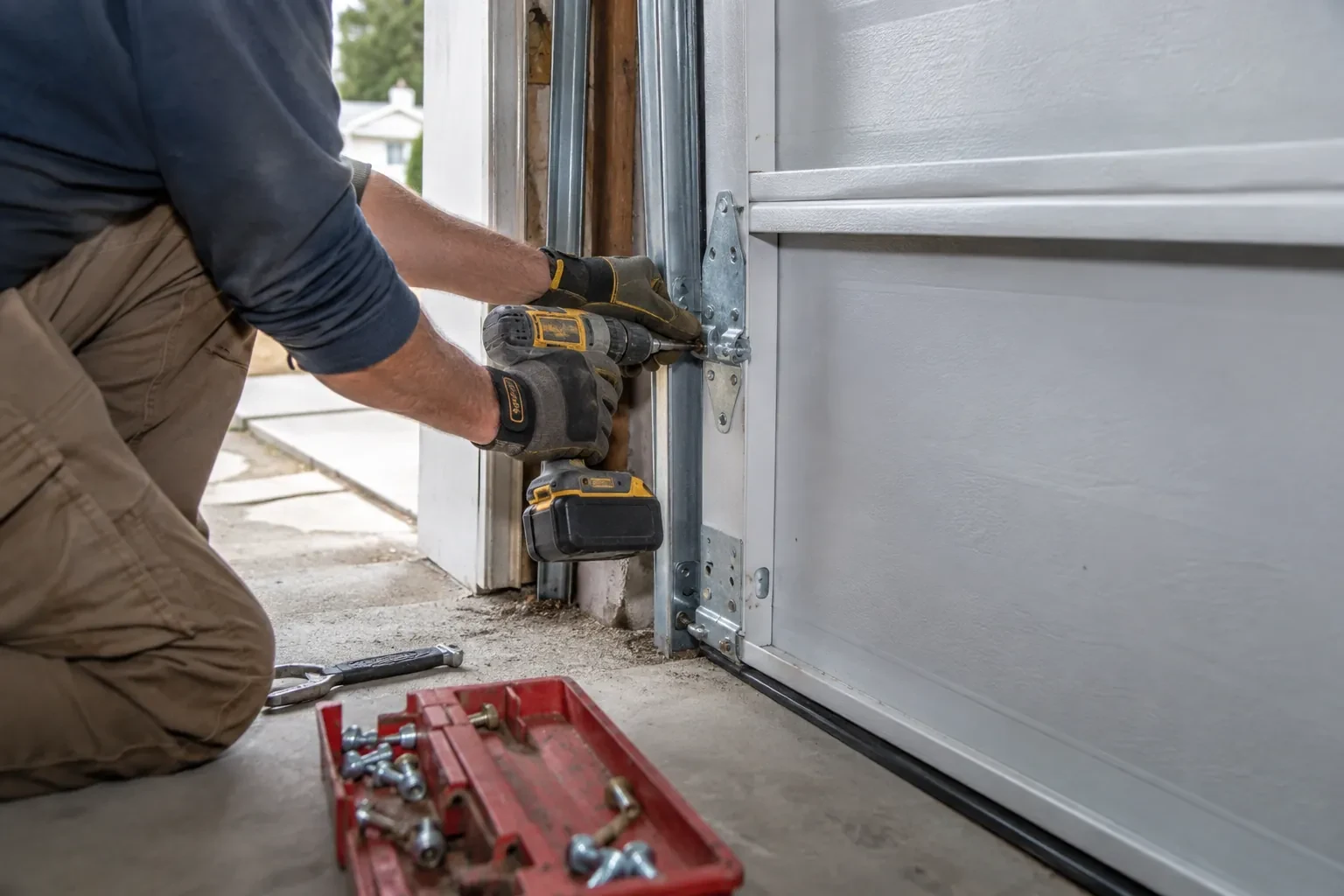
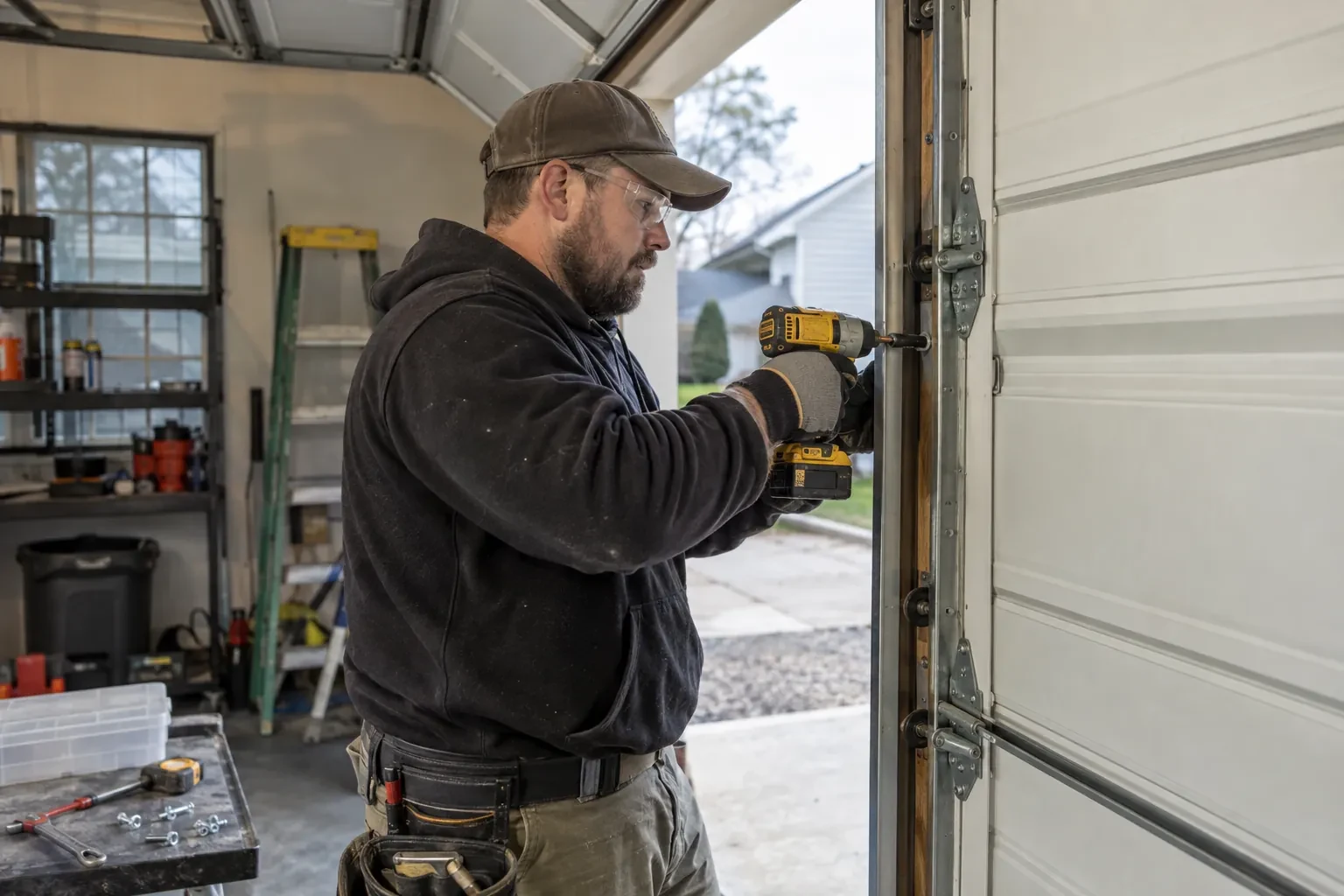
The bottom section is the one place where the lift cables attach, and those cables are held taut by the springs. Before its brackets are unbolted, the technician takes the energy out of the system. On a torsion door that means fitting winding bars into the cone and unwinding the spring turn by turn while the set screws are loosened; on an extension-spring door it means propping the door open and unhooking the springs. With the cables slack, the bottom brackets, the seal retainer and the section itself can be removed safely. The same steps are reversed at the end, and the door's balance is set fresh.
Keeping ice away from the bottom section
Since a bottom section frozen to the slab is the commonest way one gets bent, a few winter habits protect the new one. Sweep snow away from the outside of the door before it turns to slush and freezes under the seal. A light wipe of silicone on the new astragal helps it release from ice. If the door refuses to move on a cold morning, free the seal from the floor with warm water or a scraper before running the opener rather than letting the motor pull against it. A well-fitted bottom seal also keeps meltwater from wicking under the door in the first place.
Garage Door Panel Replacement
In the van
Window frame insert and glazing
Garage-door lubricant
Bottom brackets with cable tabs
Winding bars and track clamps
Adjustable top roller brackets
Garage Door Panel Replacement
What affects the quote
Reinforcement struts
If the section had a strut that bent, or if a top or wide section is to gain one it never had, the strut and its fasteners appear as their own line on the quote.
The age and condition of the rest of the door
On an older door with rust, worn hinges or tired springs, the quote may show the single section next to a whole-door option, so you can compare what each includes rather than choosing in the dark.
Hinges, rollers and brackets
Hardware bent or worn by the damage is replaced along with the section. The quote lists hinges by joint position, rollers by type, and any bottom or top brackets, so you can see what accompanies the section itself.
What to have ready
- Roughly how old is the door, and has any section been replaced before?
- Does the door still open and close, by opener or by hand?
- Are any other sections dented, rusted or out of line?
Garage Door Panel Replacement: questions
QuestionsMy door is insulated. Does the new section need the same insulation?
It should. Insulated sections come in different thicknesses and core types, and the replacement needs to match yours so the joints line up, the hinges sit at the right depth and the weight stays consistent with the springs. Mixing an insulated section into an uninsulated door, or the reverse, generally means a step at the joint and a change in balance. The technician reads the thickness and core type from the door before ordering.
Can I keep using the door while I wait for the section?
If the damage is cosmetic and the hinges, rollers and cables are sound, the door can usually stay in service. If a section is folded, a hinge has pulled out or a cable has slackened, the technician braces the door, disconnects the opener and asks you to leave it closed, because the opener pulling on a weakened section can turn a repairable door into a larger job. You will be told clearly which applies.
Can a section with windows be replaced, or windows added?
Yes on both counts, within what the manufacturer offers for your model. A damaged glazed section is ordered as a glazed section, with the frame style and glass type specified. Windows can also be introduced by ordering the replacement, usually the top section, in a glazed version. Bear in mind that a glazed section can weigh differently, so spring tension is checked, and that the window frame style should be chosen to suit the door's panel design.
Related services
- Garage Door Tune-UpThe door lands with a thud you can feel through the kitchen floor, and sometimes it bounces back up a few centimetres before settling.
- Off-Track Garage Door ResetA delivery van backed into the shop's overhead door this afternoon.
- Garage Door Bottom Seal ReplacementAfter a spring rain there is a puddle inside the door that reaches the tires.