Repairs · Toronto
Garage Door Perimeter Weatherstrip
The new door went in last year and looks perfect, but the old wooden stop and its tired seal were left in place.
In plain words
When the work is finished you have a door that closes against a soft, continuous line of contact on both sides and across the top. From inside with the lights off there is no daylight at the edges; from outside, the new stop matches the trim colour. The door moves through its full travel without the fin catching or squealing. You are told what profile, colour and lengths were fitted, so a match is simple later, and shown the few habits that keep the seal supple: no paint on the fin, a silicone wipe before freezing rain, and slush kept off the bottom of the jambs.
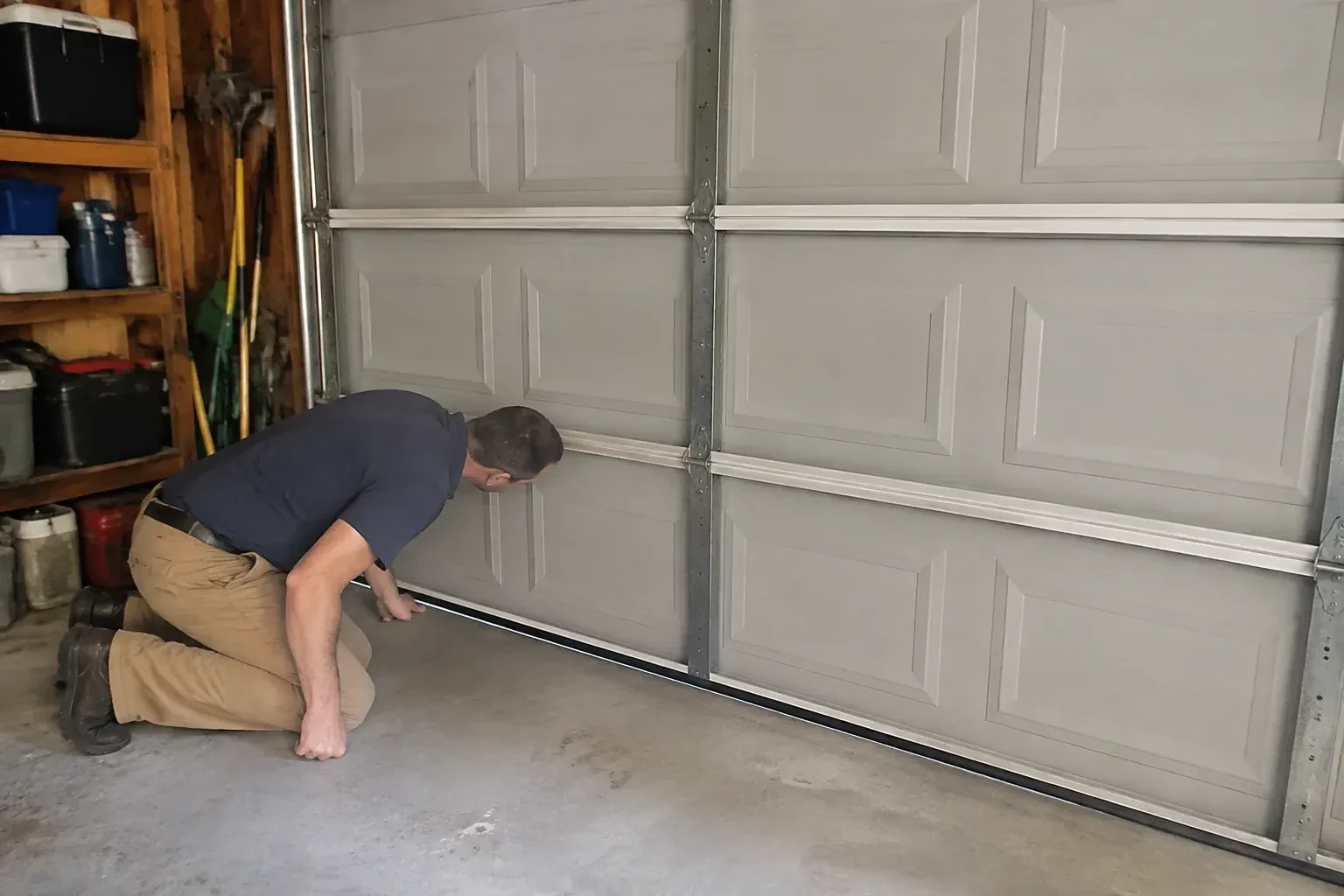
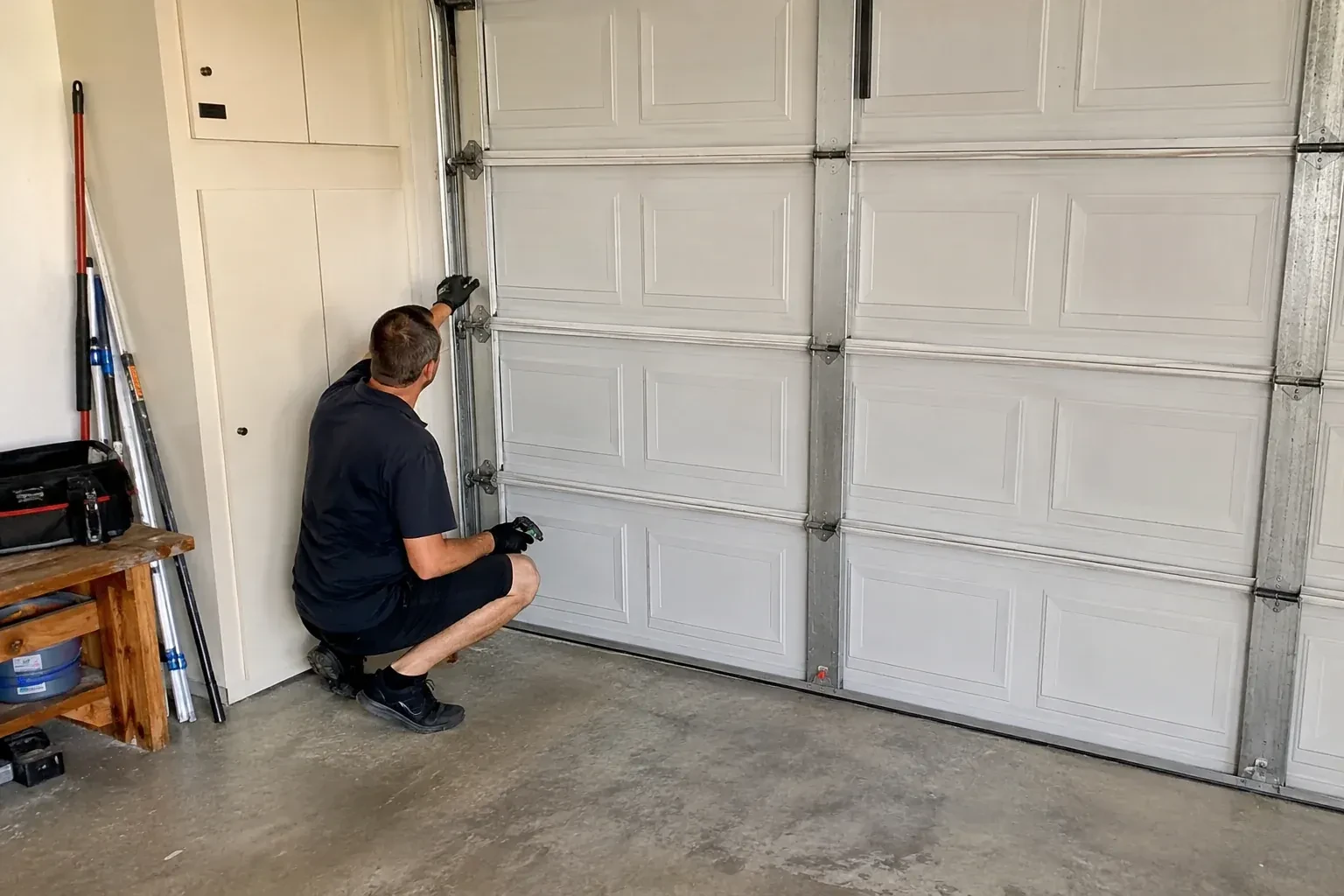
How the visit goesThe new door went in last year and looks perfect, but the old wooden stop and its tired seal were left in place. Along the top there is a gap you could slide a finger into, and the cold pours through it.
Garage Door Perimeter Weatherstrip
How the visit goes
Probing the jambs and header
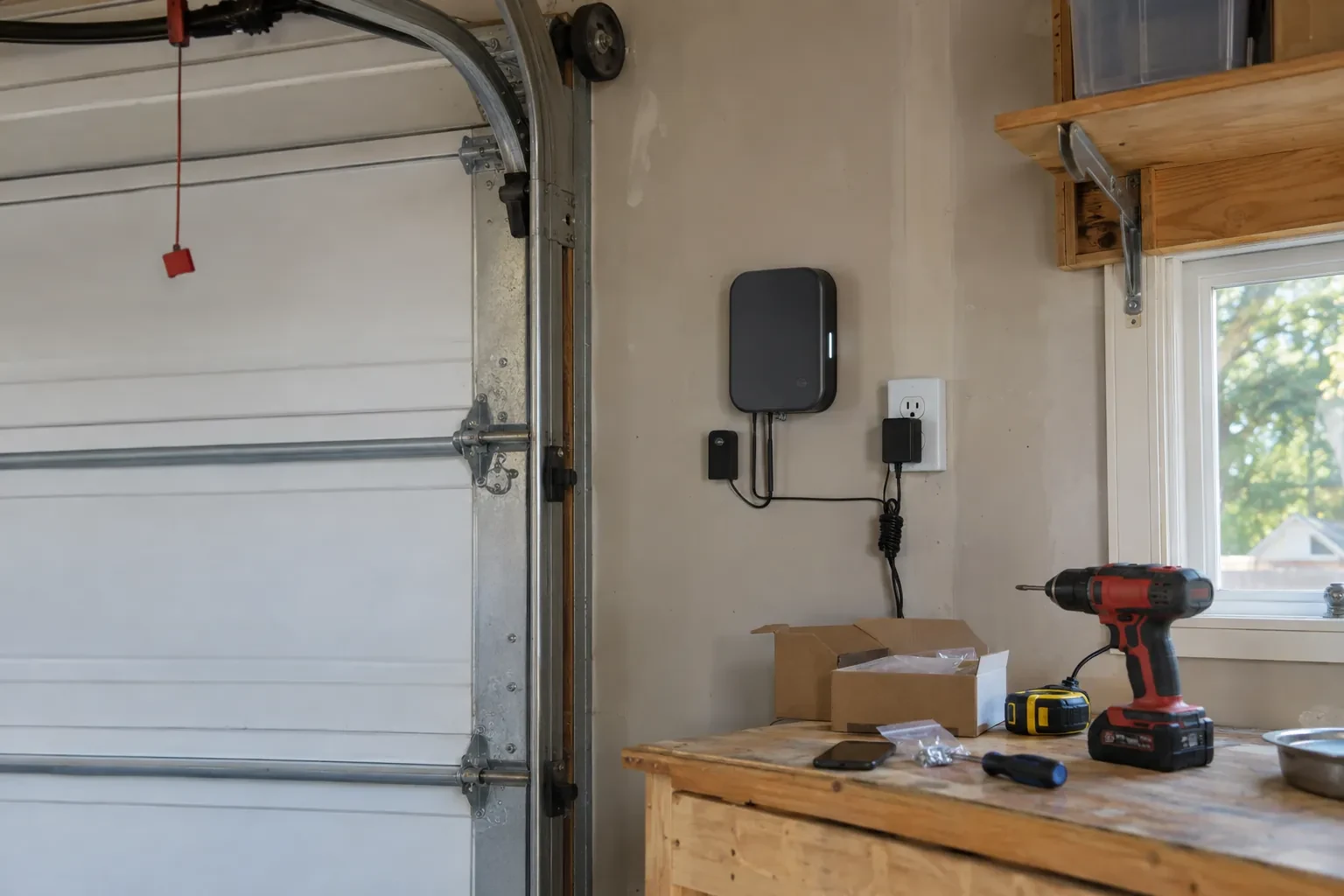
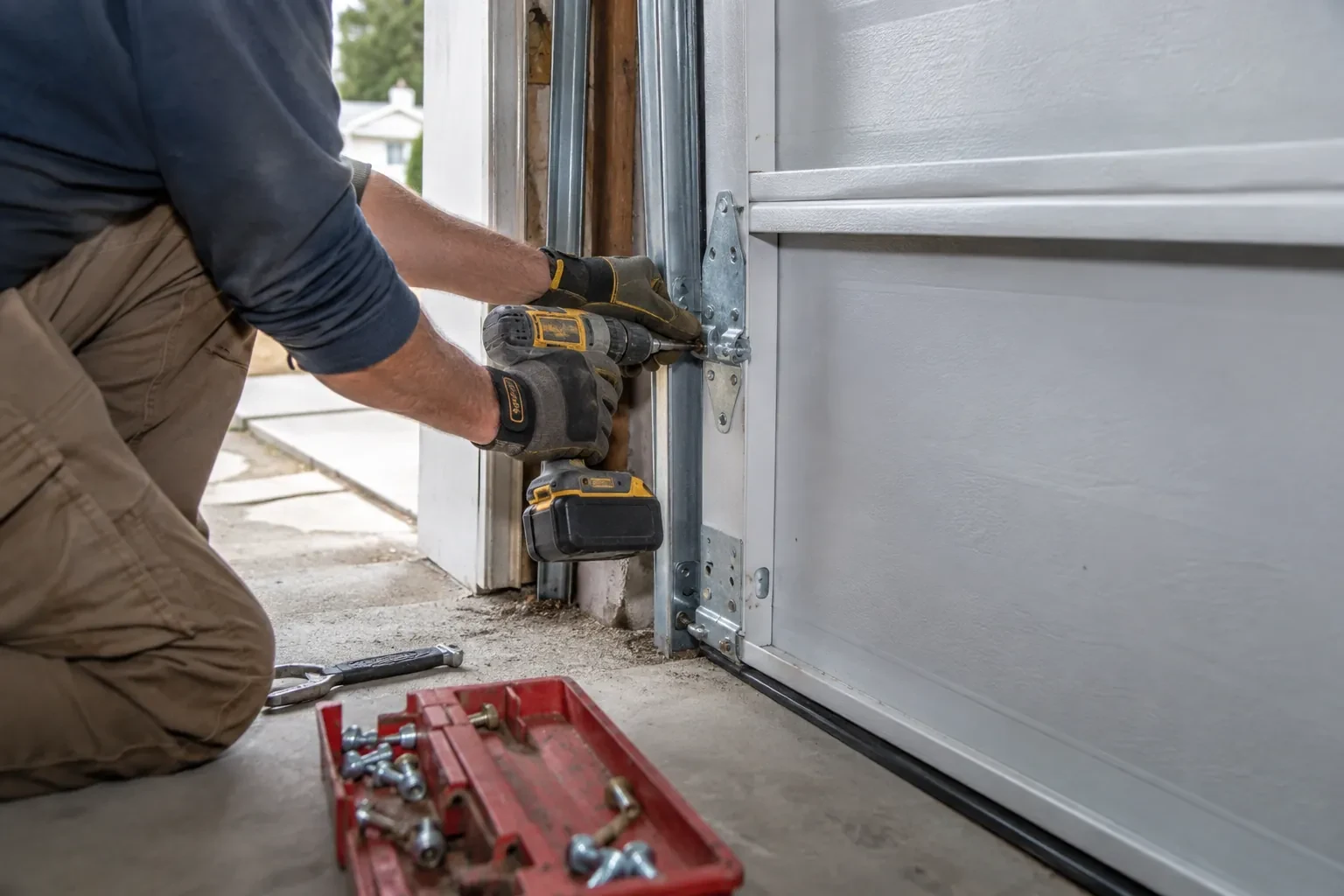
The strip is only as secure as the wood behind it, so the jambs are probed with an awl along their length and especially the lowest part, where slush and salt sit all winter. Soft, dark or crumbling wood is marked for repair. The header is checked for sag and for gaps opening between it and the top section. Where the jambs are clad in aluminum or vinyl, the technician looks for what the cladding hides and for where the seal can be fastened through to solid material. This step often adds a splice of new lumber or PVC trim to the job, and it is what makes the new seal stay put.
Making the jamb sound
Where probing found soft wood, it is dealt with before the seal. Rot at the base of the jamb is cut back to solid material and a matching piece of lumber or PVC trim is spliced in, fixed and primed. Minor soft spots are hardened with an epoxy consolidant and filled. Fasteners that will hold the new stop are then going into wood that grips them, which is what keeps the strip tight through years of the door pressing on it. Where the jamb is clad, the technician finds the solid framing behind the cladding and fastens through to it rather than into the thin skin.
If the door changes, the seal is re-checked
The seal was set against the door as it sits today. If the door is later adjusted, has its springs or rollers replaced, or is swapped for a new one, the contact can change: a door that now sits a few millimetres further out presses the fin harder, and one that sits further in leaves a gap. After any such work, do the daylight test again and ask the technician doing that job to check the perimeter seal while they are there. Re-setting a length is a small task and keeps the two parts of the system working together.
Garage Door Perimeter Weatherstrip
In the van
Tape measure, level and square
Galvanized or stainless trim nails
Exterior screws and weatherproof staples
Vinyl stop moulding with integral seal
Exterior caulking and gun
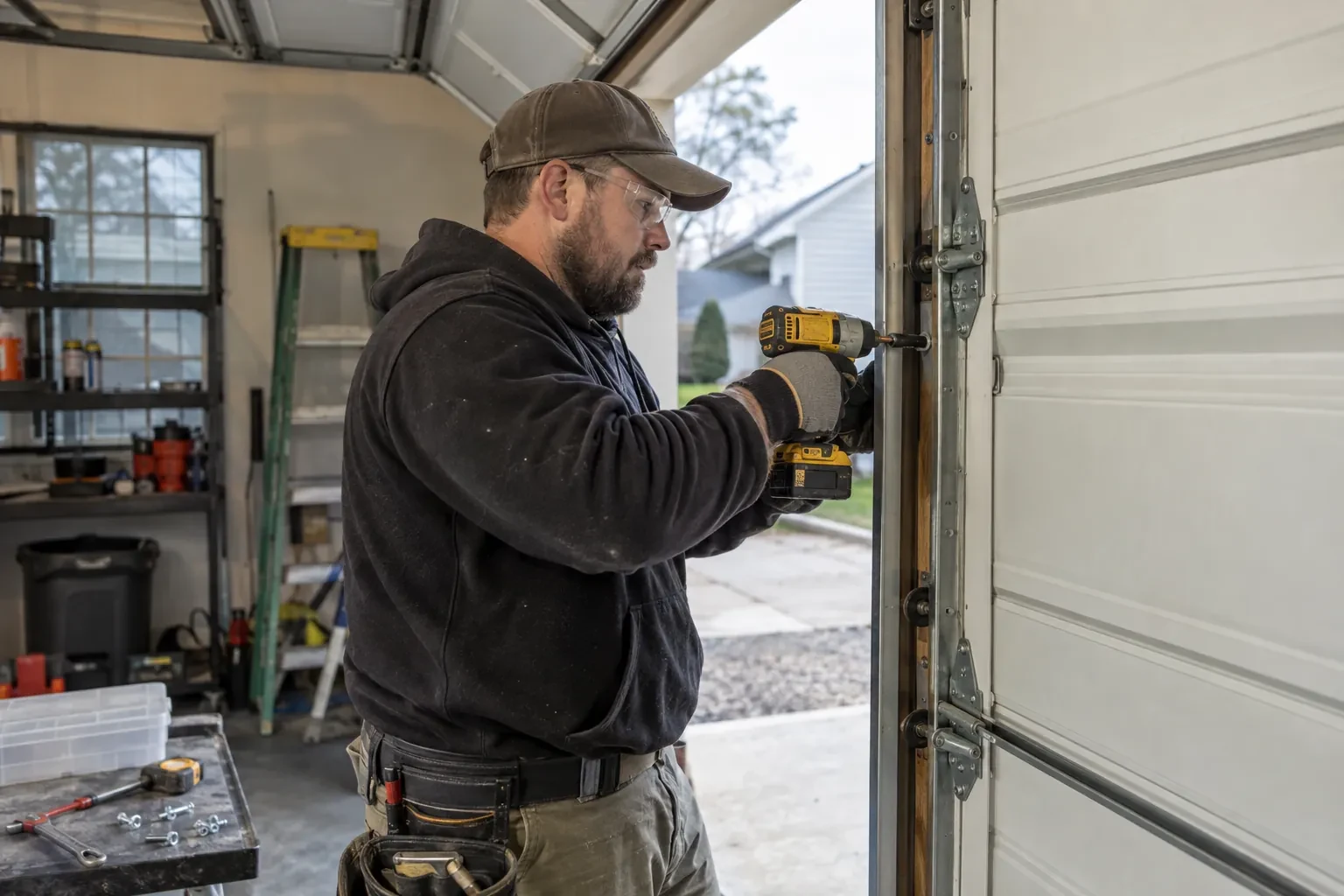
Garage Door Perimeter Weatherstrip
What affects the quote
Jamb material
Wood jambs take nails; steel or aluminum-clad jambs need screws and sometimes a backing piece, and masonry openings need a different fixing altogether, each with its own time and hardware.
Condition of the jambs
Soft or rotten wood at the base of a jamb is cut out and spliced with new lumber or PVC trim before the seal goes on, and that repair is quoted as its own item.
Weather on the day
Cold weather means keeping vinyl warm between the van and the opening and fitting each length with extra care, so a winter visit can run a little longer than one in mild weather.
What to have ready
- Is the seal cracked, torn, loose, or missing in places?
- Is the existing seal a flexible strip on a wood stop, or a one-piece vinyl moulding?
- What colour is the trim around the door?
Garage Door Perimeter Weatherstrip: questions
QuestionsThe wood around my door is rotten near the floor. Can the seal still go on?
Yes, and the rot is handled first. The soft wood at the base of the jamb is cut back to sound material and a new piece of lumber or PVC trim is spliced in, fixed and primed, so the fasteners for the new stop bite into something solid. This is one of the most common additions to a perimeter seal job here, because slush and salt sit against the jamb base all winter.
Will replacing the perimeter seal keep mice out?
It closes one of their favourite routes. Mice enter at the open corners where the header and side seals meet and along a fin that has shrunk back from the door, so a continuous, overlapped seal removes those gaps. It works alongside a sound bottom seal, a swept threshold and attention to any other openings in the garage wall, and a technician will point out any of those noticed during the visit.
Does it matter if my garage is detached and unheated?
The seal still earns its place. It keeps driven snow, rain, leaves and animals out of the garage and off whatever is stored there, and it stops the door edges rattling in the wind. For an attached or heated garage the comfort benefit to the house is added on top. The technician may suggest a simpler fin replacement for a detached shell and a one-piece stop where the garage is lived beside.
Related services
- Garage Door Tune-UpThe door lands with a thud you can feel through the kitchen floor, and sometimes it bounces back up a few centimetres before settling.
- Off-Track Garage Door ResetA delivery van backed into the shop's overhead door this afternoon.
- Garage Door Panel ReplacementA stray ball went through one of the window panes in the top section.