Springs · Toronto
Garage Door Track Repair or Replacement
Backing out this morning, the mirror caught the track beside the door.
In plain words
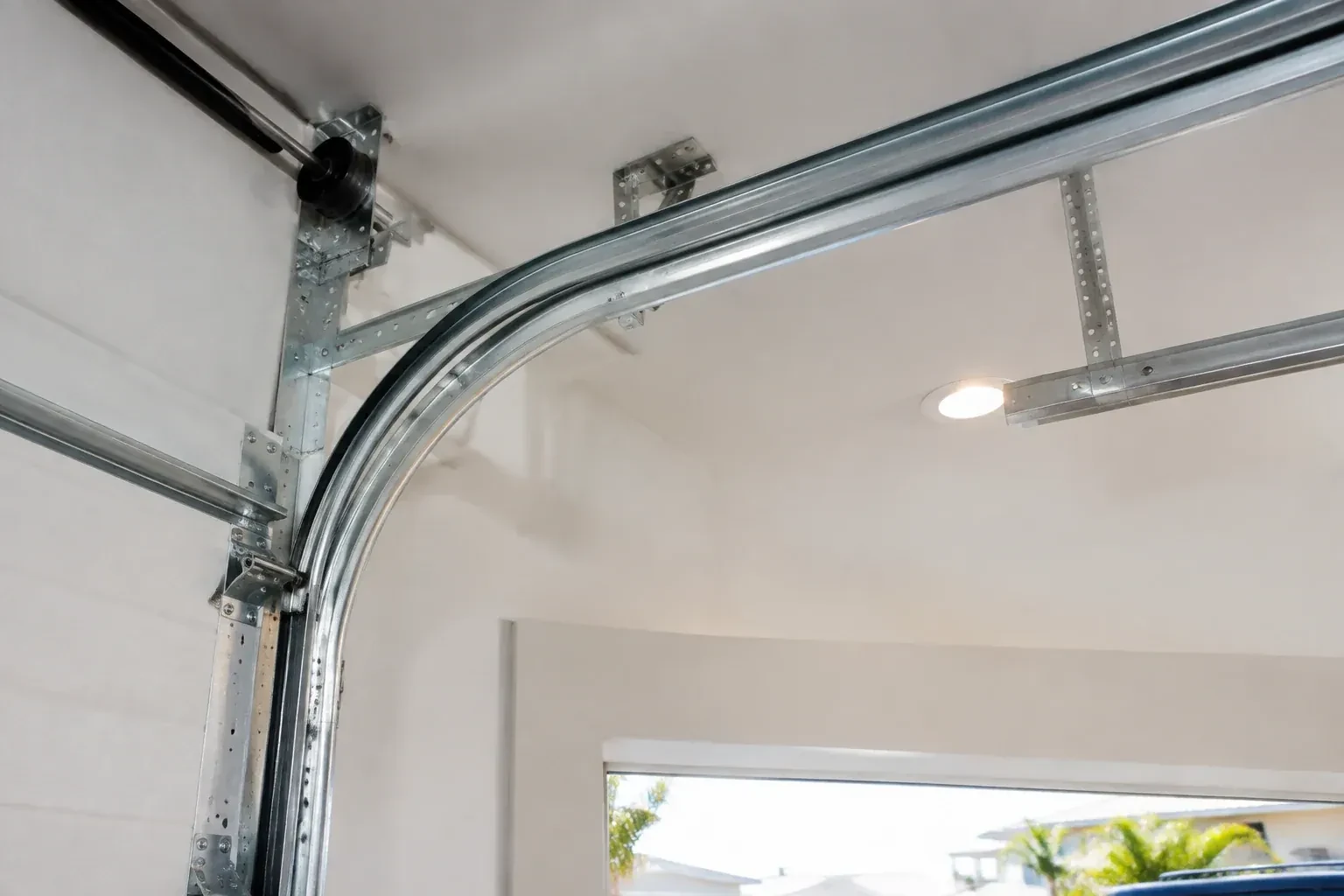
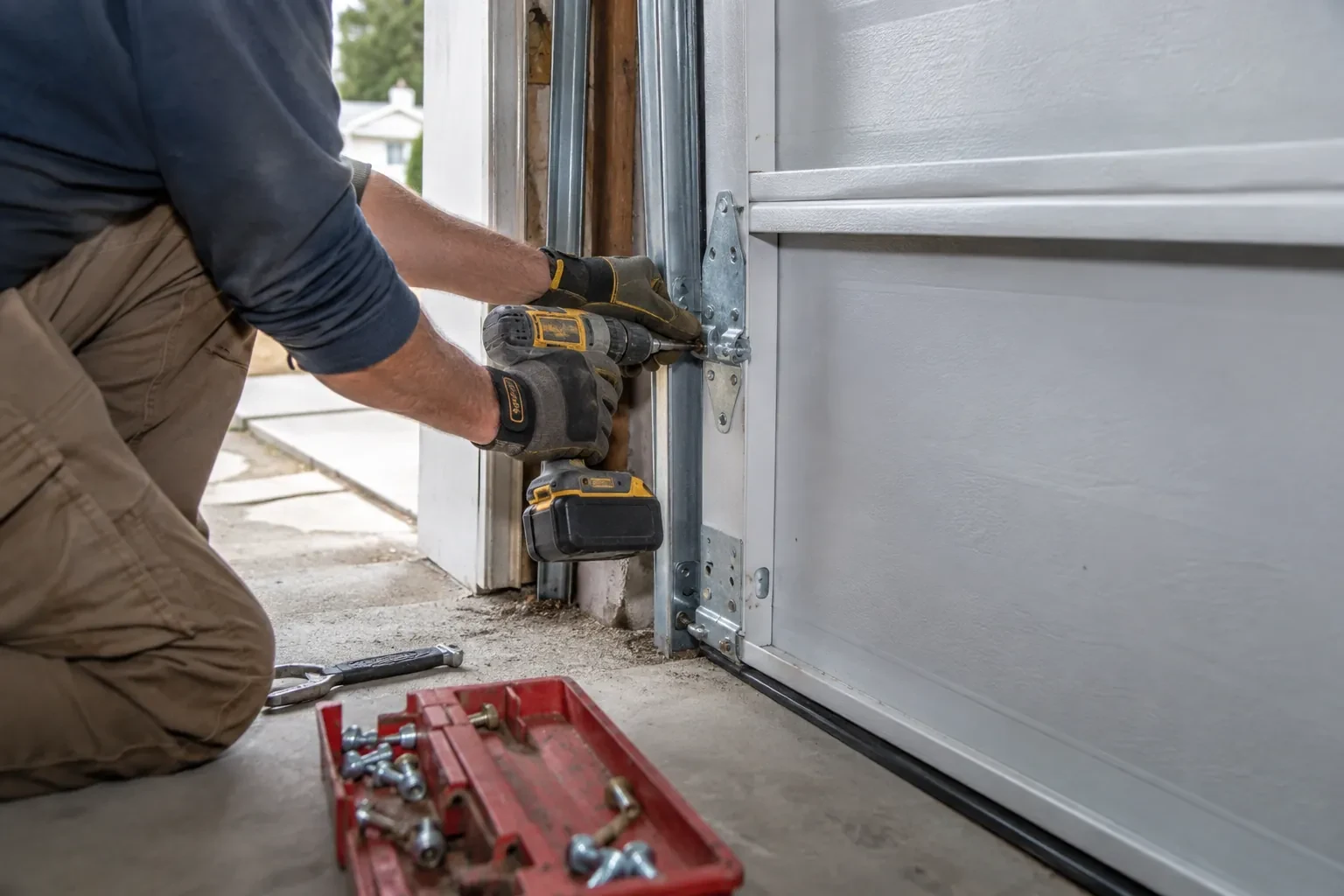
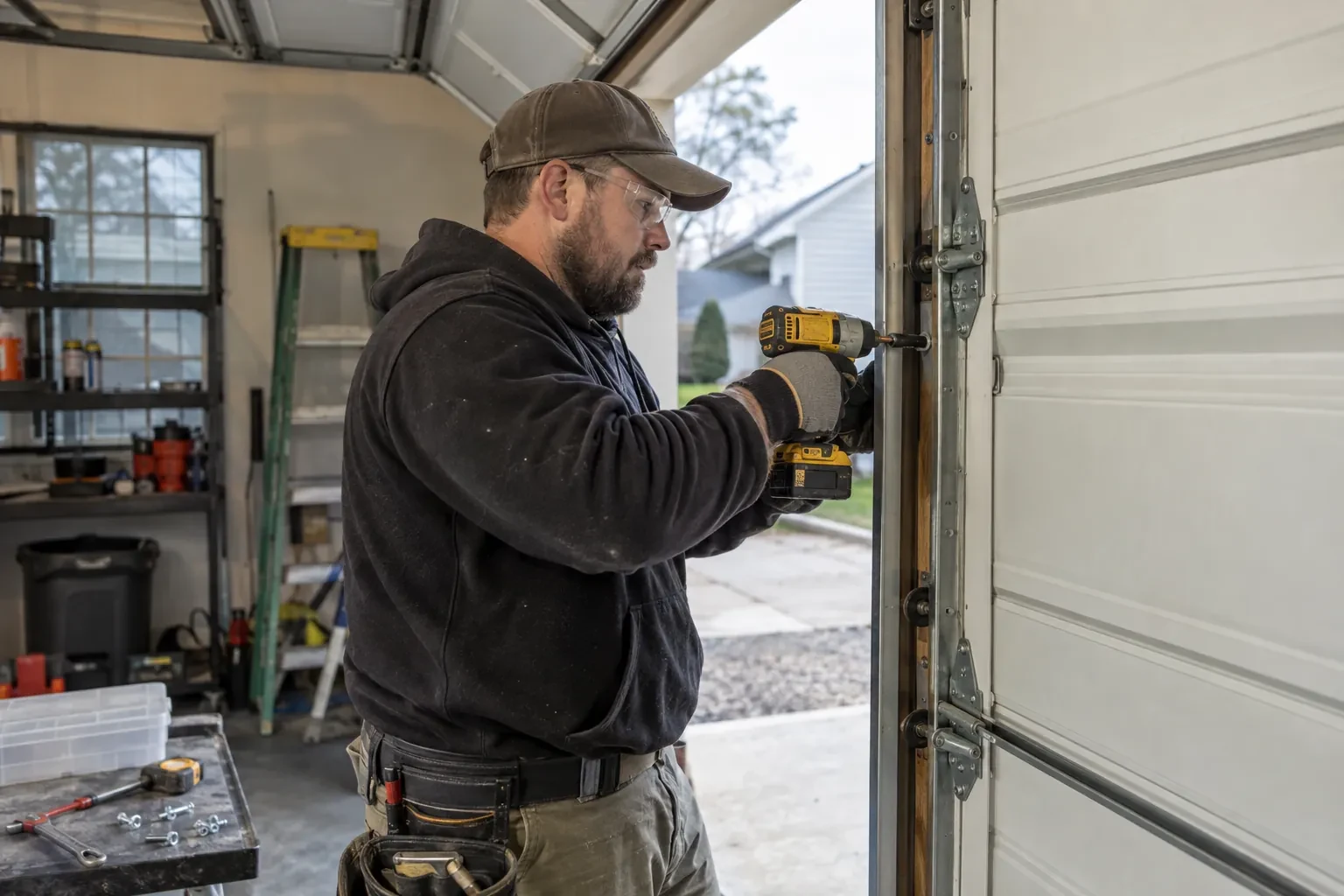
A track visit follows a set order. The opener is disconnected and the door clamped so it cannot move while hardware is loose. Then the whole path is checked: plumb and spacing of each vertical run, the state of the jamb wood and lag screws, the curve, the level of the horizontal run and the hangers holding it, and each roller's seat in the channel. Damaged pieces are dressed or replaced, brackets and hangers are refixed into solid framing, and the two sides are set square to each other. Rollers are reseated, spring tension is returned, and the door is run by hand, balanced, and the opener tested.
How the visit goesAfter a decade of slushy winters the bottom foot of the track is flaking rust. A roller squeals as it passes, and the channel edge has gone rough and thin where the salt collects.
Garage Door Track Repair or Replacement
How the visit goes
What bent it
The last question is why the track moved, because the answer shapes the repair. A crease at bumper height with paint transfer is impact. A track that has crept off the jamb with screws backed out is vibration and time. Rust at the floor is winter. A twisted section on one side with a slack cable beside it usually follows a cable or spring failure that tipped the door. Overhead damage tends to trace back to storage, a ladder or a hanger that gave way. You will be asked what happened before the symptom, since a shovel in the opening or a nudge from the car is a fact only you can supply.
Rollers, hinges and fixtures damaged when the door bound
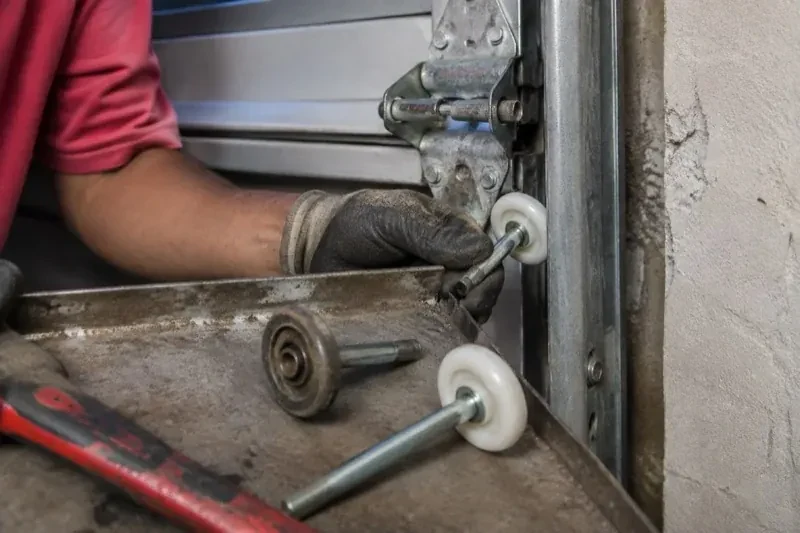
A door that has been catching on bad track usually has a few parts that suffered with it. Rollers with flat spots or bent stems are replaced, hinges that split when the door twisted are renewed, and top fixtures knocked out of line are reset so the top roller sits at the right depth. Each roller is confirmed to turn and slide freely. The channel is wiped clean of grit and old grease, and the moving parts are lubricated to the door's own manual, since track advice varies by maker. Attending to these pieces while the door is held and the track is fresh saves a second visit and stops the new alignment being chewed up by the old damage.
Keep the track clean, lubricate the rest
Follow your door's own manual on the track: many makers want it kept dry and clean, since grease there collects grit and sawdust and lets a roller skid rather than turn, which is exactly how tracks get worn and spread, while others call for a lubricant at the bend specifically. Wipe the inside of each channel with a rag a couple of times a year, and clear any leaves or cobwebs from the horizontal runs. The moving parts get their own lubricant too, the roller bearings, hinge pins and springs, in the type and points the manual specifies. That division of labour keeps the newly set track smooth for a long time.
Garage Door Track Repair or Replacement
In the van
Track pliers and dead-blow hammer
Perforated angle back hangs
Winding bars and track clamps
Level, plumb line and square
Jamb lumber and construction screws
Garage Door Track Repair or Replacement
What affects the quote
Which part of the run
A vertical section below the curve is the simplest change. The curve itself, or the horizontal run overhead, involves the flag bracket and hangers and takes longer to set.
Bracket-mounted or continuous angle
Track on jamb brackets is adjusted bracket by bracket, while a full-height angle comes off and goes back as one piece. Each mounting style shapes the time and the fasteners quoted.
Door size and weight
A tall or double door has longer runs of track and heavier loads on the brackets, and a heavy insulated or wood door may call for heavier-gauge track and more substantial hangers.
What to have ready
- Can you see a bracket standing away from the wood or screws backing out?
- Do you know what caused it, such as a car, a ladder or stored items?
- Is there rust on the track or brackets near the floor?
Garage Door Track Repair or Replacement: questions
QuestionsCan a bent garage door track be straightened, or does it need replacing?
Both happen, and the damage decides. A shallow dent in the vertical run away from the curve is usually dressed back to shape with track pliers or a block, and a channel that has spread can be squeezed closed. A kink, a crack, a bend in the curved piece or steel thinned by rust is replaced with a matching section, because a hard spot in the roller path keeps catching however carefully it is worked.
How do I keep road salt from rusting the track?
Salt does its work in the bottom foot of each vertical track, where slush drips off the car and sits. Push slush clear of the door's inside edge rather than letting it pool, and on a mild day wipe or rinse the brackets and the lower channel. A little silicone spray on the bracket fasteners in autumn helps them shed water. Keeping the threshold free of ice also stops the door being pulled against a stuck bottom section.
Why does the door catch at the same spot every trip?
A catch that repeats in one place is the signature of a local track fault: a dent, a spread section, a step at a joint, or a bracket that has let the track drift. Each roller reaches the flaw at the same point in the travel and bumps over it. The technician finds the spot by running a roller through the channel by hand, then dresses or replaces that length and checks the rest of the run for the same problem.
Related services
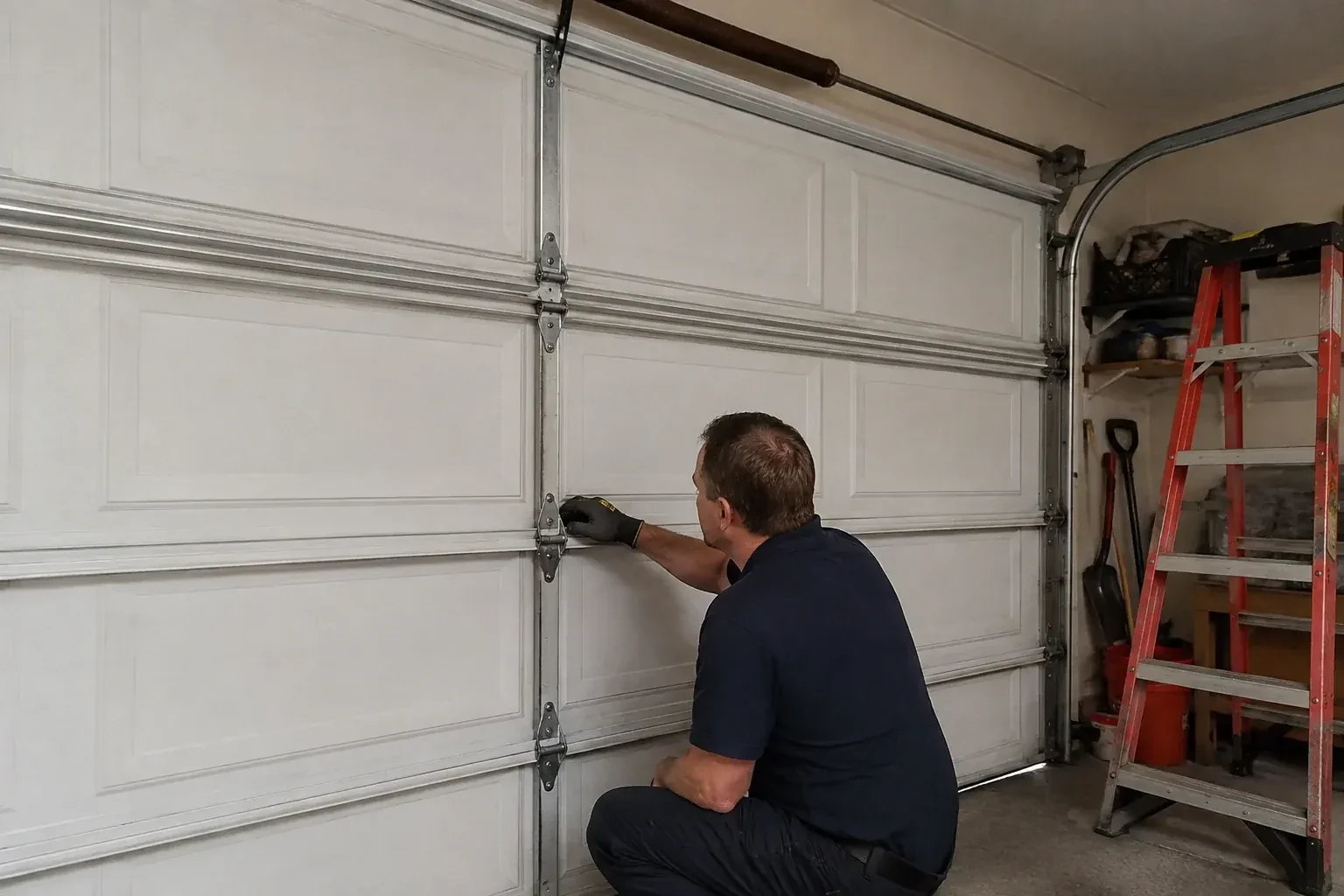
- Garage Door Hinge ReplacementOn the old wood door, one hinge has pulled away from the panel, dragging a screw and a chunk of soft timber with it.
- Garage Door Cable ReplacementSomeone left the snow shovel leaning in the opening and the door came down on it.
- Torsion Spring ReplacementYou heard a sharp bang from the garage, and now the opener hums for a second and gives up.