Garage Doors
Reading for homeowners
Every month we hear the same handful of worries from different households. This section answers them once, clearly, so you can read at your own pace and call when you are ready.
Before you book
Does winter change what you look for?
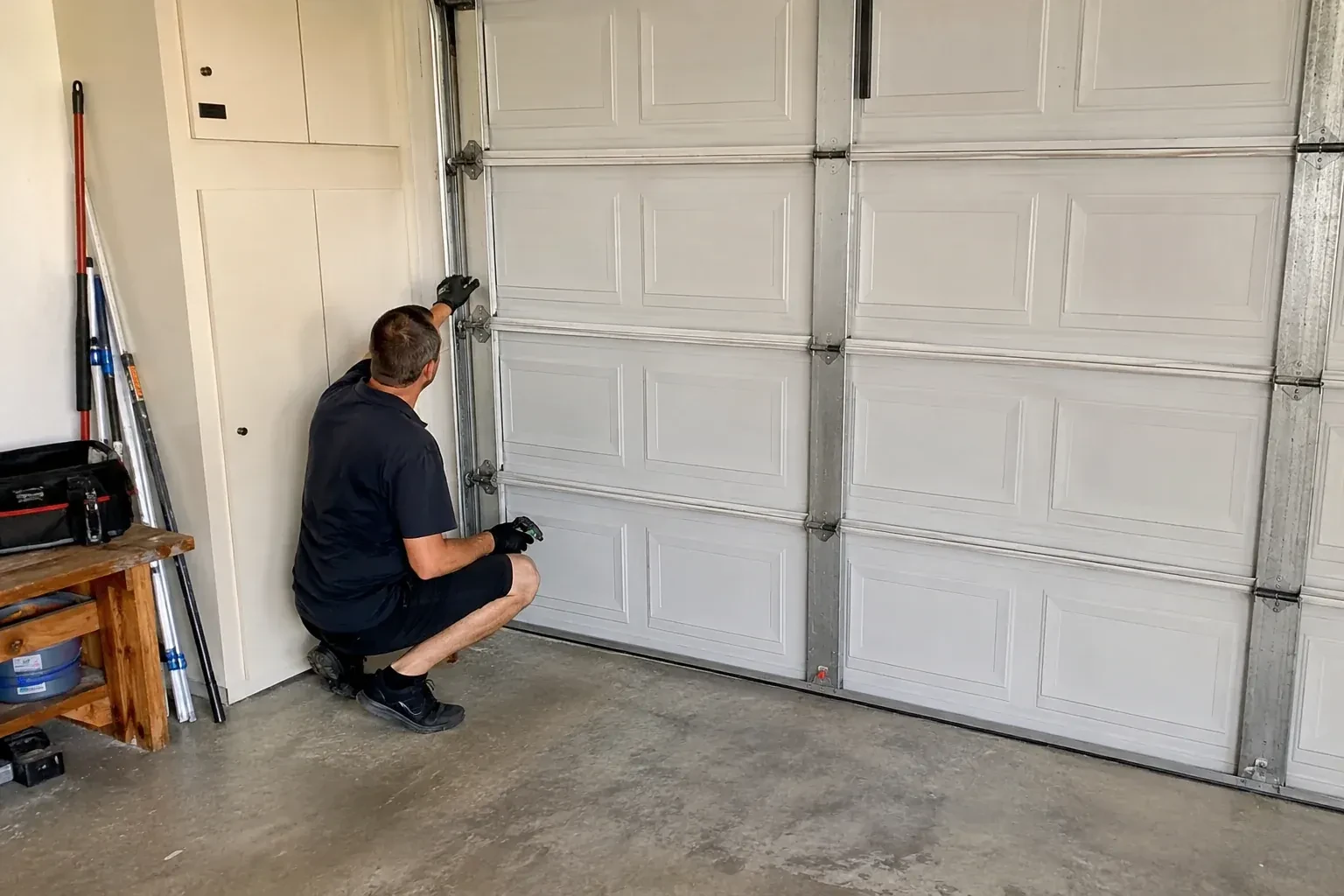
Yes, mostly at floor level. Months of slush and road salt reach the lowest hinges, the bottom brackets and the loop of each cable before anything else on the door, so those get a close look for rust. The technician also checks whether the bottom seal has been freezing to the slab, how the drive has coped with cold, stiff starts, and whether frost or salt film has been blinding the sensors near the floor.
What does a garage door tune-up actually include?
A full cycle observed before any work, a hands-on inspection of hinges, rollers, tracks, springs, cables, drums, brackets and the opener's attachments, tightening of the accessible fasteners, lubrication of the moving points with a garage door lubricant, a balance check with the door disconnected from the opener, adjustment of the opener's travel and force, cleaning and alignment of the photo-eyes, both reversal tests, a look at the seals, and a written record of the findings.
Will the track have to be replaced?
Often not. A track that is simply out of plumb, spread at the lip or loose on its brackets is re-formed and re-fixed. Replacement is for rail that has been crushed, kinked or torn by an impact, because a roller passing a tight spot will pop out again. The technician measures the damaged length against the door's roller size and tells you which case you have before any track is ordered or cut.
My door is insulated. Does the new section need the same insulation?
It should. Insulated sections come in different thicknesses and core types, and the replacement needs to match yours so the joints line up, the hinges sit at the right depth and the weight stays consistent with the springs. Mixing an insulated section into an uninsulated door, or the reverse, generally means a step at the joint and a change in balance. The technician reads the thickness and core type from the door before ordering.
How can I tell that the bottom seal needs replacing?
Close the door, turn off the lights and look along the floor from inside. Daylight showing, a strip that feels hard or cracks when pressed, a bulb that has flattened and stays flat, an end hanging out of its channel, chew marks or missing pieces are all signs. So are leaves, snow or a puddle inside the door after weather. Any one of these means the seal has stopped doing its job.
The wood around my door is rotten near the floor. Can the seal still go on?
Yes, and the rot is handled first. The soft wood at the base of the jamb is cut back to sound material and a new piece of lumber or PVC trim is spliced in, fixed and primed, so the fasteners for the new stop bite into something solid. This is one of the most common additions to a perimeter seal job here, because slush and salt sit against the jamb base all winter.
The handle turns but the bars stay put. What has broken?
Something in the short chain between the handle and the bars. The square spindle may have twisted or sheared, the set screw holding the inside knob may have let it spin free, the cam inside the centre body may have worn round, or the return spring may have snapped. The inside cover comes off to see which, and the failed part or the whole mechanism is replaced to suit.
How do worn rollers affect the opener?
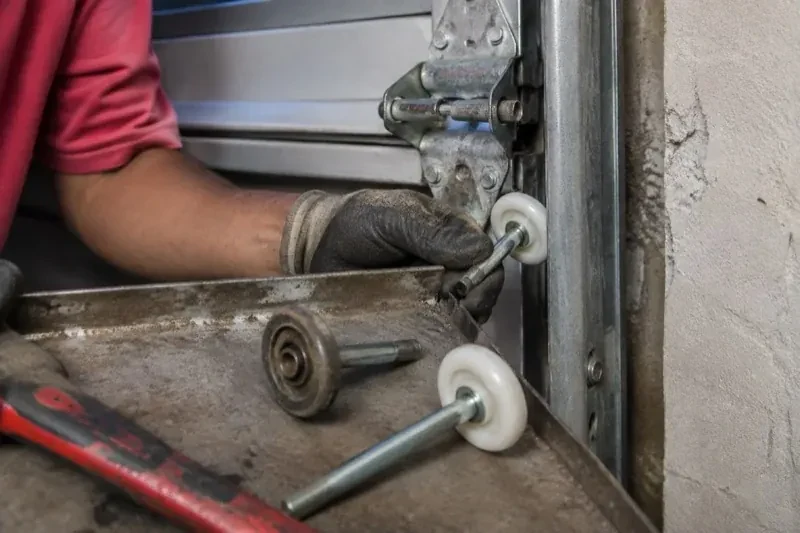
An opener is built to guide a balanced door, and every wheel that binds, wobbles or grinds adds resistance it has to overcome across the whole travel. It works harder, runs hotter, and may trip its force limit or reverse partway through a cycle. After roller replacement the technician confirms the door holds its own weight with the opener released, then checks the opener's force setting and its reversal on a test block, since a door that moves freely often needs those settings reduced.
Does hinge work affect the springs or the door's balance?
Hinge replacement leaves the springs untouched, since the door stays closed and the counterbalance is not unloaded. Balance is checked at the end all the same, because a door the opener has to drag is one of the main reasons hinges fail early. If the door drifts up or sinks when lifted by hand and released, the technician explains the spring adjustment needed and offers it as its own decision.
Can a bent garage door track be straightened, or does it need replacing?
Both happen, and the damage decides. A shallow dent in the vertical run away from the curve is usually dressed back to shape with track pliers or a block, and a channel that has spread can be squeezed closed. A kink, a crack, a bend in the curved piece or steel thinned by rust is replaced with a matching section, because a hard spot in the roller path keeps catching however carefully it is worked.
Can a cable be too long or too short for the door?
Yes, and both cause trouble. A cable that is too long runs out of drum groove and starts a second layer over the first, which wears it and throws the balance off near the top of travel. A cable that is too short leaves the door hanging out of level or the drum without a secure wrap. The correct length comes from the door height, the drum and the lift type, so the technician measures rather than guesses.
What happens if the header wood or centre bracket is damaged?
The centre bracket anchors the spring's reaction force to the framing above the door, so it has to be solid. If the header has split or softened, or the lag bolts have pulled, the technician can refasten into sound wood, add a reinforcing plate or replace the bracket before the new spring is wound. Dealing with this first keeps the shaft level and the spring pulling straight, which protects the bearings and the door.
Could I switch to torsion springs instead of replacing the extension ones?
Sometimes, and it is worth asking. A torsion system needs room above the door opening for its shaft and a header that can carry the spring bracket, which many older garages with a low ceiling simply lack; extension springs are there for that reason. Where the headroom exists, a conversion is a separate job with its own hardware and quote. The technician can tell you on the spot which route suits your garage.
I am getting a new opener. Should the door be balanced first?
Yes, and installers will usually insist on it. A new opener is set up against the door it meets on the day, so its travel and force settings are only right if the door is already balanced. Fitting a new motor to a heavy door shortens the motor's life and puts the safety reversal out of range. Balancing first means the new opener starts life doing the light work it was designed for.
What is the red cord for, and is it safe to pull?
It is the emergency release that disconnects the door from the opener so you can move it by hand, for instance during a power outage. It is safe when used with the door closed. Pulling it with the door open is the risk, because an unbalanced door can then drop. Pull straight down, lift the door by its handle, and reconnect afterwards by running the opener or lifting until the trolley clicks back in.
How much slack should the chain have?
It is a measurement, taken with the door closed and disconnected from the trolley. At the middle of the rail the chain should sit at the height the opener's own manual specifies for its rail shape, since the figure is not the same across makes. The two nuts on the trolley set and lock it. With the door reconnected and closed, some droop appears; that is expected as long as the measurement returns when the door is open.
What does out of phase mean, and why does my door stop short?
When the belt has been off the sprocket, or the motor has run without it, the motor's idea of where the door is no longer matches where the trolley sits. The door then stops short at one end however the limits are turned. The technician lifts the belt off, runs the sprocket to its closed position, refits the belt with the trolley at the closed end and relearns the limits.
How many remotes and keypads can be added?
Capacity depends on the model: current operators hold anywhere from about eight to forty remote codes, so most households can pair every driver, a keypad, in-car buttons and a phone with room to spare. Remotes are added by holding the learn button on the head unit and pressing the remote; the console guide shows the steps and the technician leaves them written down. If a remote is lost later, clearing the memory and re-teaching the others takes only a few minutes.
Will the sensors need replacing or just aligning?
Most visits end in alignment, cleaning and bracket work, because the sensors themselves are hardy. Replacement comes into it when a lens has clouded or crazed, when the housing is split or holds water, an indicator stays dark with the wiring proven good, or the pair is from a different generation than the opener and is never recognised. The technician tests before choosing, so the parts list matches what the door needs.
The wall button works but none of the remotes do. Is that a programming job?
Sometimes, but the technician rules out two things first. Lock mode on the wall control tells the opener to ignore every remote, and gives itself away by a steadily blinking wall indicator and two flashes of the opener light whenever a remote is pressed; holding the lock button releases it. A memory cleared by a long press on the learn button is the other cause, and that one is a programming job.
What should I have ready before the visit?
A photo of the label on the opener and of the learn button, your Wi-Fi network name and password to hand, the phone you will use with the app charged and updated, and the email address the account should live under. If the house came with an existing controller, any paperwork or the seller's contact details help. Knowing which family members need access saves time at the end.
Where should I grip the door when lifting it by hand?
Use the door's own handles or the gripping points built into the panel face, on the inside and outside of the door. Sectional doors are meant to have them near the bottom section and again on the second or third section. Never take hold at the joint between two sections, which closes as the door bends around the track. If your door has no handles or they have been removed, the technician can fit a pair during the visit.
How should I clean the new exterior?
Follow the care information for the selected finish. In general, use a soft cloth or sponge with a suitable mild solution, rinse away residue and clear grime from the lower edge and seals. Road salt deserves regular attention during winter. Avoid abrasive methods unless the product guidance specifically says the surface accepts them.
When should installation wait for other work?
The project may be sequenced after framing repairs, masonry work, floor correction, electrical preparation or removal of an obstruction in the travel zone. Identifying that dependency during measurement protects the selected door dimensions and attachment plan. The proposal can separate door work from tasks handled by another trade, with a clear condition that must be ready before fitting begins.
Is a building permit needed for replacement?
A like-for-like door change and a project involving structural alteration are different situations. Enlarging an opening, combining bays, replacing framing, or completing work already covered by a permit can introduce municipal review. Ask the local building department about the specific scope, and keep its direction with the door selection and installation documents.
How should I prepare the garage before installation?
Move vehicles outside and clear stored items from the door, side tracks, ceiling path and opener area. Provide access to wall controls and the electrical receptacle, and protect belongings that are sensitive to normal installation dust. Exterior access in front of the opening should also be open. Mention alarms, interior finishes or fragile landscaping that affect how the work area is arranged.
How should I clean the glass and aluminium frame?
Follow the care instructions for the exact glazing and finish. First rinse away grit and winter residue, then use a soft cloth or sponge with the approved mild solution. Acrylic, polycarbonate, coated glass and anodized or painted aluminium can have different restrictions. Clean with the door closed and prevent control operation while anyone is working near the sections.
How does an uneven garage floor affect the new door?
The bottom weather seal can compress over modest variation, but it follows the slab rather than making the slab level. The installer measures the high and low points and sets the door from the established finished floor. Larger variation may leave uneven seal contact or alter the clear opening height. Confirming coatings, thresholds and drainage slopes before installation gives everyone the same reference surface for fit and travel.
What causes a commercial sectional door to become noisy?
Common sources include roller-bearing wear, loose hinges, dry pivots, a rubbing panel, track movement, shaft-bearing wear and operator-chain vibration. The point in the cycle where the sound occurs helps isolate it. A technician watches and listens during controlled travel, looks for play or contact marks, and services the component creating the repeatable noise.
Can guide damage be straightened instead of replaced?
Some local bends can be corrected when the guide retains its strength, fastening points and required profile. Creased, torn, heavily corroded or repeatedly struck sections may call for compatible replacement. The choice also depends on guide gap, endlock or windlock arrangement, mounting construction and whether the door is part of a labelled fire-protection assembly.
Why is manual balance checked before powered operation?
The operator is intended to move a properly counterbalanced door, not compensate for an unsuitable spring or drum setup. Manual checks show how the door behaves without motor force and help technicians refine spring adjustment for the finished geometry. Once movement is controlled and consistent, powered commissioning can focus on limits, controls and protective devices rather than masking a mechanical issue.