Don Mills Garage Door Experts · Toronto
Garage Door Hinge Replacement: step by step
Garage Doors · Toronto, Ontario
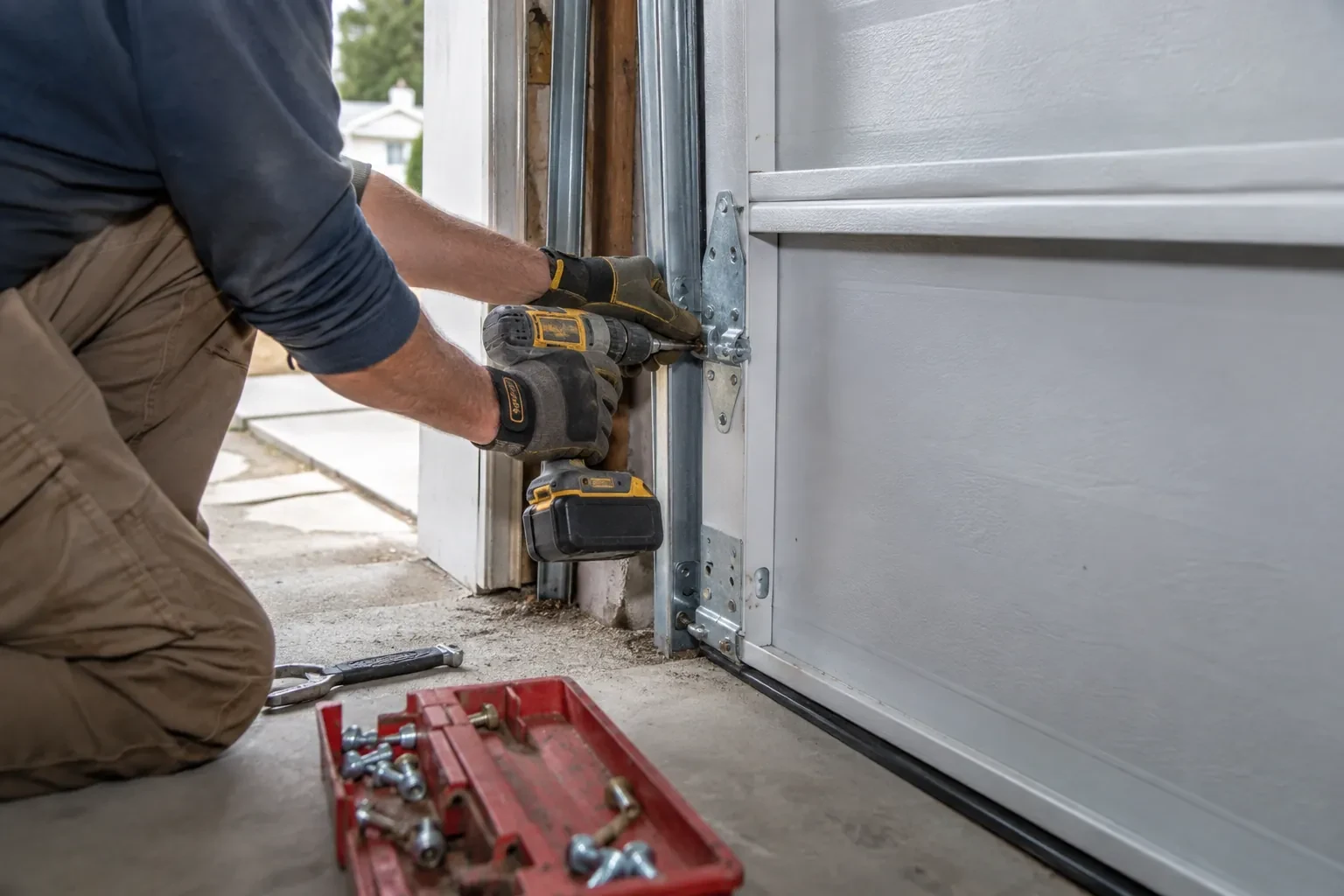
What comes back is a door that moves as a single piece. The panels fold around the curve without a gap opening on one side, the rollers ride flat in the track instead of leaning, and the pop a metre off the floor is gone. With the opener released, the door lifts by hand with light effort and holds at waist height, which shows the hinge work has left the balance undisturbed. You also get a note of the hinge numbers, gauge and any backer plates fitted, plus a look at the small routine of tightening and lubricating that keeps hinges working for many years.
Reading the number on each edge hinge
Every edge hinge carries a stamped number, and the technician reads it rather than assuming. A 1 sits at the joint above the bottom panel, a 2 at the next joint up, then 3, with 4 and 5 appearing on taller doors. The number sets how far the roller stands off the door, so the door leans into the jambs when closed and follows the track as it climbs. An earlier repair sometimes leaves a 2 where a 3 belongs, and that door binds or gaps at the curve for years without anyone knowing why. Confirming the number on each joint, and correcting any that are wrong, is part of the first look.
The right number, gauge and pattern
Every replacement hinge is matched three ways. The number matches the joint, read from the old hinge or counted from the floor, so the roller sits at the correct offset. The gauge matches or improves on the original: 18 for a light door, 14 for the heavier residential standard, and thicker still where a heavy insulated door or heavy use calls for it. The width and hole pattern match the stile, since a hinge from one maker may not line up with another's panels. Where the door has a mix of numbers from earlier repairs, the technician corrects them so all edge hinges follow the proper sequence.
Lubricating the knuckles twice a year
Hinges want a light film of lubricant on the pin where the two leaves meet. Spring and autumn are the natural moments. Use a silicone or white lithium spray made for garage doors, put a short burst on each hinge knuckle and on the roller stems, then run the door a few times to spread it. Heavy grease or general oil holds grit and salt against the steel, so it is avoided. Leave the track itself dry and simply wipe it clean, since lubricant there collects dirt and lets the wheels slide. Ten hinges take about as long as making a coffee.