Garage Doors in Don Mills, OntarioThe garageis part of the house.
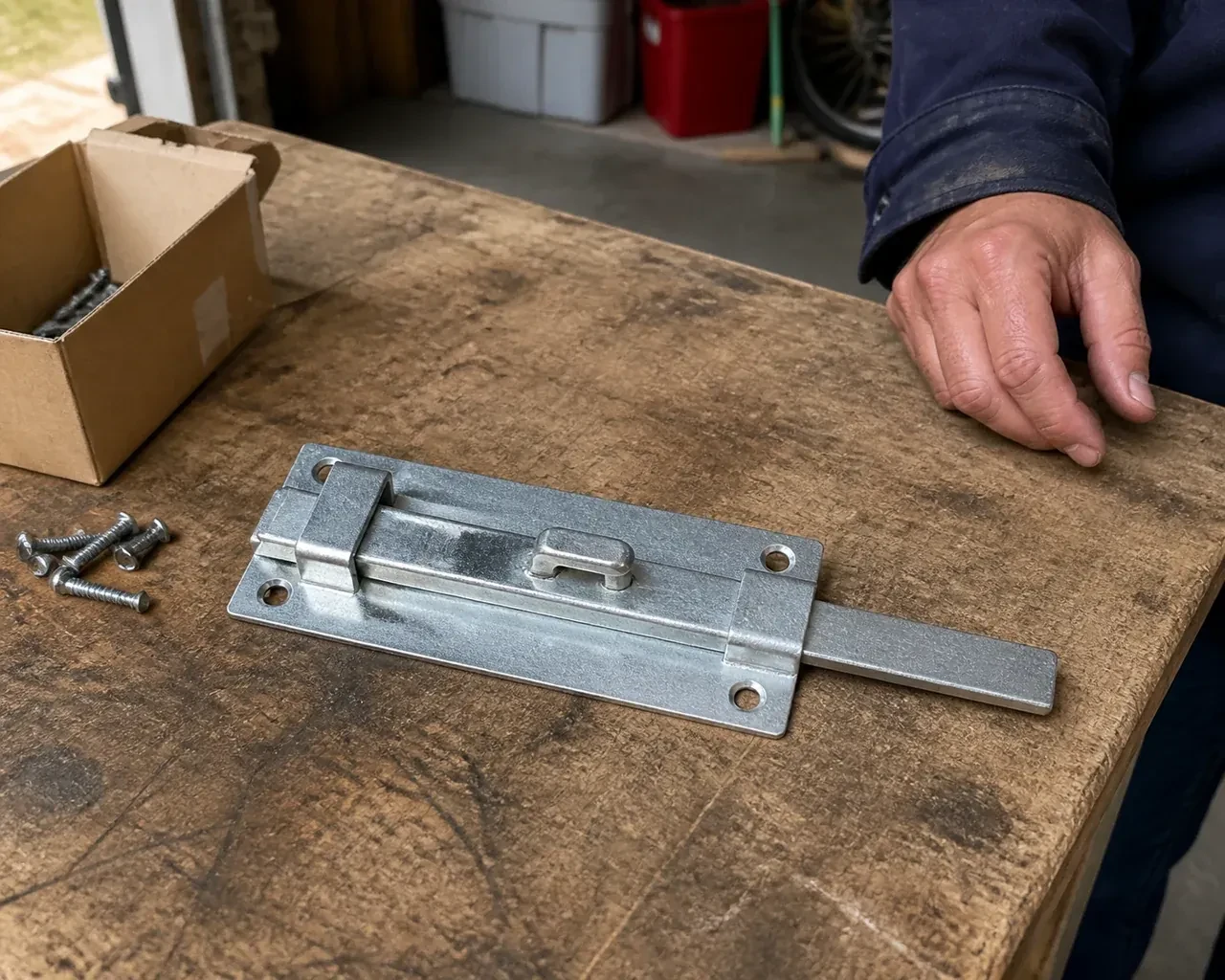
In most homes in Don Mills the door between the garage and the kitchen is the least guarded one, so the garage door itself matters for security. We make sure it closes and locks fully, replace worn emergency-release cords, add a manual lock where wanted, and clear old codes from the opener.
In most homes in Don Mills the door between the garage and the kitchen is the least guarded one, so the garage door itself matters for security. We make sure it closes and locks fully, replace worn emergency-release cords, add a manual lock where wanted, and clear old codes from the opener.
Safe for everyone who walks under it.
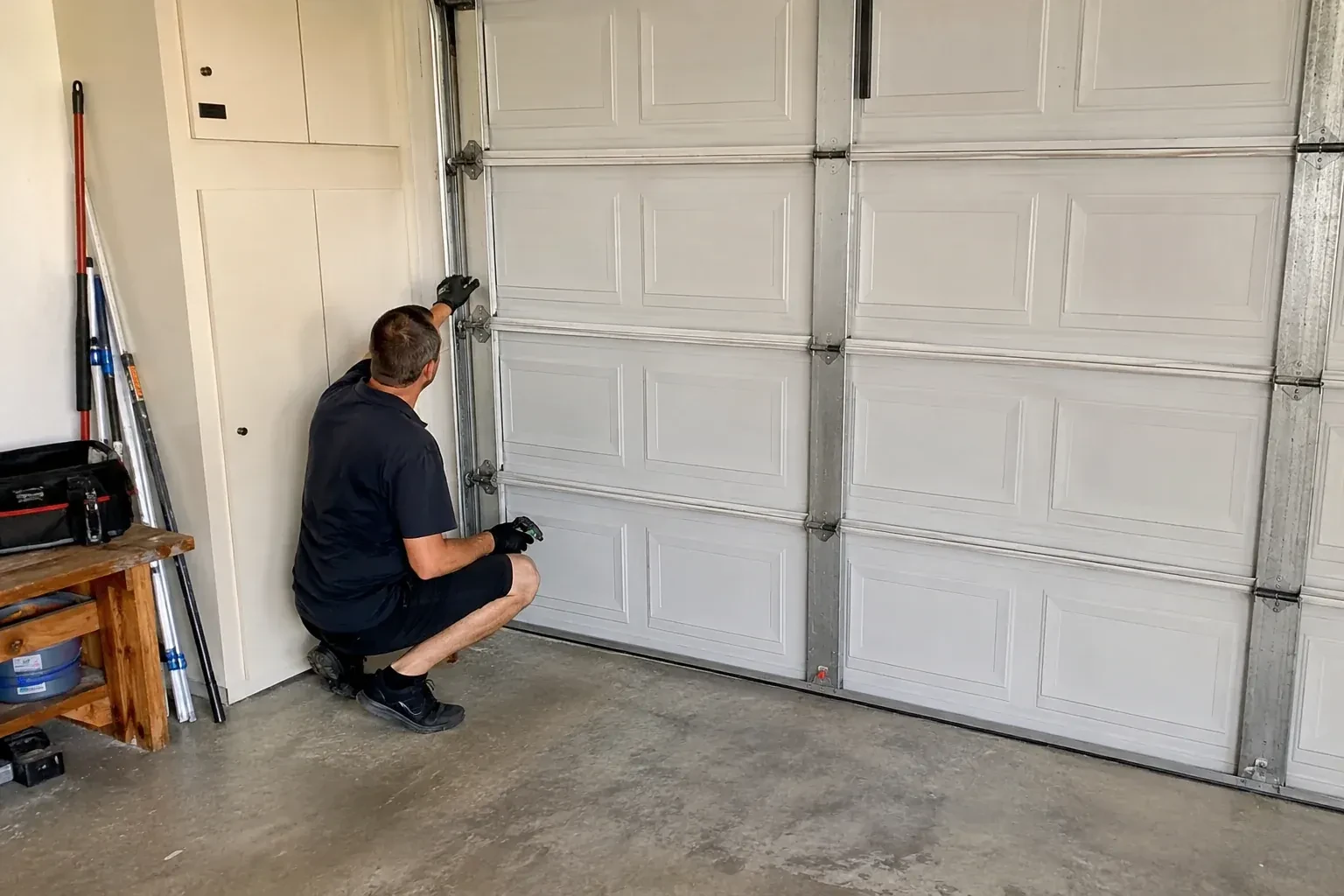
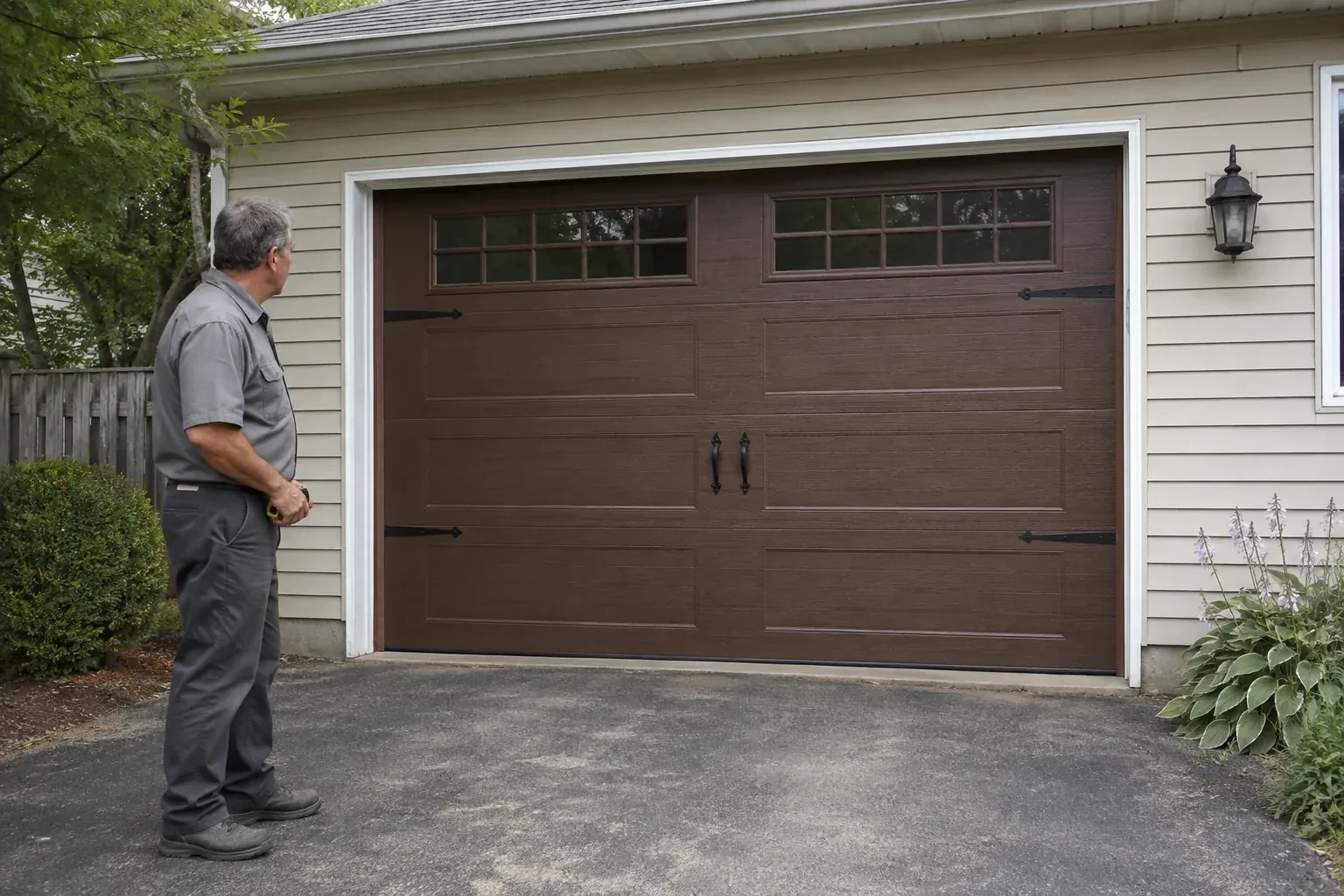
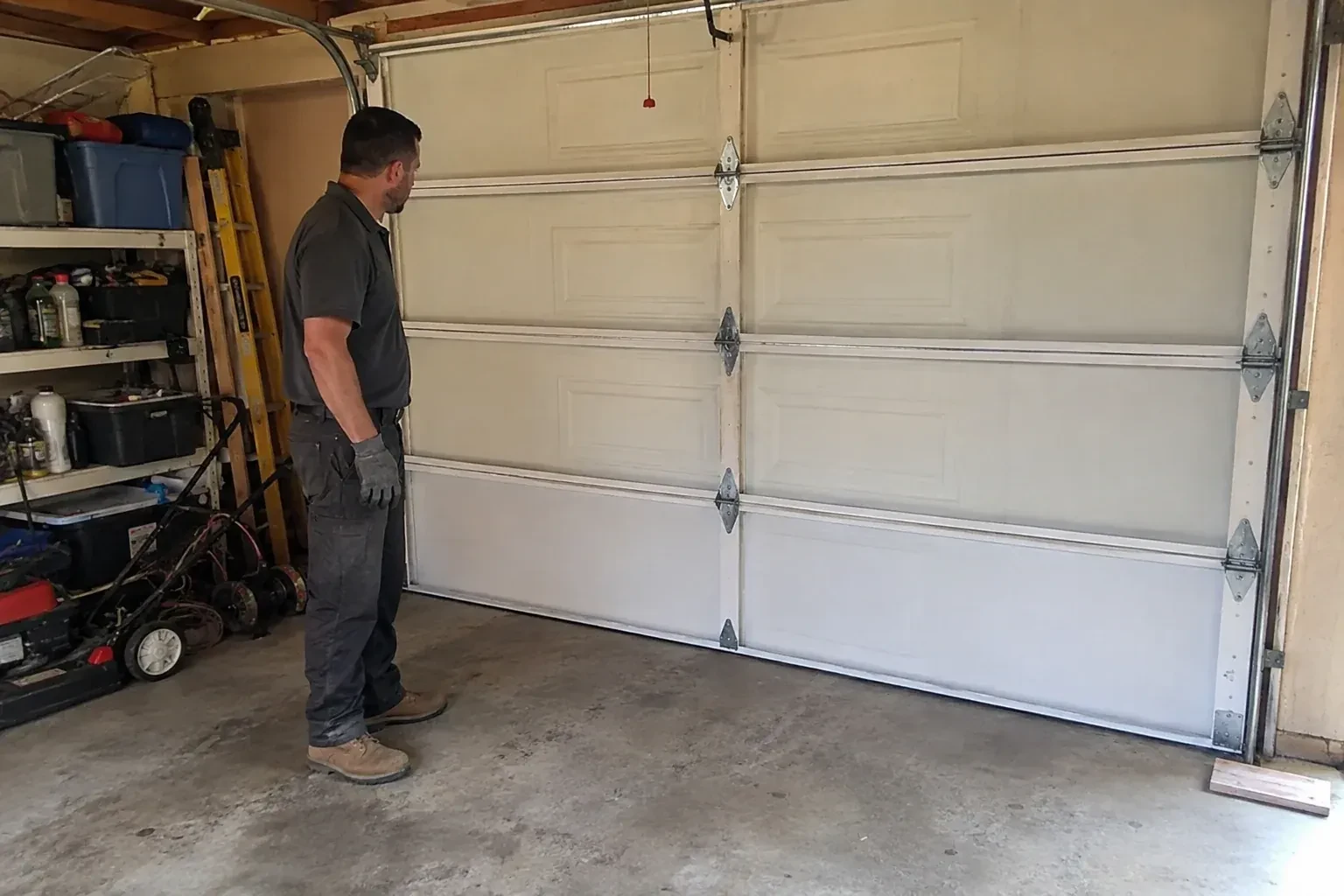
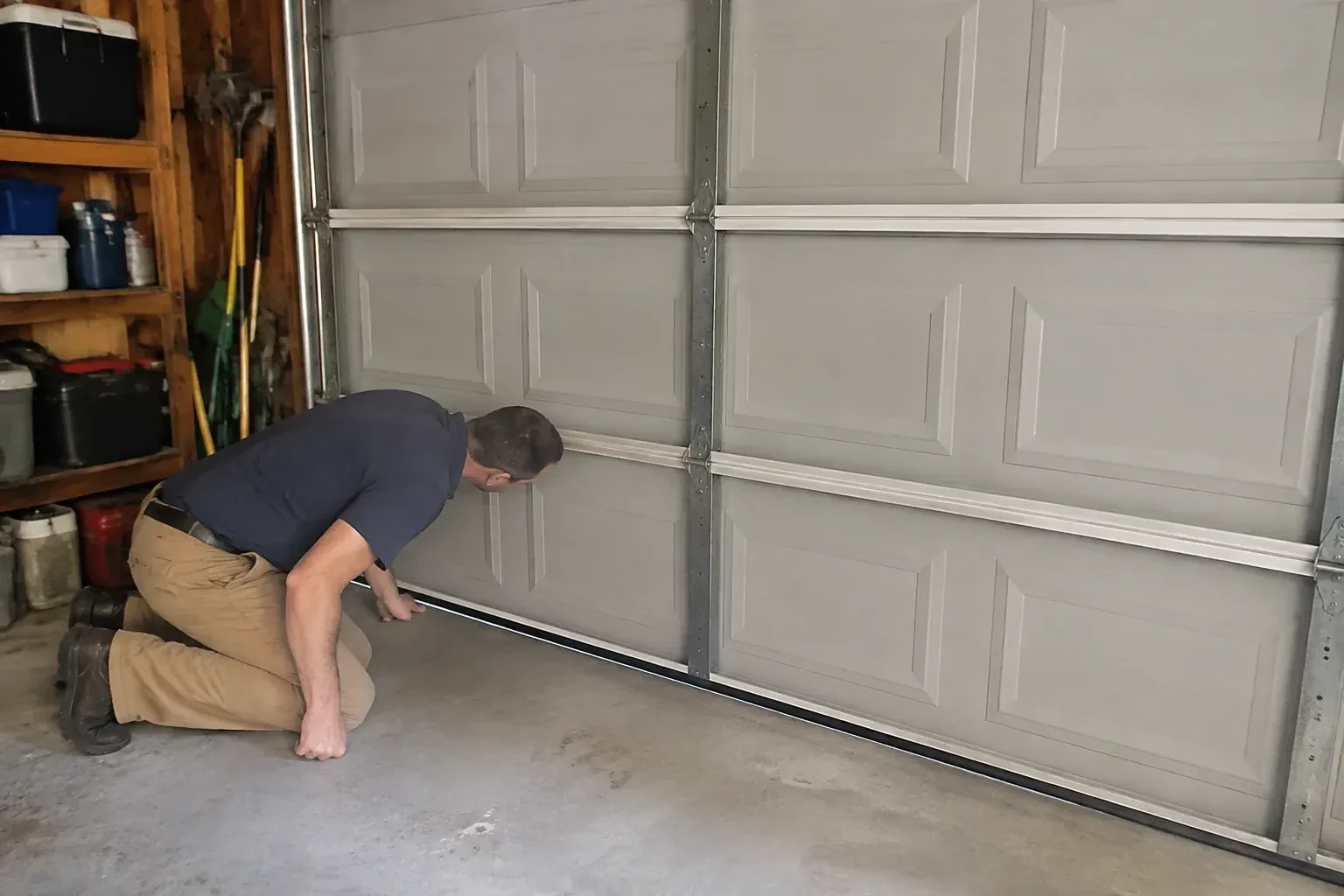
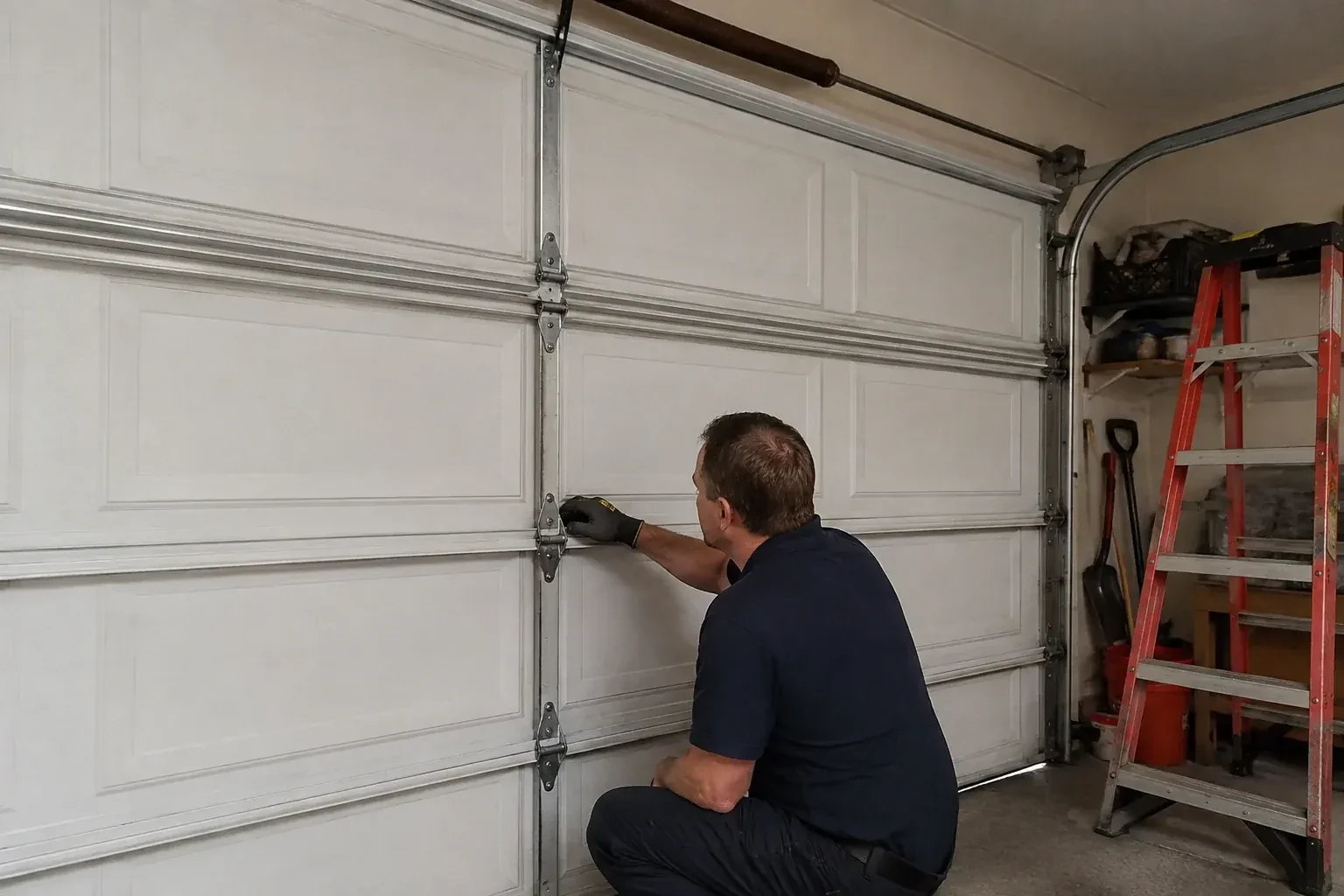
For customers in Don Mills the sequence is always the same. Assess the door in person. Explain what was found and why. Price the options on site. Do the agreed work with the door secured and the right tools. Test every part of the travel. Show you what changed. Then clean up and go.
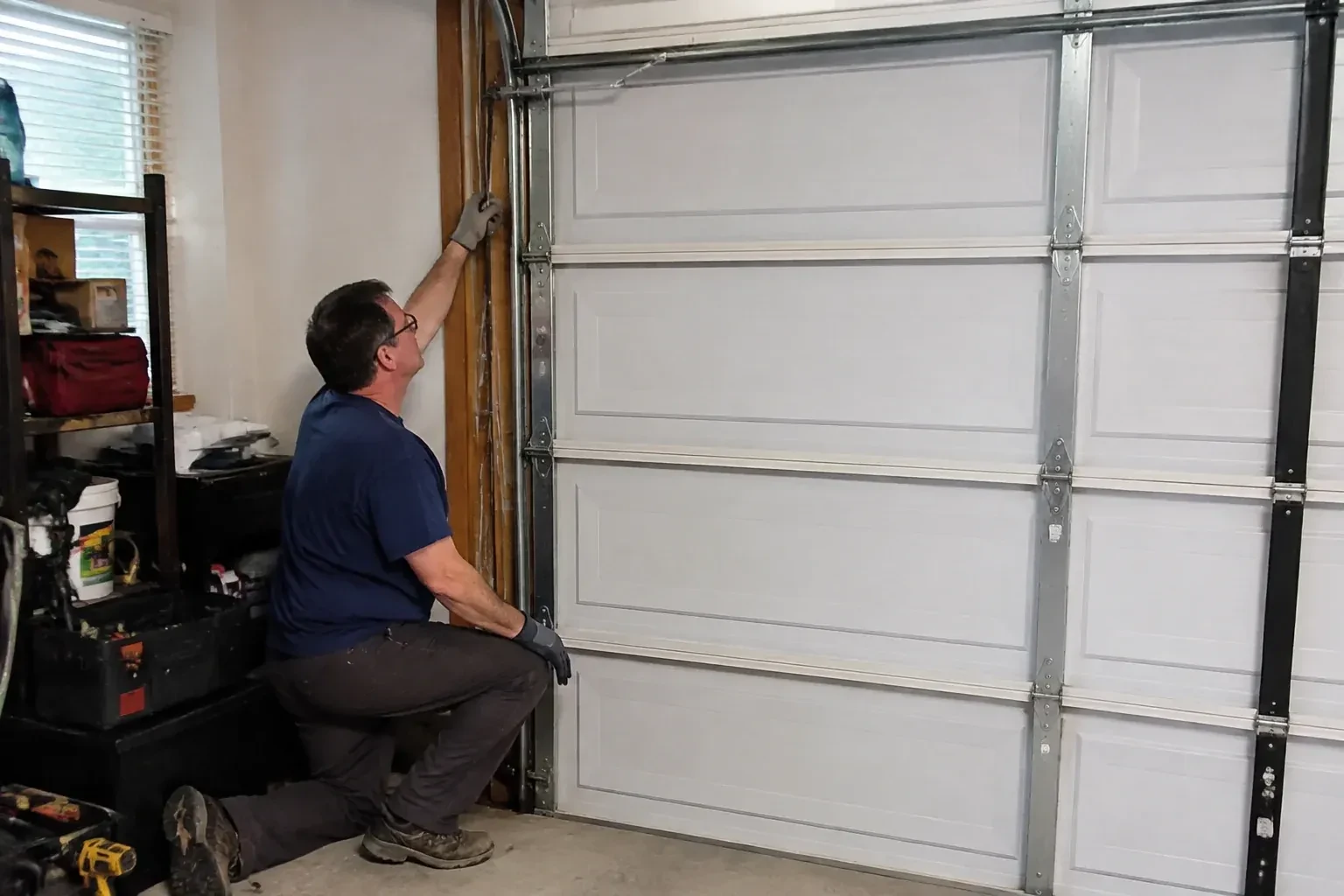
Many of the houses in Don Mills have garage doors that are decades old, adjusted and patched over the years by more than one pair of hands. We work with that history rather than against it, bringing the door back into balance, replacing what is worn and being honest when a new door would serve the household better. Every visit ends with a full test and a clear explanation.
31years in business
24/7open every day
Told before touched. Nothing is adjusted or replaced until you have heard what we found and agreed with the plan for it.
Neat work, neat exit. New parts fitted cleanly, old ones removed, the floor and door wiped down. The garage is yours again the moment we leave.
Room to choose. We give you the practical picture and step back. Repair now, plan a replacement, or wait and watch: your call.
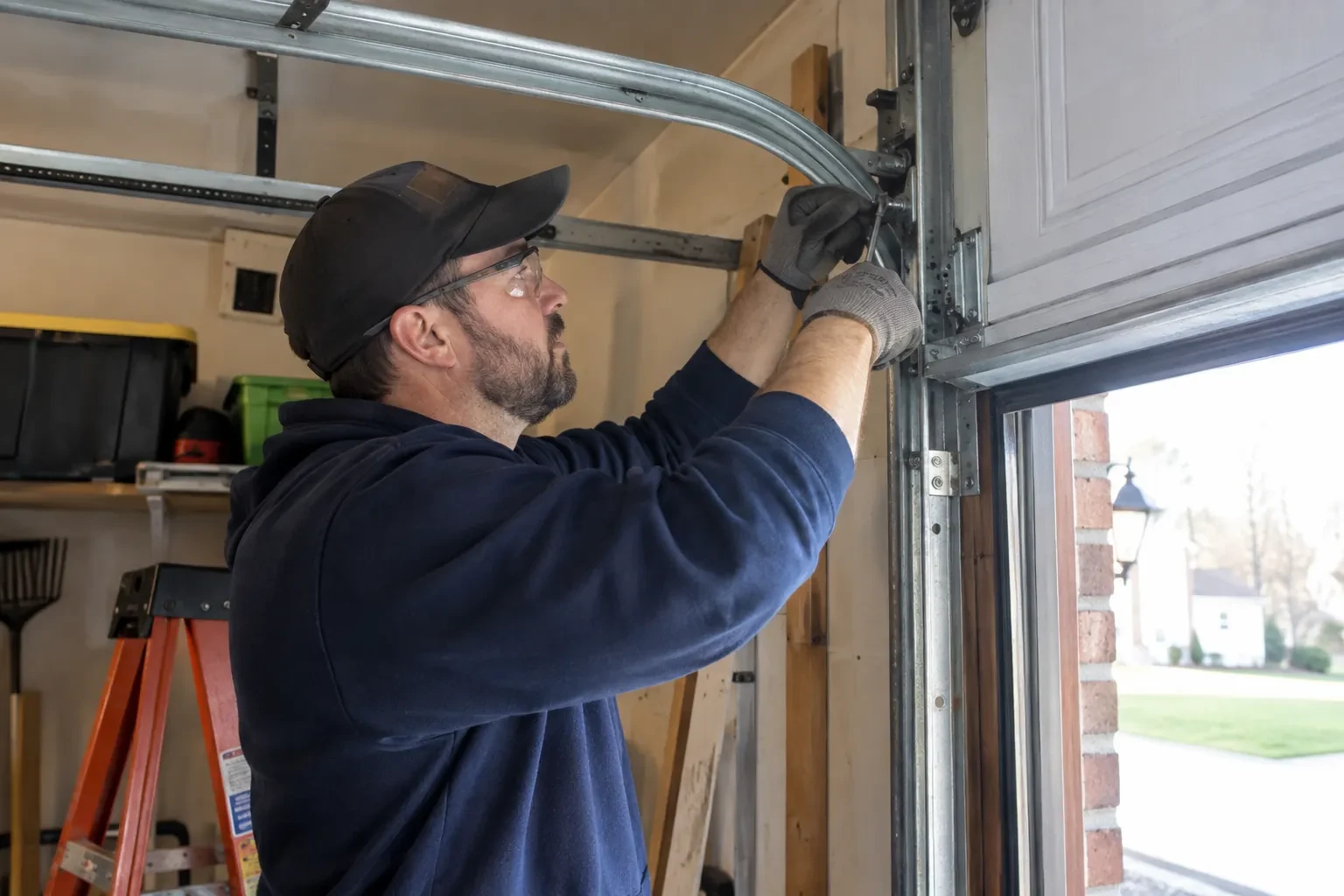
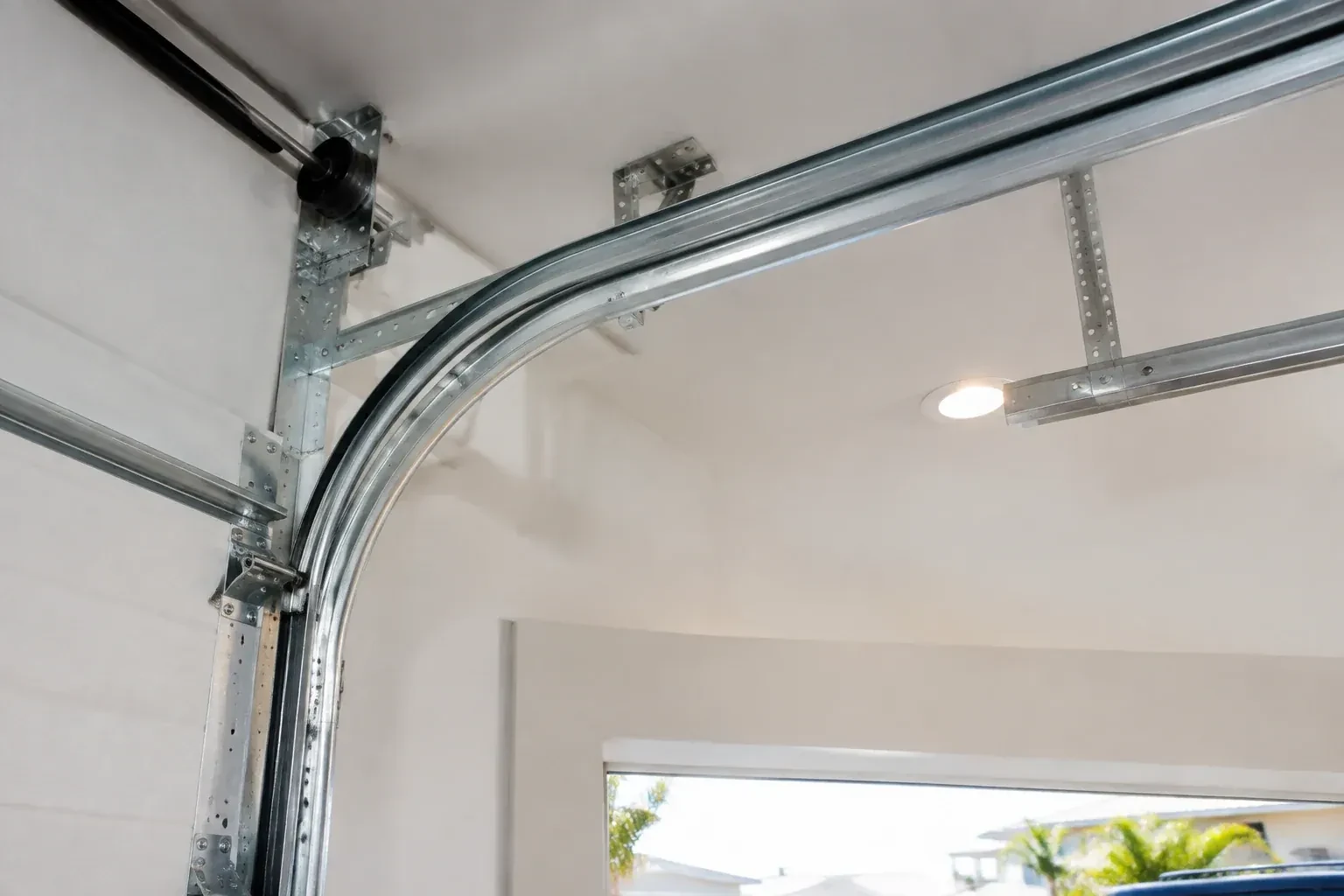
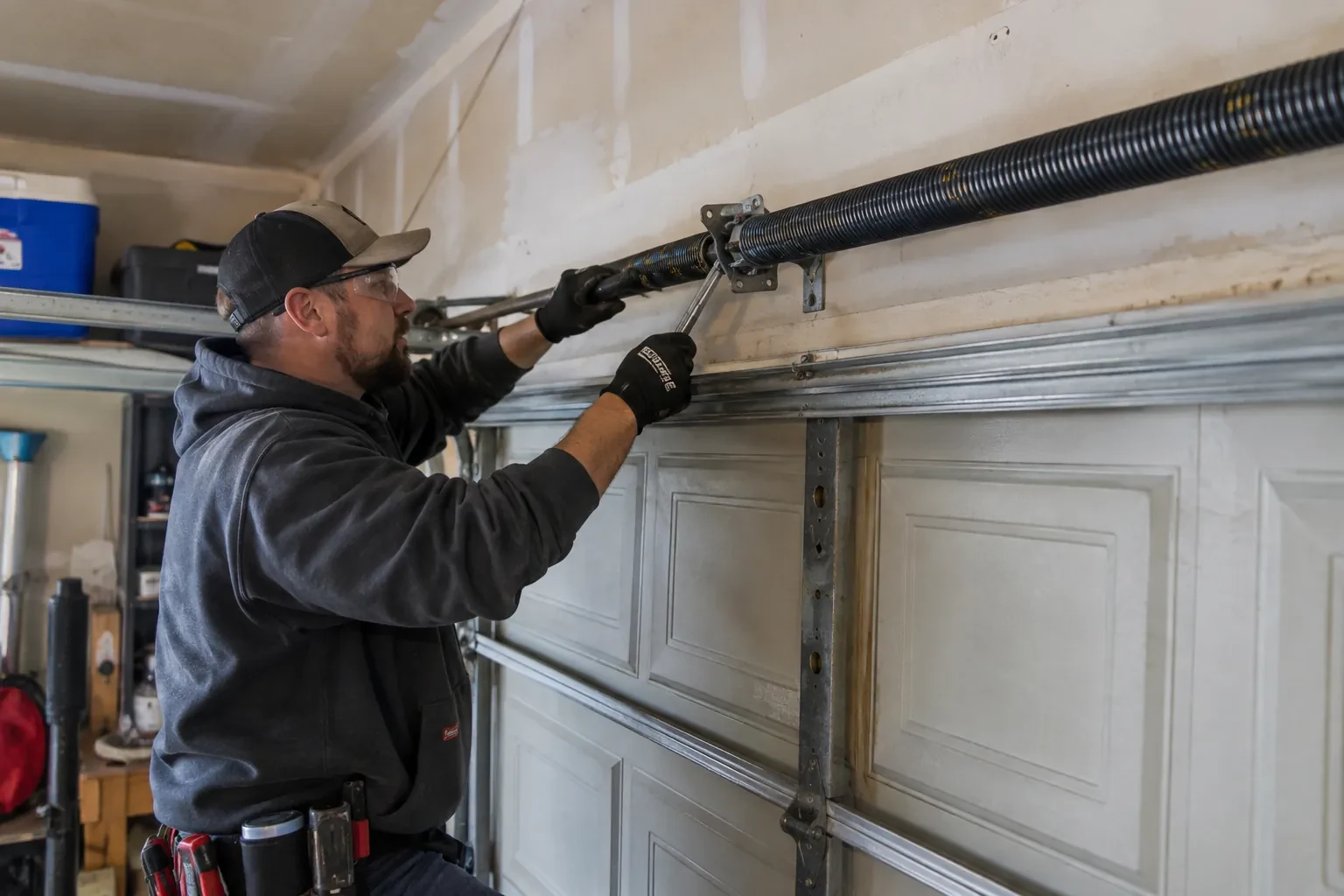
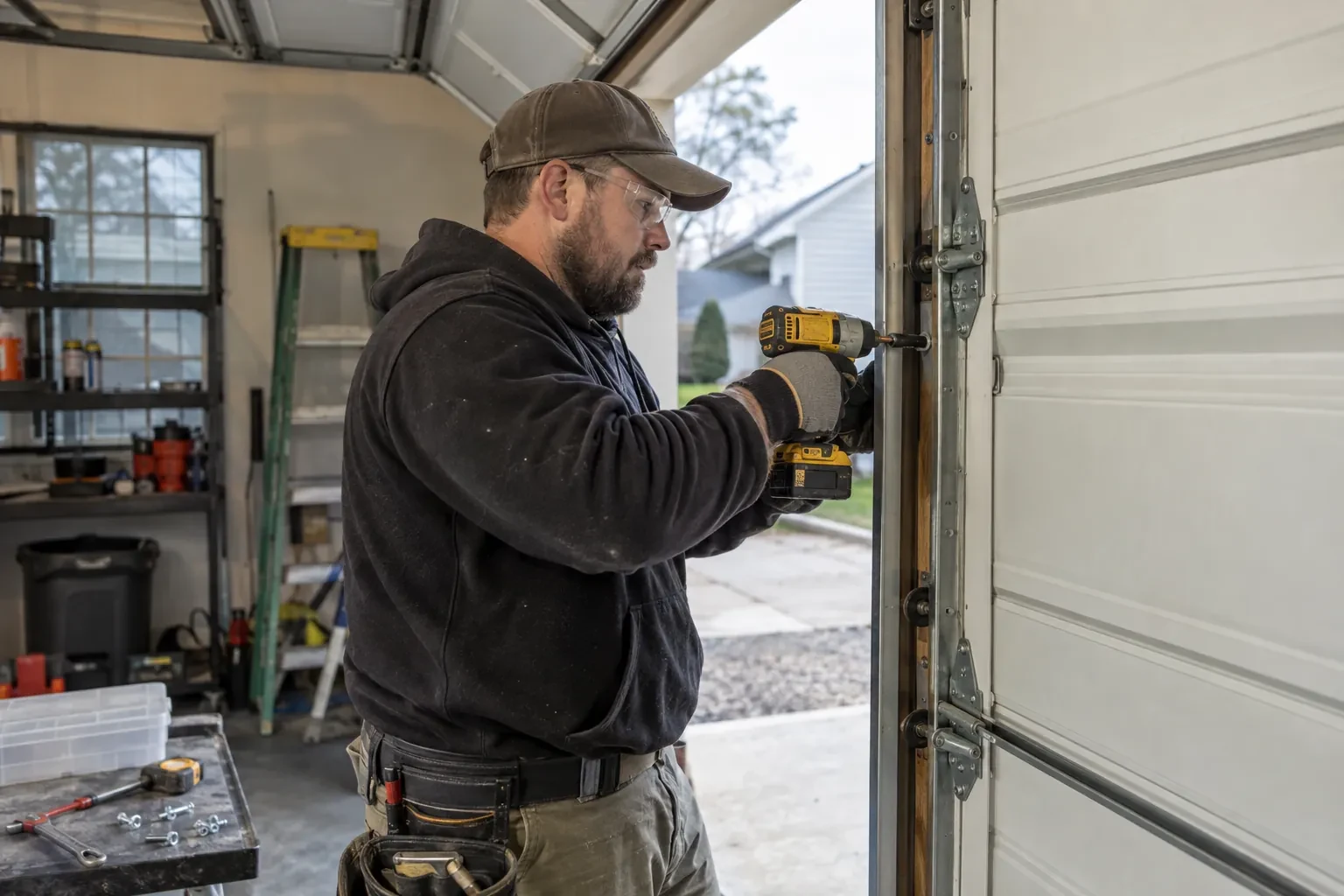
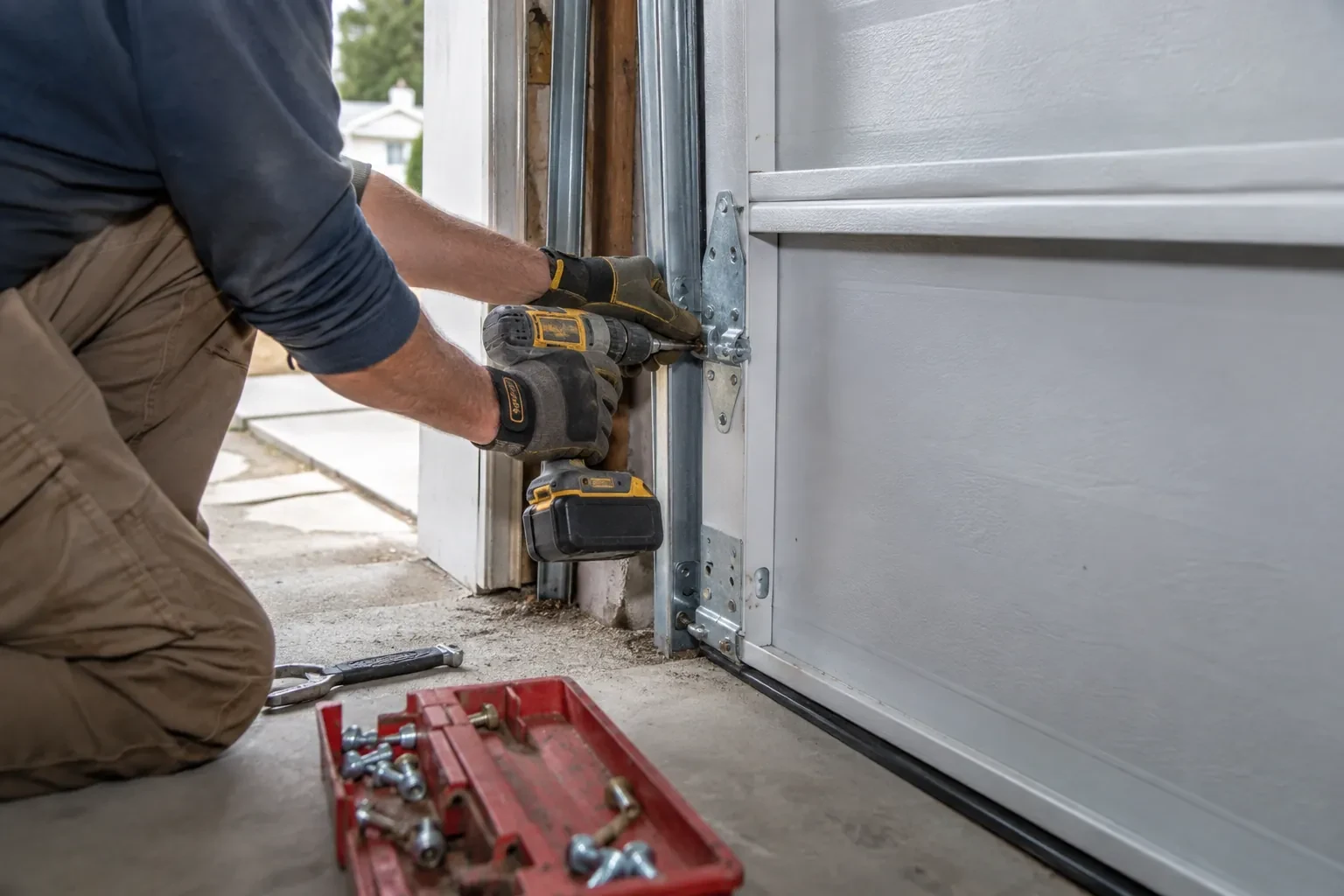
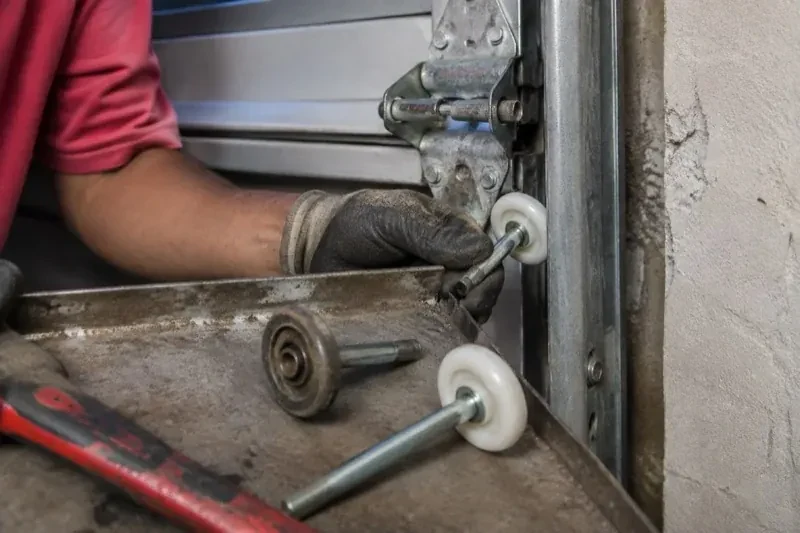
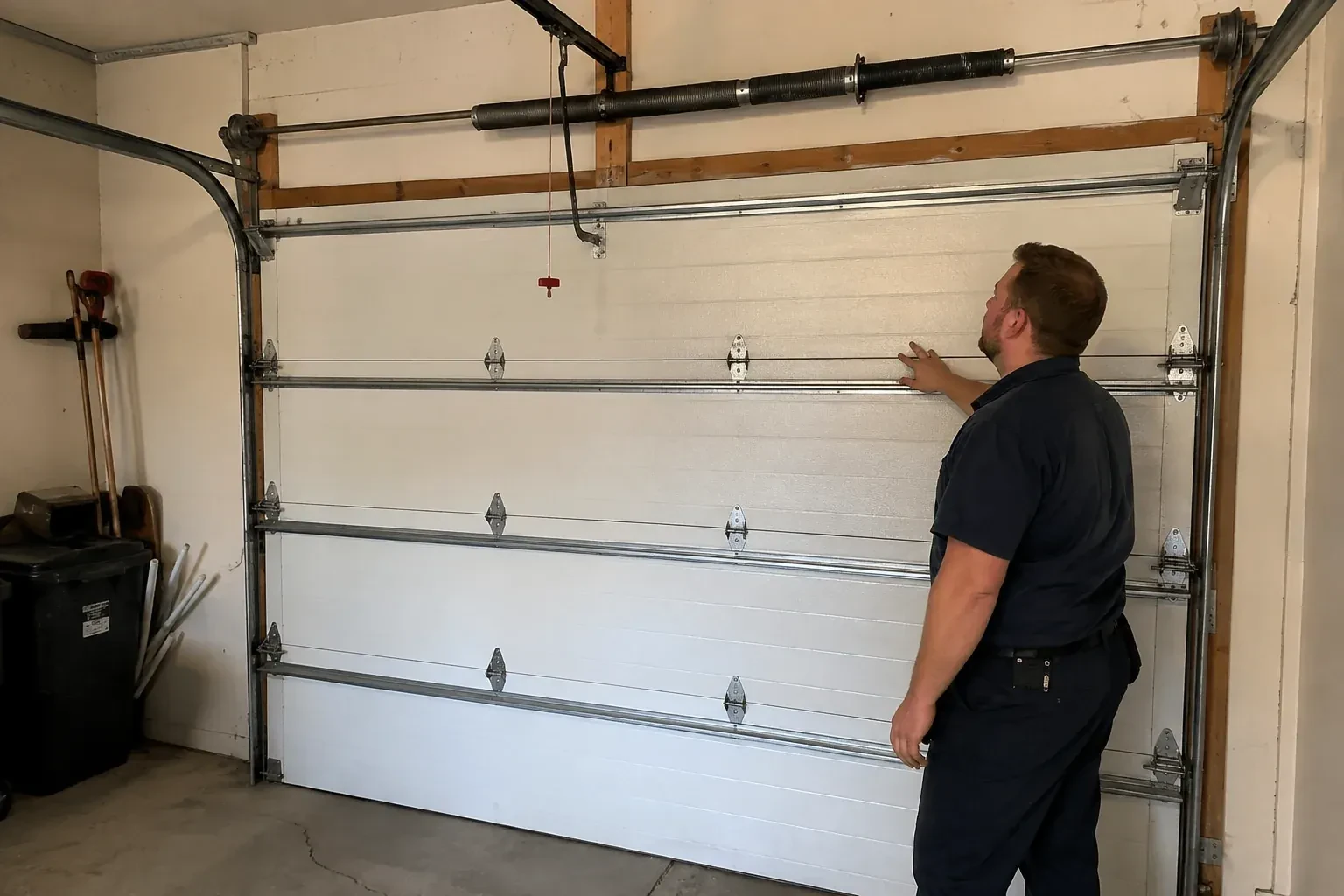
We think of garage door work in Don Mills as keeping a heavy moving object safe and smooth. That covers spring and cable work, tracks and rollers, opener force and sensor settings, seals against the weather, and complete door replacement when a repair no longer makes sense.
About 58% of homes in Toronto were built in 1980 or earlier, according to the 2021 Census.
Older homes
Older houses frequently have a garage door that was replaced once already, sometimes with a door chosen for the opening rather than the building. When that door reaches its end, there is a chance to pick a style that suits the house properly, and we measure with that in mind.
Single-detached houses make up about 23% of homes in Toronto (2021 Census).
Attached housing frequently has tandem or tight garages with limited headroom and little side room, so replacement openers and tracks are chosen to fit those dimensions. A low-headroom track kit or a wall-mounted jackshaft opener often solves what a standard unit cannot.
You moved in three months ago. The door works, but nobody can say how old the springs are, when anyone last looked at it, or whether the little sensors by the floor have ever been tested.
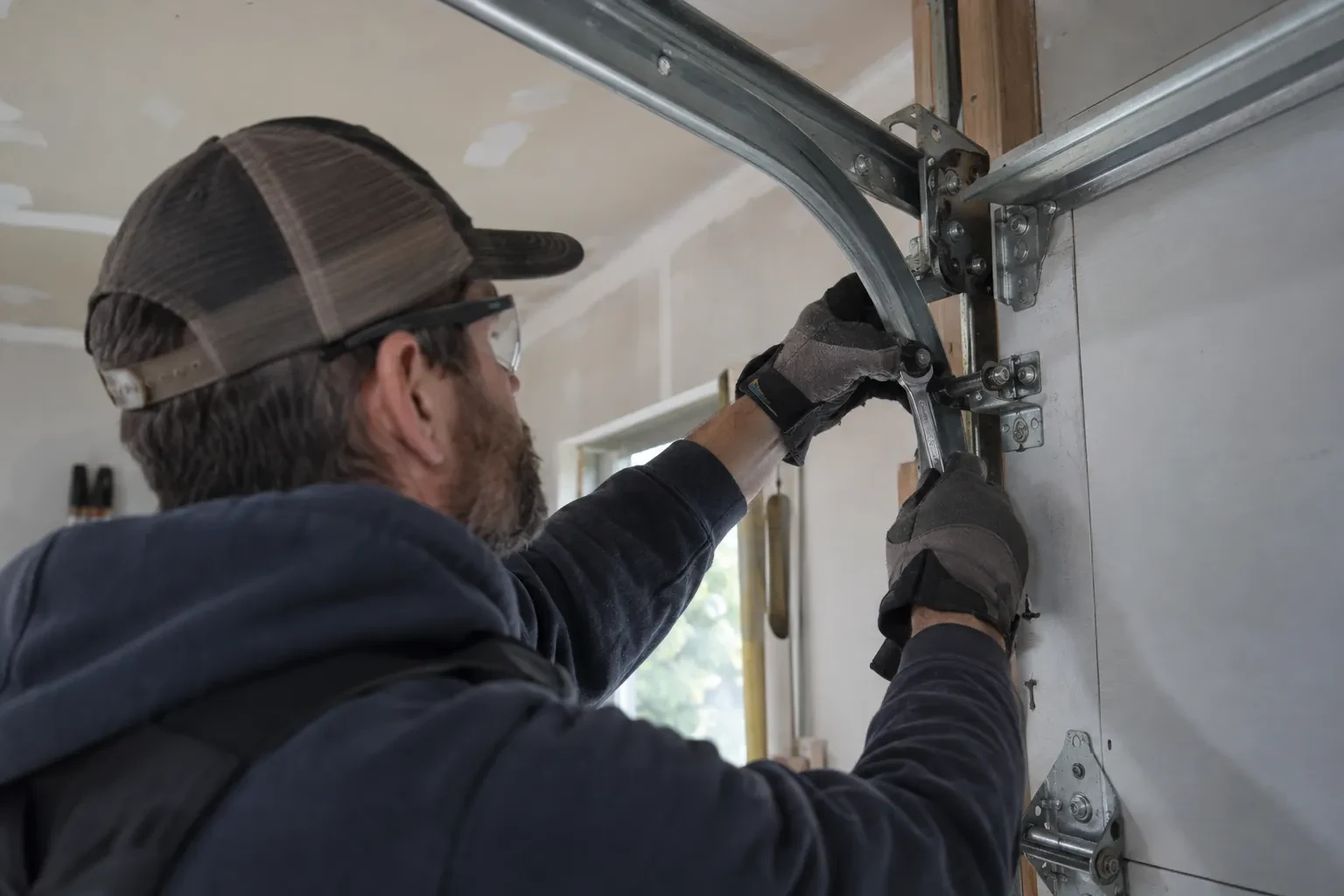
Backing out this morning, the mirror caught the track beside the door. Now there is a crease in the steel at about knee height, and the door stops with a bang every time a roller reaches it.
The cable has wrapped itself around the shaft above the door instead of sitting on its drum. When the opener runs, the door lurches, one side rises before the other, and the top panel twists.
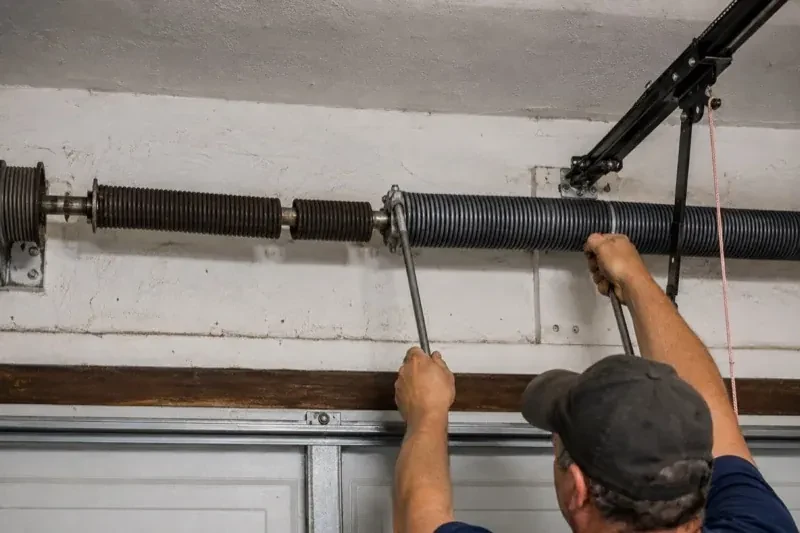
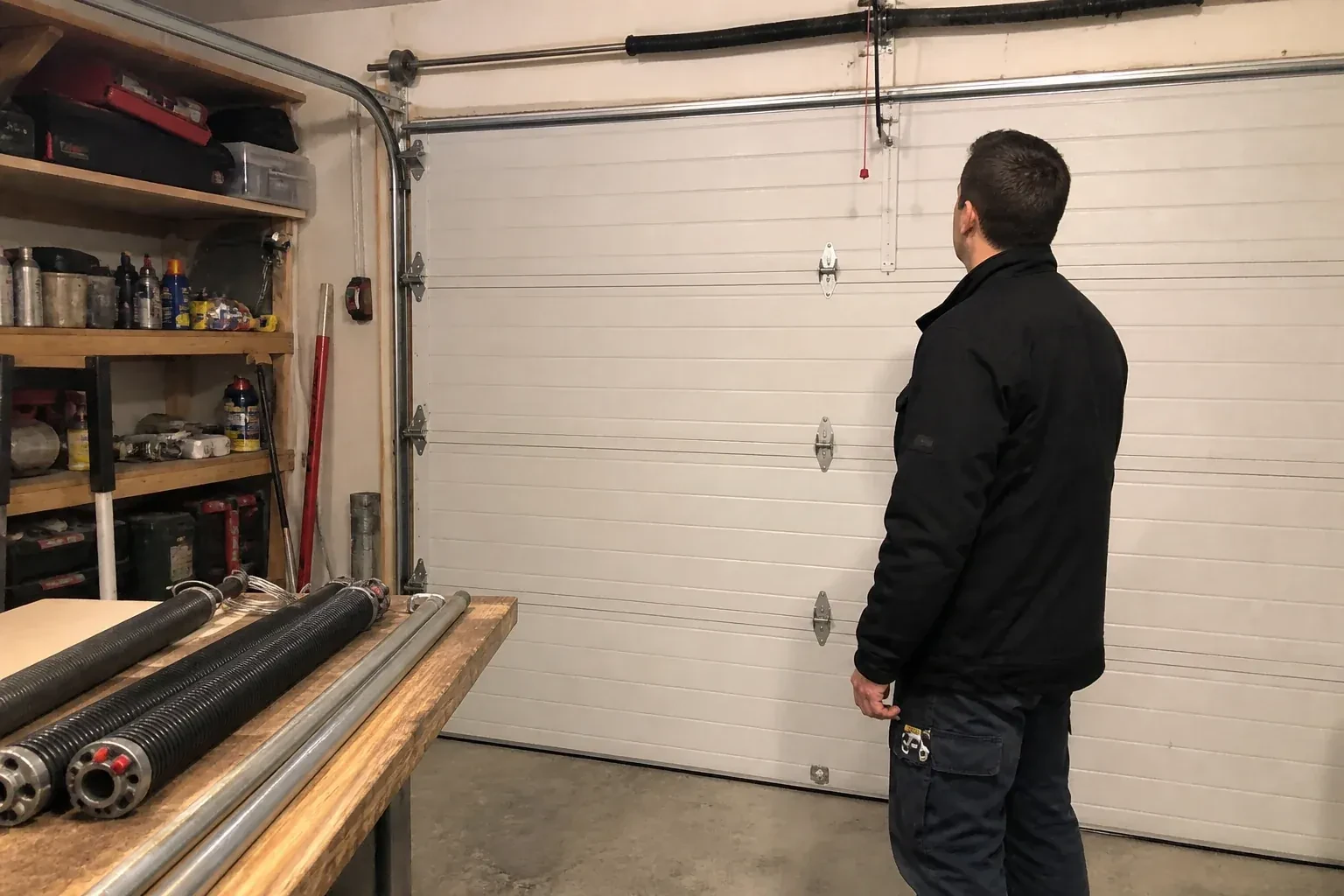
Looking up at the coil above the door, you can see a clean split with a gap of several centimetres between the two halves. The rest of the spring looks fine, but the door has become almost impossible to move by hand.
Press the button and the opener hums for a second, then quits. The trolley is jammed hard against a bolt at the very end of the rail near the motor and will not budge in either direction.
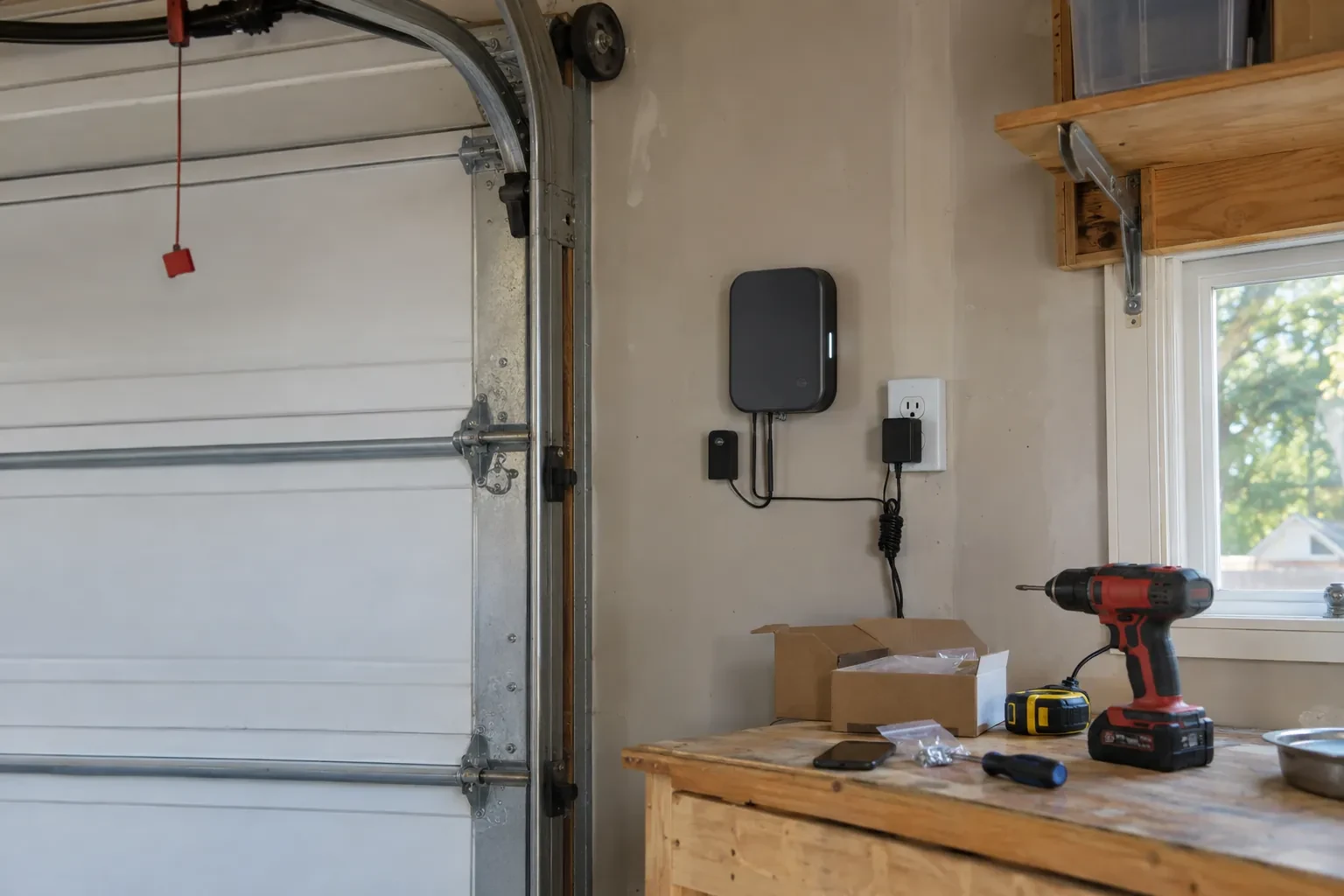
A smart hub arrived in the mail with a coin-cell sensor and two wires. The instructions ask what colour your learn button is and how old the opener is. Yours is over a decade old and the button colour is not on their chart.
Someone pulled the cord last spring to get a car out during an outage, and the door has never properly rejoined the opener. Press the button and the trolley glides along the rail by itself while the door stays exactly where it is.
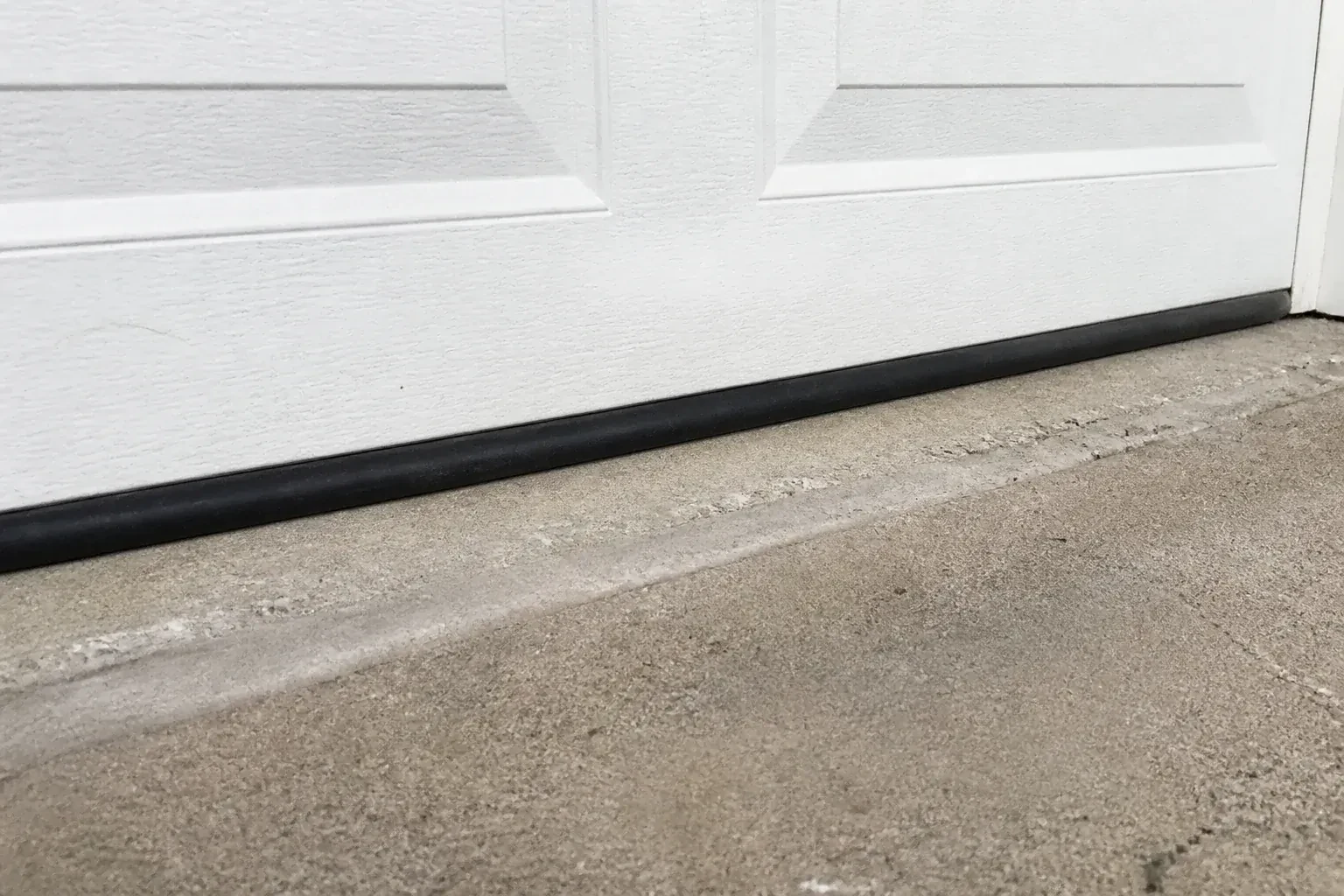
The bottom section has absorbed years of moisture and road-salt residue. Its edge is swollen, the seal retainer is failing, and the door leaves an irregular gap across the floor whenever it closes.
Traditional swing-out coach doors have the look you like, but the driveway needs to remain clear as the door opens. A sectional carriage-house design would provide that appearance while travelling overhead.
A metallic clatter now comes from inside the hood whenever the curtain coils. The sound follows each revolution, the travel has become jerky, and fine metal dust is visible near one bracket and bearing.
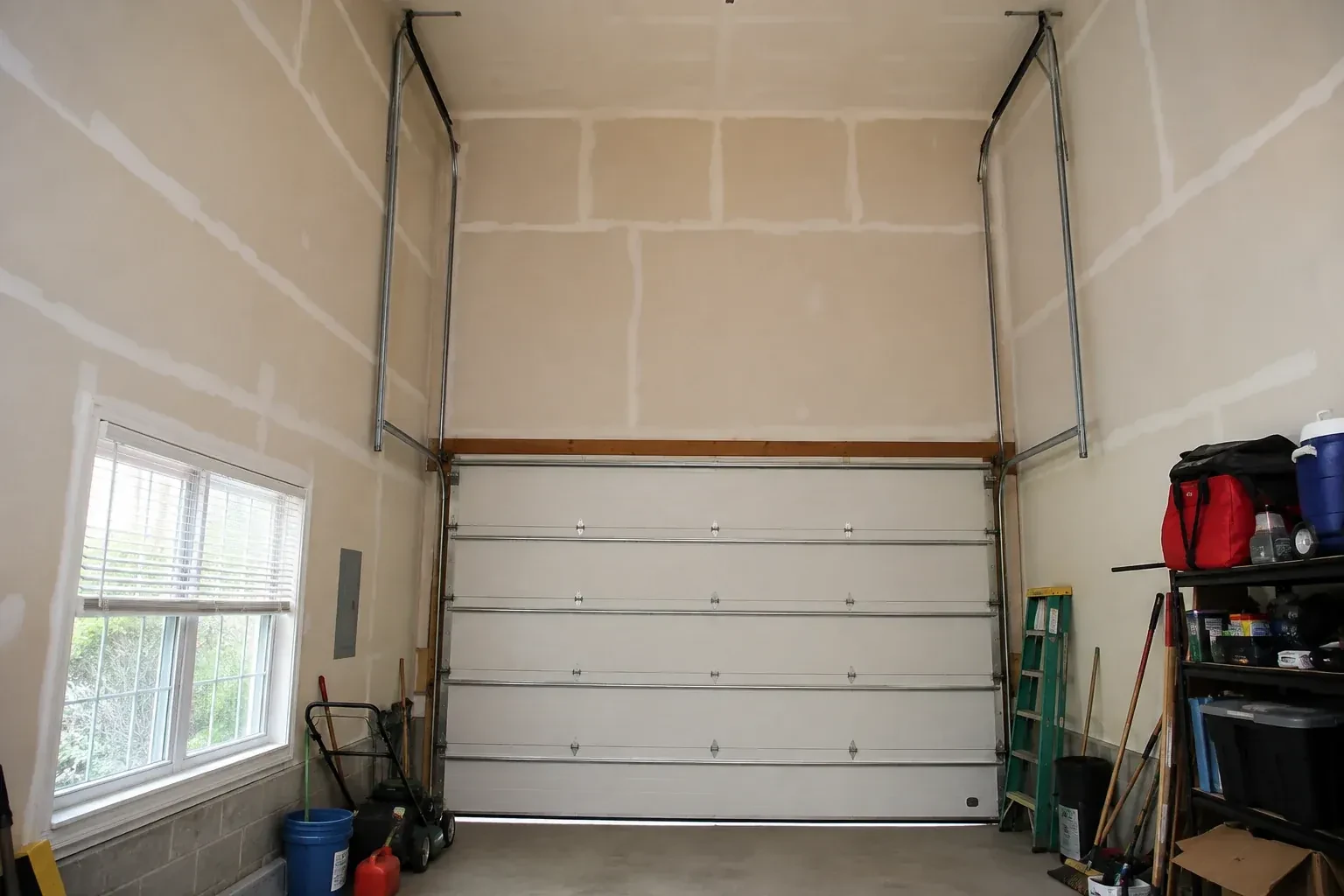
High-lift conversions raise the horizontal track toward the ceiling so the door opens higher, clearing a car lift or a tall truck. It is a change to the track, the drums and the springs, and it needs an opener that suits.
The door goes up perfectly. Coming down is the trouble: partway to the floor it stops, climbs back to the top, and the light on the opener blinks at you.
The door opens about a third of the way and stops. Turning the limit screw on the head has made no difference, and the trolley seems to sit in the wrong place along the rail when the door is fully closed.
It is minus twenty in the detached garage and the door climbs in jerks, the belt stiff as a board. By the afternoon, when the sun has been on the door, it runs almost normally again.
During the ice storm the power was off for two days. You came home in the dark, found the door dead, and had to climb out of the car to pull the red cord in the cold.
Someone backed the car in a little too far, a bin or a bicycle brushed the track, and since then the door starts to close and comes back up. One sensor now sits at a slightly different angle from the other.
A contractor is coming to work in the garage on Thursday while you are away. Handing over a remote means chasing it back afterwards, and the keypad code is the one your whole family uses.
Halfway up, the door lets go of the opener with a clunk and sinks back to the floor while the trolley carries on to the top alone. It has happened three times this month, and each time the release lever is found half-cocked.
WhyBy the end of the visit your phone shows the door's true state, updates within a few seconds of any movement, and keeps a history of every open and close with the time, and the user when the command came from a signed-in app or virtual key.
Someone pulled the cord last spring to get a car out during an outage, and the door has never properly rejoined the opener.
WhyThe operator standard for residential openers in this country asks for a manual release that is coloured red, easy to tell apart from the rest of the mechanism, and reachable from the floor, with the handle no more than about 1.8 metres up.
The bottom section has absorbed years of moisture and road-salt residue.
My opener is old and has no photo eyes. Can it still be inspected?
Yes. Older openers rely on contact reversal alone, so the board test carries more weight and is run carefully against the maker's procedure, along with the manual balance check, the force setting and the release. The report records what the opener has and how it performed. An opener built before photo eyes became standard is flagged for replacement in the report, since makers recommend moving off that generation of opener rather than treating photo eyes as a nice-to-have.
How do I keep road salt from rusting the track?
Salt does its work in the bottom foot of each vertical track, where slush drips off the car and sits. Push slush clear of the door's inside edge rather than letting it pool, and on a mild day wipe or rinse the brackets and the lower channel. A little silicone spray on the bracket fasteners in autumn helps them shed water. Keeping the threshold free of ice also stops the door being pulled against a stuck bottom section.
How do I tell a cable problem from a spring problem?
Look above the door with it closed. A torsion spring that has broken shows a clear gap in the coil, and both cables usually go slack together because nothing is turning the shaft. A cable problem tends to show on one side only: a frayed length, a coil of loose cable, or one corner sitting higher. Either way the technician inspects both, since a weak spring is a common reason a cable fails.
What is the difference between galvanized and oil-tempered springs?
Oil-tempered springs are the traditional dark grey or black coil; they hold their tension well over time and are widely used. Galvanized springs have a zinc coating that resists rust, which is useful in damp garages, though they tend to relax slightly and may need a small adjustment after settling in. Both are available in standard and high-cycle ratings, and the technician can explain which suits your garage.
Can you turn the force up so the door closes on cold mornings?
Force is set to the lightest level that moves the door reliably, and it is raised only a little for a cold garage. Turning it up further to overcome a heavy door or a seal frozen to the slab is not done, because too much force interferes with the safety reversal and can bend the top section. If the door is hard to move in the cold, the springs, rollers or the frozen seal are dealt with instead.
What does the colour of the learn button tell you?
On many openers the learn button's colour marks the generation of radio coding the unit uses, which decides how a hub can talk to it. Some generations accept a simple two-wire connection at the wall-control terminals; others use an encrypted console and need the hub paired by radio or through a small adapter. Sending a photo of the button and the label ahead of the visit lets the technician arrive with the right hardware.
The door is stuck shut, the opener is dead and there is no other door. Can you still get in?
Usually. If the door has an outside key release, a small round lock near the top panel, that is what it is for: the key pulls a cable that frees the trolley from outside so the door can be lifted by hand. If there is no such release, the technician has other methods to reach the lever from outside, and once inside the fault is dealt with. Fitting an outside release afterwards is a sensible follow-up for a garage with a single door.
Will a new door help reduce drafts?
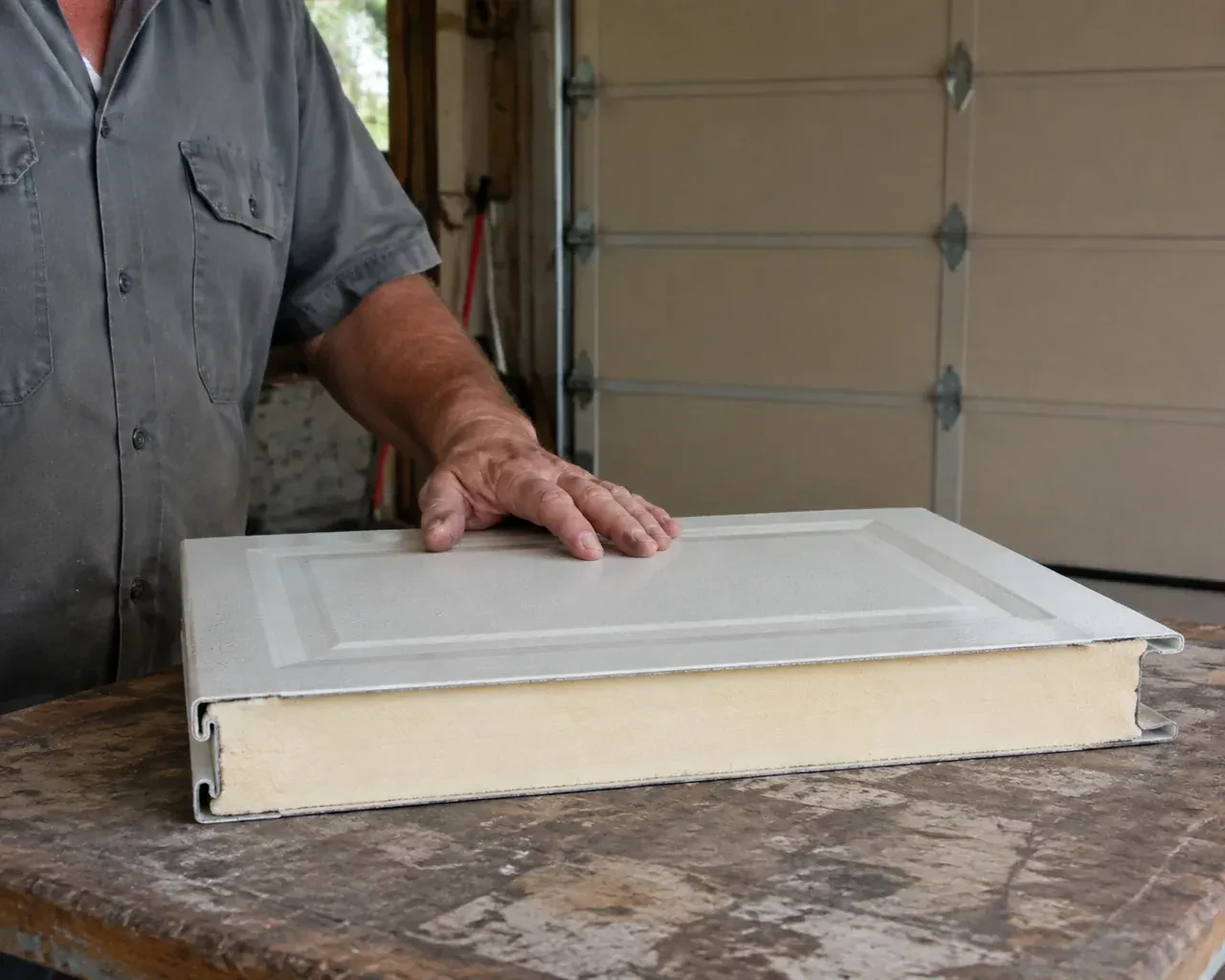
A properly fitted replacement can improve the boundary through fresh perimeter seals, a new bottom astragal and straighter section joints. The survey also checks whether the slab is uneven or the opening is out of square, since those building conditions affect contact. Seal selection is therefore paired with measurements rather than treated as a universal cure.
What happens if the garage floor is not level?
The survey measures the variation and determines how the bottom section and seal can meet it. A flexible astragal can accommodate modest changes, while a pronounced crown, dip or damaged threshold may call for related floor or threshold work. The door itself is installed level for reliable travel; the sealing approach is selected separately to follow the practical shape of the floor.
Why is there a grinding or clattering sound near the hood?
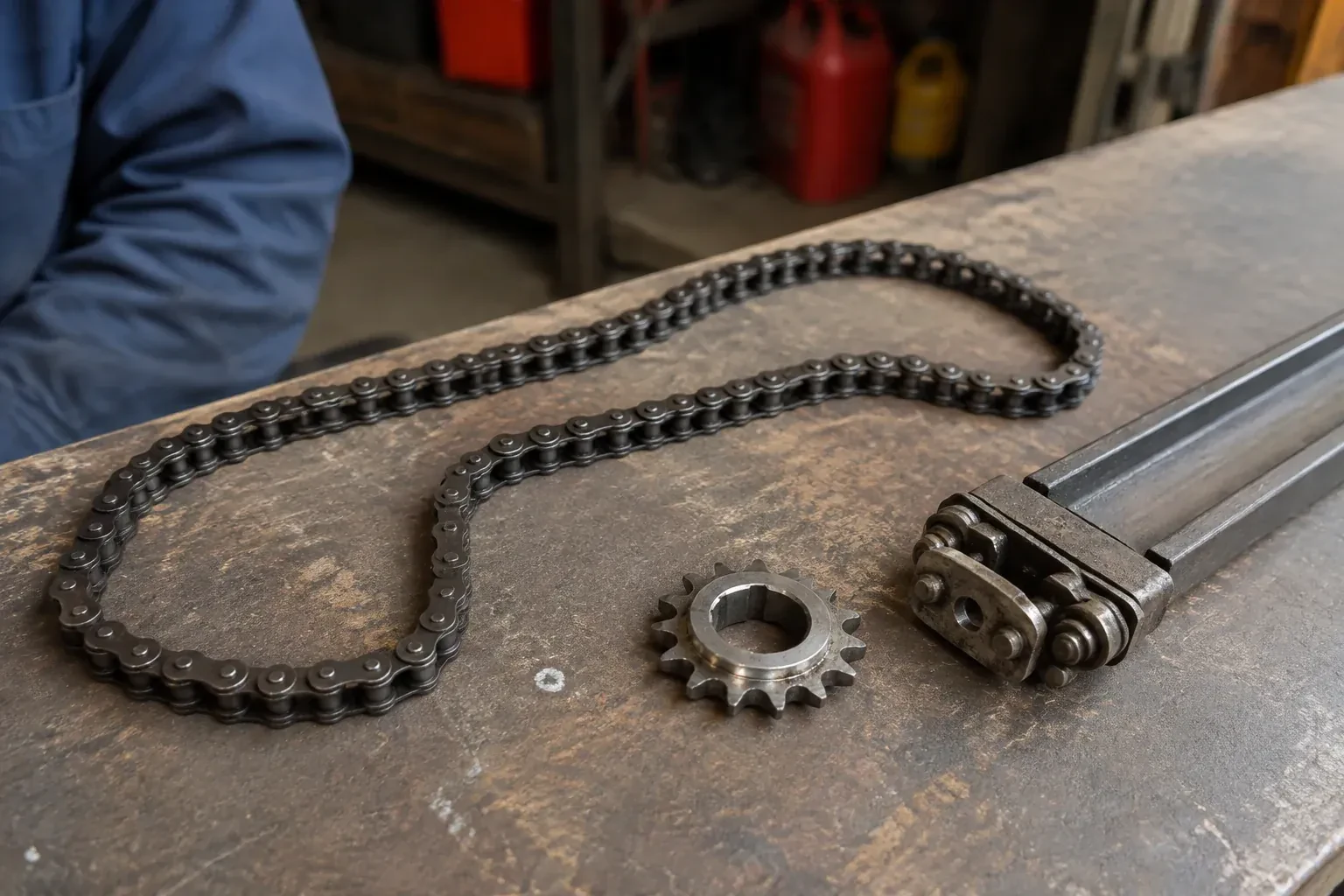
Noise at the head can come from worn barrel bearings, loose brackets, misaligned drive chain or sprockets, shifting slats, an uneven coil or hardware contacting the hood. The pattern matters: once per revolution suggests something different from continuous guide scrape. Controlled observation locates the source before a specific part is selected.
Request a visit
For customers in Don Mills the sequence is always the same. Assess the door in person. Explain what was found and why. Price the options on site. Do the agreed work with the door secured and the right tools. Test every part of the travel. Show you what changed. Then clean up and go.