Repairs · Don Mills
Garage Door Safety Inspection in Don Mills
You moved in three months ago.
In plain words
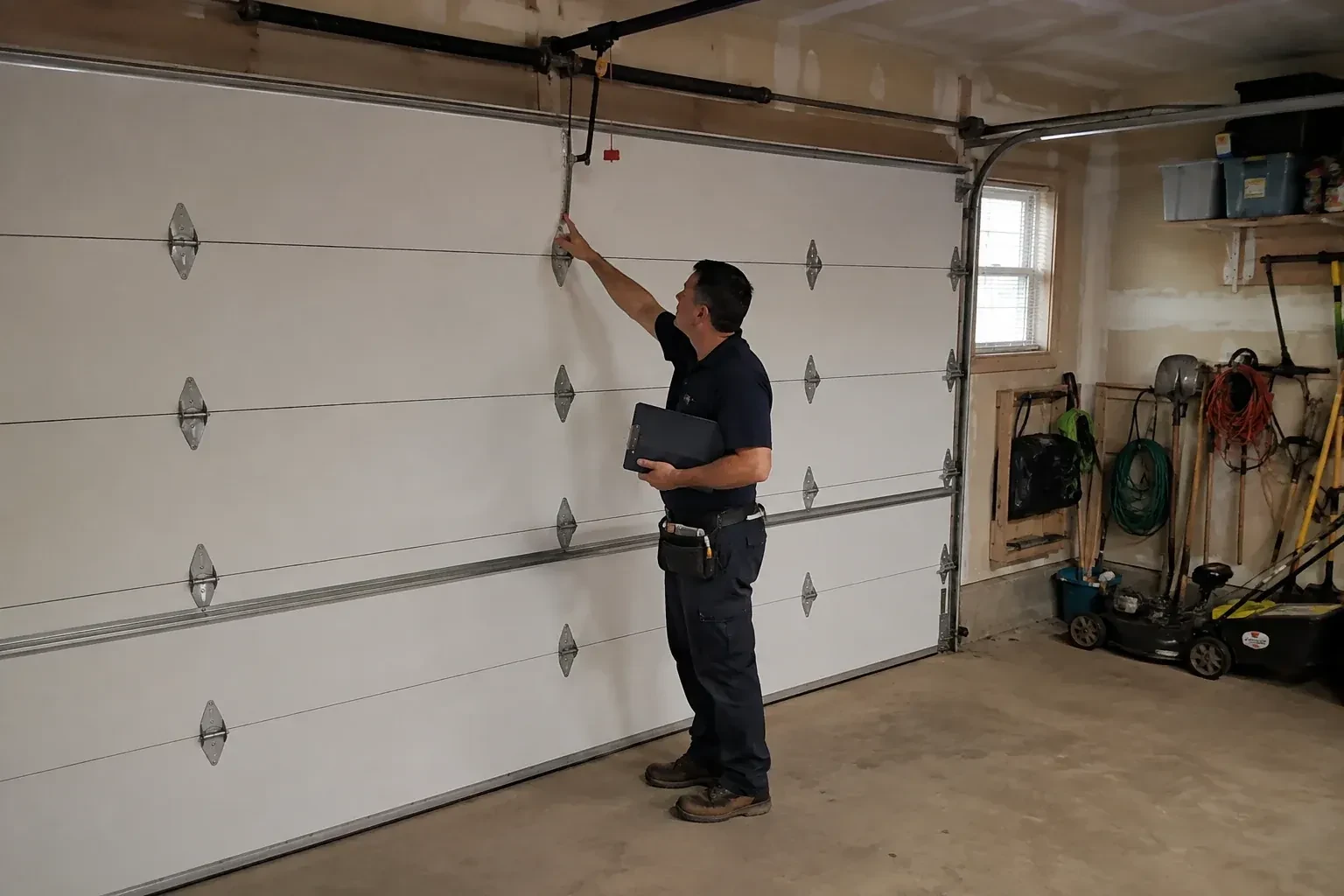
What you get back is a report with four kinds of entry. Items that are in good order, so you know what is fine. Maintenance items, such as lubrication or a loose hinge bolt, which are often handled during the same visit if you wish. Repairs to plan, such as a worn roller set or a cable showing rust at the bottom loop, quoted separately. And, rarely, a stop-use item, where the door should stay put until a specific part is corrected. That last category is the reason the inspection exists, and the report says plainly which items fall into it.
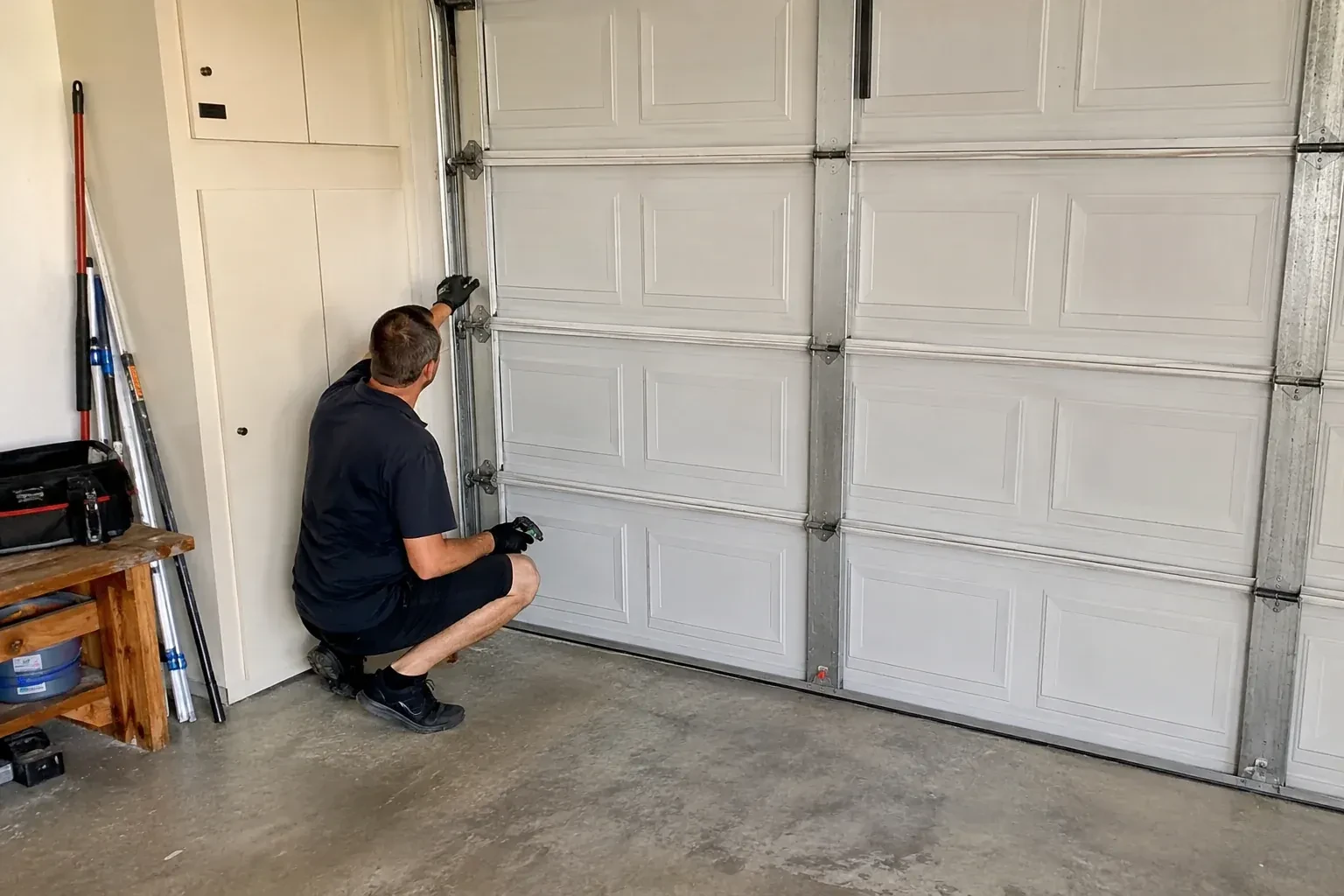
How the visit goesYou moved in three months ago. The door works, but nobody can say how old the springs are, when anyone last looked at it, or whether the little sensors by the floor have ever been tested.
Garage Door Safety Inspection
How the visit goes
Following the force after an impact
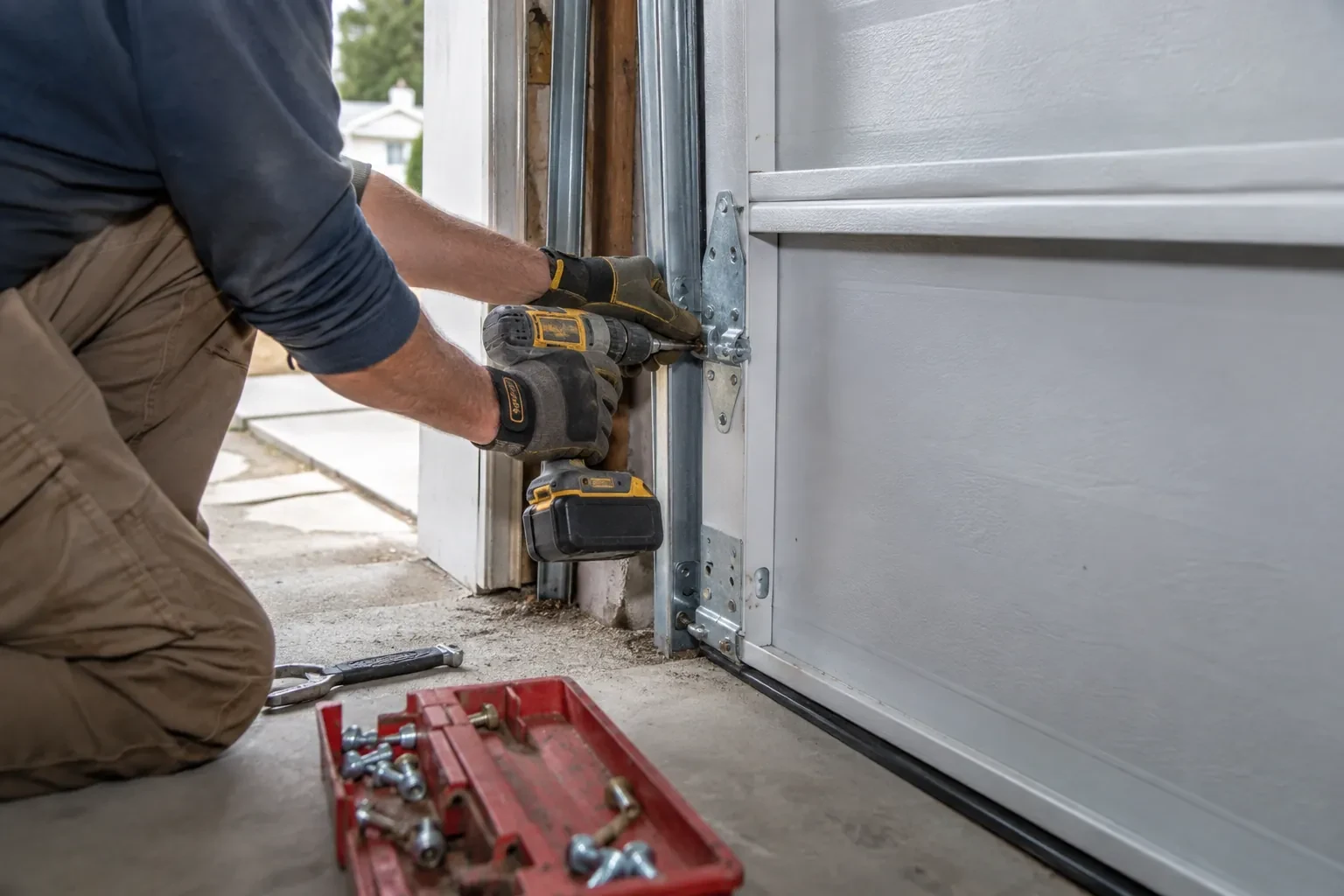
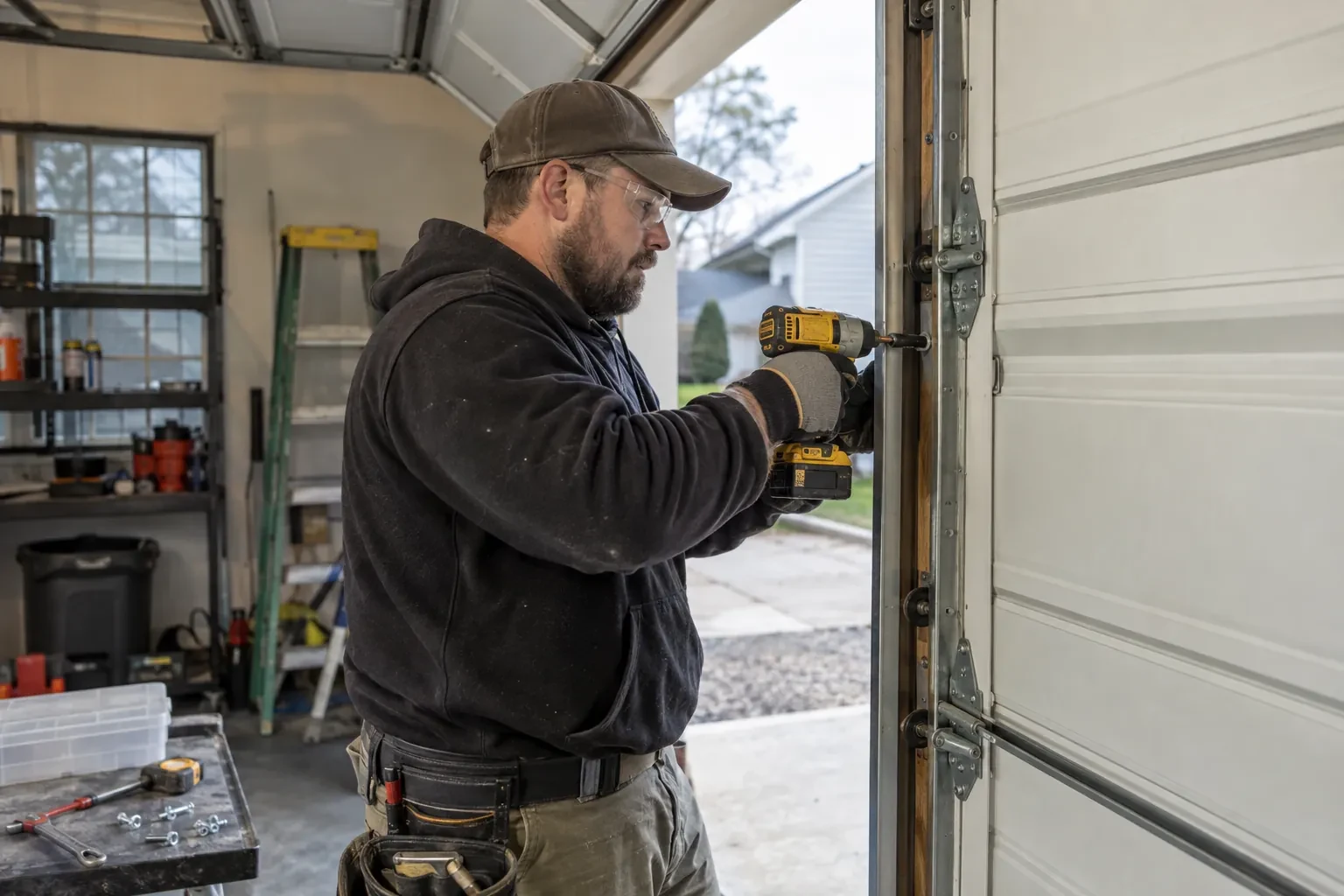
When a vehicle or something heavy has struck the door, the technician starts at the mark and works outward along the force's path. A dented bottom section can push a roller sideways in its track, bend the track itself where the roller was, shift a bottom bracket and change how that cable sits on its drum. The hinges beside the impact are checked for splits and the strut for a kink. The door is then observed through a cycle to see whether it now twists or hesitates at the point of damage. The finding is written up as cosmetic, hardware repair, section replacement or a counterbalance that needs resetting, so you can decide with the whole picture in view.
Controls, release and lock
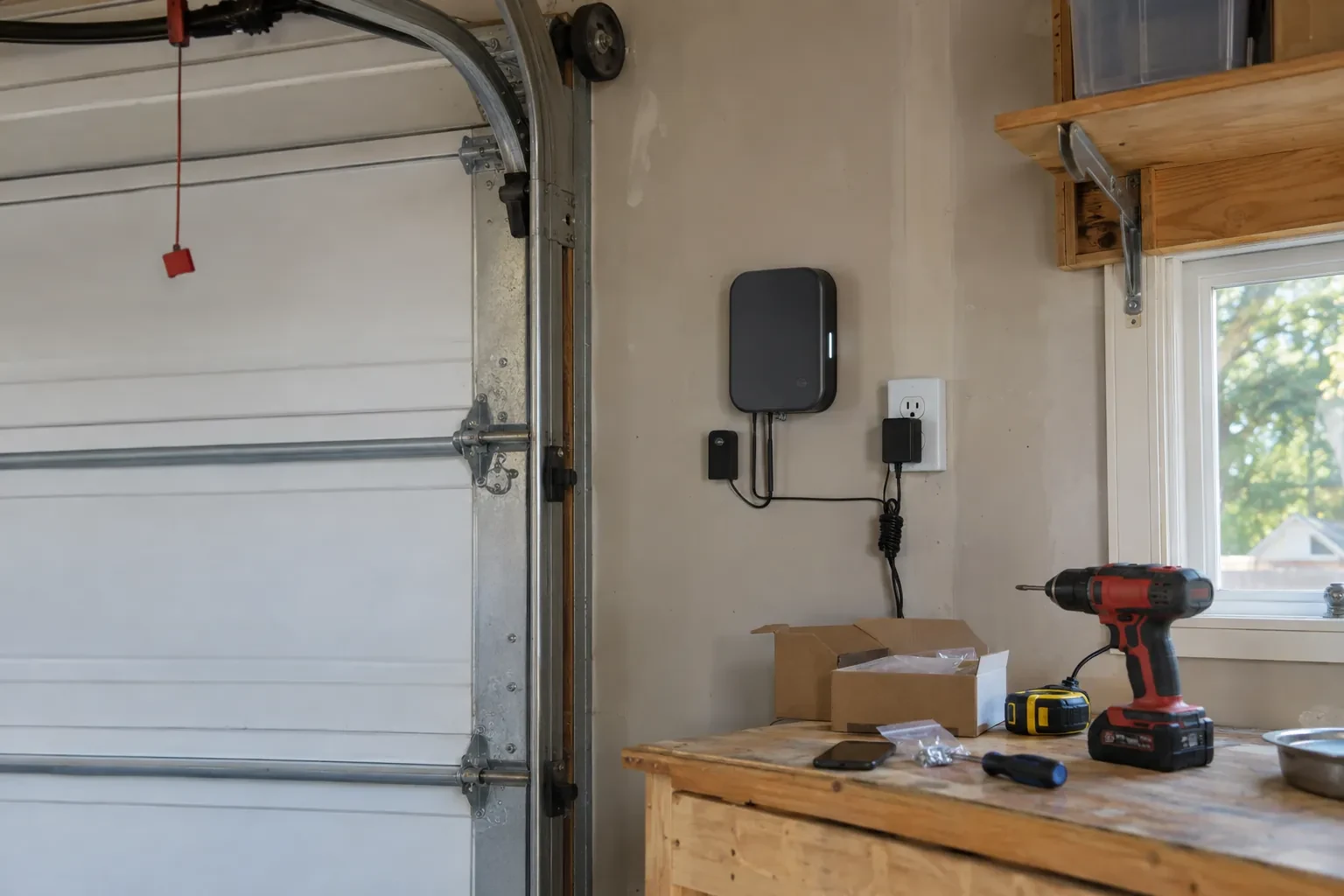
Each way of operating the door is tried in turn: the wall control, every remote the household uses, the keypad if there is one, and the lock or vacation button that disables the remotes. The technician checks that the wall control is mounted out of a small child's reach and within sight of the door, that batteries are fresh, and that the manual release cord hangs within reach with its handle intact and releases and re-engages the trolley cleanly. Any manual slide lock on the door is checked to make sure it is disengaged, since a door locked by hand while the opener is connected is a common cause of a bent rail.
Signs that call for a visit before the next scheduled one
A few things are worth a call the day you notice them: a door that hangs crooked or stops part-way; a cable that looks slack, frayed or wrapped where it should not be; a gap in a torsion spring coil; a door that suddenly feels heavy on the manual release; an opener that reverses for no reason after the photo eyes are wiped; or a deep dent, one from an impact, or one dragging in the track. In each case, leave the door as it is, keep people and vehicles clear, and use another door until it has been looked at. A small cosmetic dent that leaves the door running smoothly can wait for the planned appointment.
Garage Door Safety Inspection
In the van
Replacement hinge and track fasteners
Camera for findings
Spring and cable gauges
Tape measure and level
Inspection checklist and report form
Garage Door Safety Inspection
What affects the quote
Findings that change the scope on the day
If a stop-use item turns up, securing the door and explaining the correction takes extra time on the visit. That, and any work you approve, is quoted separately before it starts.
Distance to the property
Travel is part of every visit. A property across town and one at the end of a rural road involve different driving time, and the quote reflects the trip.
Access to overhead track or a locked mechanical room
Some tracks run behind storage or into a locked mechanical room, and reaching every bracket and fixture takes longer when a ladder or a key has to be found first. Clearing a path to the track ahead of the visit lets the inspection move through the whole door without interruption.
What to have ready
- Has a vehicle or anything else struck the door or the tracks?
- Is the door a single or a double, and roughly how tall is it?
- What make is the opener, and does it have sensors near the floor on each side?
Garage Door Safety Inspection: questions
QuestionsDoes winter change what you look for?
Yes, mostly at floor level. Months of slush and road salt reach the lowest hinges, the bottom brackets and the loop of each cable before anything else on the door, so those get a close look for rust. The technician also checks whether the bottom seal has been freezing to the slab, how the drive has coped with cold, stiff starts, and whether frost or salt film has been blinding the sensors near the floor.
My opener is old and has no photo eyes. Can it still be inspected?
Yes. Older openers rely on contact reversal alone, so the board test carries more weight and is run carefully against the maker's procedure, along with the manual balance check, the force setting and the release. The report records what the opener has and how it performed. An opener built before photo eyes became standard is flagged for replacement in the report, since makers recommend moving off that generation of opener rather than treating photo eyes as a nice-to-have.
Can I do these checks myself between visits?
The three owner checks, yes: the manual balance test from the closed position, the board test for contact reversal and the photo-eye test with a broom handle through the beam. Industry guidance recommends all three monthly. What stays with a technician is anything that involves loosening, winding or unhooking springs, cables, drums or bottom brackets, and any adjustment to the opener's force settings.
Related services
- Off-Track Garage Door ResetA delivery van backed into the shop's overhead door this afternoon.
- Garage Door Panel ReplacementA stray ball went through one of the window panes in the top section.
- Garage Door Bottom Seal ReplacementAfter a spring rain there is a puddle inside the door that reaches the tires.