Openers · Don Mills
Chain-Drive Opener Repair in Don Mills
The door opens about a third of the way and stops.
In plain words
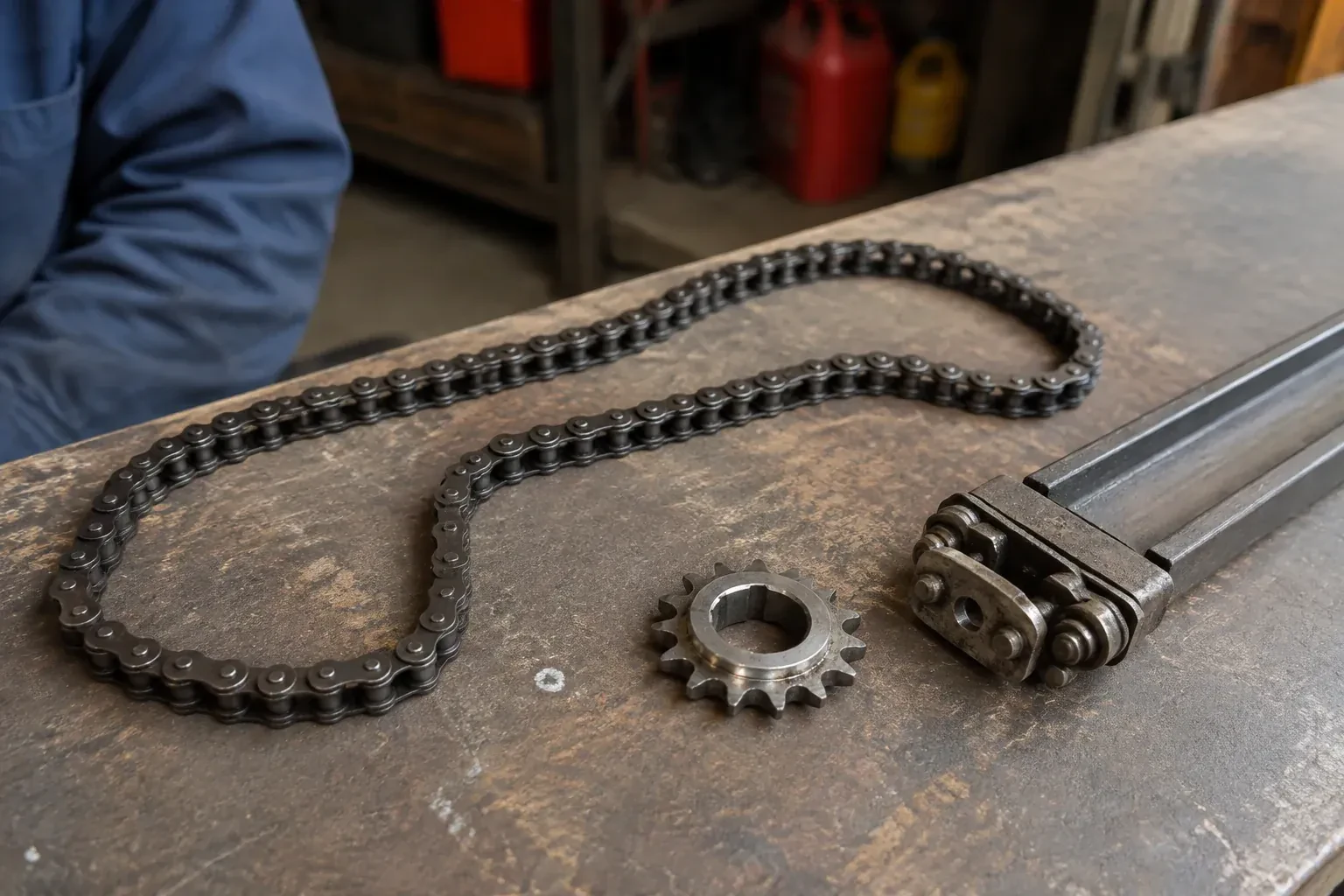
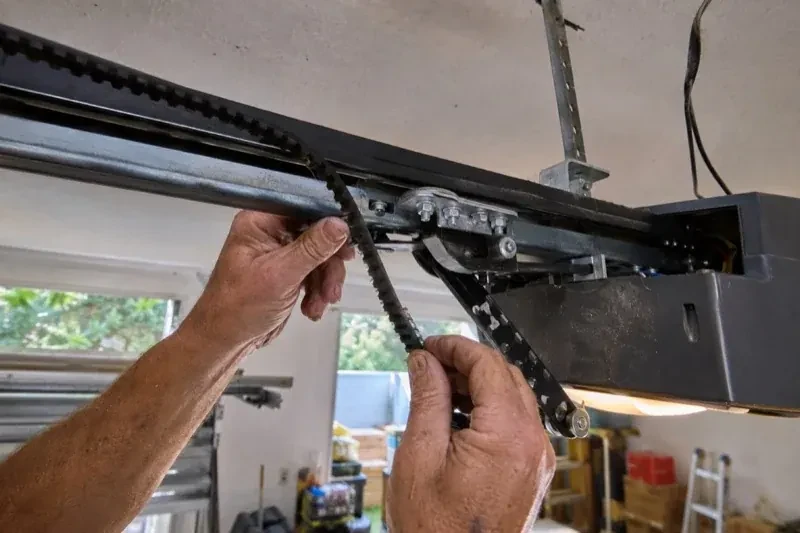
The trolley is the carriage that rides the rail carrying the door arm, and many chain-drive calls end there. If travel limits creep, the trolley runs onto the stop bolt at the end of the rail and the motor hums against it. If the chain was run off the sprocket, the trolley and the motor disagree about where the door is, and the door travels partway no matter how the limits are turned. The technician frees the trolley, puts the chain back in phase with the motor's closed position, resets the limits and confirms the release lever picks the door arm up cleanly.
How the visit goesPress the button and the opener hums for a second, then quits. The trolley is jammed hard against a bolt at the very end of the rail near the motor and will not budge in either direction.
Chain-Drive Opener Repair
How the visit goes
Trolley, release lever and the stop bolt
The trolley is looked at in two ways: where it sits and how it is wearing. With the door closed, the trolley should rest near the door end of the rail without touching the stop tab; with the door open, short of the stop bolt near the head. A trolley jammed against either stop explains a humming motor. The release lever is checked for a bent arm or a worn latch that lets the trolley slide past the door arm without picking it up. The technician also confirms the trolley and the motor agree about the door's position, since a chain that was run off the sprocket puts them out of phase and no amount of limit adjustment corrects that.
Resetting travel and force
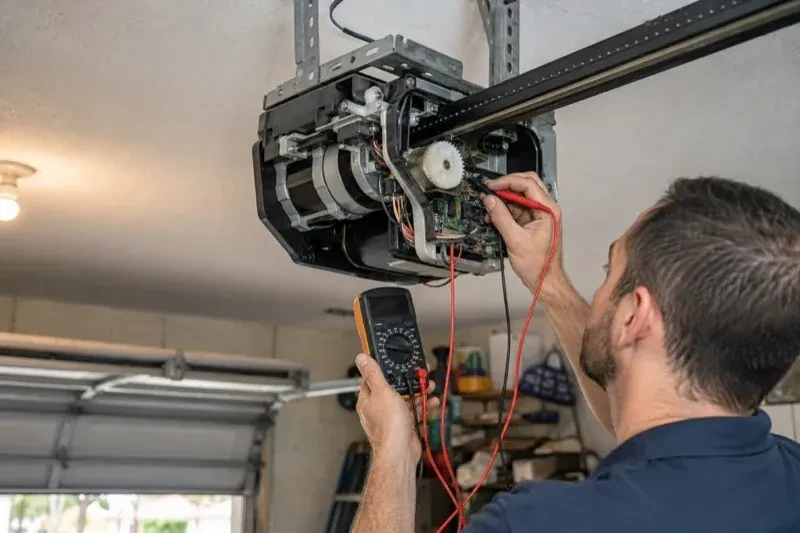
With the drive mechanically sound, the operator is taught the door again. On older heads, the up and down limit screws are turned with a flat screwdriver, each full turn moving the stop about 5 cm, until the door meets the floor with the seal lightly compressed and opens to full height without the trolley reaching the bolt. Force is set to the lightest level that moves the door reliably through a full cycle in the garage's normal temperature. Newer heads run a learn cycle from buttons on the back and measure both for themselves. The operator is then cycled several times to confirm the settings hold.
A record of the drive as it is now
Before leaving, the technician writes down what was found and what was fitted: the operator's model and age, whether the gear kit, sprocket, chain, trolley or rail hardware was replaced, the tension figure set, the limit and force positions, and the results of the reversal tests. The manual is hung near the wall control so the model's own instructions are at hand for the monthly tests. This note makes any future call a short conversation, tells a home inspector what has been done, and gives whoever owns the house next a clear picture of what is hanging over the car.
Chain-Drive Opener Repair
In the van
Sprocket and shaft assembly
Cold-rated garage door lubricant
Rail hangers and header bracket
White lithium grease
Motor start capacitor
Chain-Drive Opener Repair
What affects the quote
Rail hardware and hangers
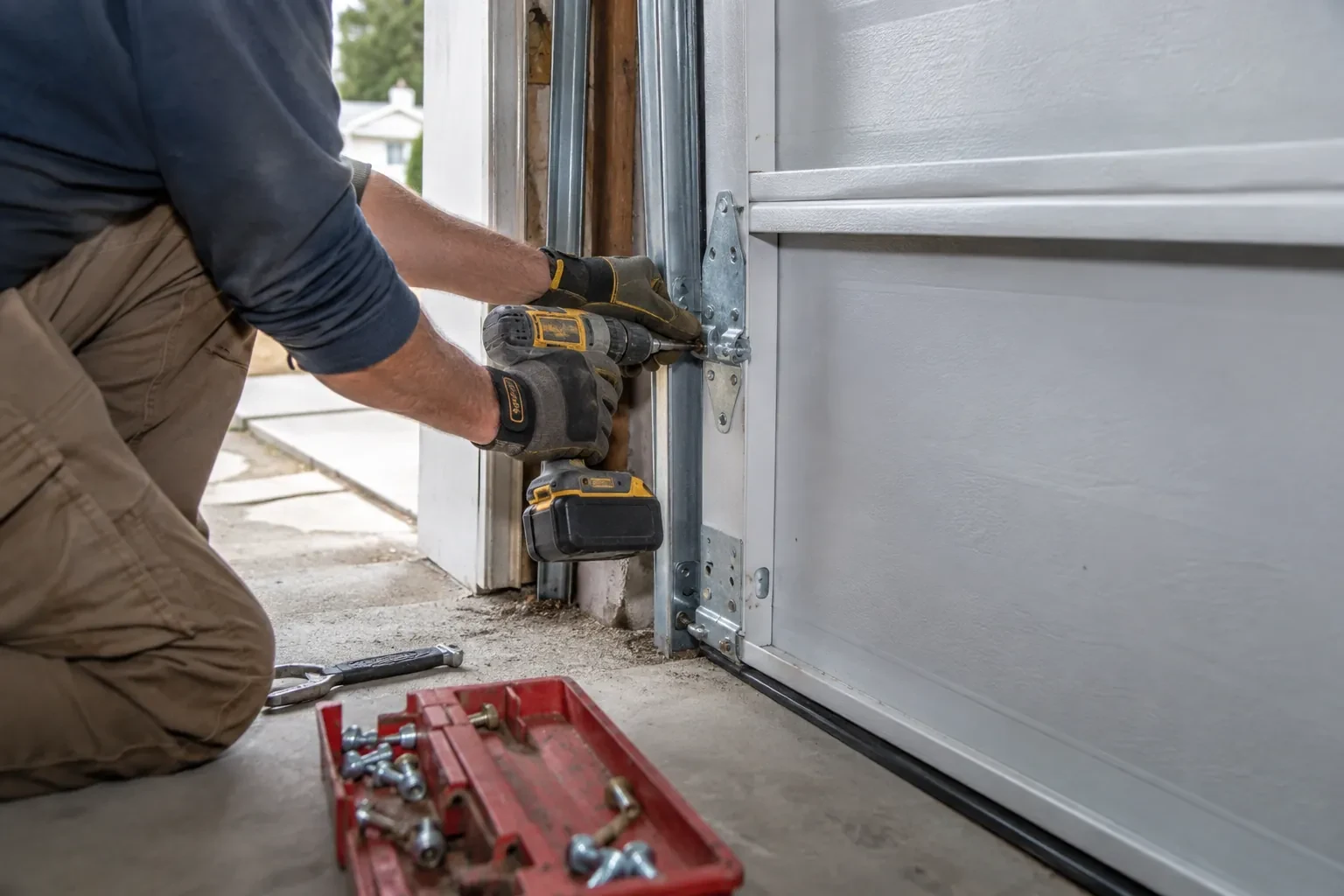
Loose hangers, a header bracket that has pulled from the framing, or splice plates that need renewing add fasteners, angle iron and time on the ladder to a job that might otherwise be an adjustment.
Ceiling height and access
A head hung from a high or cathedral ceiling, or a rail boxed in by storage racks, a lift or ductwork, takes longer to reach and work on than one under a standard joist with a clear floor.
The gear kit for your model
Drive gear, worm gear and sprocket shaft assemblies are made to fit a particular head, and the kit for an older or less common unit is a different item from the one for a current model.
What to have ready
- Is the chain hanging loose under the rail, or is it rusty or stiff?
- What make and model is on the opener's label, and roughly how old is it?
- Is the trolley stuck at the very end of the rail, near the motor or near the door?
Chain-Drive Opener Repair: questions
QuestionsHow much slack should the chain have?
It is a measurement, taken with the door closed and disconnected from the trolley. At the middle of the rail the chain should sit at the height the opener's own manual specifies for its rail shape, since the figure is not the same across makes. The two nuts on the trolley set and lock it. With the door reconnected and closed, some droop appears; that is expected as long as the measurement returns when the door is open.
Can you turn the force up so the door closes on cold mornings?
Force is set to the lightest level that moves the door reliably, and it is raised only a little for a cold garage. Turning it up further to overcome a heavy door or a seal frozen to the slab is not done, because too much force interferes with the safety reversal and can bend the top section. If the door is hard to move in the cold, the springs, rollers or the frozen seal are dealt with instead.
Should I use the slide lock on the door with a chain drive?
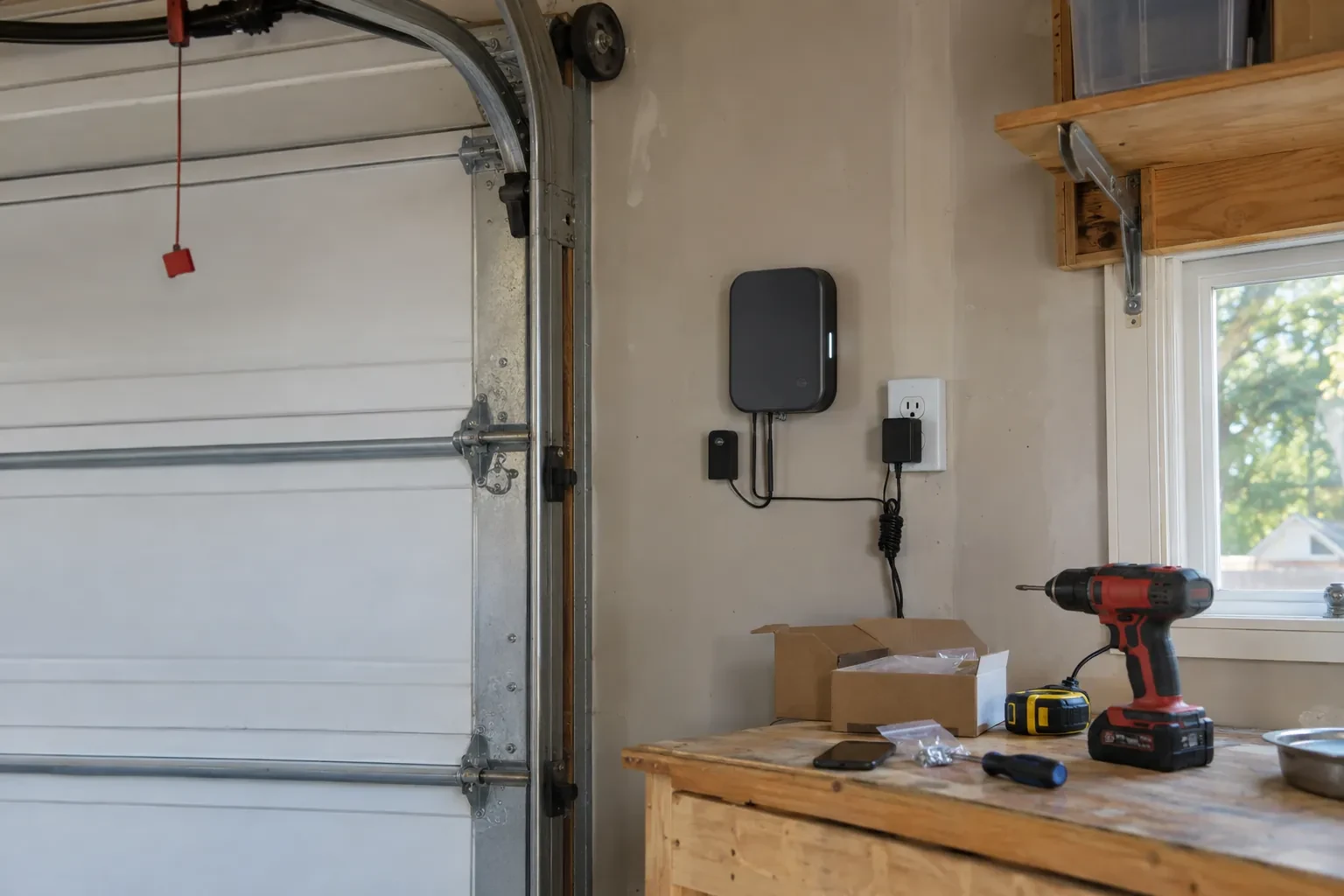
No. The manual slide lock on the door is disabled or removed once an operator is connected, and the technician checks that during the repair. A motor pulling against a locked door strains the chain, strips the drive gear and can bend the top section of the door. If you want the door secured against remotes, the lock button on the wall control switches them off, and a track lock designed to work with an operator does the rest.
Related services
- Belt-Drive Opener RepairIt is minus twenty in the detached garage and the door climbs in jerks, the belt stiff as a board.
- Garage Door Opener ReplacementDuring the ice storm the power was off for two days.
- Photo-Eye Sensor Alignment or ReplacementSomeone backed the car in a little too far, a bin or a bicycle brushed the track, and since then the door starts to close and comes back up.