Garage Doors in Victoria Village, OntarioQuiet doorsfor early risers.
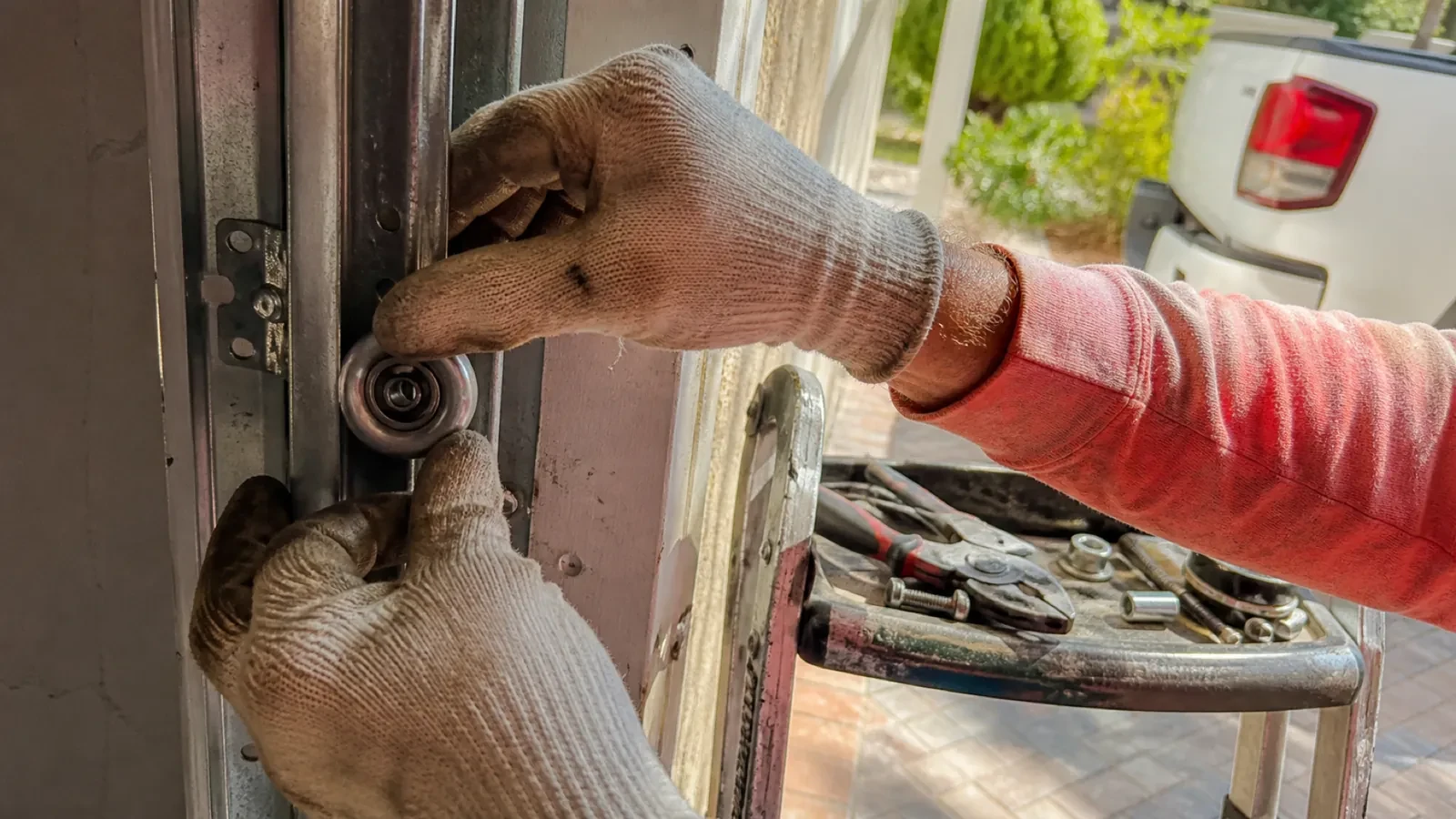
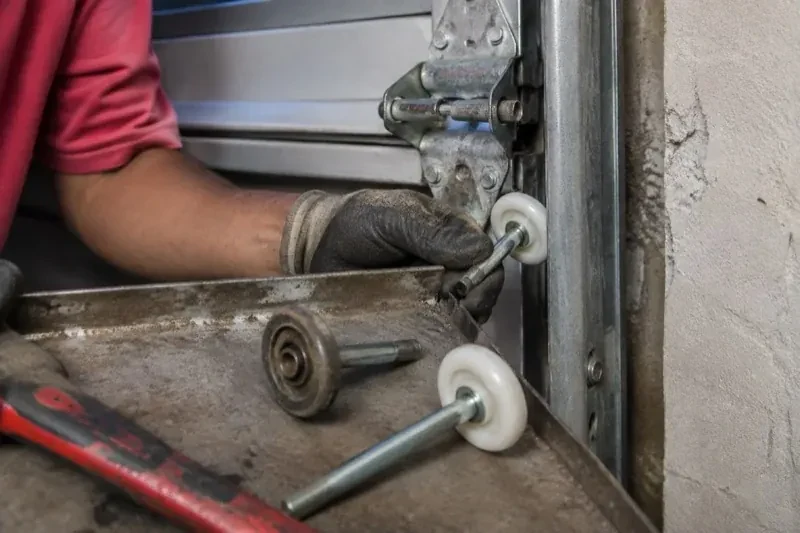
When the bedroom sits above the garage, every rattle at six in the morning is personal. For households in Victoria Village we track each sound to its source: dry rollers, a loose hinge, a chain that has stretched, an opener rail rubbing the ceiling. Fix those and the door becomes something you stop noticing.
When the bedroom sits above the garage, every rattle at six in the morning is personal. For households in Victoria Village we track each sound to its source: dry rollers, a loose hinge, a chain that has stretched, an opener rail rubbing the ceiling. Fix those and the door becomes something you stop noticing.
Safe for everyone who walks under it.
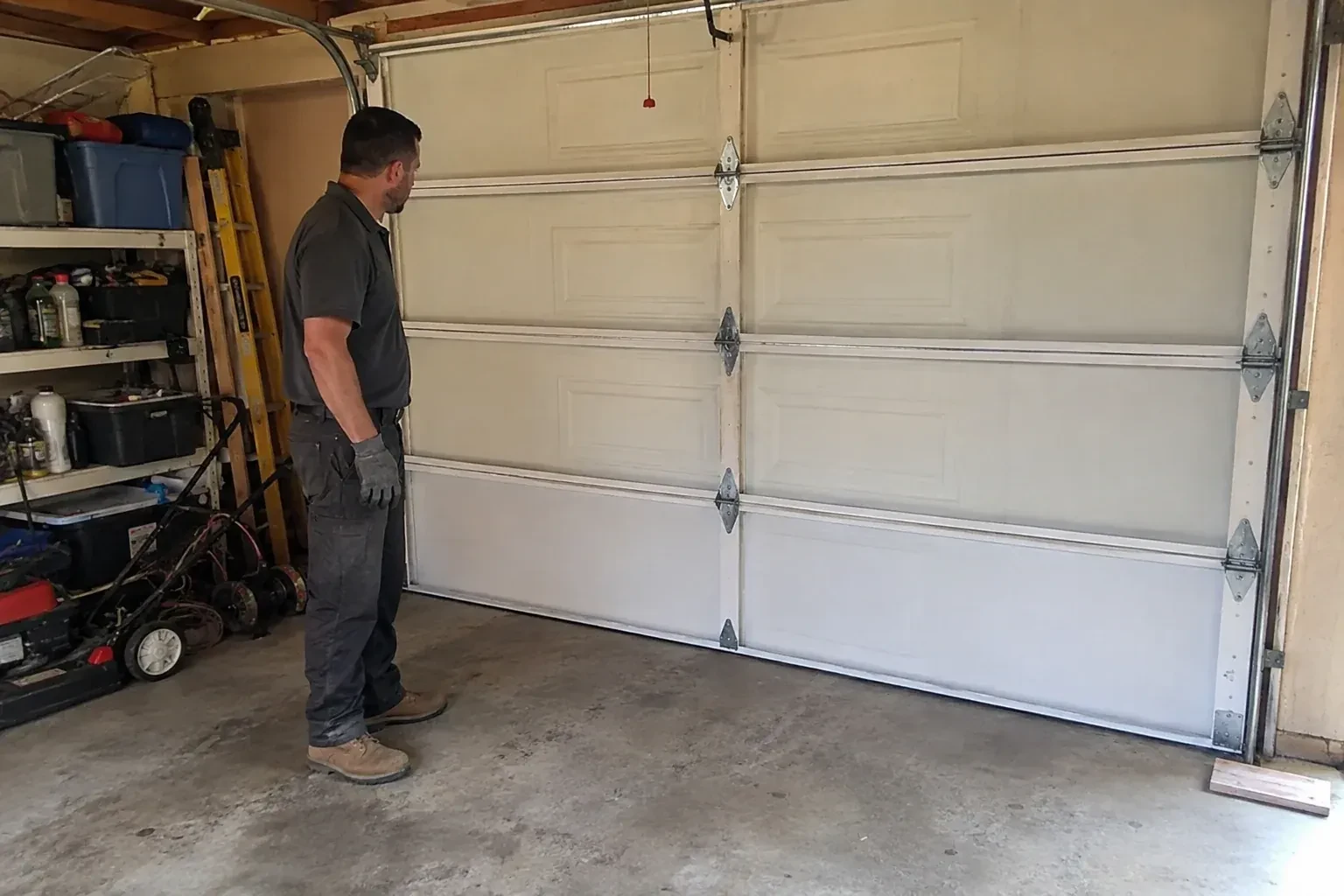
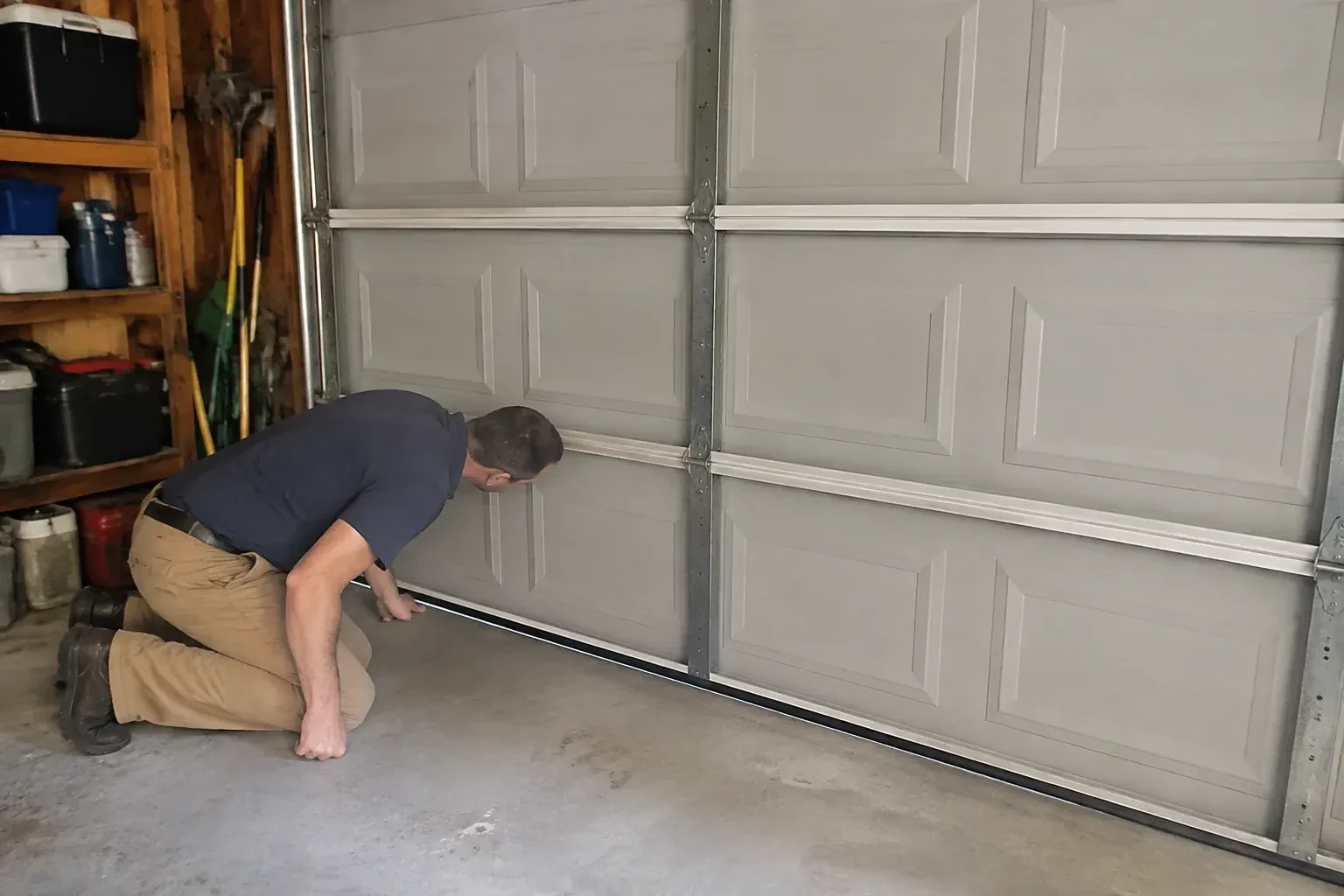
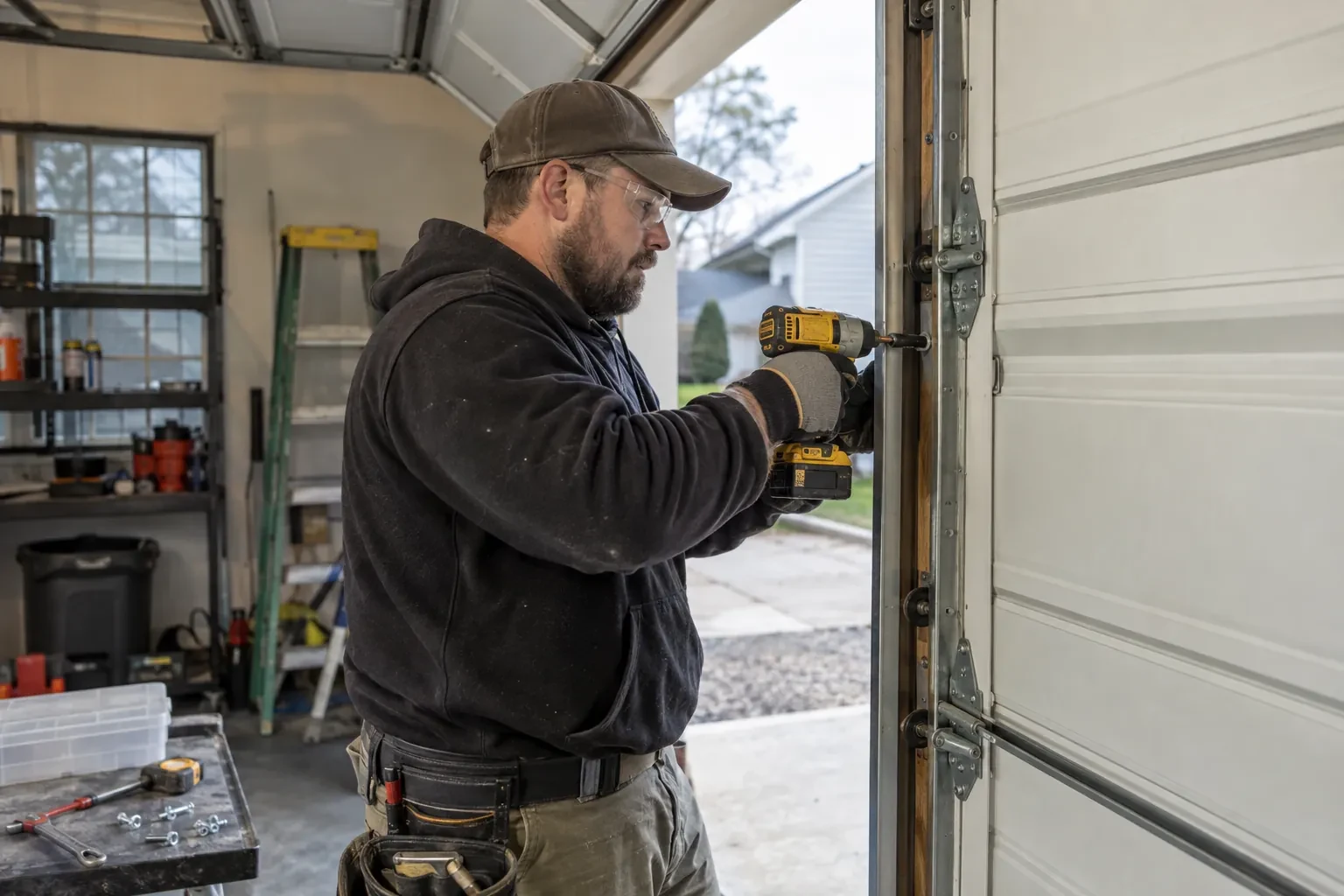
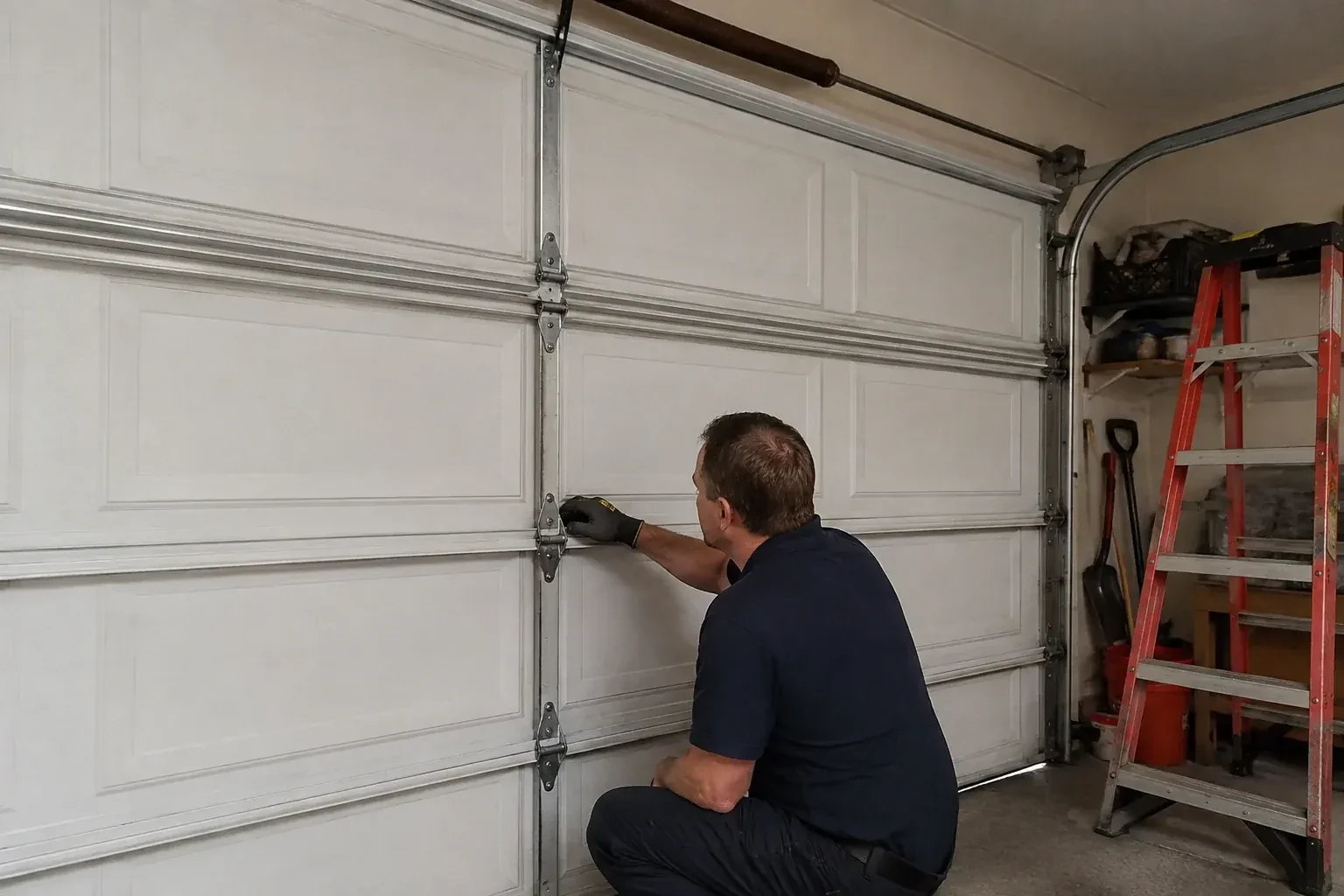
When you call about a garage door in Victoria Village, a technician comes to the house, looks at the whole door and tells you what he found before anything is taken apart. The cost is worked out on site from that assessment rather than guessed from a description, and the fee is the same whatever hour the visit happens to fall in.
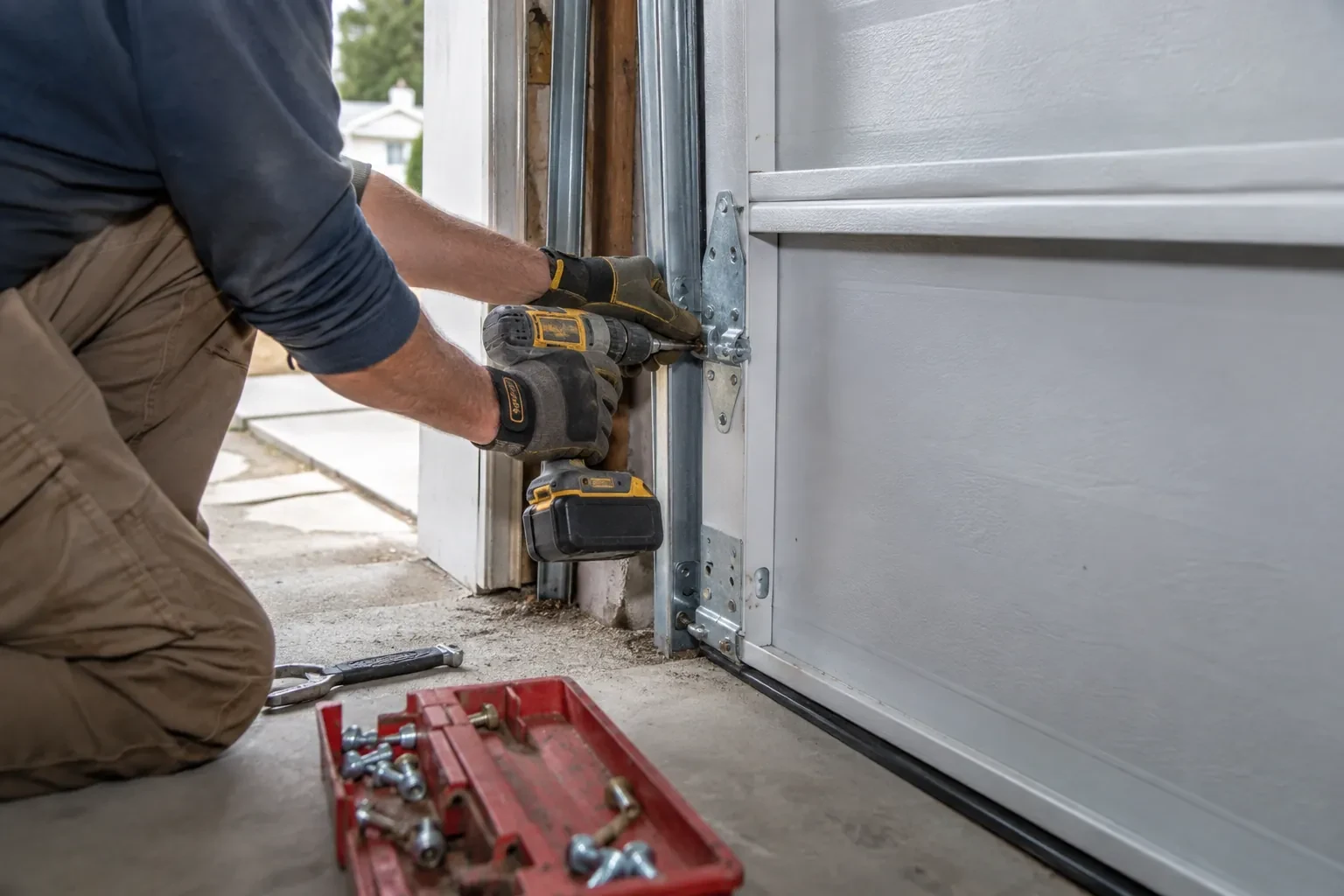
We keep Victoria Village on our regular route, which means a technician who knows the neighbourhood and a van that is stocked for the repairs we see there most often. Broken springs, loose cables, worn rollers, opener faults and failed sensors are all handled with care and explained in plain words. New doors and openers are installed with the same attention to detail.
31years in business
24/7open every day
Told before touched. Nothing is adjusted or replaced until you have heard what we found and agreed with the plan for it.
Neat work, neat exit. New parts fitted cleanly, old ones removed, the floor and door wiped down. The garage is yours again the moment we leave.
Room to choose. We give you the practical picture and step back. Repair now, plan a replacement, or wait and watch: your call.
Tell us what your door in Victoria Village is doing.
People in Victoria Village call about garage doors for many reasons, and we have a service for each: the door that stopped, the one that got loud, the one that lets in cold air, the remote that died, the panel that got dented, and the door that has simply had its day.
About 58% of homes in Toronto were built in 1980 or earlier, according to the 2021 Census.
Older homes
Where houses are older, the garage often sits beside the house rather than beneath a bedroom, so noise is a smaller concern and durability a larger one. Heavy-duty rollers, a properly sized torsion spring and cold-rated lubricant make an old door dependable for years.
Single-detached houses make up about 23% of homes in Toronto (2021 Census).
Apartment and condo buildings often have a single heavy door protecting the whole parking level, and when it stops, everyone is affected. We prioritise these calls, carry commercial operator parts, and set up a maintenance interval matched to the number of cycles the door sees each day.
Your toddler has discovered the wall button. You want to know, from someone who checks these things for a living, that the door will stop and reverse if a small person is under it.
After years of slushy winters the cables look thinner near the bottom brackets, with rust streaks running down the door where they attach. The door still works, but the frayed wires catch your glove when you brush past.
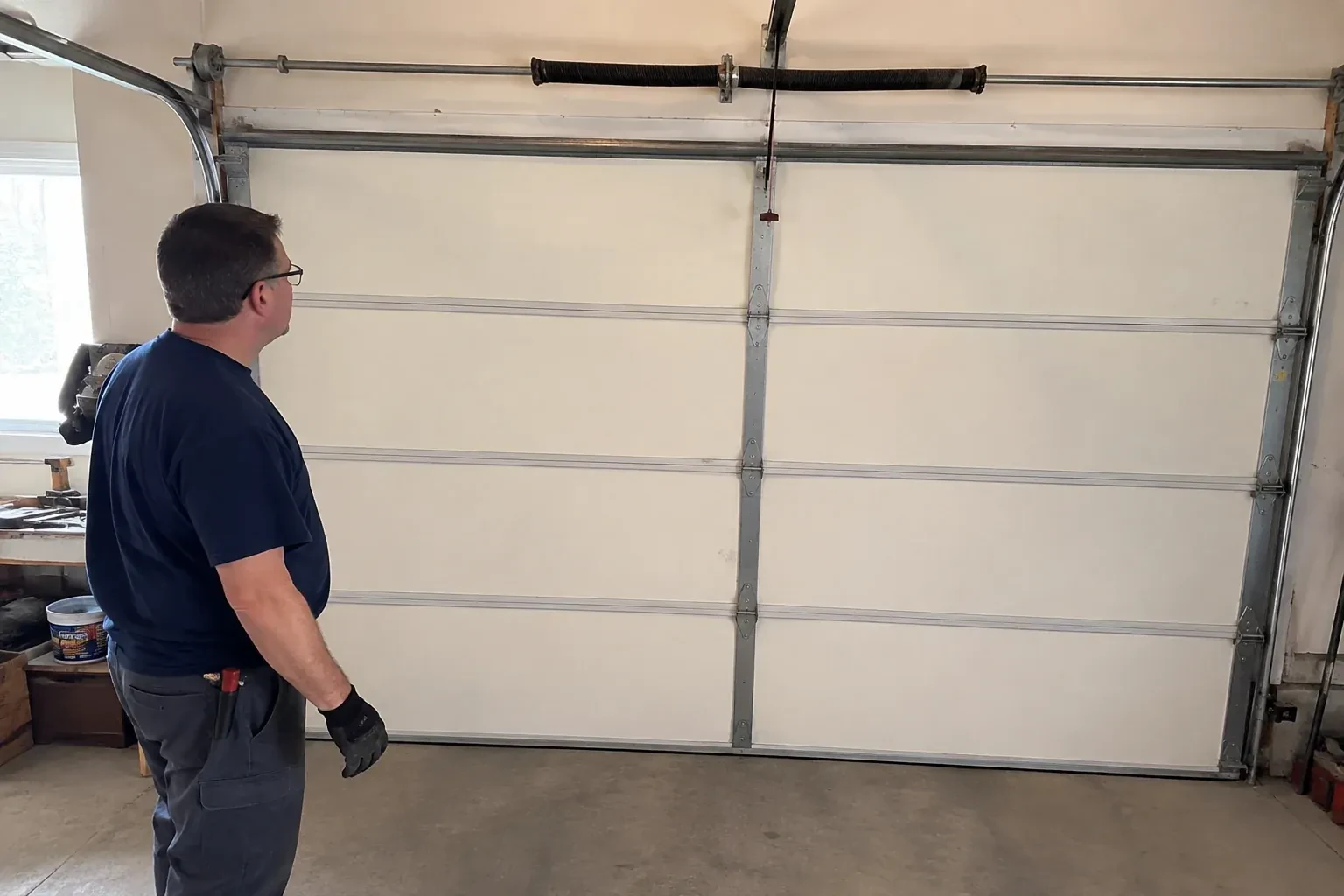
The door climbs with the left corner ahead of the right, then twists as it turns into the ceiling track. Looking up, the spring on the right side is stretched longer than its partner, with daylight showing between the coils.
It is minus twenty in the detached garage and the door climbs in jerks, the belt stiff as a board. By the afternoon, when the sun has been on the door, it runs almost normally again.
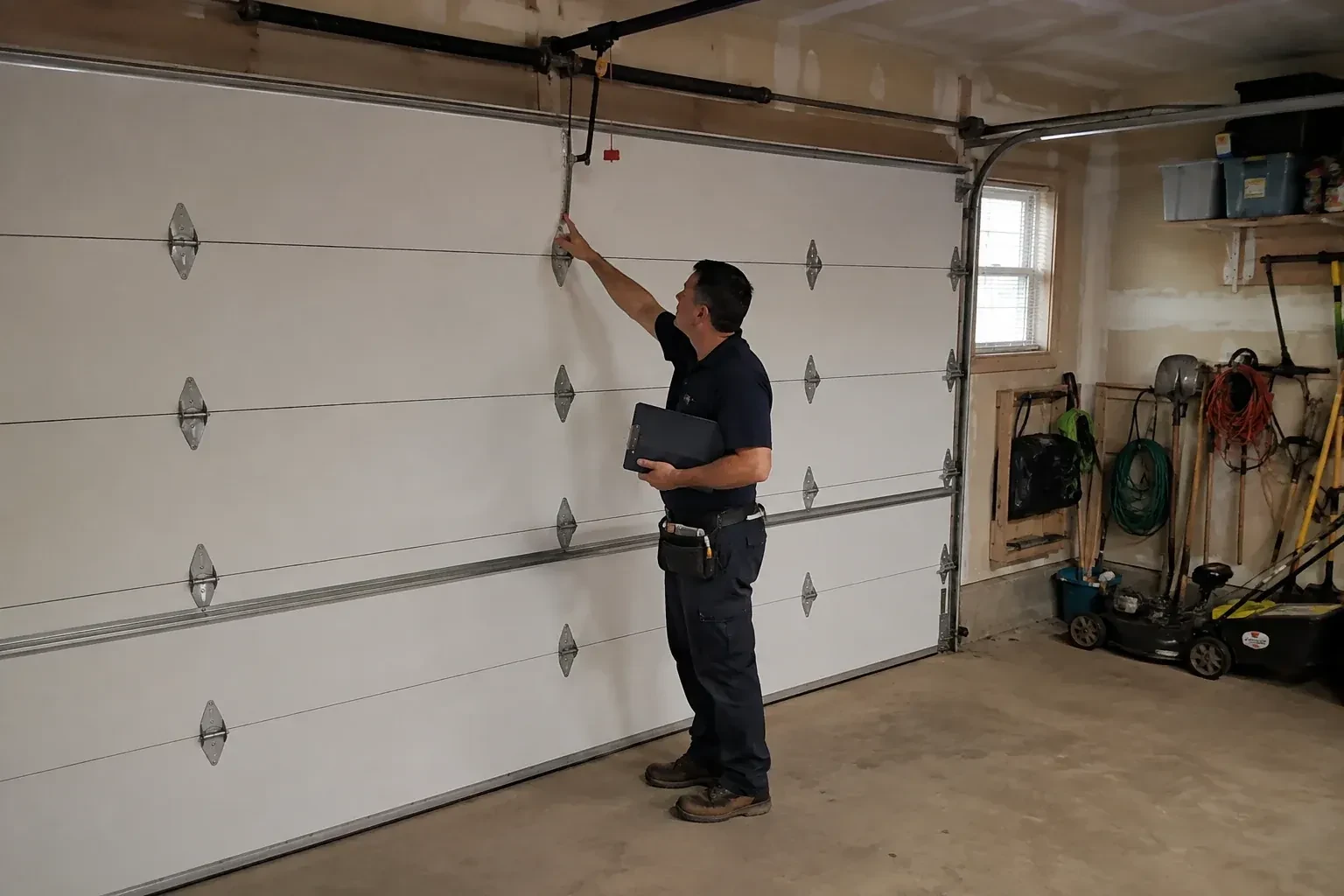
A previous owner knotted the release cord around the rail and stacked storage shelves right beneath it. You only discovered this in the dark, with the power off, a flashlight in your teeth and a car that needed to be somewhere.
Several sections are rusting along their lower edges, and one has begun to bow. The door still travels, but its tired panels, widening gaps and uneven finish now make the whole entrance look overdue for renewal.
Your building designer has supplied positive and negative pressure values for the garage opening. The old door was selected years ago without that documentation, so the next step is a replacement whose full configuration can be matched to those criteria.
Your garage door works, yet its broad plain panels feel disconnected from the brick, gables and entry details around them. You want the opening to contribute the warmth and character of the home's exterior.
Cold-weather moisture has frozen the bottom seal to the sill, and salty grit has collected along the guide entrances. The door chatters during its first cycle and leaves a visible gap after it reaches the closed limit.
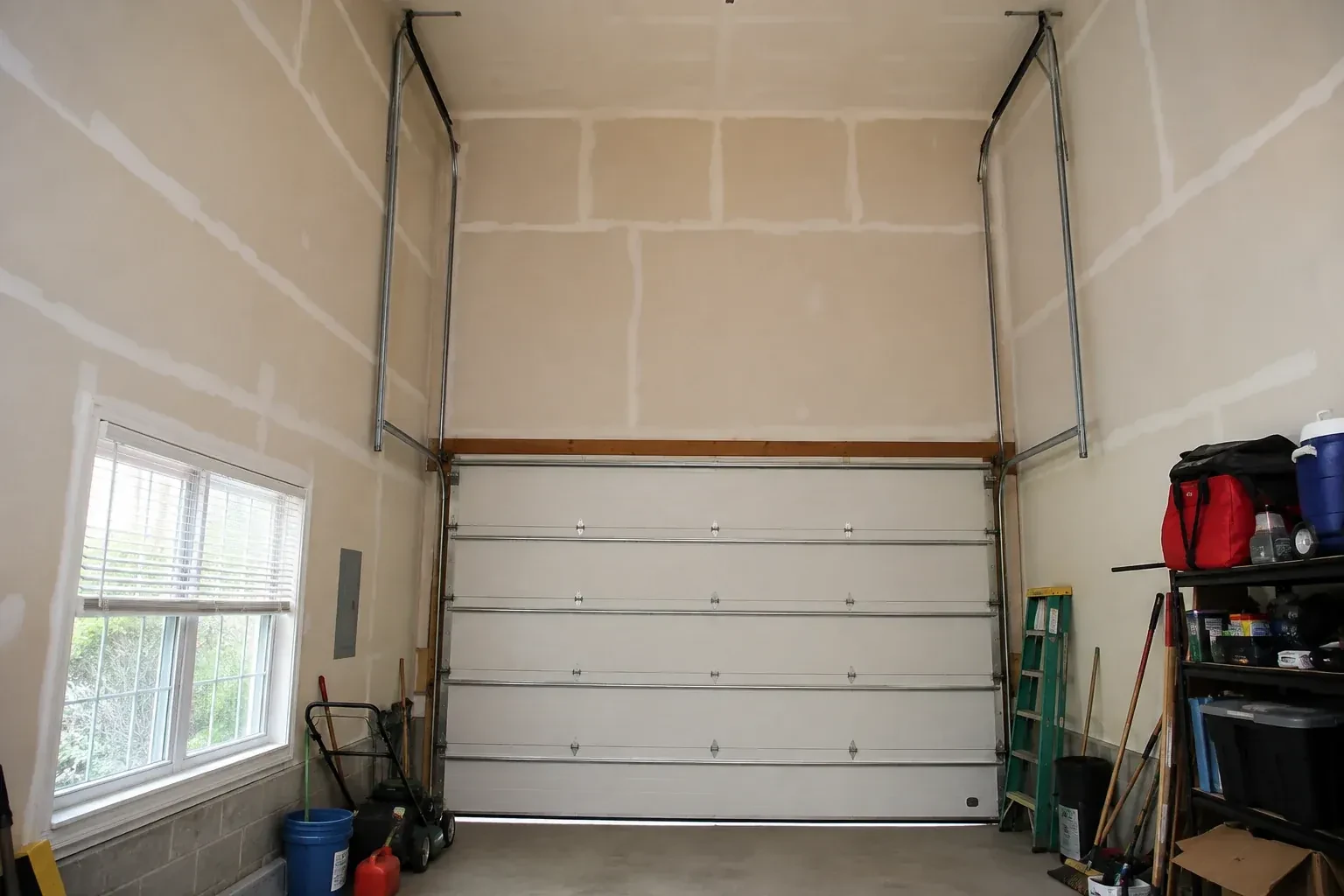
The garage has a tall ceiling, yet the horizontal tracks sit much lower than the lights and joists. That unused wall height makes the open door feel like a low shelf across an otherwise generous room.
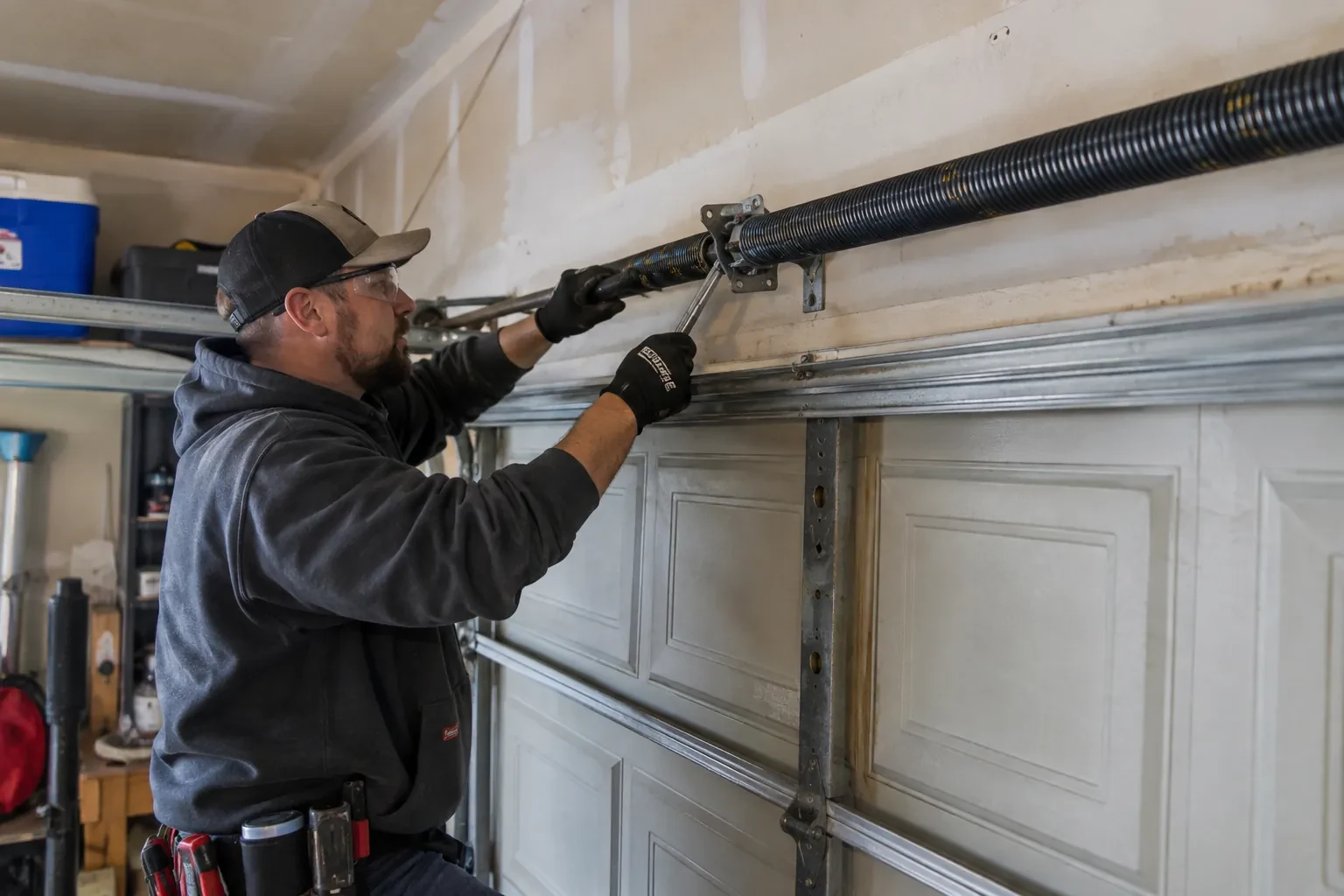
Every spring has a fixed number of open and close cycles in it, and a busy household uses them up sooner than a quiet one. When yours are worn, we fit replacements sized to your door and can suggest longer-life options for heavy use.
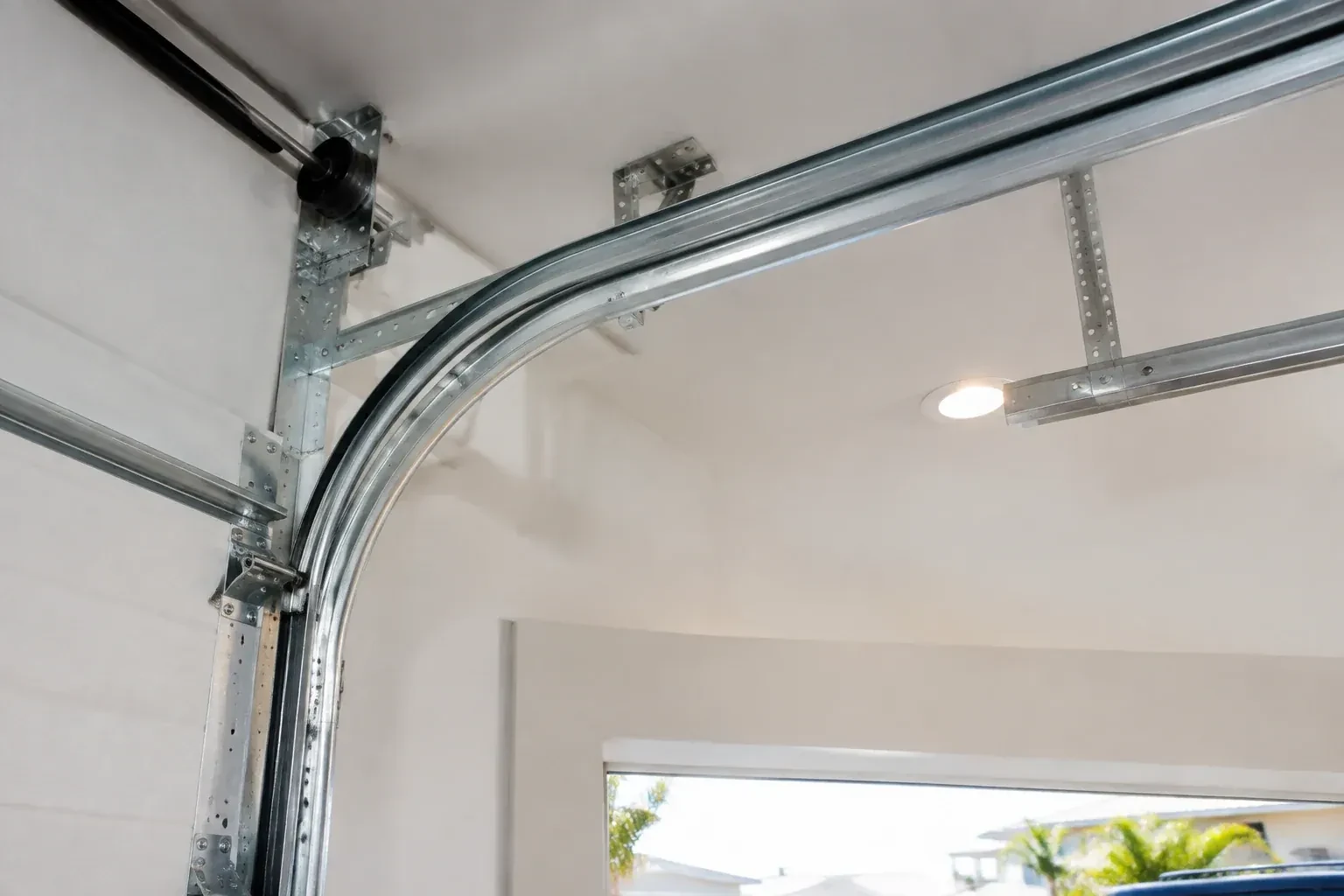
High-lift conversions raise the horizontal track toward the ceiling so the door opens higher, clearing a car lift or a tall truck. It is a change to the track, the drums and the springs, and it needs an opener that suits.
WhyThe operator standard for residential openers in this country asks for a manual release that is coloured red, easy to tell apart from the rest of the mechanism, and reachable from the floor, with the handle no more than about 1.8 metres up.
Several sections are rusting along their lower edges, and one has begun to bow.
WhyWhen permit drawings or a building designer specify wind criteria, the replacement is planned from those documents rather than from appearance alone.
Your garage door works, yet its broad plain panels feel disconnected from the brick, gables and entry details around them.
WhyA carriage look can be created with several constructions, including embossed steel, insulated steel with composite overlays, or wood components intended for sectional-door use.
Cold-weather moisture has frozen the bottom seal to the sill, and salty grit has collected along the guide entrances.
My opener is old and has no photo eyes. Can it still be inspected?
Yes. Older openers rely on contact reversal alone, so the board test carries more weight and is run carefully against the maker's procedure, along with the manual balance check, the force setting and the release. The report records what the opener has and how it performed. An opener built before photo eyes became standard is flagged for replacement in the report, since makers recommend moving off that generation of opener rather than treating photo eyes as a nice-to-have.
How do I tell a cable problem from a spring problem?
Look above the door with it closed. A torsion spring that has broken shows a clear gap in the coil, and both cables usually go slack together because nothing is turning the shaft. A cable problem tends to show on one side only: a frayed length, a coil of loose cable, or one corner sitting higher. Either way the technician inspects both, since a weak spring is a common reason a cable fails.
Do the pulleys need replacing at the same time?
Often, yes. Each side has two pulleys, one on the spring and one fixed at the front of the track, and the cable rides over both on every trip. A pulley whose wheel has worn a sharp groove, or whose bearing has stiffened, drags on the cable and adds load the spring has to overcome, which is a common reason the old spring wore early. Pulleys that spin freely and run true can stay.
Is a belt drive harder to repair than a chain drive?
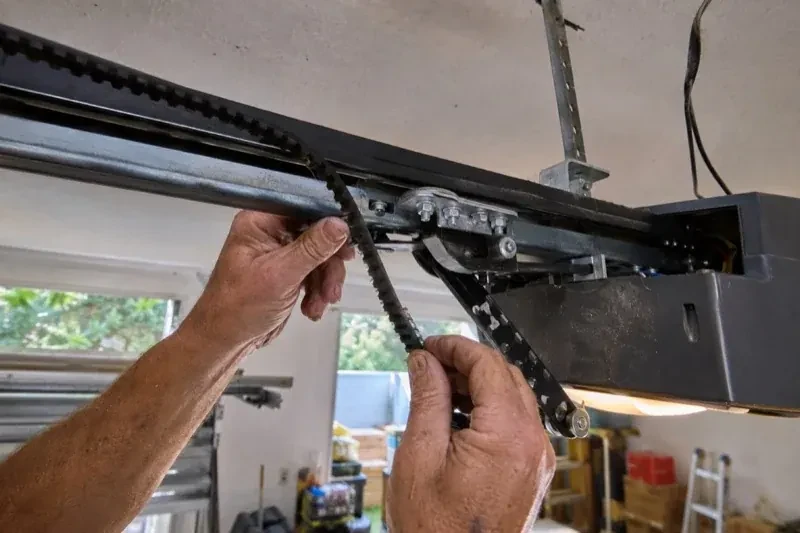
No, just different. The belt is lighter, runs dry and is replaced as one length with a clip, where a chain has links and takes grease. The tensioning at the trolley works the same way on both, and the sprocket, idler and trolley are similar parts. What a belt drive rewards is care with tension and a straight rail, because it is chosen for quiet and shows any fault as noise.
The door is stuck shut, the opener is dead and there is no other door. Can you still get in?
Usually. If the door has an outside key release, a small round lock near the top panel, that is what it is for: the key pulls a cable that frees the trolley from outside so the door can be lifted by hand. If there is no such release, the technician has other methods to reach the lever from outside, and once inside the fault is dealt with. Fitting an outside release afterwards is a sensible follow-up for a garage with a single door.
Will a new door help reduce drafts?
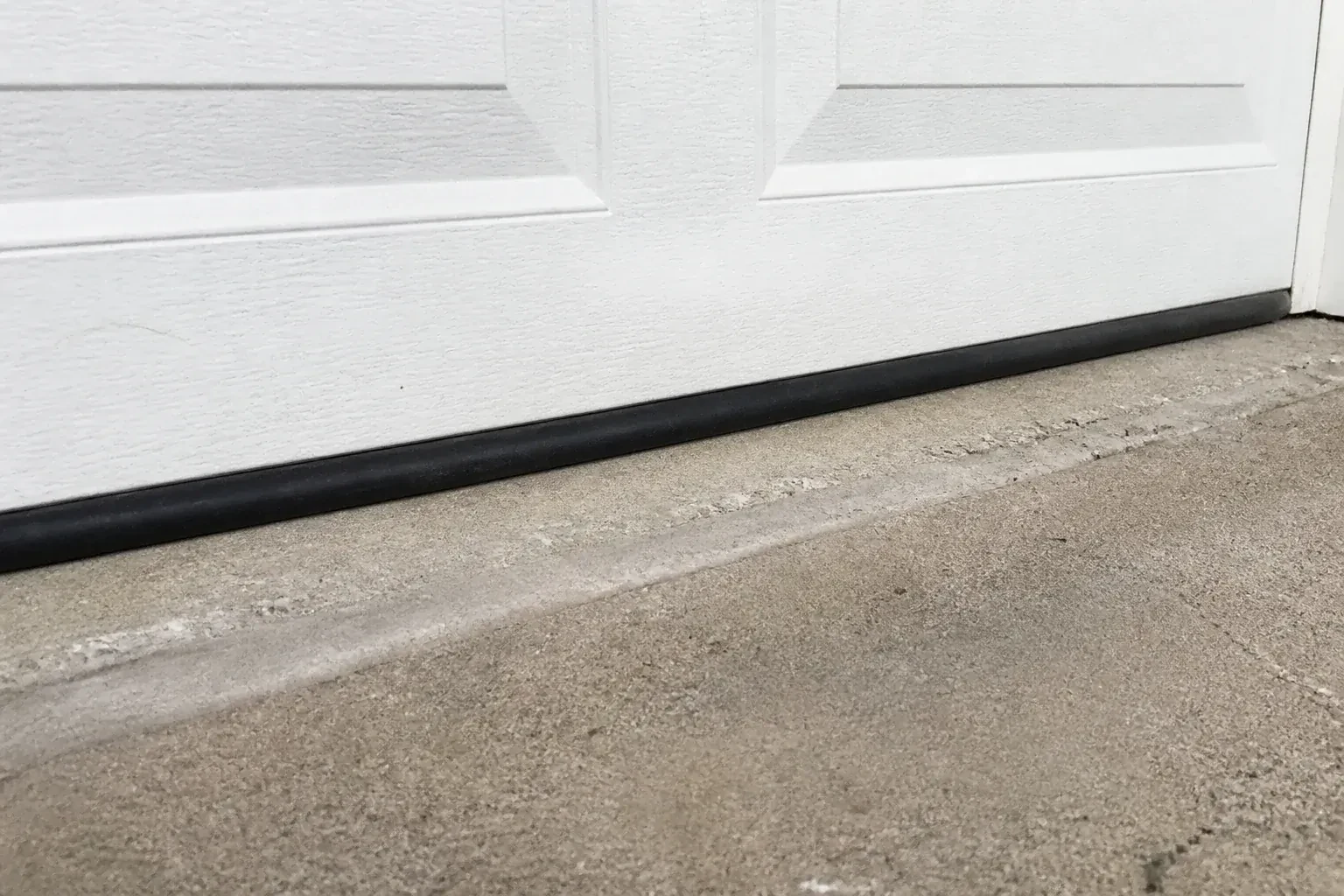
A properly fitted replacement can improve the boundary through fresh perimeter seals, a new bottom astragal and straighter section joints. The survey also checks whether the slab is uneven or the opening is out of square, since those building conditions affect contact. Seal selection is therefore paired with measurements rather than treated as a universal cure.
Can a similar-looking hinge or roller be substituted later?
Appearance is not enough to establish equivalence. Metal thickness, strength, hole pattern, roller stem length, bearing design, and fastener placement can differ in ways that affect both movement and structural performance. Future service should use the door record and applicable component guidance to match parts, preserving the intended arrangement instead of relying on a visual comparison.
What happens if the garage floor is not level?
The survey measures the variation and determines how the bottom section and seal can meet it. A flexible astragal can accommodate modest changes, while a pronounced crown, dip or damaged threshold may call for related floor or threshold work. The door itself is installed level for reliable travel; the sealing approach is selected separately to follow the practical shape of the floor.
Why is there a grinding or clattering sound near the hood?
Noise at the head can come from worn barrel bearings, loose brackets, misaligned drive chain or sprockets, shifting slats, an uneven coil or hardware contacting the hood. The pattern matters: once per revolution suggests something different from continuous guide scrape. Controlled observation locates the source before a specific part is selected.
How much ceiling height does the conversion need?
There is no single ceiling figure because the useful dimension depends on the opening height, desired clearance, track transition, shaft and spring space, opener arrangement and nearby obstructions. A technician measures the whole bay and calculates the high-lift rise that fits those boundaries. The result should be expressed as a proposed open-door clearance before the component set is ordered.
Request a visit
When you call about a garage door in Victoria Village, a technician comes to the house, looks at the whole door and tells you what he found before anything is taken apart. The cost is worked out on site from that assessment rather than guessed from a description, and the fee is the same whatever hour the visit happens to fall in.