Openers · Toronto
Garage Door Opener Diagnosis and Repair
The door goes up perfectly.
In plain words
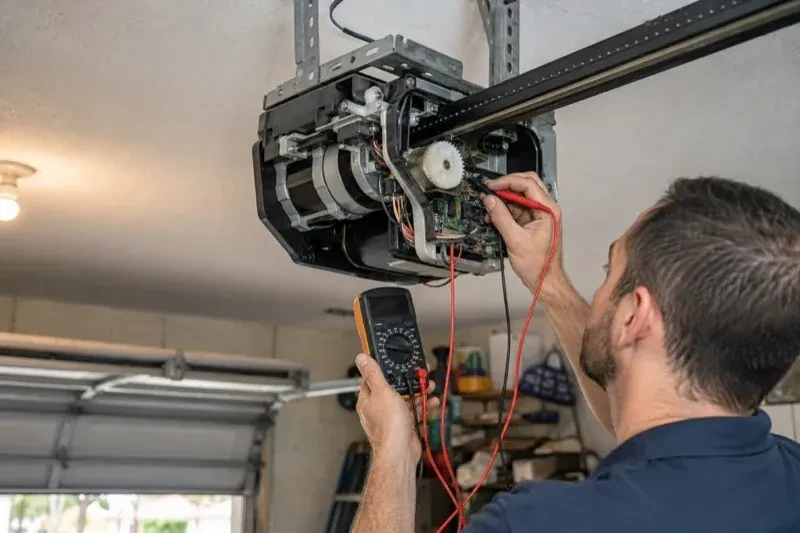
Most openers built in the last fifteen years report their own trouble. When something is wrong the head unit blinks its lights in a count, an up arrow and a down arrow flashing in a pattern, or a status light repeating a number. Each pattern has a meaning on the maker's chart for that model: a sensor circuit open, no motor movement detected, too much force needed to close. The technician reads the pattern, checks it against the model, and confirms it with a hands-on test rather than trusting the light alone. Older units without codes are diagnosed by ear, by meter and by hand.
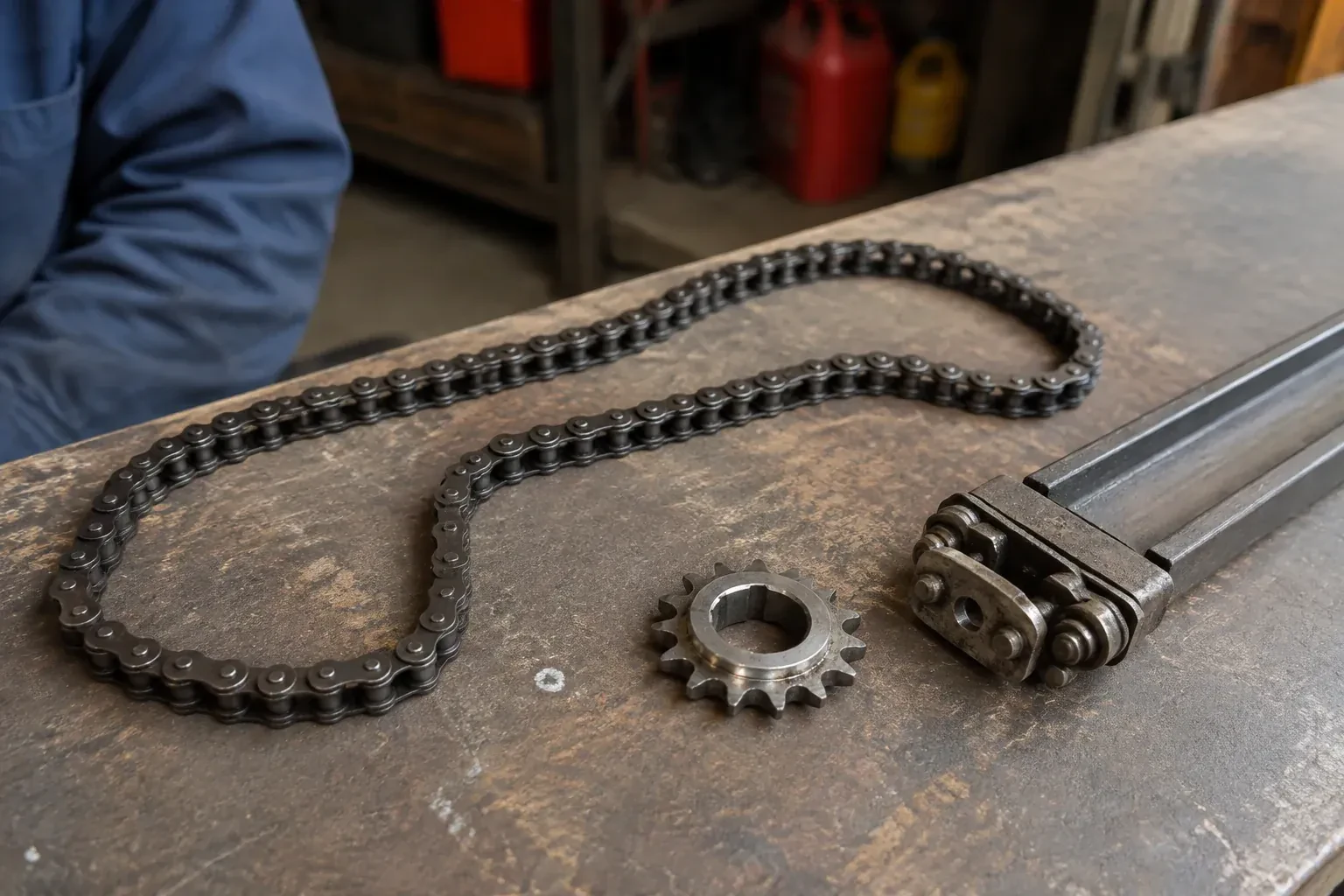
How the visit goesFor a few days there was a grinding sound whenever the door started moving. Now the motor spins freely and the door stays exactly where it is. On the hood of the car there is a scatter of white plastic shavings that fell from the unit above.
Garage Door Opener Diagnosis and Repair
How the visit goes
The two small eyes near the floor
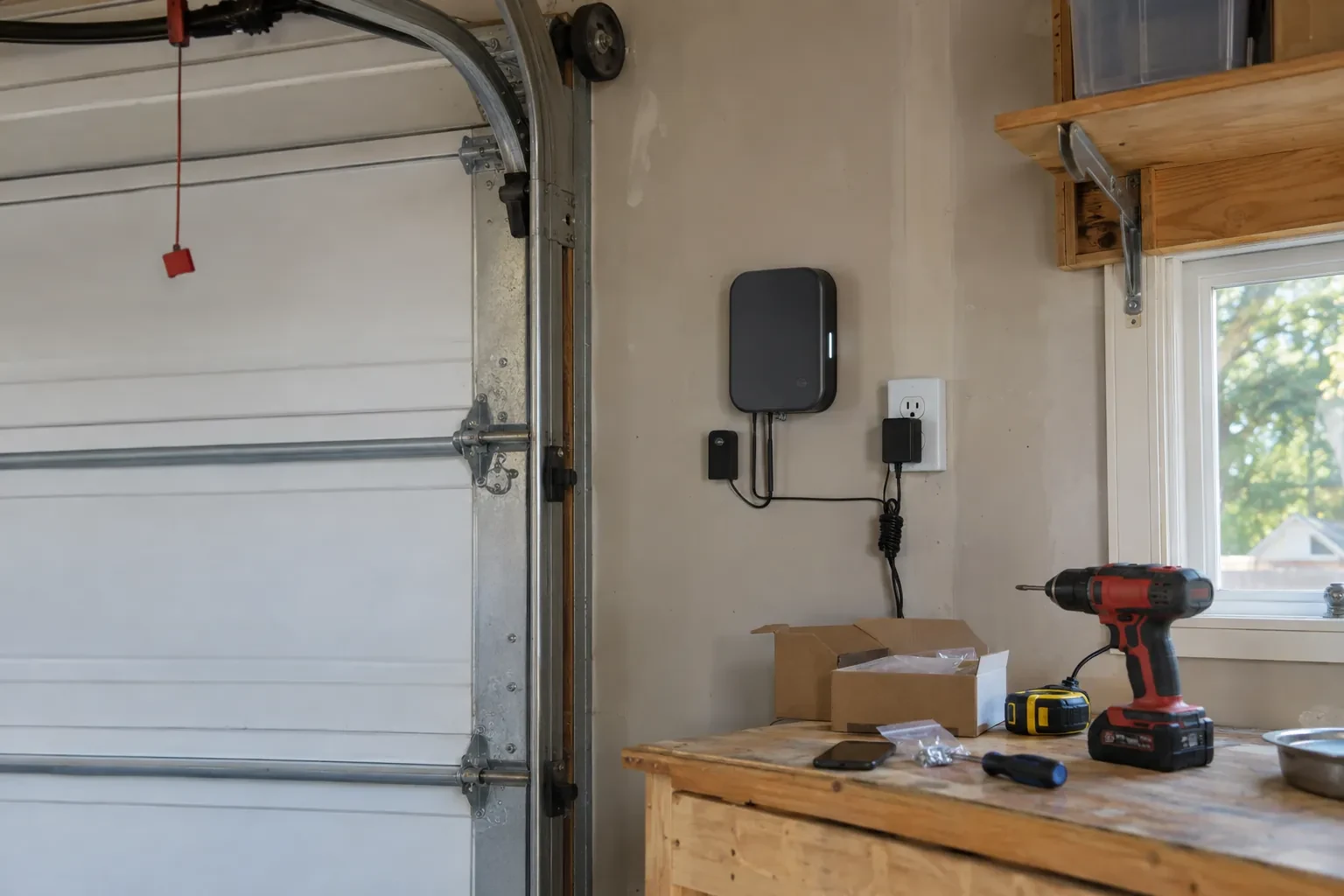
The photo-eye sensors are inspected together with their wiring. Each sensor carries a small indicator; a steady light on both means the beam is aligned, while a flicker, a dark light or one that goes out when the bracket is nudged points to misalignment, a loose mount or a damaged wire. The technician sights along the beam, looks for obstructions, cobwebs, frost and low sun on the receiving lens, checks that the sensors sit no higher than about fifteen centimetres off the floor, and traces the wire back to the head unit for staples, kinks and chew marks. Sensor faults are the single commonest reason a door refuses to close.
Setting travel and force, then proving them
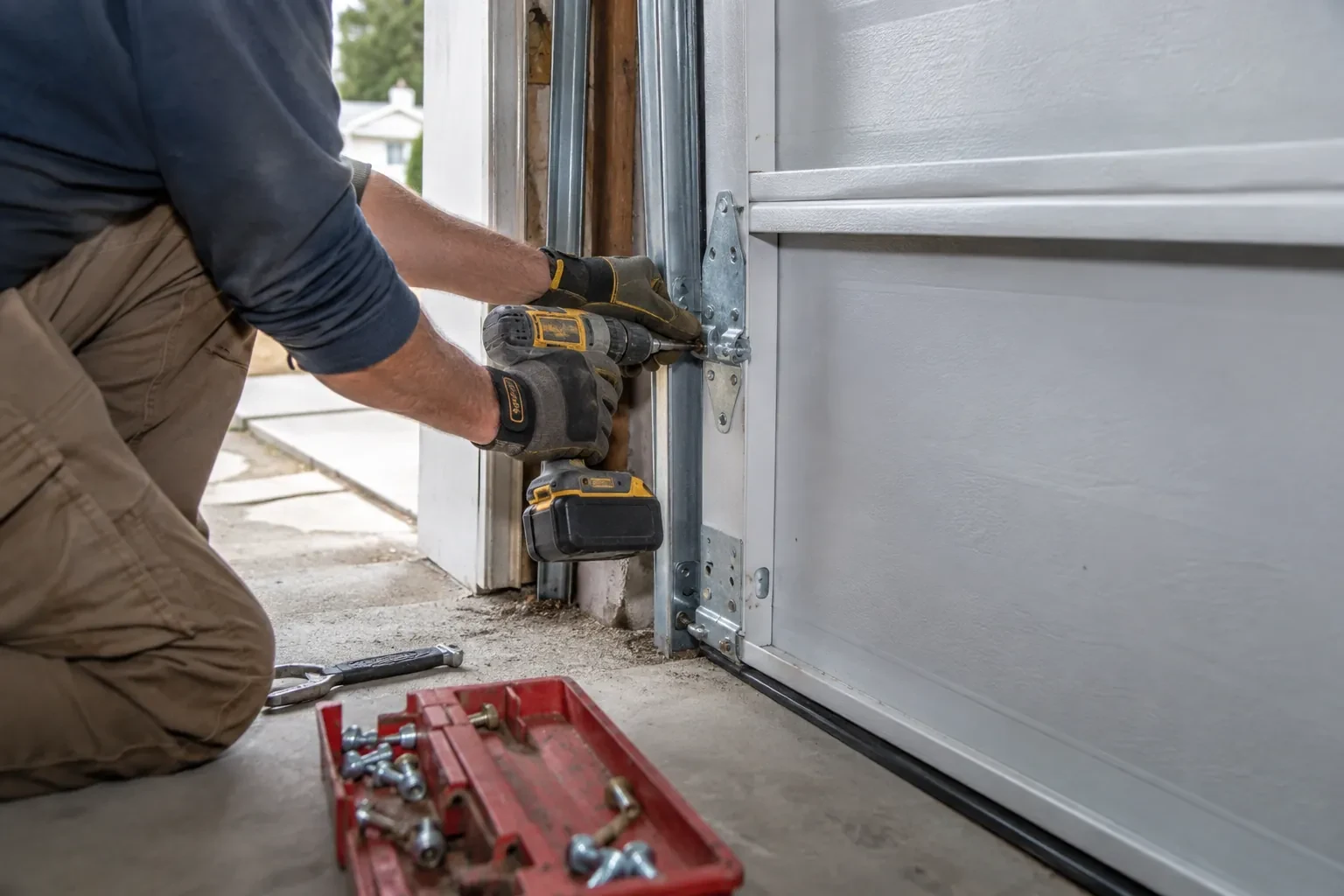
Once the mechanical cause is dealt with, the opener is set up as if newly installed. Travel is adjusted so the door seals gently on the floor without hammering the slab and stops at the top clear of the header. Force is set as low as will reliably move the door through a full cycle in the current season, never higher. Then the door is closed onto a 2x4 lying flat on the floor and must climb back to open the moment it touches; and while closing again, a broom handle is passed through the beam and the door must stop and rise. Failing either means the setup is redone, not accepted.
Remotes, codes and who can reach them
Your controls are left tidy. Every remote is programmed and tested, the keypad code is one you chose, and you know which coin or cylinder cell each device takes. You know what the wall control's lock button does and how to tell when it is on, so a visitor cannot strand you by pressing it. Remotes are kept away from children, and the wall control sits about a metre and a half up, in sight of the door and away from moving parts. If your opener connects to a phone app, that link has been checked and the account is in your name.
Garage Door Opener Diagnosis and Repair
In the van
Start capacitor
Wall control
Garage door lubricant
Transformer and board fuse
Remote batteries (coin and cylinder cells)
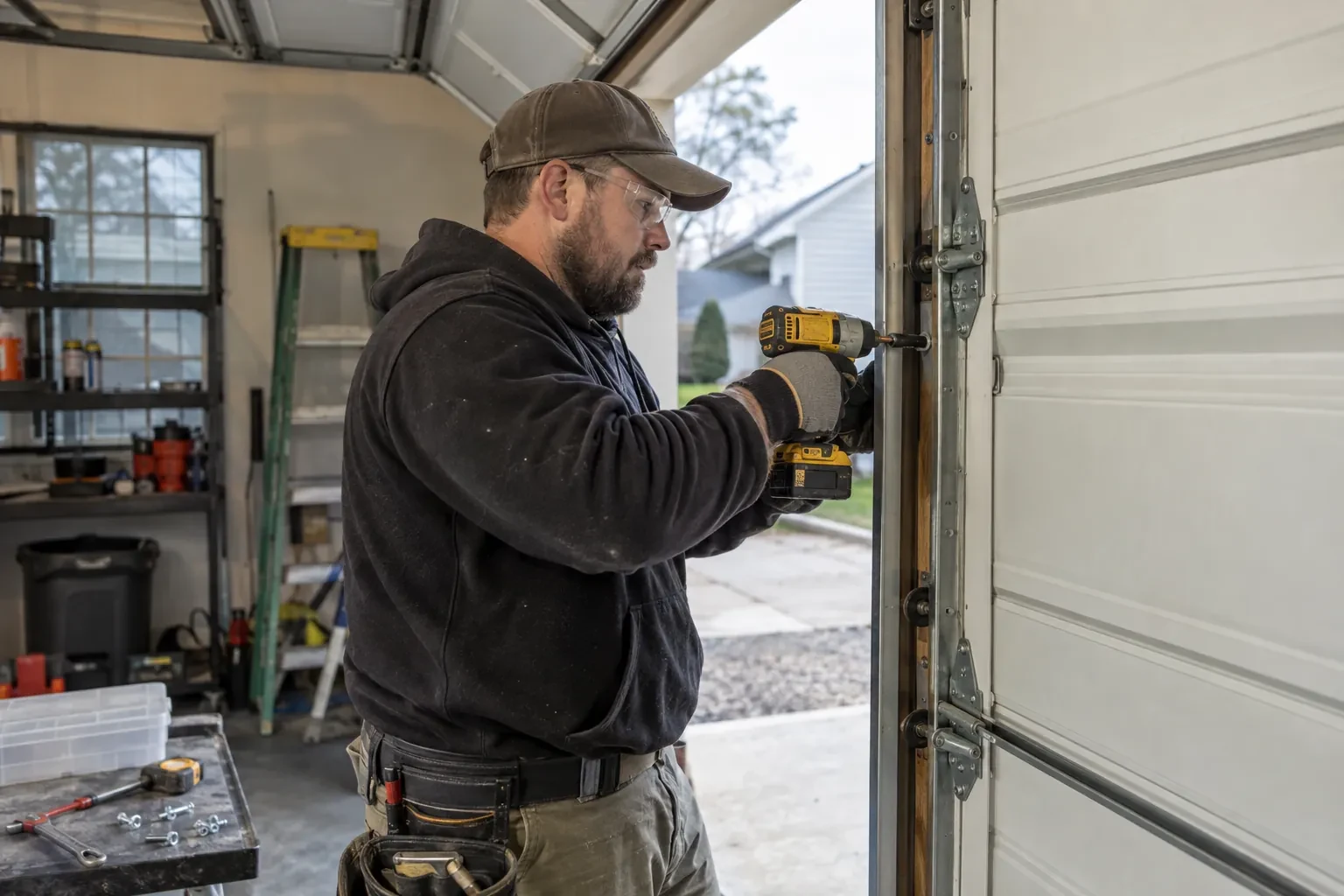
Garage Door Opener Diagnosis and Repair
What affects the quote
Condition of the mounting
A rail that has sagged, a header bracket pulling out of the wall, or ceiling angle iron that has loosened must be re-secured before the opener is set up, and that hardware work is itemized.
Age and model of the unit
Parts availability is checked by exact model and part number rather than assumed from age, since some units even from the last two decades already have a board or component discontinued with nothing to replace it. Sourcing a part, or replacement instead, shapes the quote.
Wiring to be re-run
Damaged low-voltage wire to the sensors or the wall control is replaced along its whole length and clipped clear of the track, so the distance and route from head unit to door frame affect the time.
What to have ready
- Is the door quieter or noisier than it used to be, and where is the sound coming from?
- Roughly how old is the opener, and is the model label readable?
- Is the door stuck open or stuck closed right now?
Garage Door Opener Diagnosis and Repair: questions
QuestionsWhat is the red cord for, and is it safe to pull?
It is the emergency release that disconnects the door from the opener so you can move it by hand, for instance during a power outage. It is safe when used with the door closed. Pulling it with the door open is the risk, because an unbalanced door can then drop. Pull straight down, lift the door by its handle, and reconnect afterwards by running the opener or lifting until the trolley clicks back in.
Will the repair happen during the same visit?
When the cause is a common part carried on the truck, yes: capacitors, gear kits, sensor pairs, trolleys, wall controls, remotes and wiring are typical. When the part is specific to an older model and has to be ordered, or when the diagnosis finds a spring or cable problem that needs its own appointment, the door is left safe and the next step is agreed with you before the technician leaves.
My opener has no photo eyes. Can it be kept in service?
Openers without an external sensor date from before 1993, when photo eyes or an equivalent device became part of the operator standard. The door industry's own inspection checklist and consumer safety regulators both recommend replacing such units rather than repairing them, because the contact-reversal feature alone is a weaker protection for anyone or anything under the door. A diagnosis on one of these units usually ends with a replacement recommendation, explained plainly.
Related services
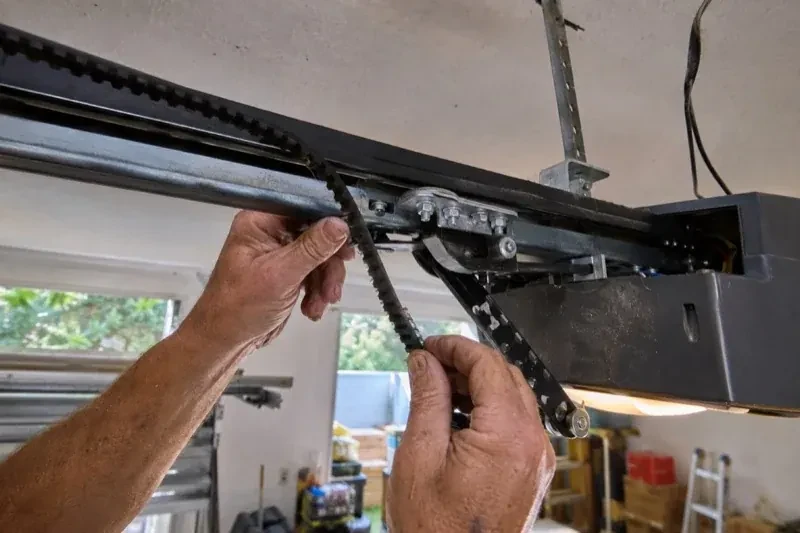
- Belt-Drive Opener RepairIt is minus twenty in the detached garage and the door climbs in jerks, the belt stiff as a board.
- Garage Door Opener ReplacementDuring the ice storm the power was off for two days.
- Photo-Eye Sensor Alignment or ReplacementSomeone backed the car in a little too far, a bin or a bicycle brushed the track, and since then the door starts to close and comes back up.