Springs · Toronto
Garage Door Cable Replacement
Someone left the snow shovel leaning in the opening and the door came down on it.
In plain words
Which counterbalance your door has shapes the job. Torsion doors carry a spring on a shaft above the opening, and the cables wind onto grooved drums at each end; the technician winds the spring down with steel bars, swaps the cables, sets the drums and winds it back up. Extension doors, common on older detached garages, run the cables over pulleys beside the horizontal tracks with a spring stretched behind each; here the door is opened and clamped so the springs relax, then the cable is threaded, adjusted at its clip and checked against its containment cable. Either way, the service ends with a balanced door.
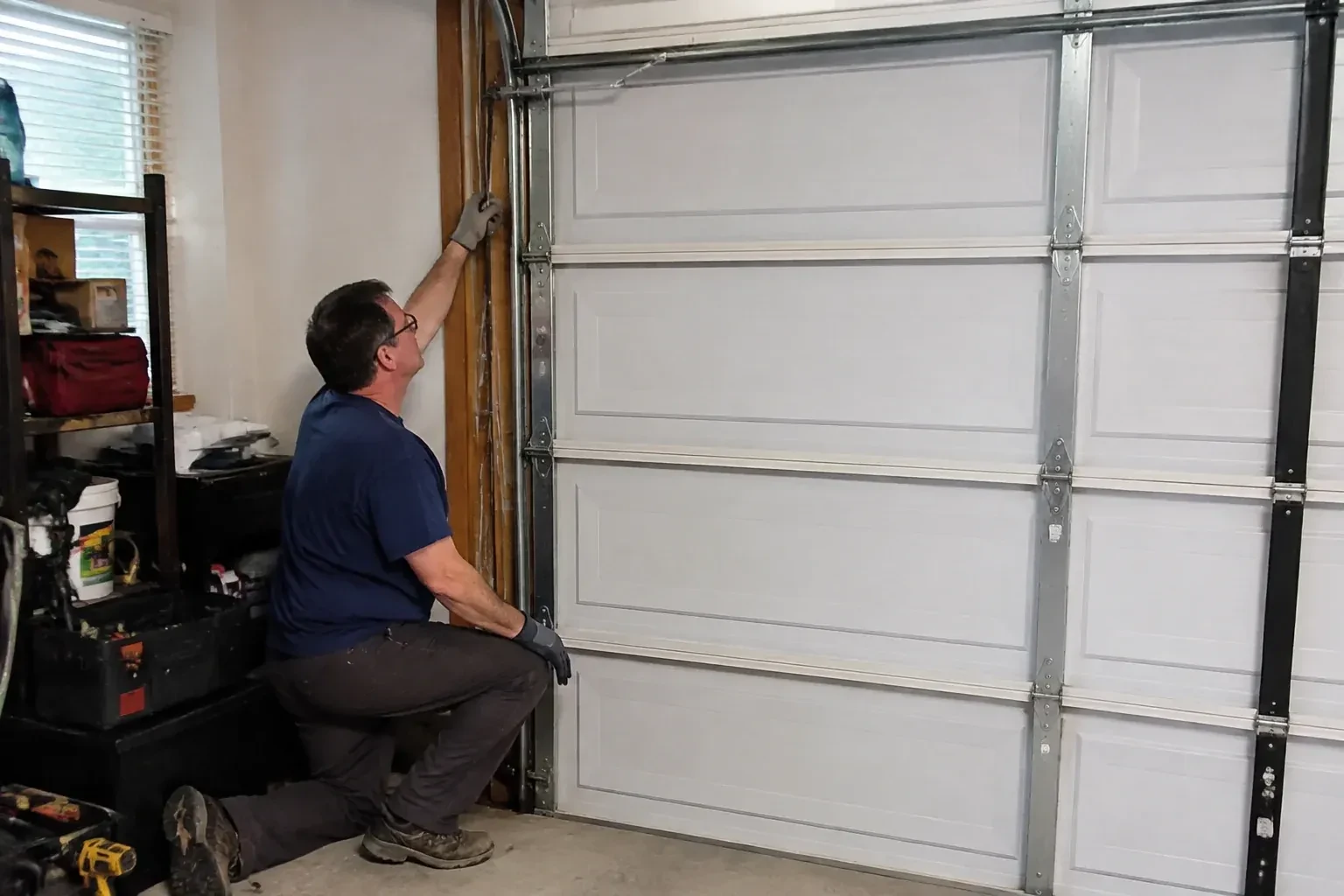
How the visit goesStanding inside with the door closed, you notice the cable on the right side near the floor has gone fuzzy. A handful of broken wires stick out like a bottle brush and the steel underneath is brown.
Garage Door Cable Replacement
How the visit goes
Making the door safe to work on
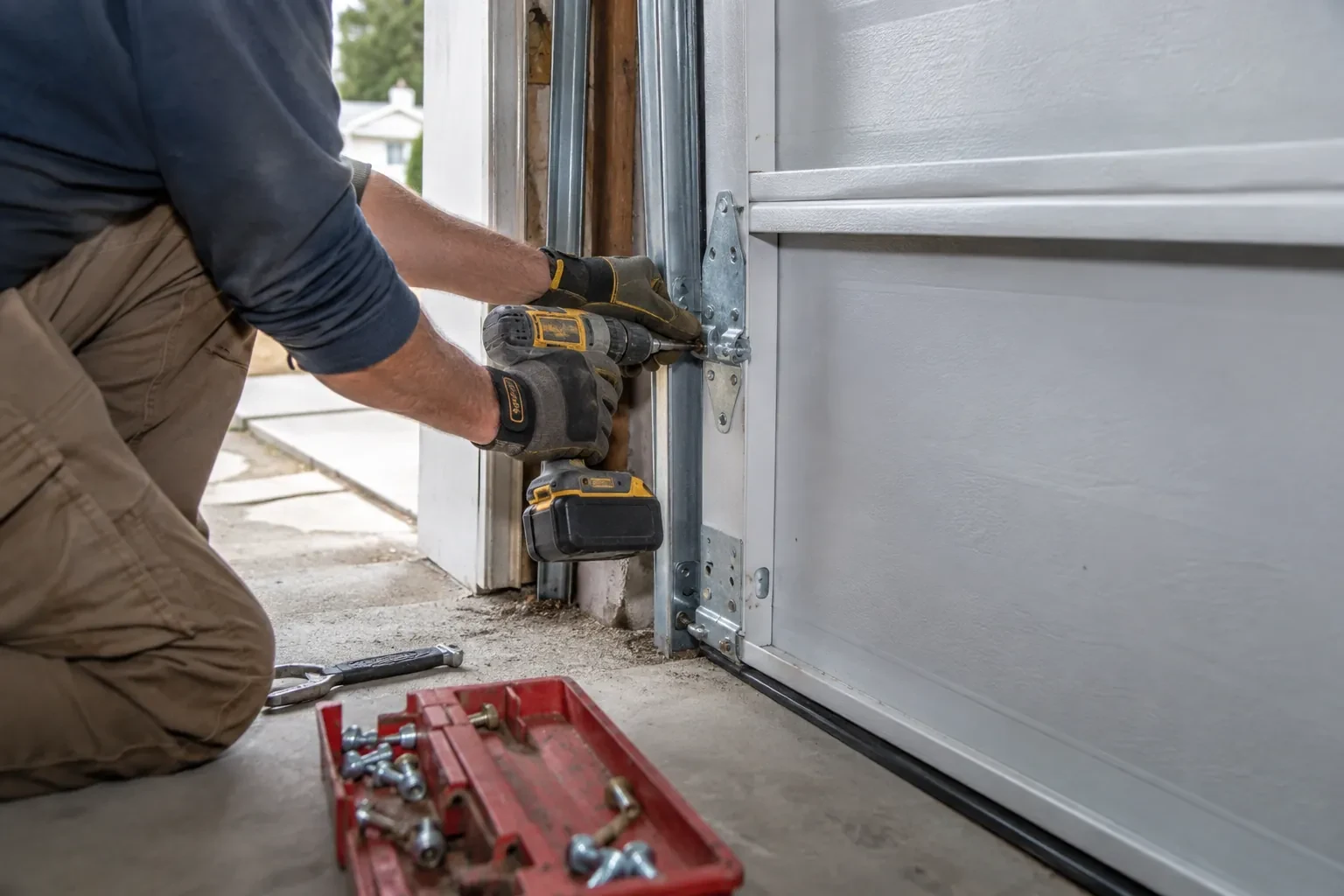
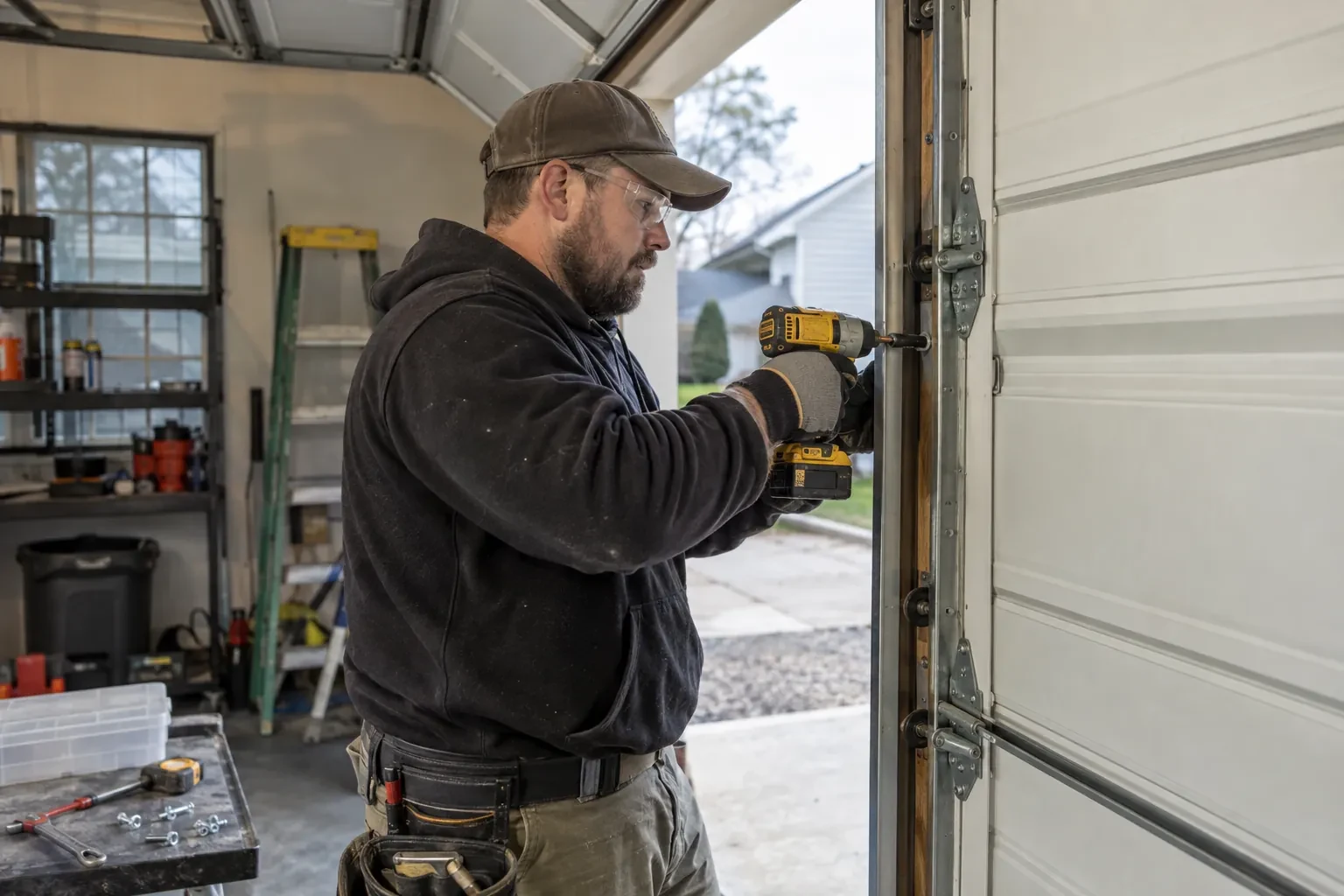
Nothing is touched until the door cannot move. The technician pulls the opener's release cord so the motor is out of the picture, clears the opening, and clamps the track just above a roller or props the door if it is jammed partway. If one cable has let go, the door is probably tipped and binding in the track, with its weight resting unevenly on the remaining cable and spring, so the first job is to take that weight on clamps or a support. Only then does the assessment of drums, springs and brackets begin. This step is calm and deliberate, and it is what allows every later step to be done with both hands.
Setting the door level
Before any spring tension returns, both cables are brought to the same tension. The technician rotates each drum until the slack is gone and the cable is snug in its groove, then tightens the set screws onto the shaft, often onto a small flat so the drum cannot creep. A level on the top section confirms the door sits square in the opening, and the gap under the bottom seal is checked along its length. If one corner sits high, the drum on that side is eased and reset. This is the moment that decides whether the door will run straight for years, so it is not hurried.
A monthly glance from inside
The simplest care is a look. Once a month, with the door closed and the light on, stand inside and follow each cable from the bottom bracket up to the drum. You are looking for broken wires standing out from the strand, a brown bloom of rust near the bottom loop, a kink, or a cable that hangs slack while the other is taut. Then check the door sits level and each drum shows a neat single wrap. Anything you notice is worth a call while it is still a small job. The whole check takes less than a minute and is the same one the industry maintenance checklist recommends.
Garage Door Cable Replacement
In the van
Drum set screws
Track clamps or locking pliers
Torsion springs and winding cones
Winding bars
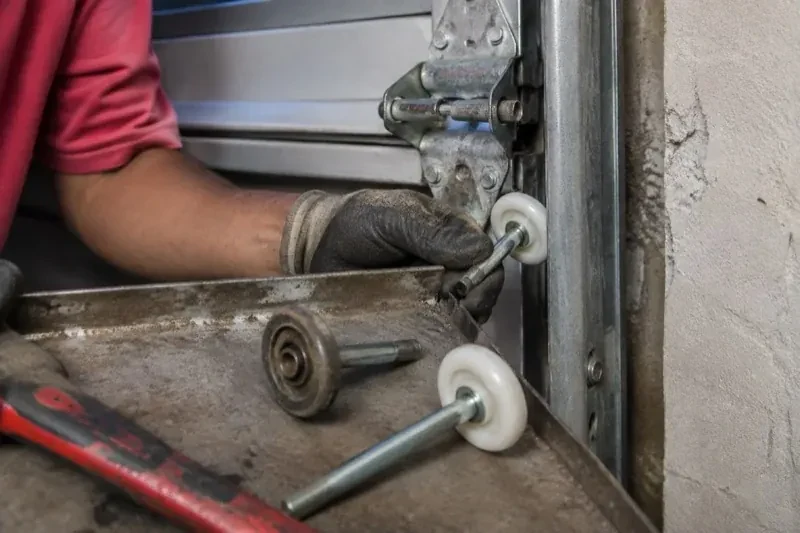
Extension-spring pulleys and sheave forks
Garage Door Cable Replacement
What affects the quote
Access to the spring shaft
Shelving, storage or a low ceiling around the torsion shaft and drums slows the work. Clearing the area beforehand or a tighter working space both affect the time quoted.
Condition of the bottom brackets
A bracket bent by a bumper or corroded by years of salt is replaced while the system is unloaded. New brackets, roller and fasteners are listed as their own line.
Torsion or extension system
A torsion door with drums and an extension door with pulleys are different jobs with different parts, and the counterbalance type is the first thing that shapes the quote.
What to have ready
- Is anything stored close to the door or under the spring shaft?
- Is there a car inside that you need out before the visit?
- Did the door come down on something, or did a vehicle touch it?
Garage Door Cable Replacement: questions
QuestionsCan a cable be too long or too short for the door?
Yes, and both cause trouble. A cable that is too long runs out of drum groove and starts a second layer over the first, which wears it and throws the balance off near the top of travel. A cable that is too short leaves the door hanging out of level or the drum without a secure wrap. The correct length comes from the door height, the drum and the lift type, so the technician measures rather than guesses.
How do I tell a cable problem from a spring problem?
Look above the door with it closed. A torsion spring that has broken shows a clear gap in the coil, and both cables usually go slack together because nothing is turning the shaft. A cable problem tends to show on one side only: a frayed length, a coil of loose cable, or one corner sitting higher. Either way the technician inspects both, since a weak spring is a common reason a cable fails.
What is the cable drum, and when does it need replacing too?
The drum is the grooved wheel on each end of the torsion shaft that the cable winds onto as the door opens. Its grooves guide the cable in a single layer and its shape sets how the door is balanced through its travel. A drum is replaced when the grooves are worn or cracked, the cable slot is damaged, or it has spun on the shaft and scored it. Drums are changed in pairs.
Related services
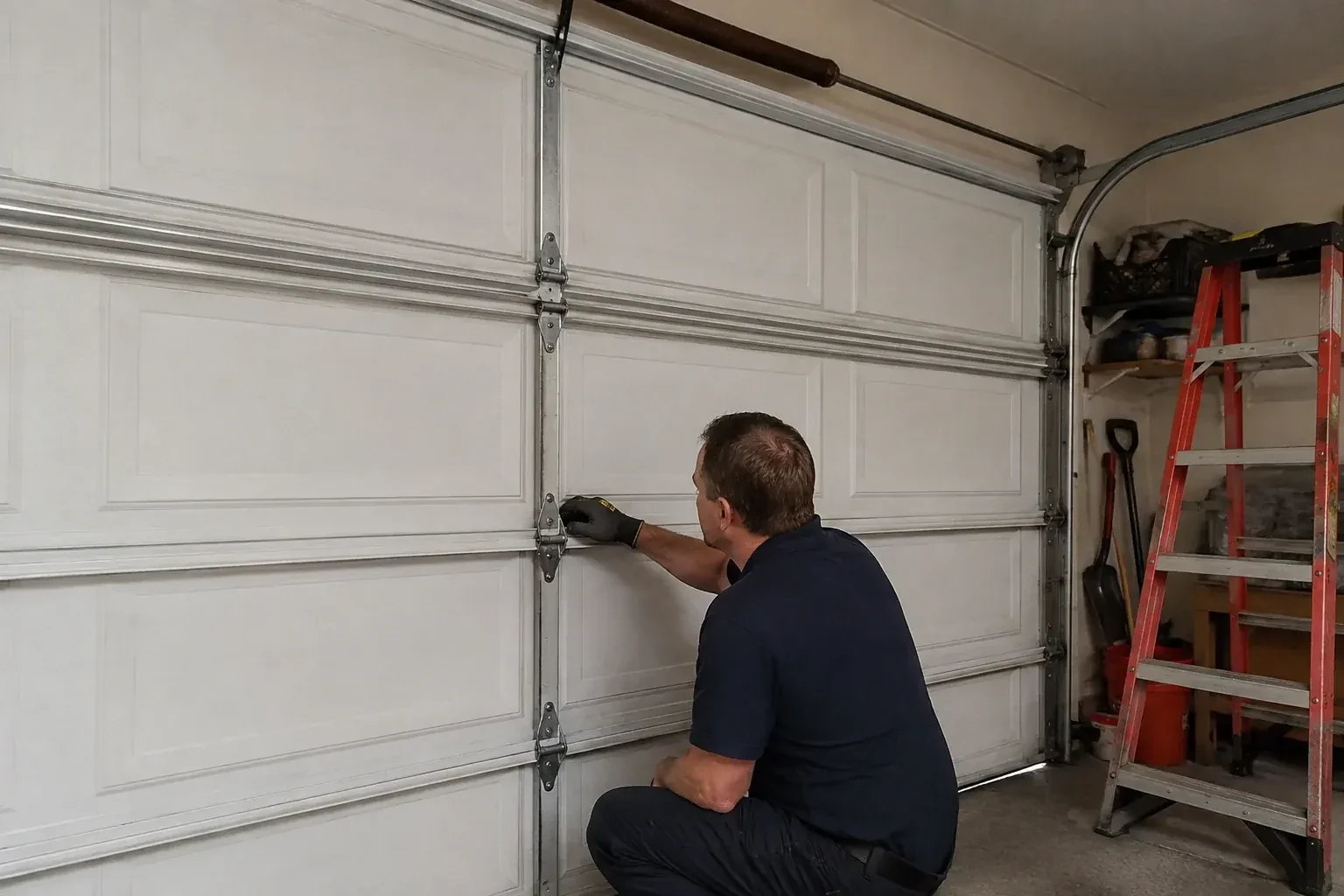
- Garage Door Hinge ReplacementOn the old wood door, one hinge has pulled away from the panel, dragging a screw and a chunk of soft timber with it.
- Garage Door Track Repair or ReplacementBacking out this morning, the mirror caught the track beside the door.
- Torsion Spring ReplacementYou heard a sharp bang from the garage, and now the opener hums for a second and gives up.