Garage Doors in Maryvale, OntarioBumped the doorbacking out?
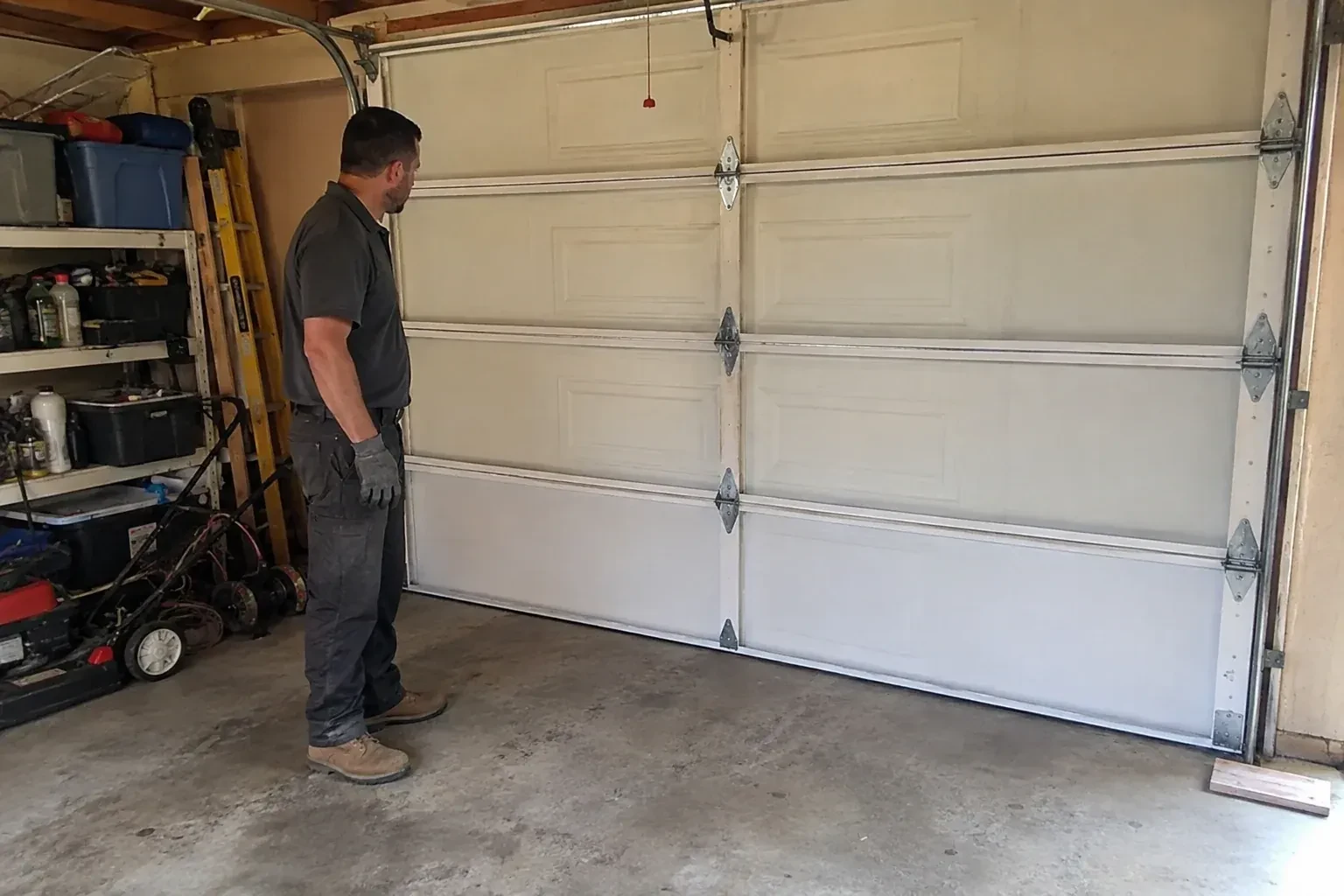
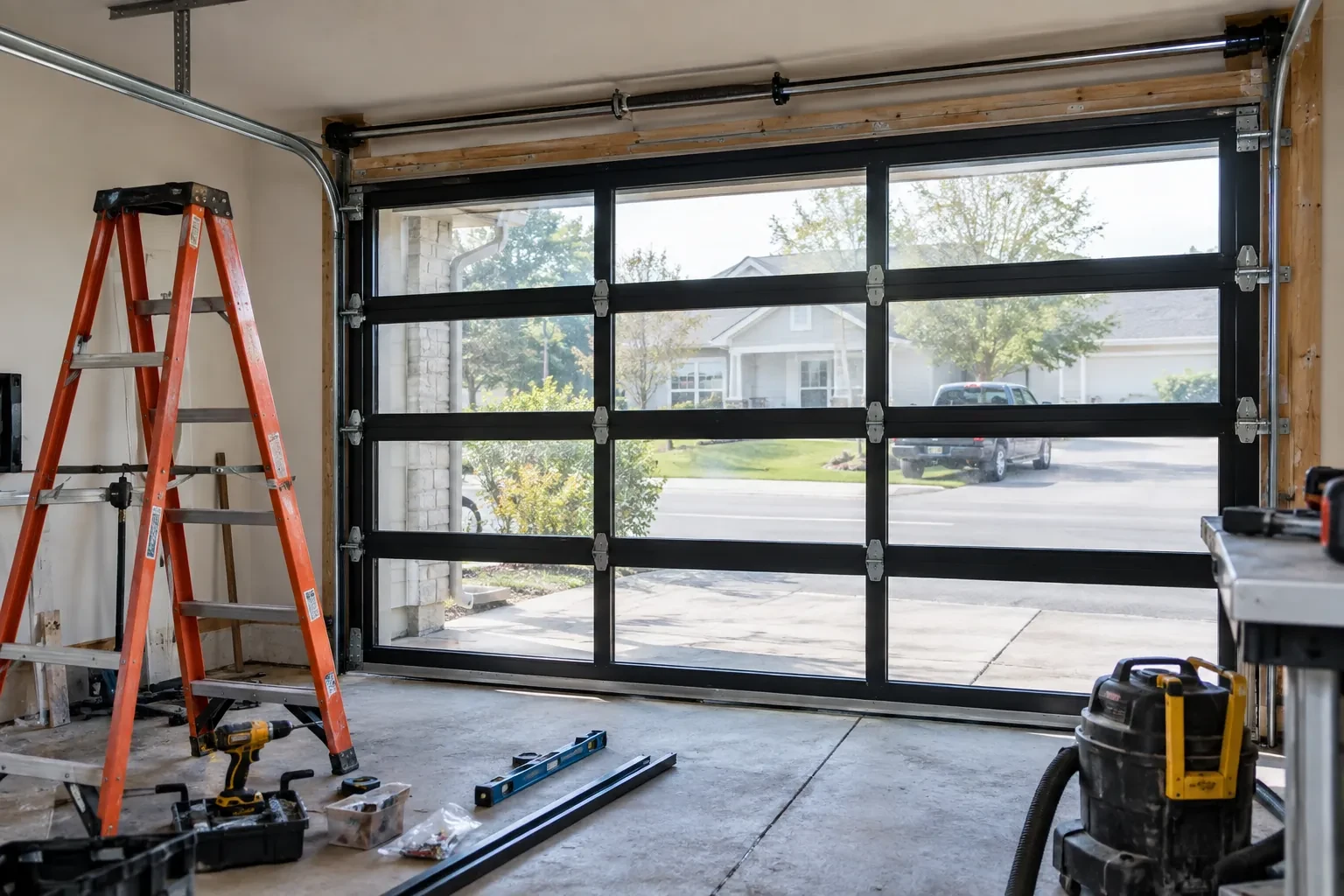
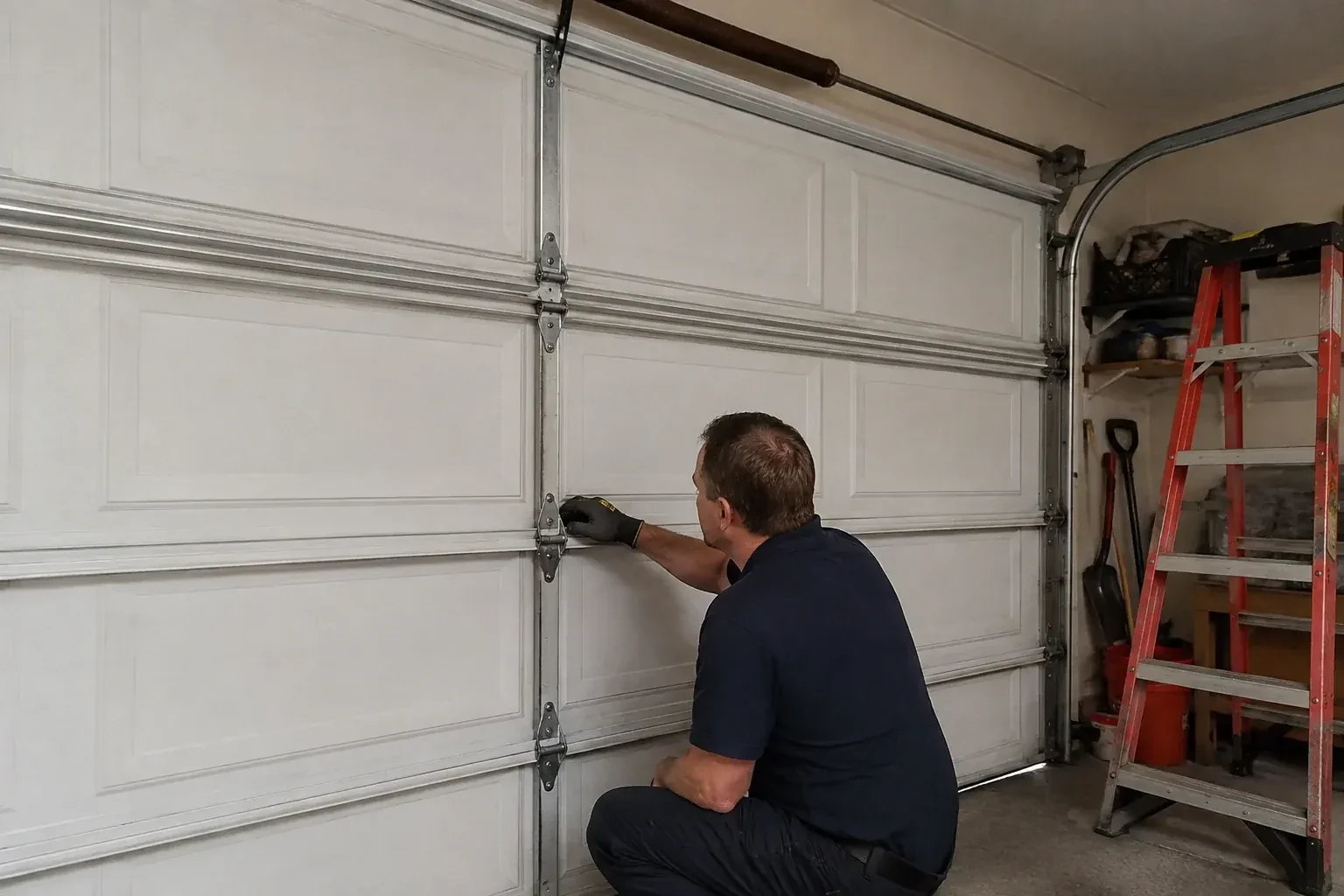
A creased bottom panel is a common sight in Maryvale, and it rarely means a whole new door. We check the struts, hinges and track alignment, replace the damaged section when a match is available, and reinforce the panel so the door lifts straight and looks whole again from the street.
A creased bottom panel is a common sight in Maryvale, and it rarely means a whole new door. We check the struts, hinges and track alignment, replace the damaged section when a match is available, and reinforce the panel so the door lifts straight and looks whole again from the street.
Safe for everyone who walks under it.
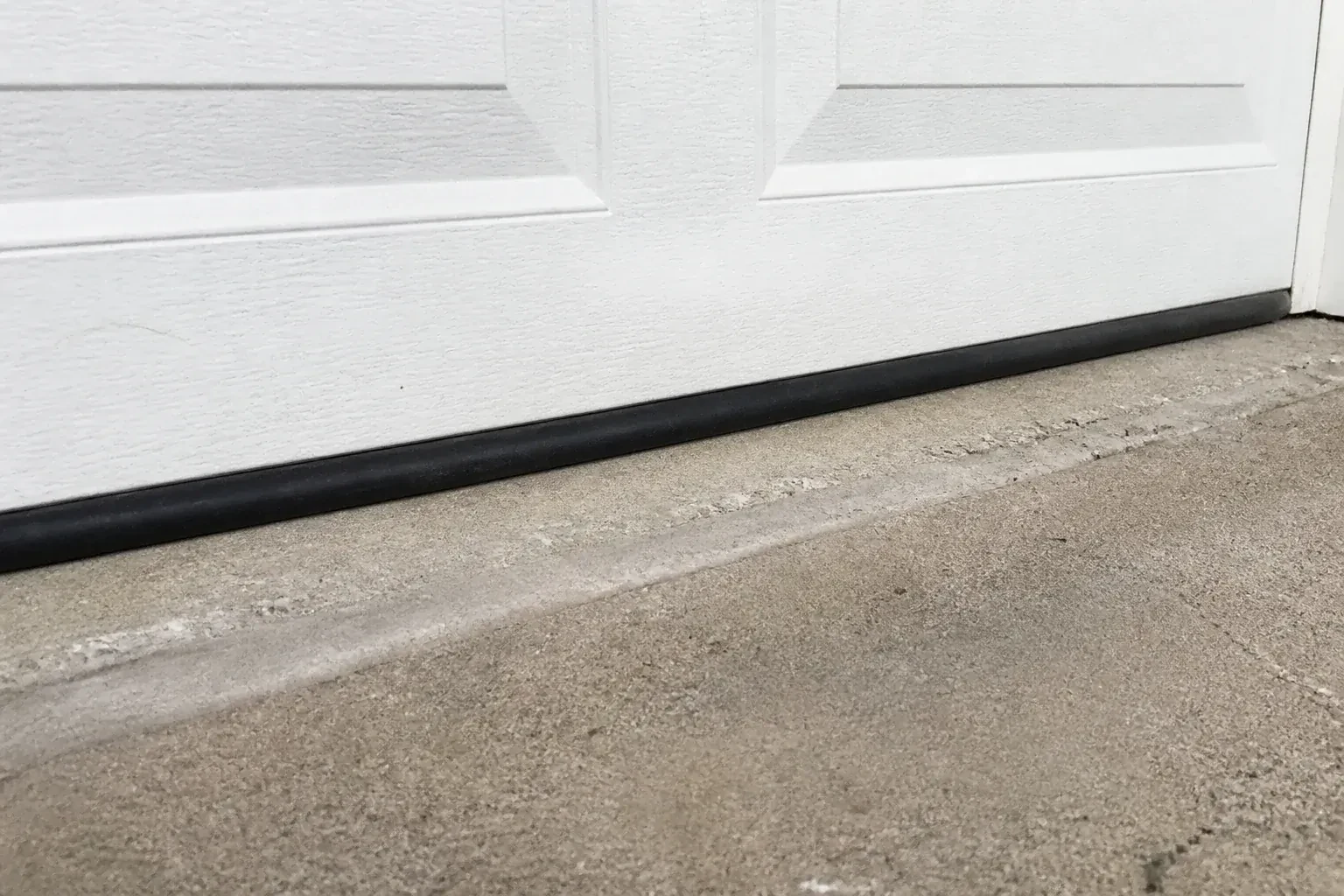
Winter is when garage doors in Maryvale fail most, so we prepare for it. Cold-rated lubricants, bottom seals that stay soft in the frost, spring tension checked before the freeze and opener force adjusted for a stiffer door. A door serviced in the autumn is a door that opens in January.
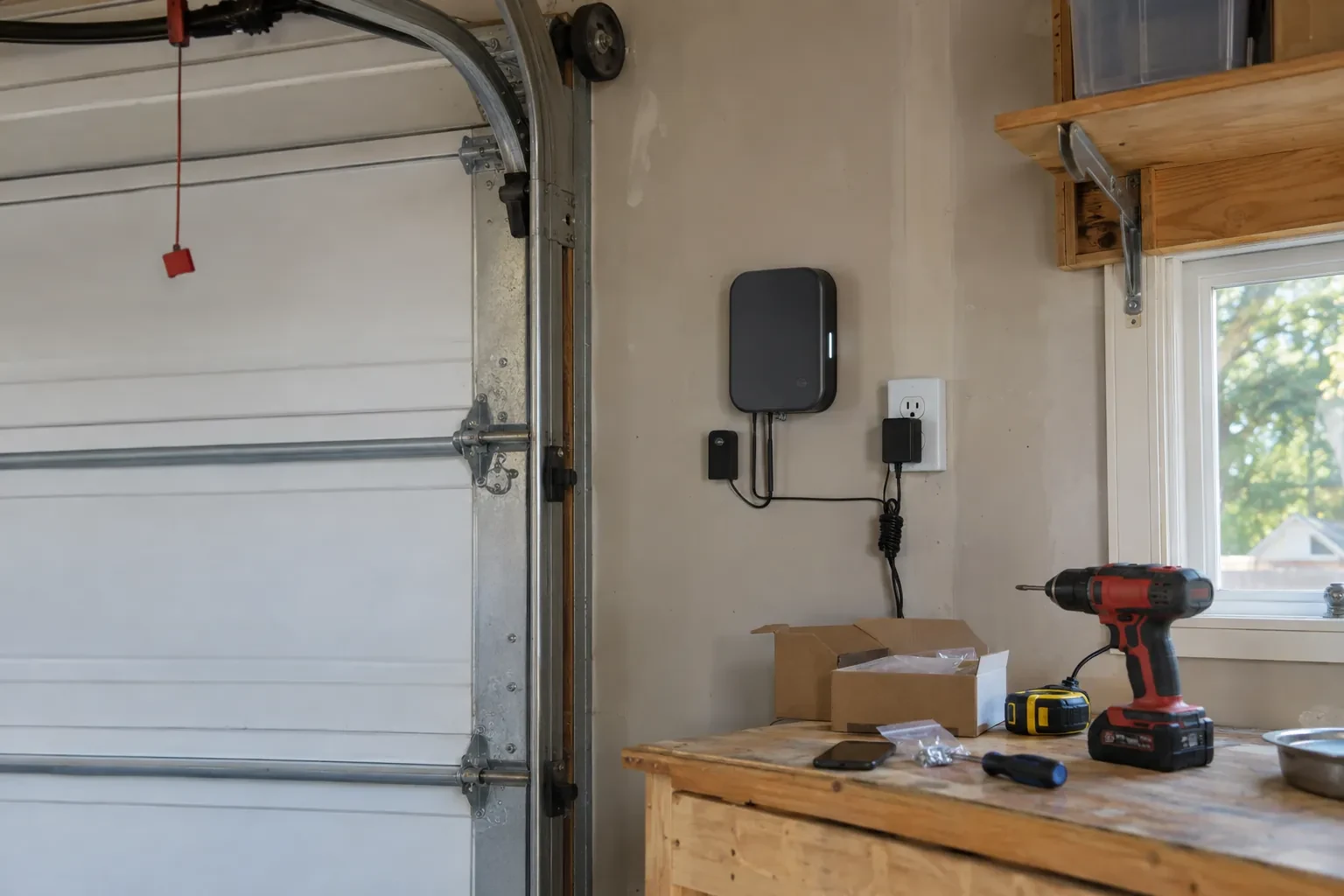
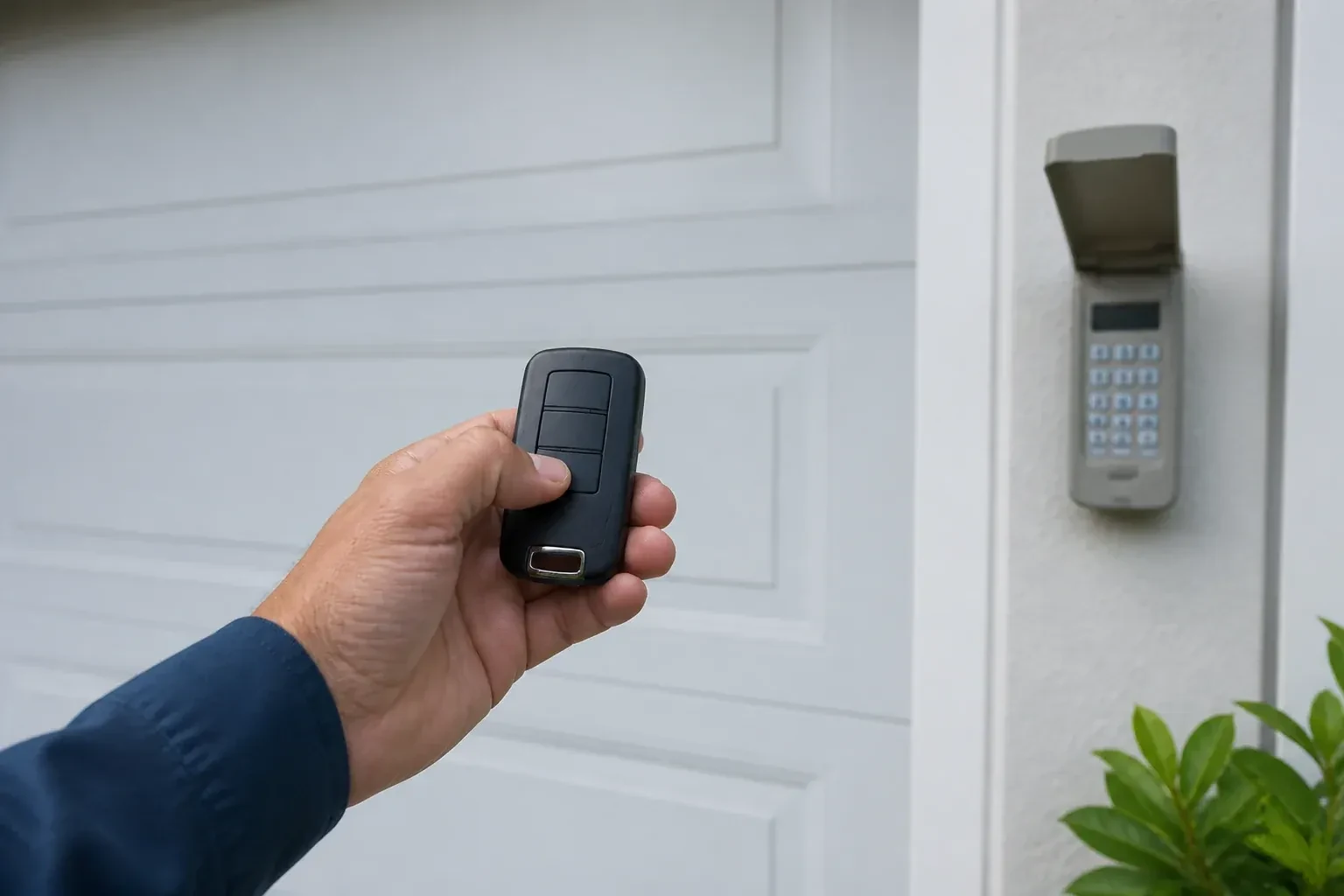
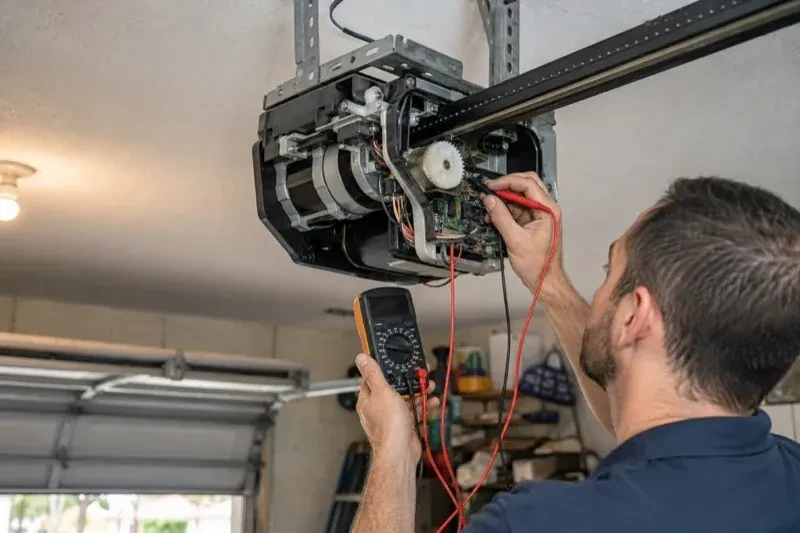
Garage door openers, remotes and keypads are as much a part of our work in Maryvale as springs and cables. A door that lifts by hand but ignores the button gets a calm, methodical check: power, board, travel limits, force settings, sensors and the remote itself. New openers are set up completely, including every remote, before the technician leaves your driveway.
31years in business
24/7open every day
Told before touched. Nothing is adjusted or replaced until you have heard what we found and agreed with the plan for it.
Neat work, neat exit. New parts fitted cleanly, old ones removed, the floor and door wiped down. The garage is yours again the moment we leave.
Room to choose. We give you the practical picture and step back. Repair now, plan a replacement, or wait and watch: your call.
Whether the door on your house in Maryvale needs a single roller or a whole new opener, the services listed here cover it. Repairs come first, because most doors can be saved; springs, cables and hardware follow; then openers and remotes; and finally new doors for homes and commercial buildings.
About 58% of homes in Toronto were built in 1980 or earlier, according to the 2021 Census.
Older homes
Older garages are frequently used as workshops or storage as much as parking, which means the door opens many times a day and collects dust on the sensors. Sealed rollers, protected photo-eyes and a tune-up schedule suit that pattern well.
Single-detached houses make up about 23% of homes in Toronto (2021 Census).
Townhouse and condo owners often share responsibility for the door with a board or property manager, so we provide a clear written report after each visit: what was found, what was replaced and what is likely to need attention next, ready to pass along.
Every spring has a fixed number of open and close cycles in it, and a busy household uses them up sooner than a quiet one. When yours are worn, we fit replacements sized to your door and can suggest longer-life options for heavy use.
The door goes up perfectly. Coming down is the trouble: partway to the floor it stops, climbs back to the top, and the light on the opener blinks at you.
The door opens about a third of the way and stops. Turning the limit screw on the head has made no difference, and the trolley seems to sit in the wrong place along the rail when the door is fully closed.
It is minus twenty in the detached garage and the door climbs in jerks, the belt stiff as a board. By the afternoon, when the sun has been on the door, it runs almost normally again.
During the ice storm the power was off for two days. You came home in the dark, found the door dead, and had to climb out of the car to pull the red cord in the cold.
Someone backed the car in a little too far, a bin or a bicycle brushed the track, and since then the door starts to close and comes back up. One sensor now sits at a slightly different angle from the other.
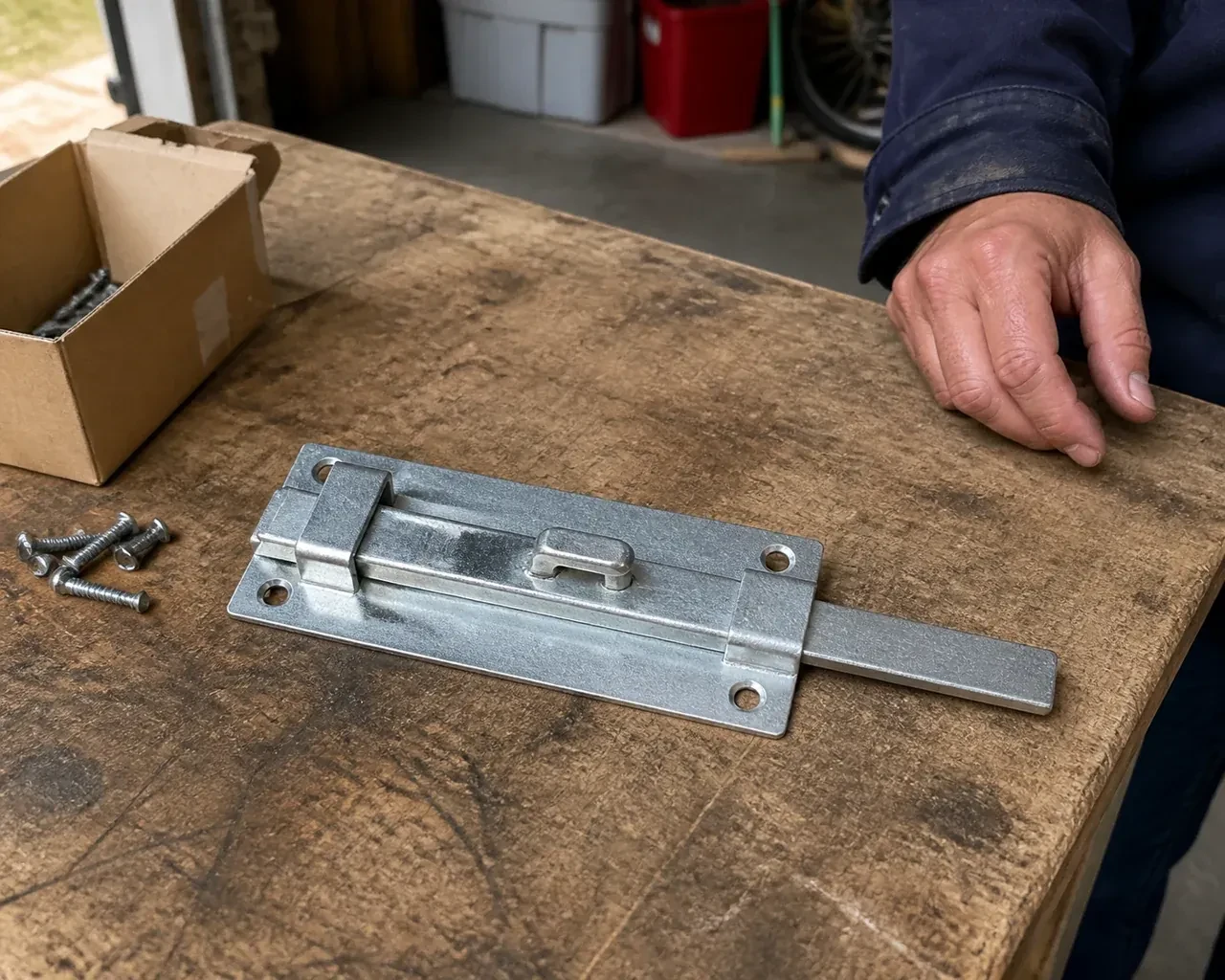
A contractor is coming to work in the garage on Thursday while you are away. Handing over a remote means chasing it back afterwards, and the keypad code is the one your whole family uses.
Halfway up, the door lets go of the opener with a clunk and sinks back to the floor while the trolley carries on to the top alone. It has happened three times this month, and each time the release lever is found half-cocked.
Which fix fits?
The morning after a thaw the opener groaned, the door stayed stuck to the icy floor for a second, then lurched up crooked.
WhyEverything about a section replacement flows from knowing exactly which door you have.
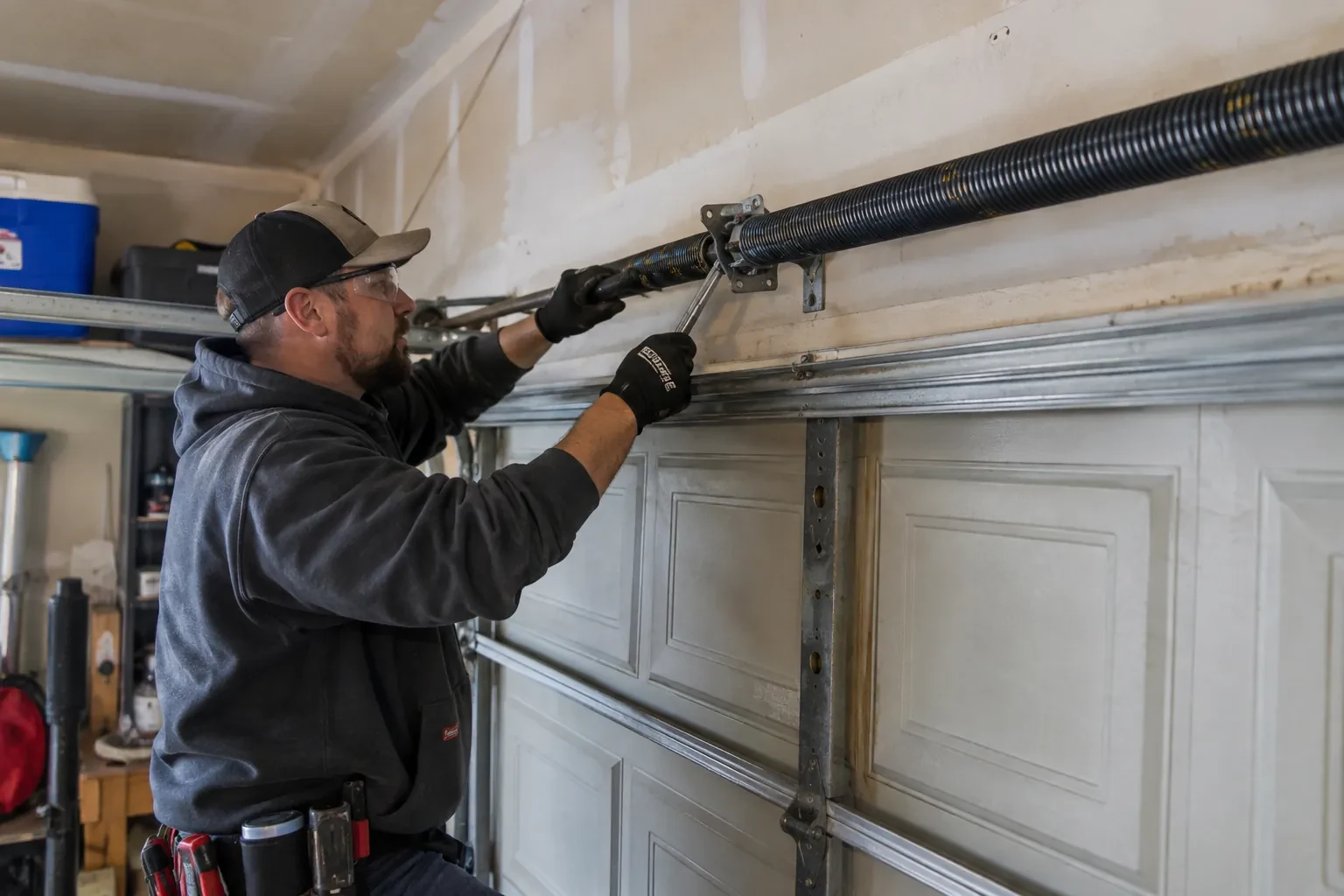
One of the springs beside the track is hanging loose at the front end, its pulley dangling, and a length of cable lies slack along the top of the door.
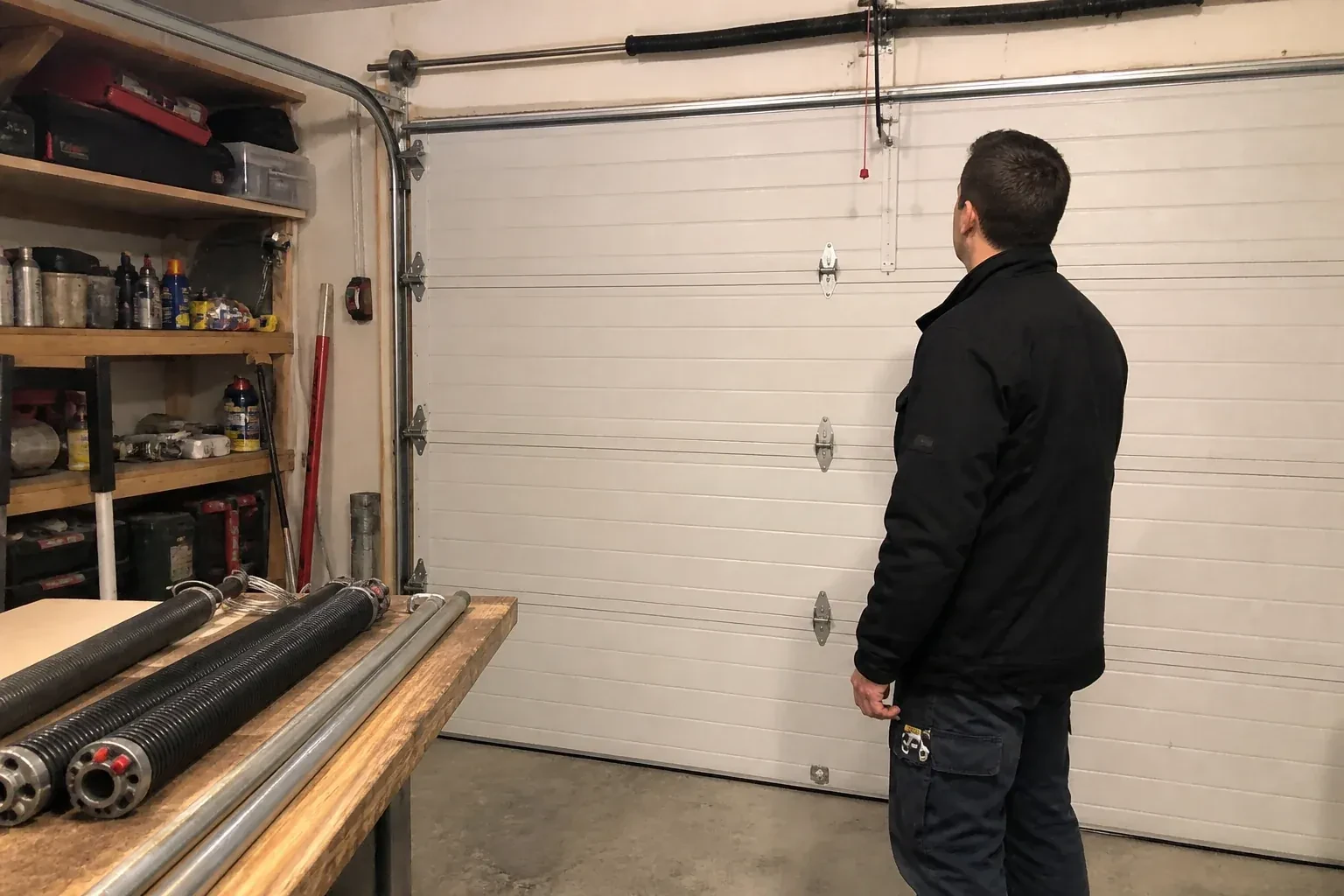
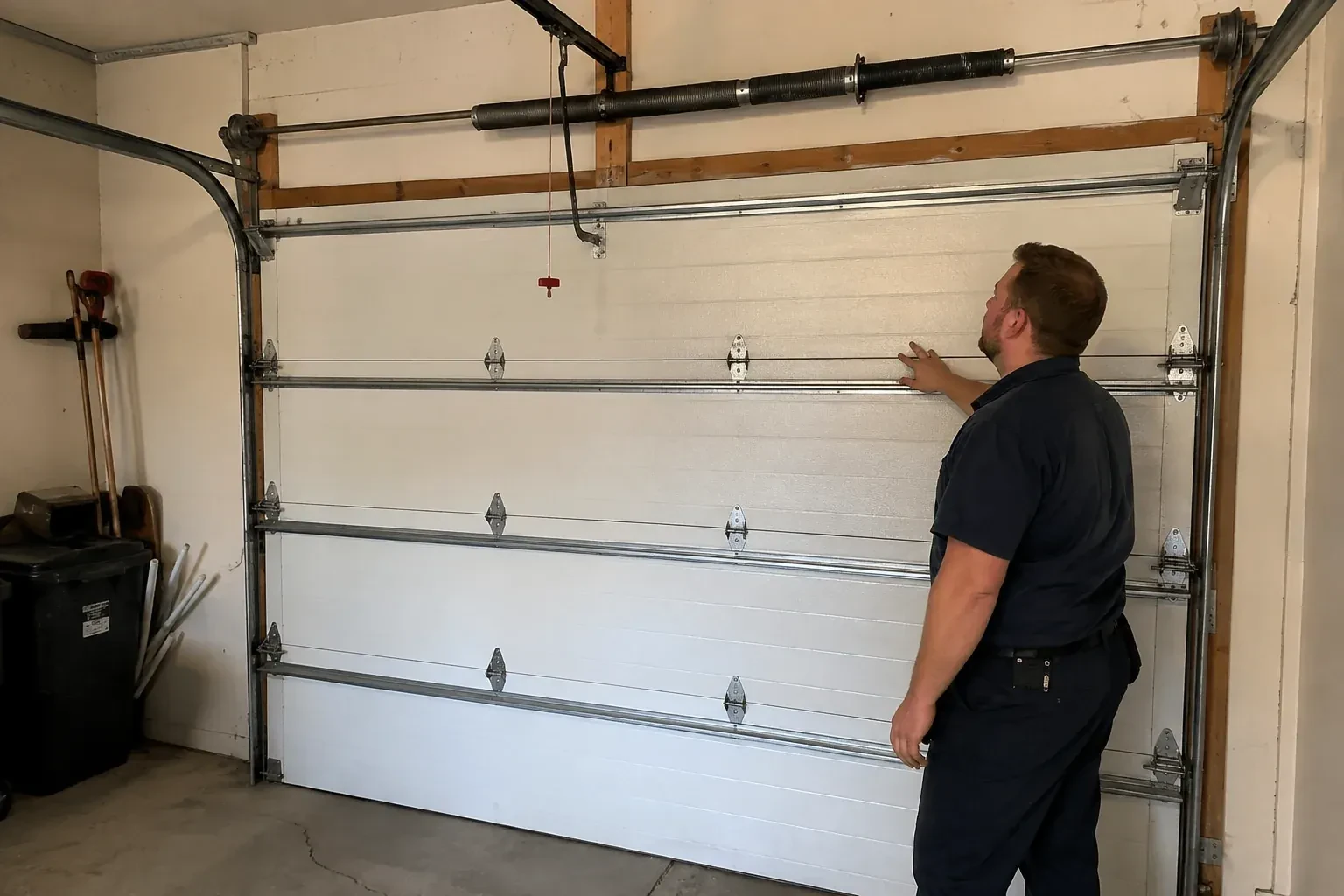
WhyA garage door is balanced when its springs carry almost the whole weight of the door, so the door itself is nearly weightless in your hands and the opener only has to guide it.
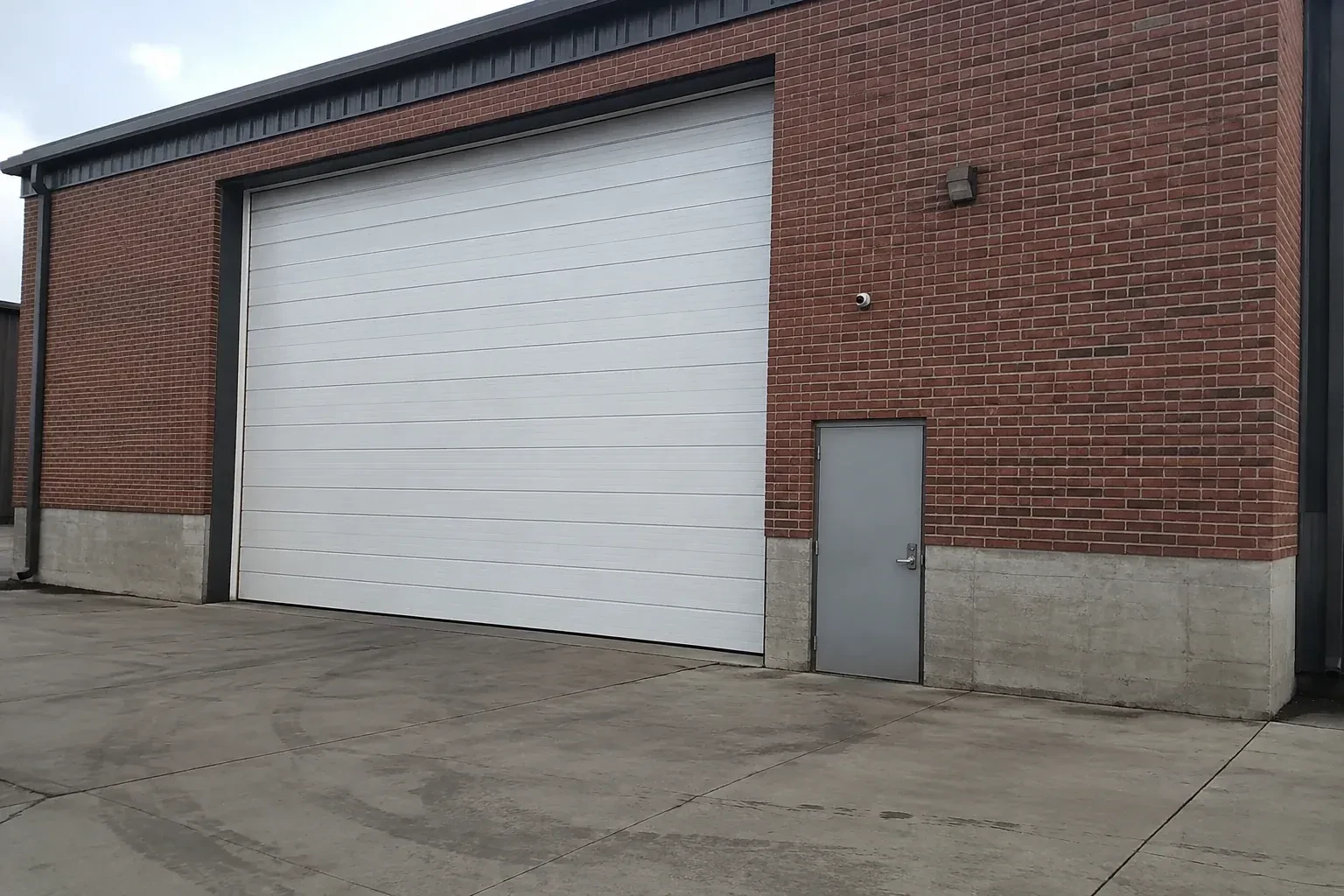
WhyCommercial rolling door repair treats the opening as one connected machine rather than a loose collection of parts.
How a visit goes
Describe the property, the hardware and what has changed, and the visit starts from what you have seen.
01
Start with a description
The door is heavy, the opener hums, the remote is dead. Whatever it is, say it in your own words and we translate it into a plan.
02
Diagnosis in the garage
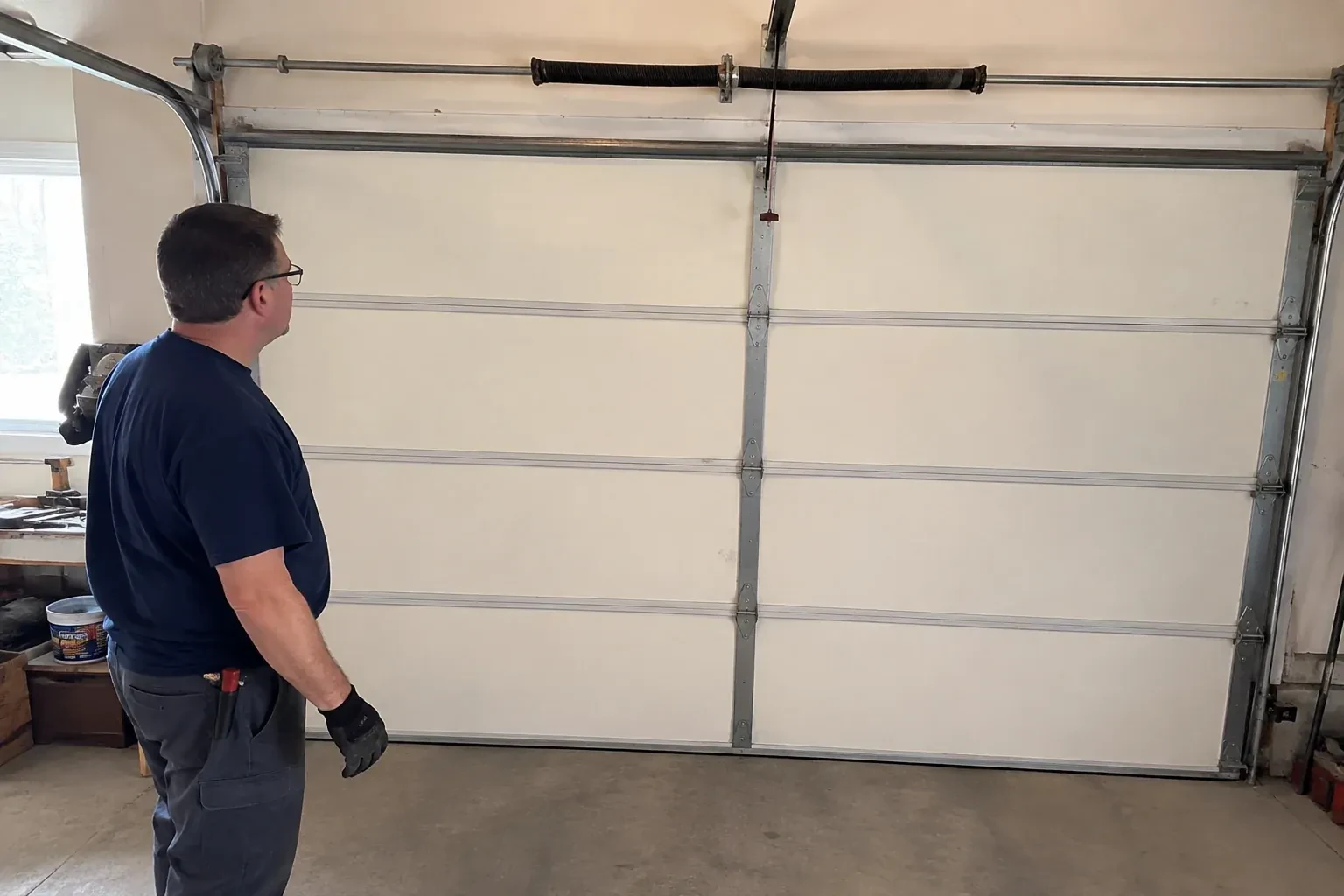
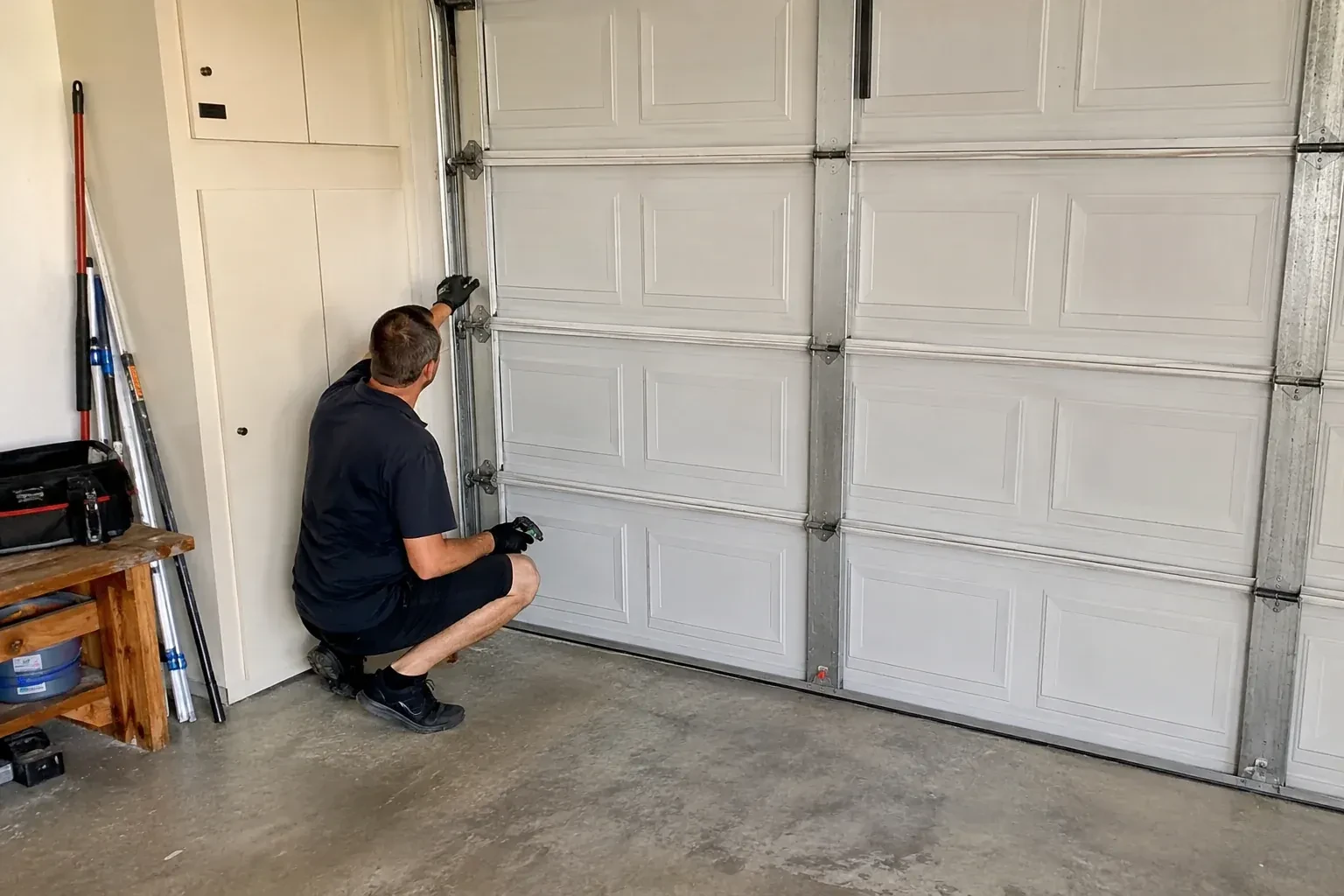
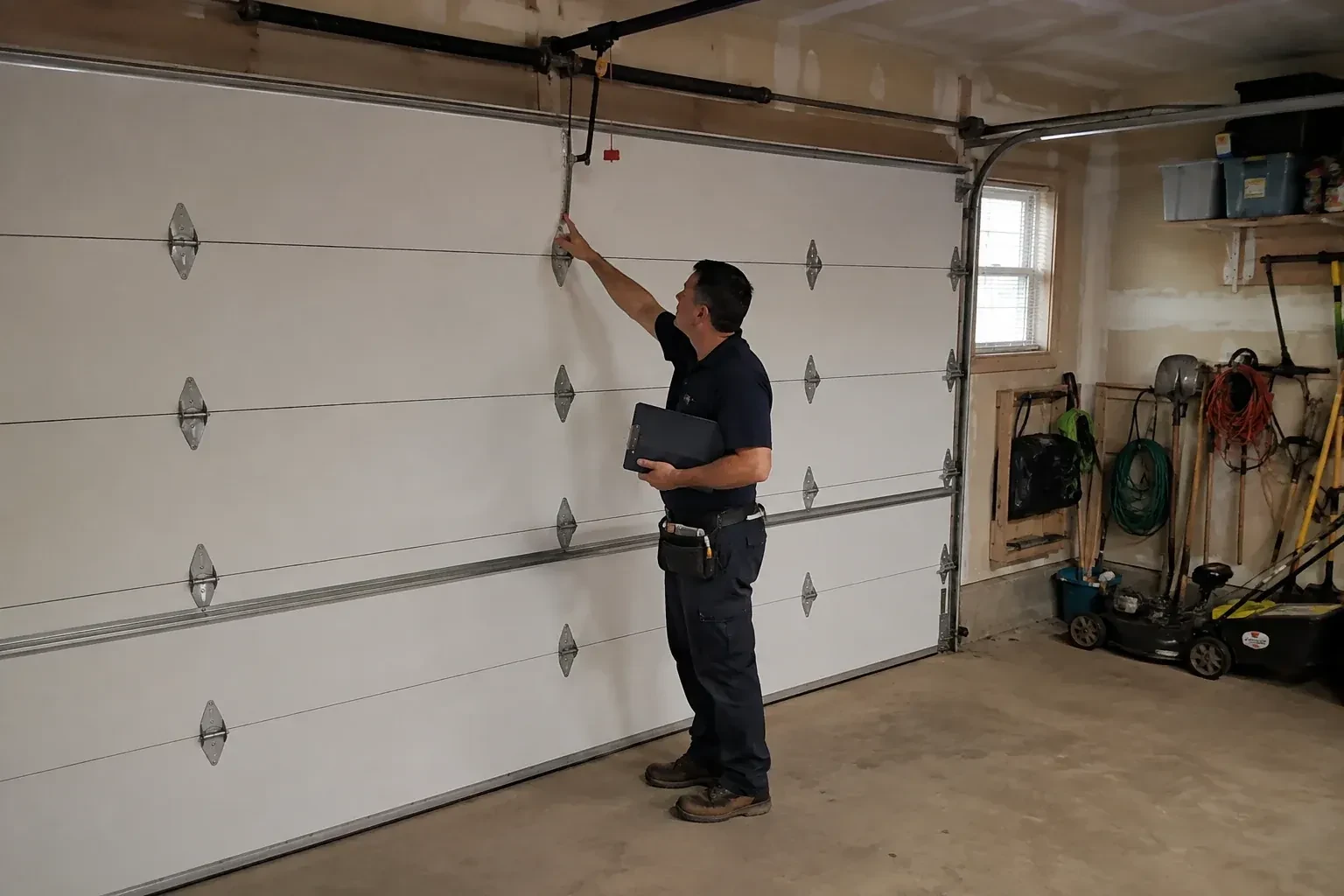
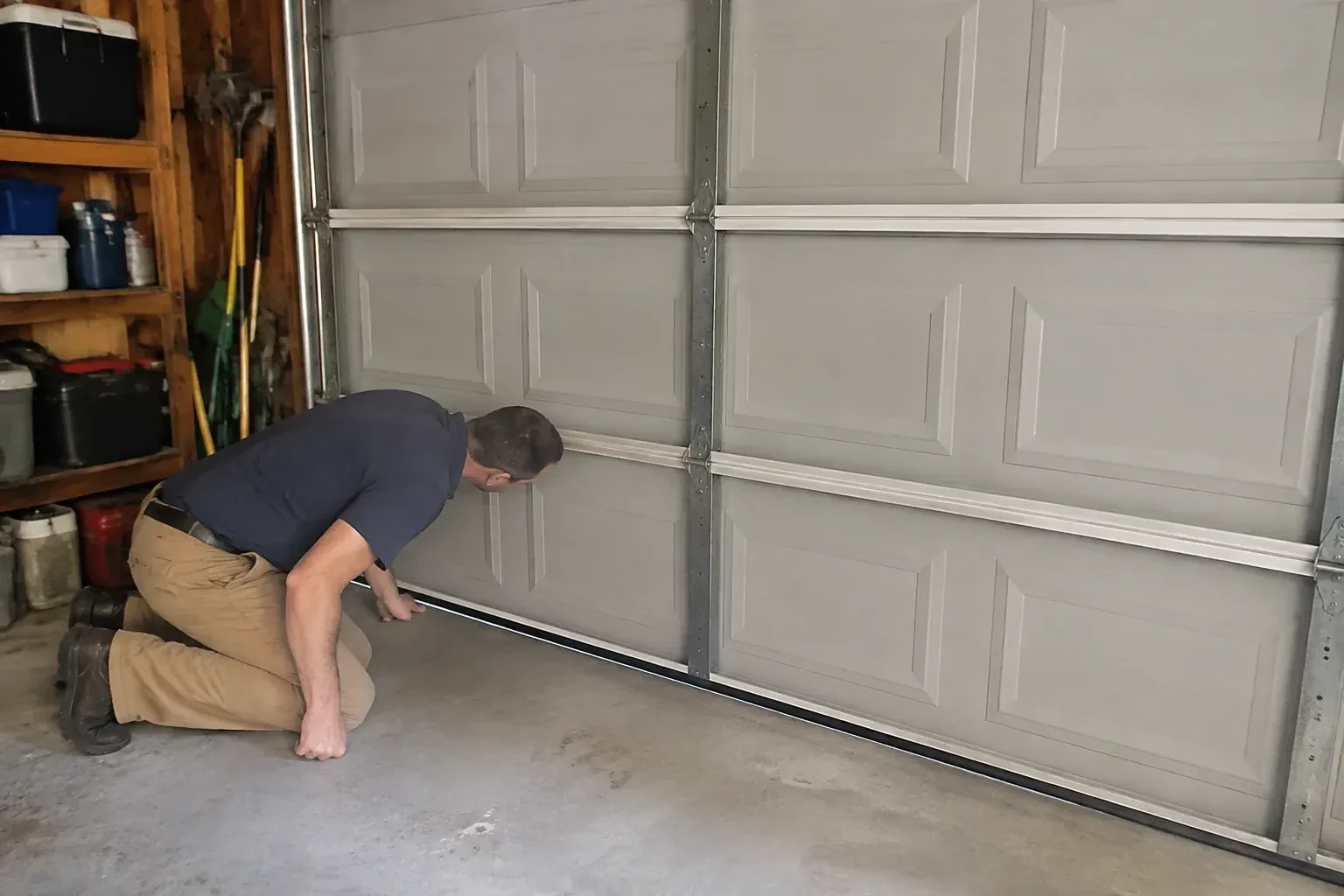
We test the door by hand, watch the opener under load, check the safety sensors and inspect the hardware before anything is decided.
03
Work you can watch
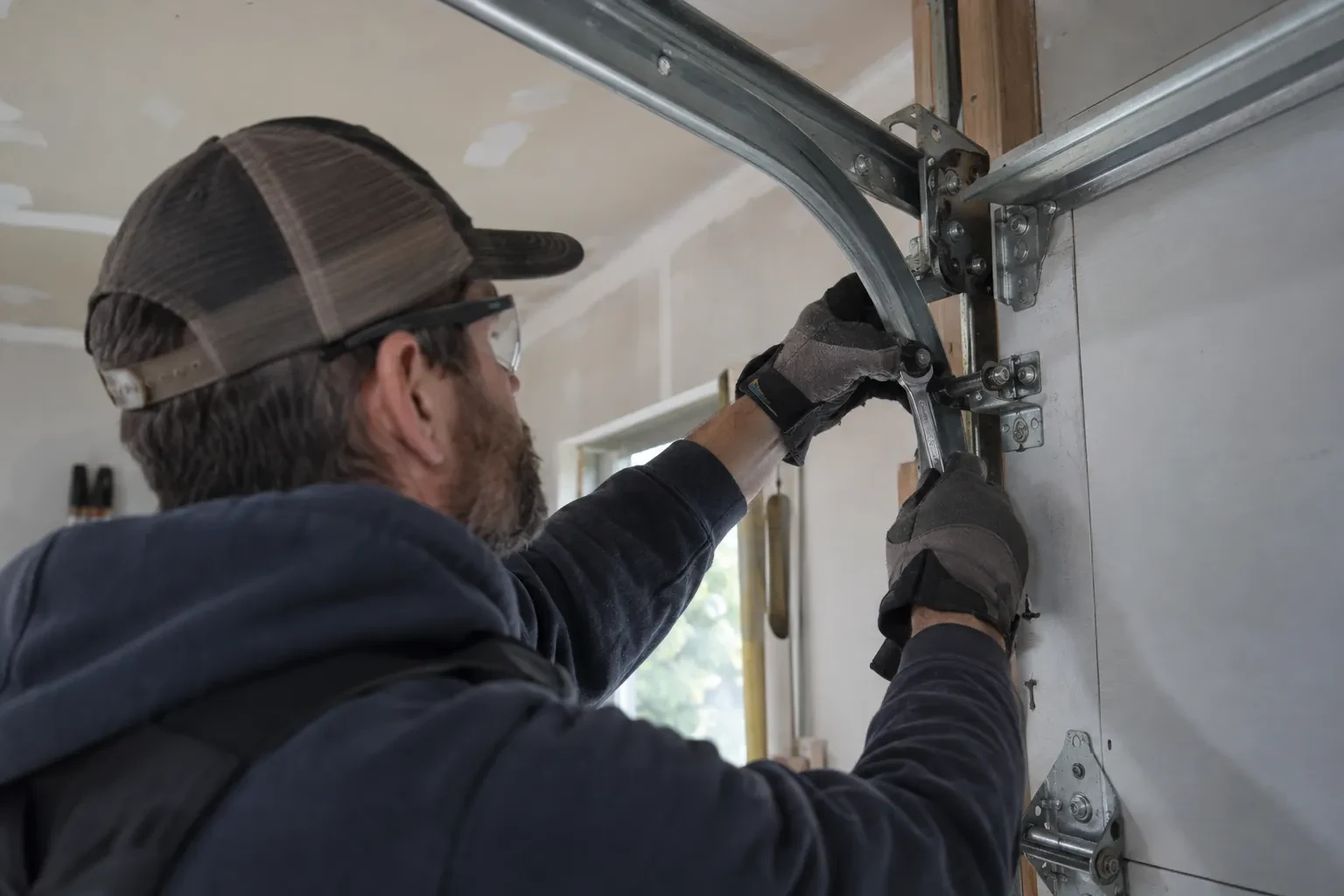
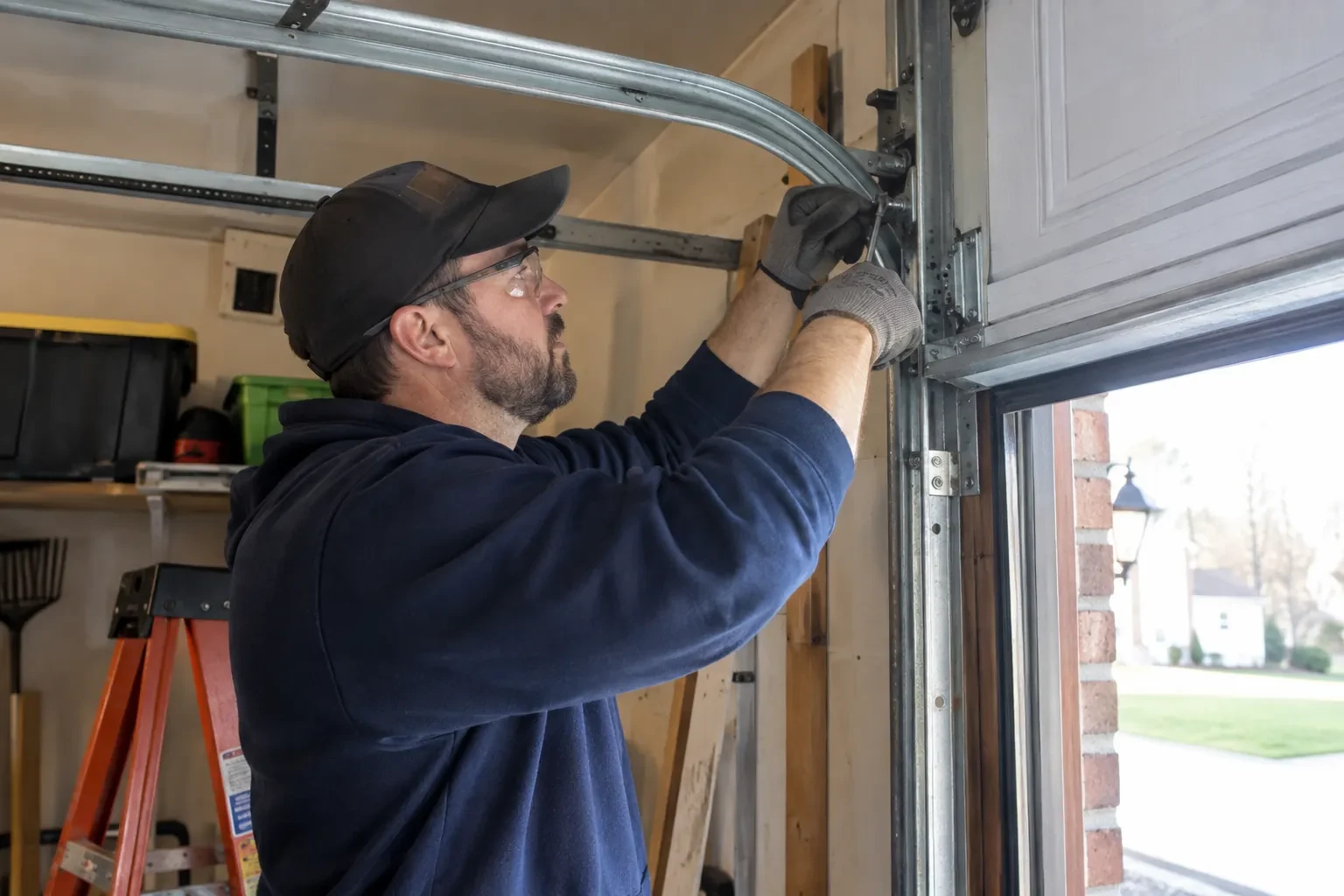
You are welcome to stay while we work. We explain each step, replace what is worn, and confirm the door runs smoothly before leaving.
An entrance. Not an afterthought.
1/10Off-Track Garage Door Reset
The morning after a thaw the opener groaned, the door stayed stuck to the icy floor for a second, then lurched up crooked. It stopped halfway with a grinding scrape and has not moved since.
Years of slap shots have peppered the lower two sections with dents. Each one alone is small, but from the street the door looks tired, and the deepest dent near the centre has cracked the paint and shows bare steel.
One of the springs beside the track is hanging loose at the front end, its pulley dangling, and a length of cable lies slack along the top of the door. The door sits slightly crooked and the opener reverses whenever it tries to close.
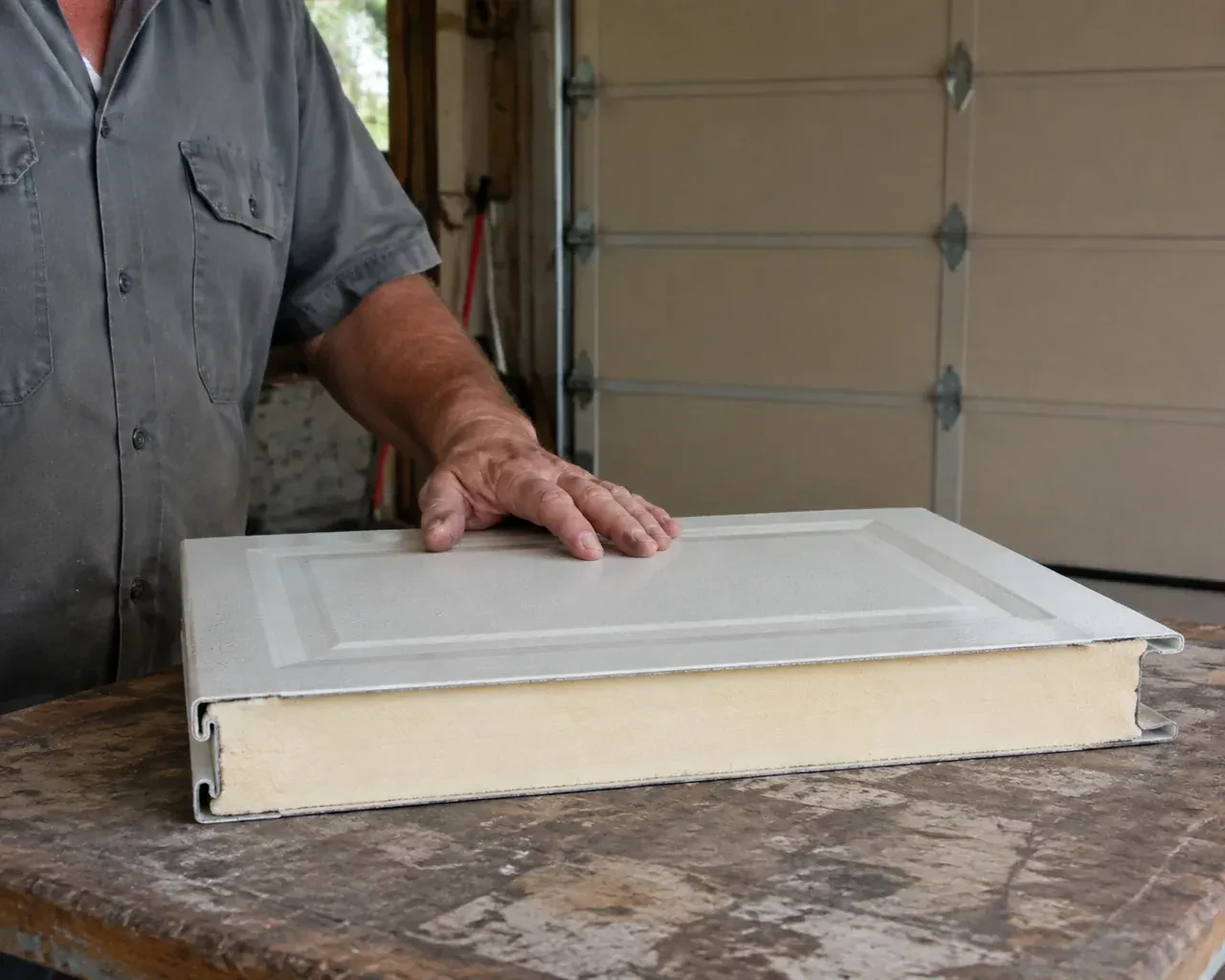
Since the new insulated panels went in, the door feels like a different animal. It closes with a thud, the opener labours where it used to hum, and lifting it by hand takes a proper heave rather than a fingertip.
The outdoor keypad worked all summer. Now that the mornings are below freezing it lights up faintly, takes the code, and the door does nothing. Back inside, the remote works on the first press.
Your daughter gets home from school an hour before anyone else. She has lost two house keys this year, and the garage keypad code has been shared with half her class. You would rather open the door from your desk and know the moment she is in.
The opener strains as the heavy older door starts upward, and manual movement feels uneven. A new insulated assembly calls for counterbalance hardware matched to its actual weight and a compatibility check for the operator.
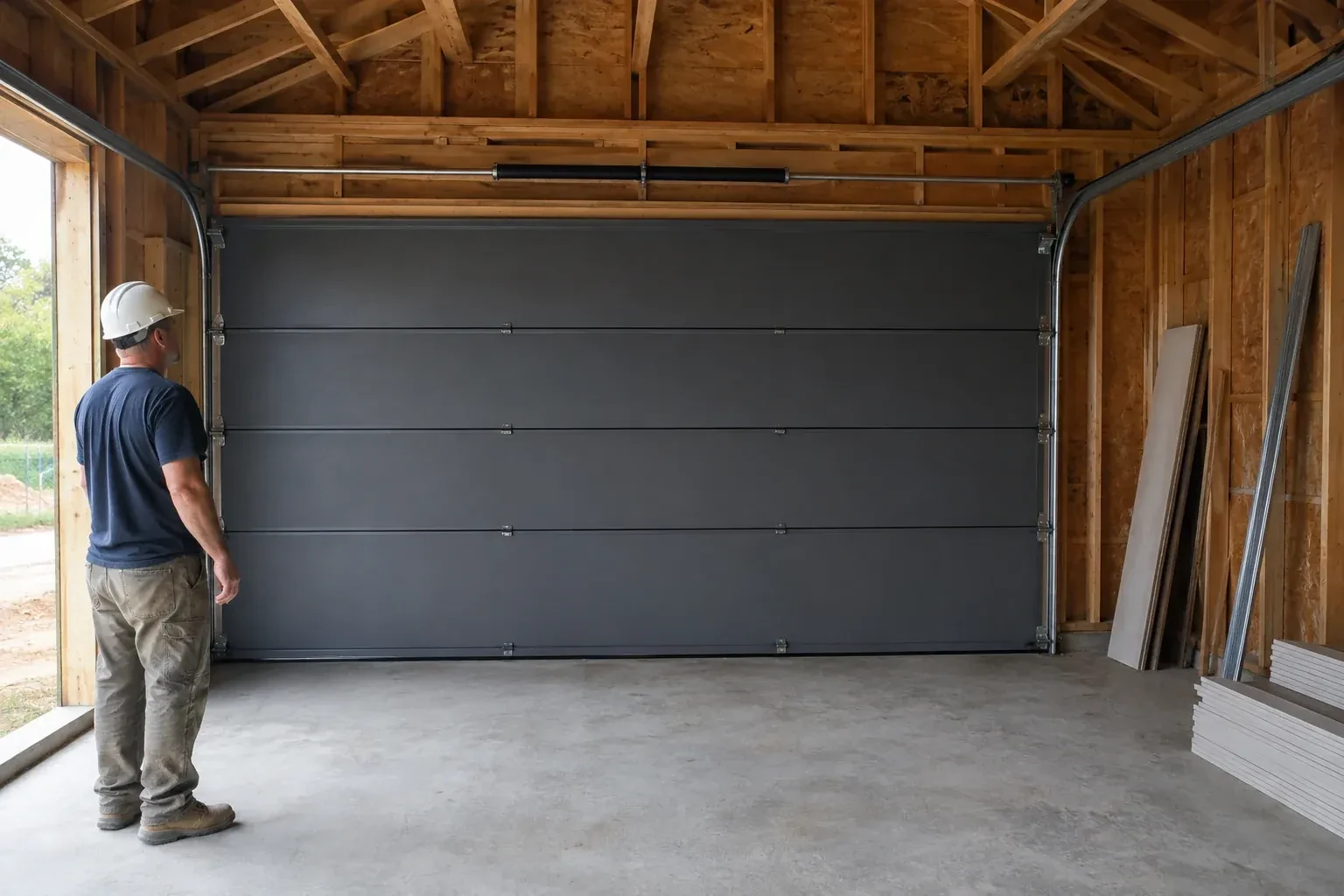
Framing, siding, flooring and electrical crews are working from the same schedule. The garage door is ready for its place in that sequence once the opening, anchor points, floor height and power are confirmed.
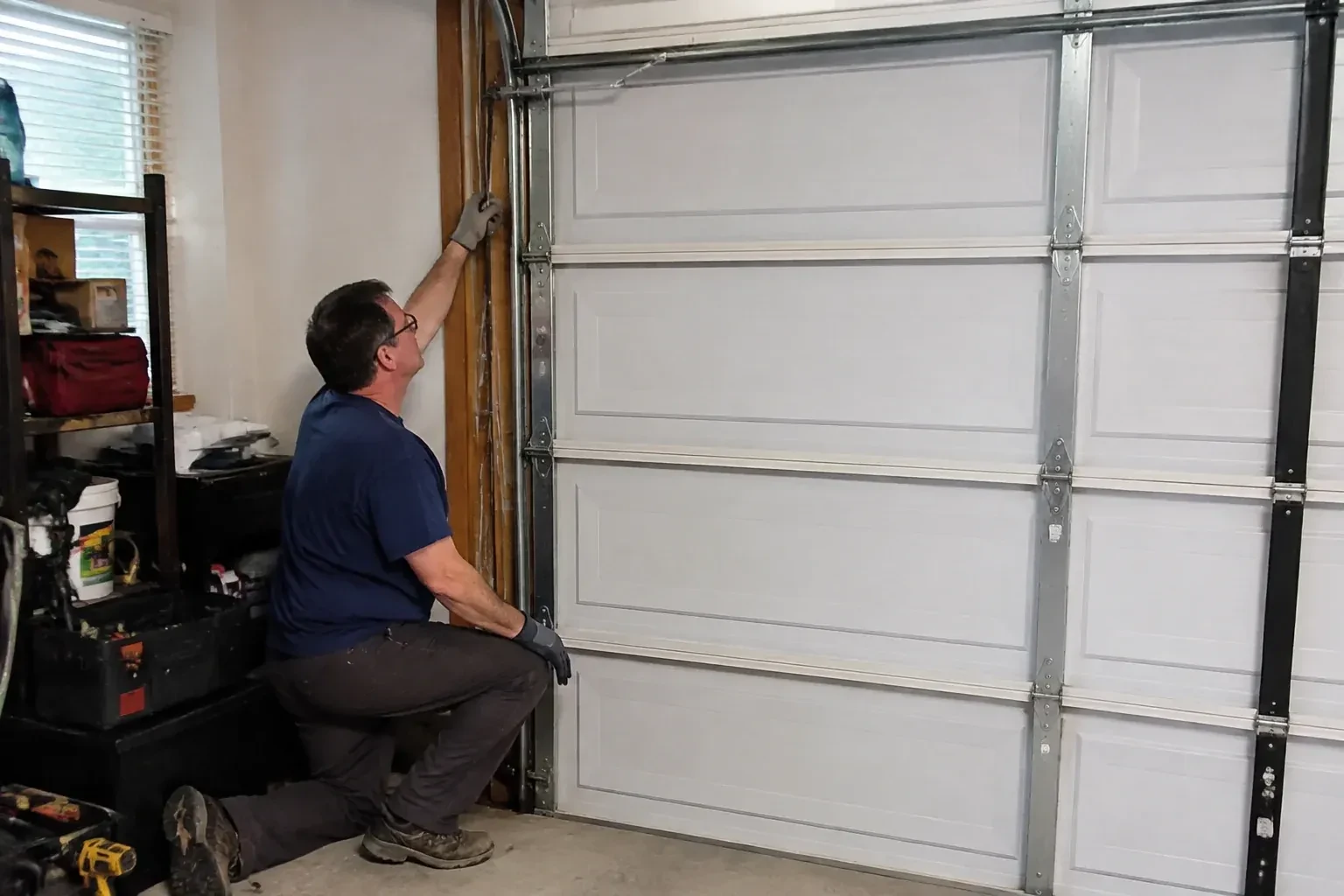
A high-lift door begins smoothly, then a cable loses tension as the top sections change direction. The loose cable no longer follows its drum grooves evenly, leaving the door unreliable at the top of travel.
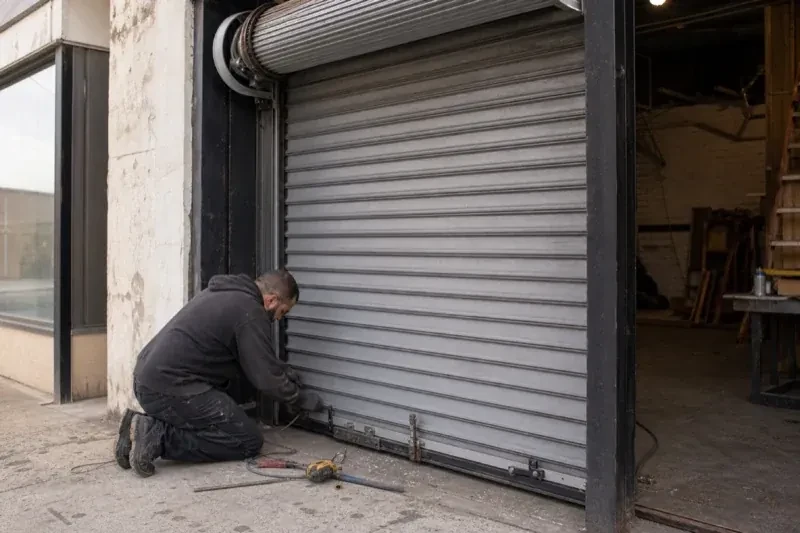
A metallic clatter now comes from inside the hood whenever the curtain coils. The sound follows each revolution, the travel has become jerky, and fine metal dust is visible near one bracket and bearing.
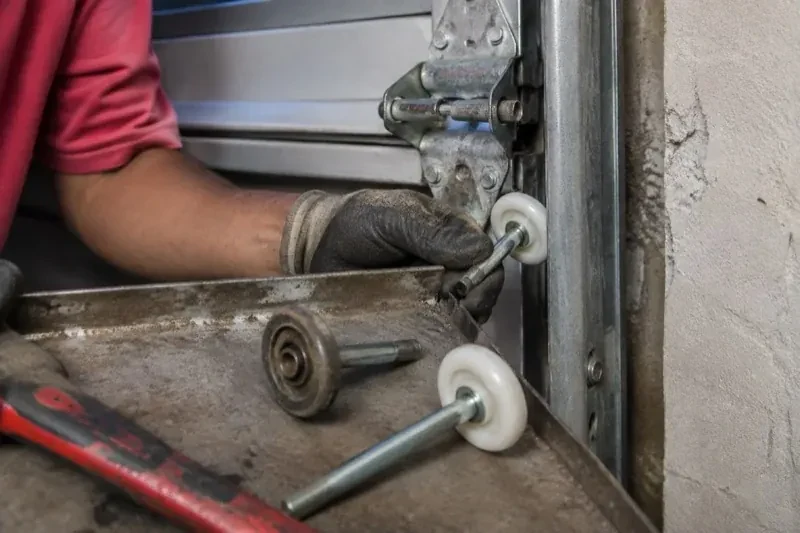
Can I just push the roller back into the track myself?
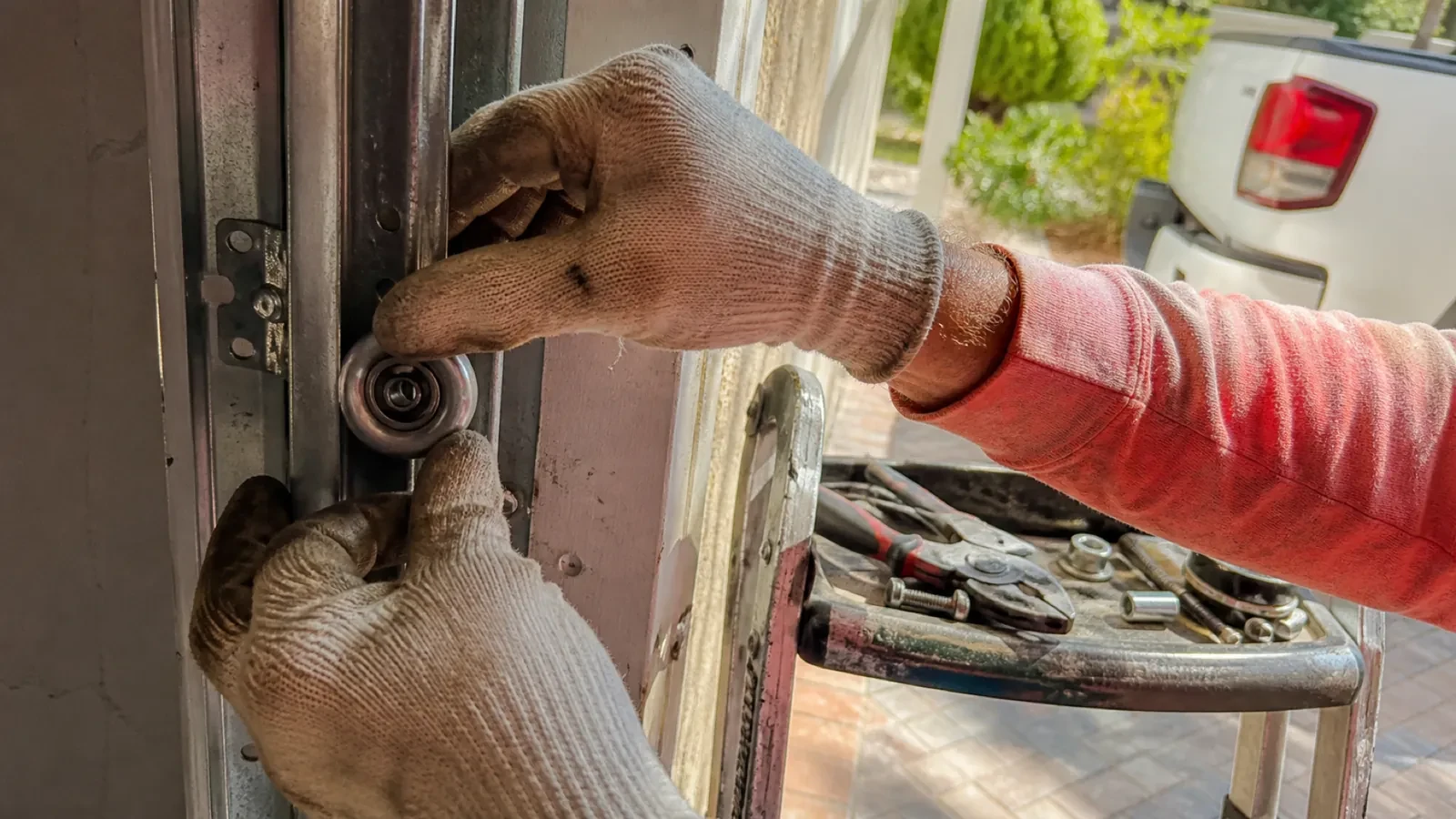
The roller is only the visible part of the problem. Behind it are cables and springs holding the door's weight unevenly, and a door can drop or swing when a section is moved without the load taken off first. A trained technician clamps the door, releases the tension in a controlled way and seats the rollers in order. Leaving it to that process protects both you and the sections themselves.
Can I keep using the door while I wait for the section?
If the damage is cosmetic and the hinges, rollers and cables are sound, the door can usually stay in service. If a section is folded, a hinge has pulled out or a cable has slackened, the technician braces the door, disconnects the opener and asks you to leave it closed, because the opener pulling on a weakened section can turn a repairable door into a larger job. You will be told clearly which applies.
Do the pulleys need replacing at the same time?
Often, yes. Each side has two pulleys, one on the spring and one fixed at the front of the track, and the cable rides over both on every trip. A pulley whose wheel has worn a sharp groove, or whose bearing has stiffened, drags on the cable and adds load the spring has to overcome, which is a common reason the old spring wore early. Pulleys that spin freely and run true can stay.
What is the difference between balancing a torsion door and an extension-spring door?
A torsion door has springs on a shaft above the opening, and tension is changed by winding the springs with steel bars, a quarter turn at a time. An extension door has springs along the tracks, and tension is changed by moving the hook or cable clip to a different position with the door open and clamped. The hand test that proves the result is the same for both.
Do I need to be home for the programming visit?
Yes, for two reasons. The technician confirms that the person authorising changes to the door's access is the owner, a tenant with permission or the building manager, and you choose the keypad code yourself so it is never known to anyone else. You also test each control in your own hand before the visit ends. Have every remote and vehicle you want programmed available, since a car parked elsewhere cannot be trained.
What does the colour of the learn button tell you?
On many openers the learn button's colour marks the generation of radio coding the unit uses, which decides how a hub can talk to it. Some generations accept a simple two-wire connection at the wall-control terminals; others use an encrypted console and need the hub paired by radio or through a small adapter. Sending a photo of the button and the label ahead of the visit lets the technician arrive with the right hardware.
How are gaps around the sides and top sealed?
Perimeter weather seals are attached at the jambs and header after the door is aligned in its closed position. Their flexible edge makes light contact with the exterior face of the sections. The installer checks continuity at corners and watches the seal during movement, adjusting it to limit visible gaps while keeping friction away from the door's normal travel.
What regular care does a newly installed door need?
Follow the door and operator manuals for inspection and product-specific lubrication. Owners can keep the opening and sensor path clear, clean the section finish gently and watch visible cables, rollers, hinges and seals for change. Tracks are guides, so adding heavy grease can collect dirt. Any shift in balance, smooth movement or cable condition is useful reason to arrange a professional system assessment.
How does high-lift track change the repair?
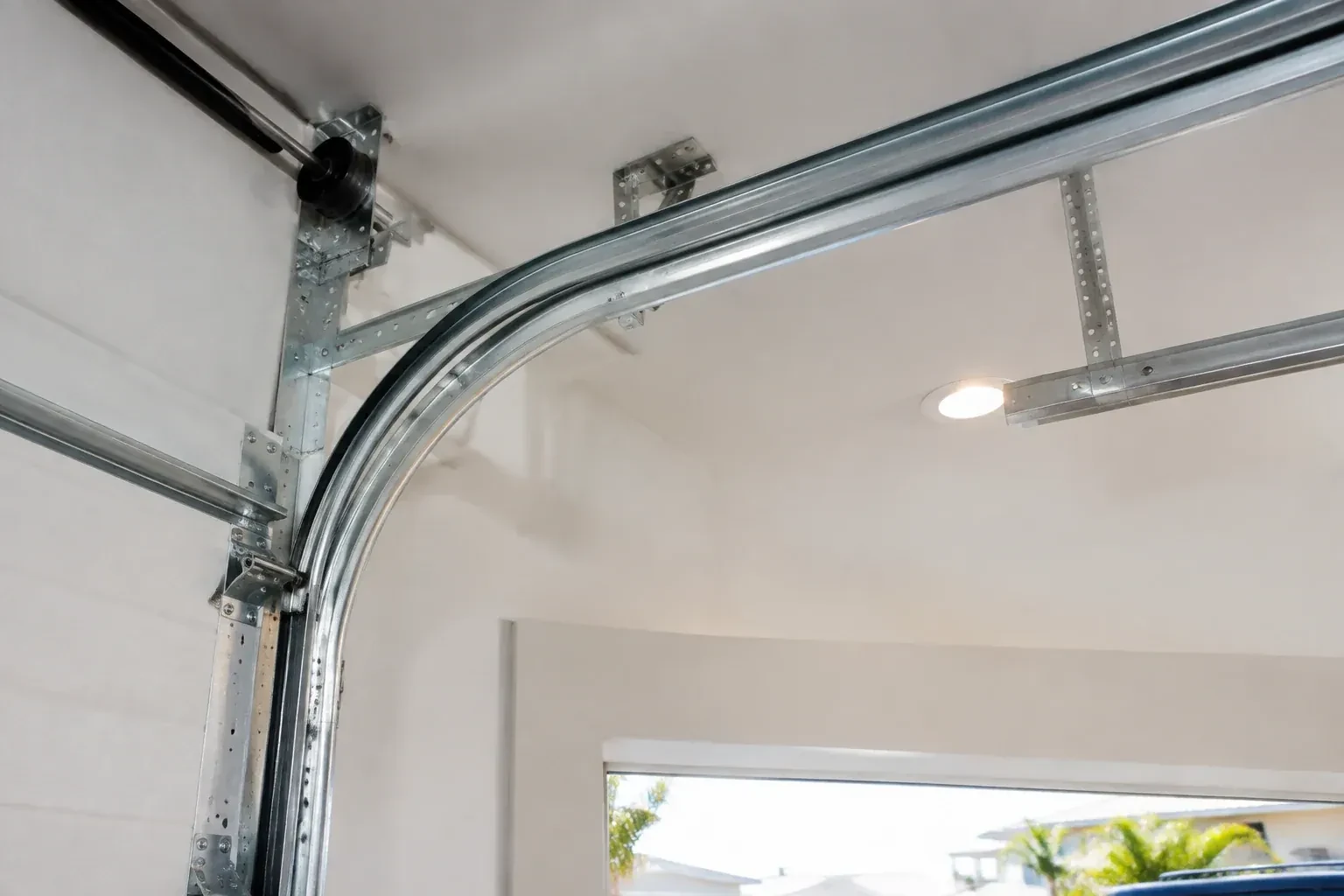
High-lift doors keep travelling vertically above the opening before turning into horizontal track. That geometry changes cable length, drum type, track support and operator arrangement. Repairs therefore use the recorded lift dimensions and door weight, with cable tension observed through the transition and near the open position. Components from a standard-lift setup are not assumed to match.
Why is there a grinding or clattering sound near the hood?
Noise at the head can come from worn barrel bearings, loose brackets, misaligned drive chain or sprockets, shifting slats, an uneven coil or hardware contacting the hood. The pattern matters: once per revolution suggests something different from continuous guide scrape. Controlled observation locates the source before a specific part is selected.
Request a visit
Winter is when garage doors in Maryvale fail most, so we prepare for it. Cold-rated lubricants, bottom seals that stay soft in the frost, spring tension checked before the freeze and opener force adjusted for a stiffer door. A door serviced in the autumn is a door that opens in January.