Garage Doors in Parkway East, OntarioWarmer abovethe garage.
When a bedroom or office sits over the garage in Parkway East, the door is part of the building envelope. An insulated door, tight weatherstrip and a properly adjusted bottom seal make that room noticeably more comfortable in January and July alike, and the difference shows up on the heating bill.
When a bedroom or office sits over the garage in Parkway East, the door is part of the building envelope. An insulated door, tight weatherstrip and a properly adjusted bottom seal make that room noticeably more comfortable in January and July alike, and the difference shows up on the heating bill.
Safe for everyone who walks under it.
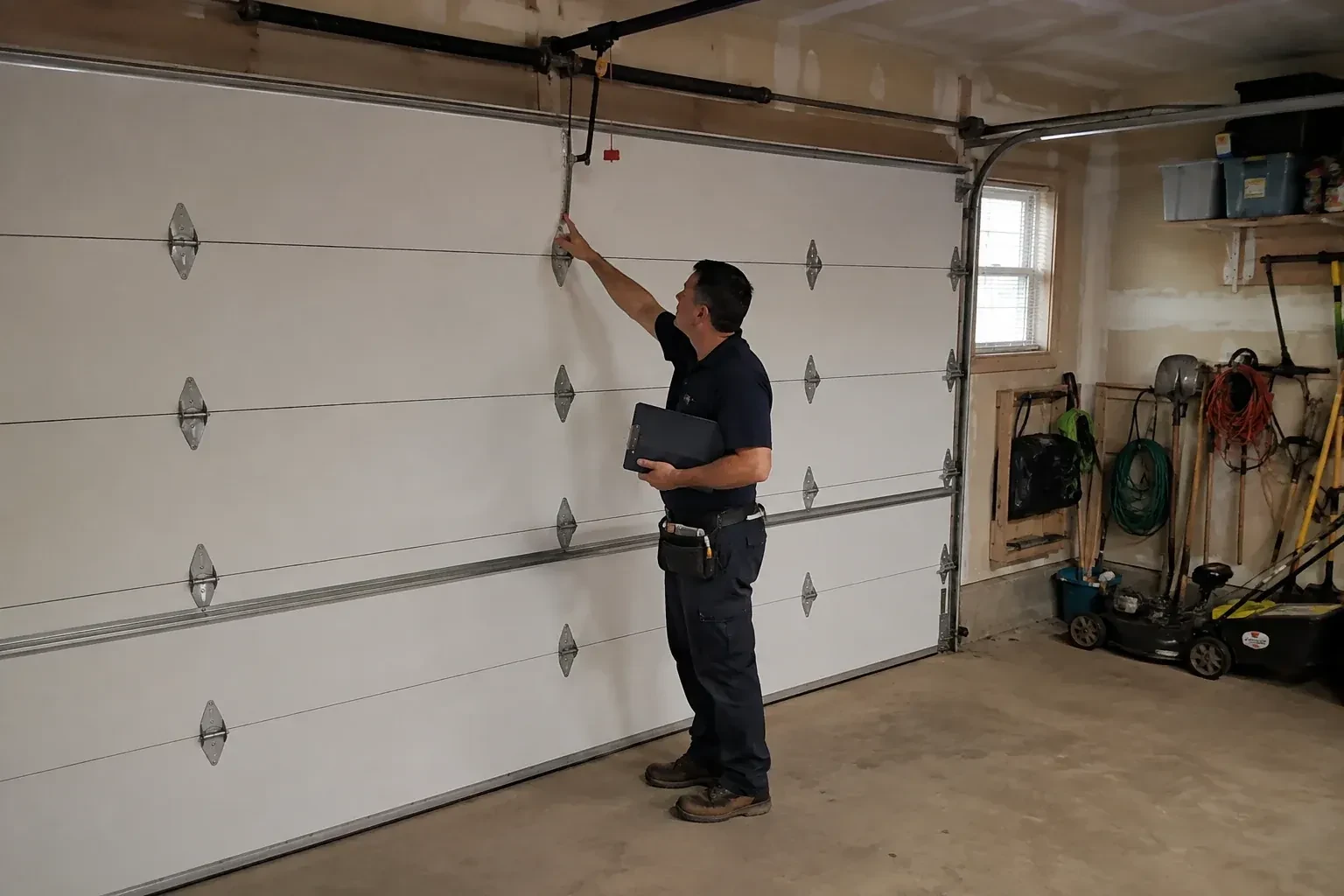
We keep the van stocked for Parkway East so a single visit covers most repairs, and we book a time you can hold us to rather than a window that swallows your morning. If a part must be ordered, you hear that on the spot, along with when the second visit will be.
Shops, warehouses and workshops in Parkway East run on their doors, and a stalled door means a stalled day. We service commercial sectional and rolling steel doors, high-cycle springs, heavy-duty operators and safety edges, and we keep that hardware on hand. The person in charge on site gets a plain explanation of the fault and the fix, and a record for next time.
31years in business
24/7open every day
Told before touched. Nothing is adjusted or replaced until you have heard what we found and agreed with the plan for it.
Neat work, neat exit. New parts fitted cleanly, old ones removed, the floor and door wiped down. The garage is yours again the moment we leave.
Room to choose. We give you the practical picture and step back. Repair now, plan a replacement, or wait and watch: your call.
Request a tune-up for your garage door in Parkway East.
Shops, warehouses and service bays in Parkway East have their own list: rolling steel doors, heavy sectional doors, industrial operators, safety edges and high-cycle springs. Alongside our residential work, we service and replace all of these and can set up a maintenance schedule that fits your operating hours.
About 58% of homes in Toronto were built in 1980 or earlier, according to the 2021 Census.
Older homes
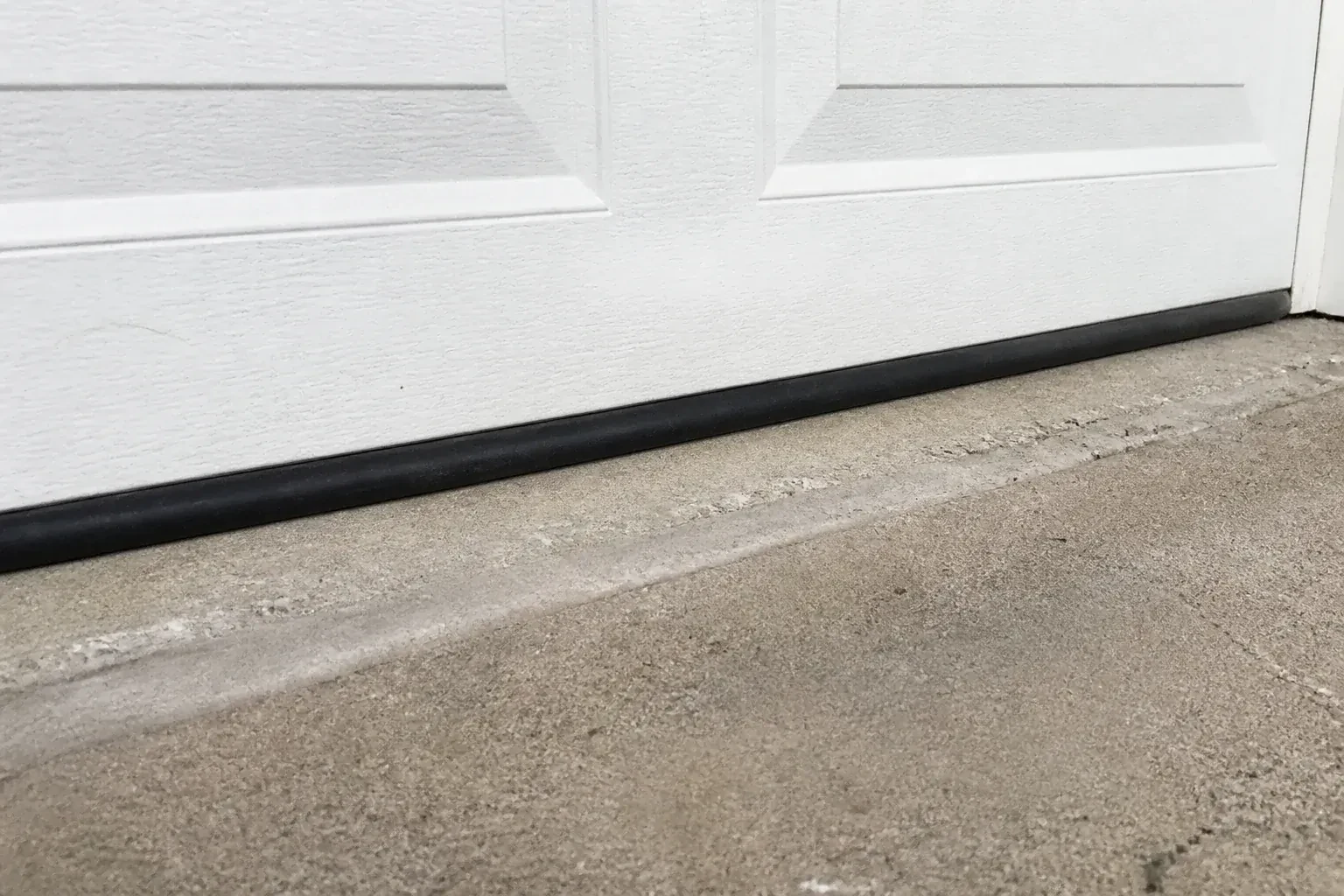
Decades of freeze and thaw work on the concrete apron in front of an older garage, and an uneven floor means the bottom seal meets a gap on one side. A thicker seal or an adjusted threshold closes it and keeps snow and cold air out.
Single-detached houses make up about 23% of homes in Toronto (2021 Census).
In denser housing the garage door is frequently the main entrance to the home and sits close to the living space, so a door that closes fully and locks properly matters for security. We check the closing force, the lock and the opener's stored codes on every visit.
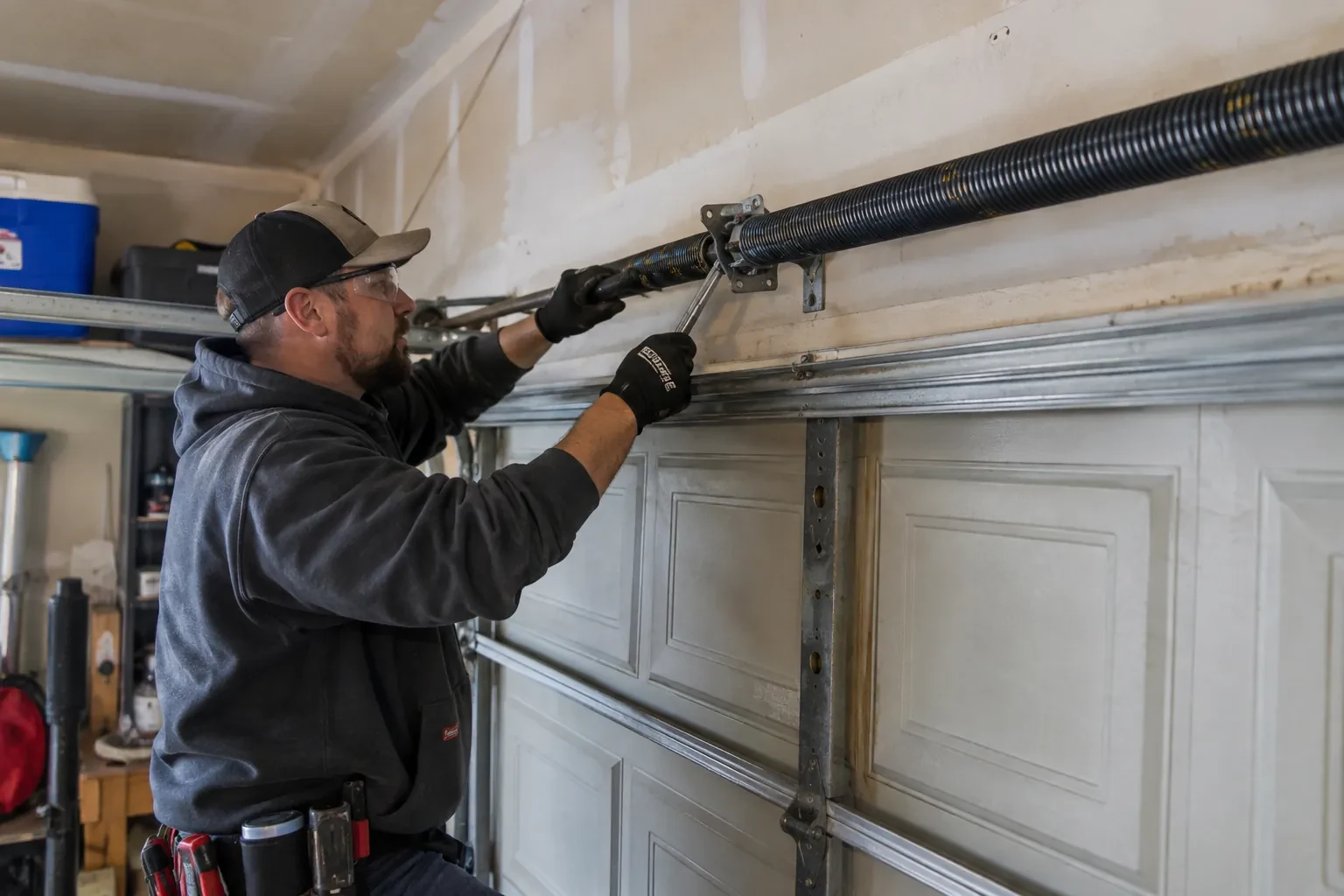
Every spring has a fixed number of open and close cycles in it, and a busy household uses them up sooner than a quiet one. When yours are worn, we fit replacements sized to your door and can suggest longer-life options for heavy use.
The door goes up perfectly. Coming down is the trouble: partway to the floor it stops, climbs back to the top, and the light on the opener blinks at you.
The door opens about a third of the way and stops. Turning the limit screw on the head has made no difference, and the trolley seems to sit in the wrong place along the rail when the door is fully closed.
It is minus twenty in the detached garage and the door climbs in jerks, the belt stiff as a board. By the afternoon, when the sun has been on the door, it runs almost normally again.
During the ice storm the power was off for two days. You came home in the dark, found the door dead, and had to climb out of the car to pull the red cord in the cold.
Someone backed the car in a little too far, a bin or a bicycle brushed the track, and since then the door starts to close and comes back up. One sensor now sits at a slightly different angle from the other.
A contractor is coming to work in the garage on Thursday while you are away. Handing over a remote means chasing it back afterwards, and the keypad code is the one your whole family uses.
Halfway up, the door lets go of the opener with a clunk and sinks back to the floor while the trolley carries on to the top alone. It has happened three times this month, and each time the release lever is found half-cocked.
Which fix fits?
The morning after a thaw the opener groaned, the door stayed stuck to the icy floor for a second, then lurched up crooked.
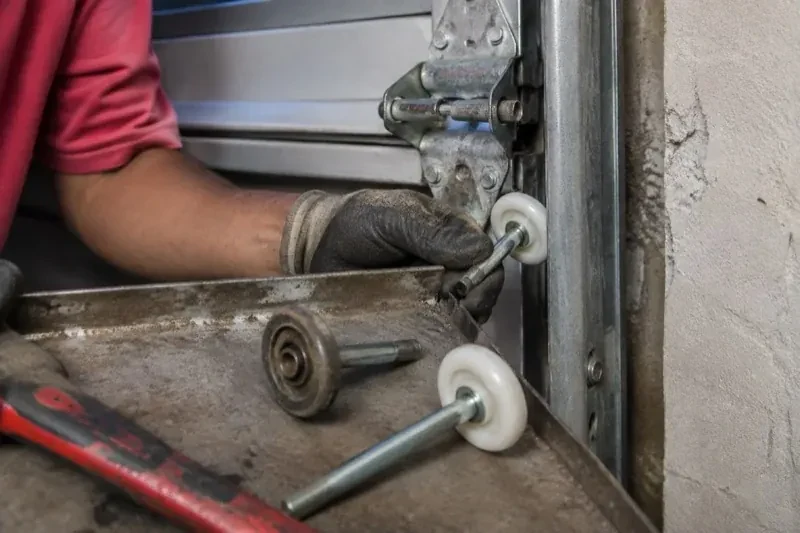
Every morning the door announces itself: a rattle on the way up, a grinding squeal on the way down, loud enough that the neighbours know when you leave.
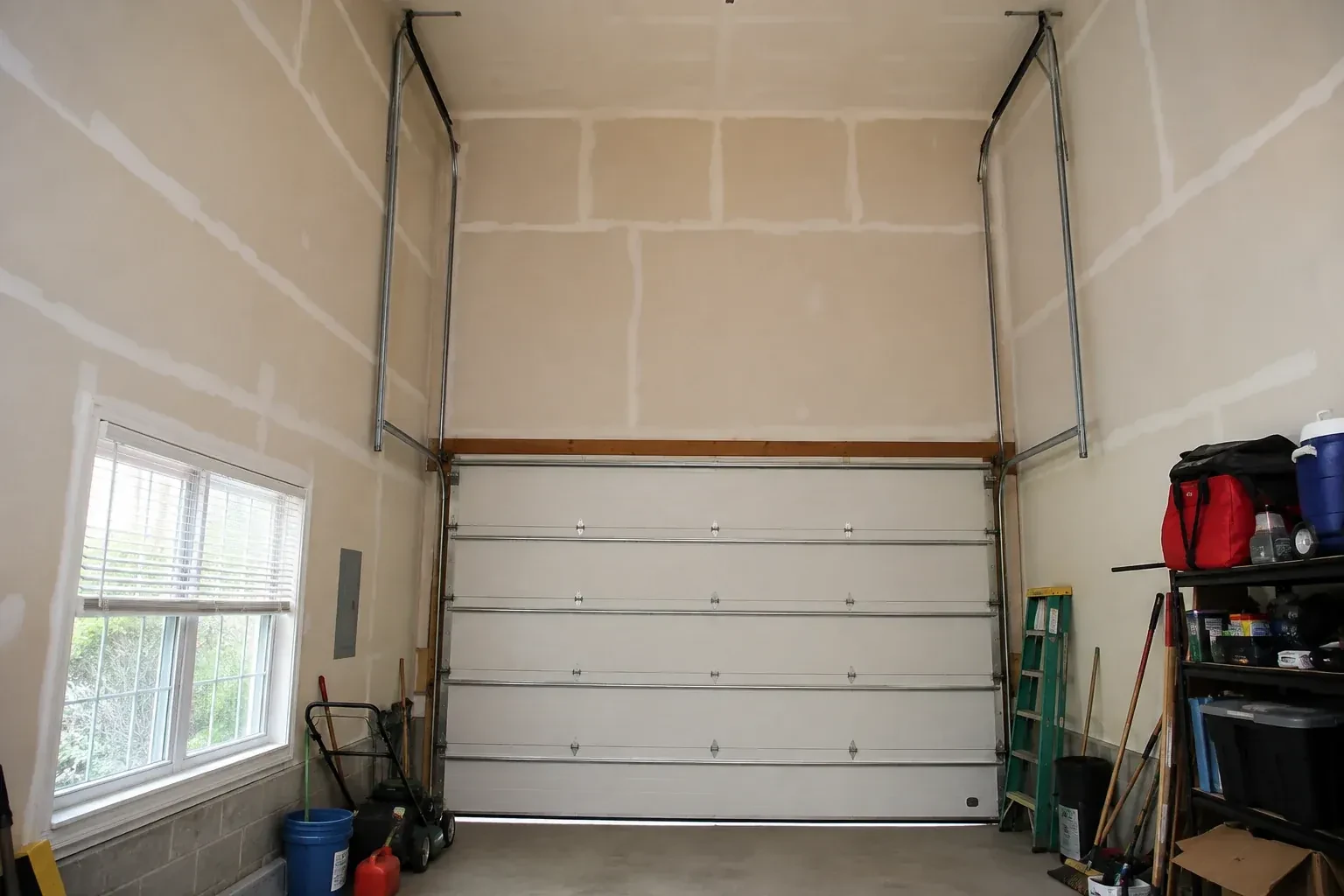
WhyFor a garage with generous headroom, standard track can leave valuable space unused.
An entrance. Not an afterthought.
1/10Off-Track Garage Door Reset
The morning after a thaw the opener groaned, the door stayed stuck to the icy floor for a second, then lurched up crooked. It stopped halfway with a grinding scrape and has not moved since.
Someone slid the inside lock across before bed, and in the morning someone else pressed the remote. The opener groaned, the door jumped and shuddered, and now the lock bar is bent, the section is creased and the door hangs crooked at the top.
Every morning the door announces itself: a rattle on the way up, a grinding squeal on the way down, loud enough that the neighbours know when you leave. A spray of lubricant settled it for a day or two, then the racket came back.
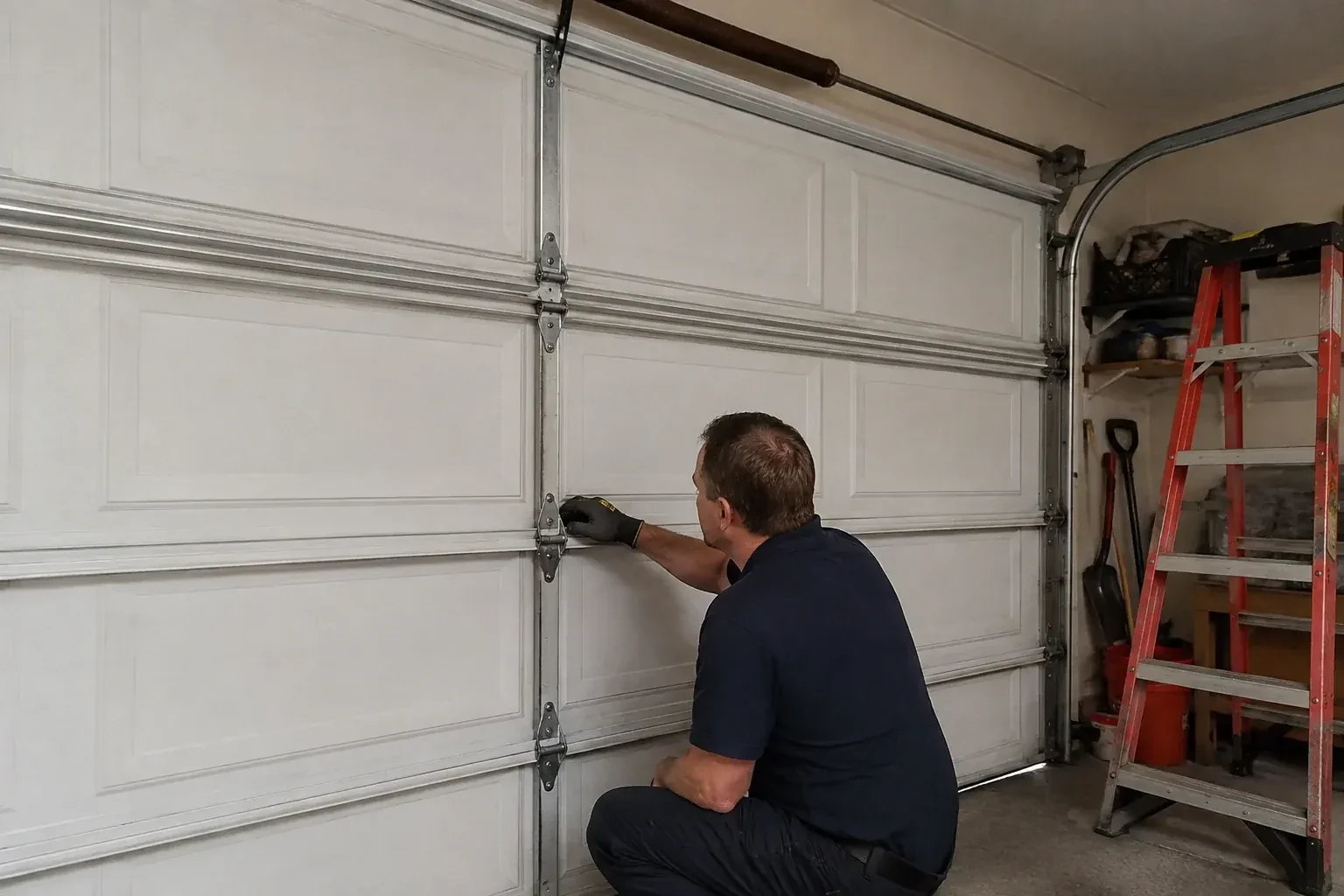
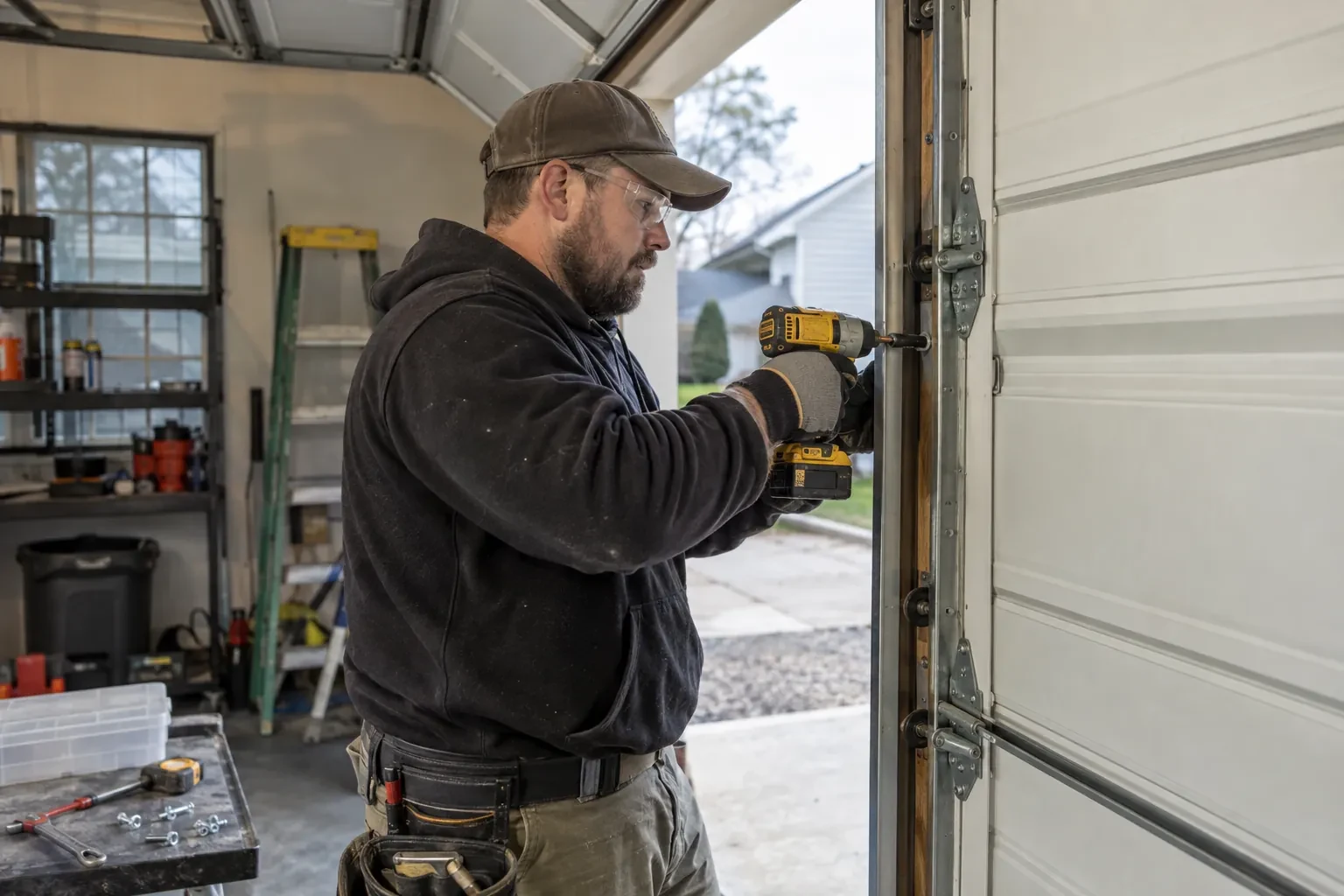
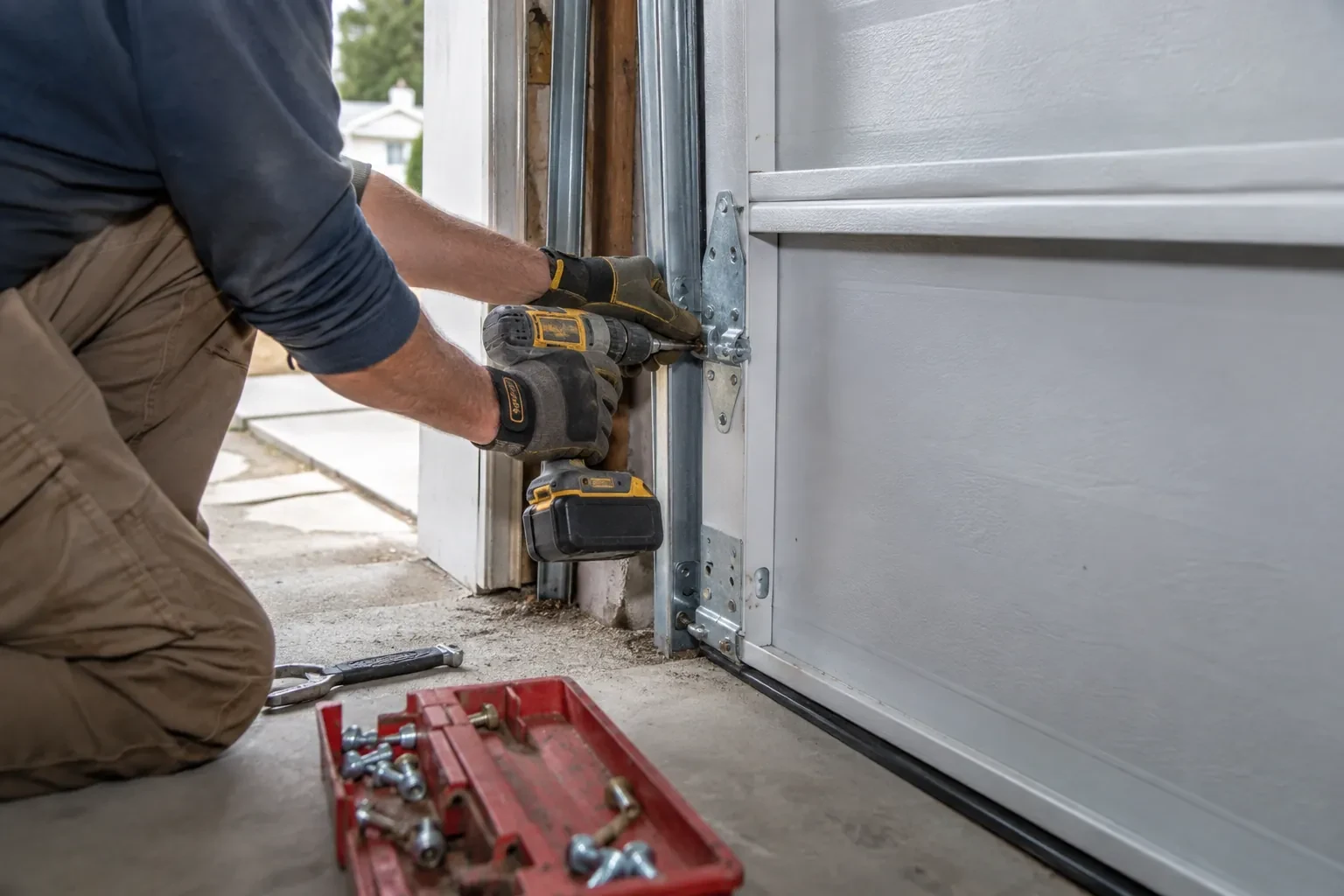
Pressing a hand against one of the middle hinges makes it rock on the panel. The screws turn and turn without ever tightening, and there is a rattle from that spot every time the door settles onto the floor.
The rail shakes when the door runs. The steel straps holding it to the ceiling have worked loose, the chain rattles the length of the garage, and a bolt has already dropped onto the hood of the car.
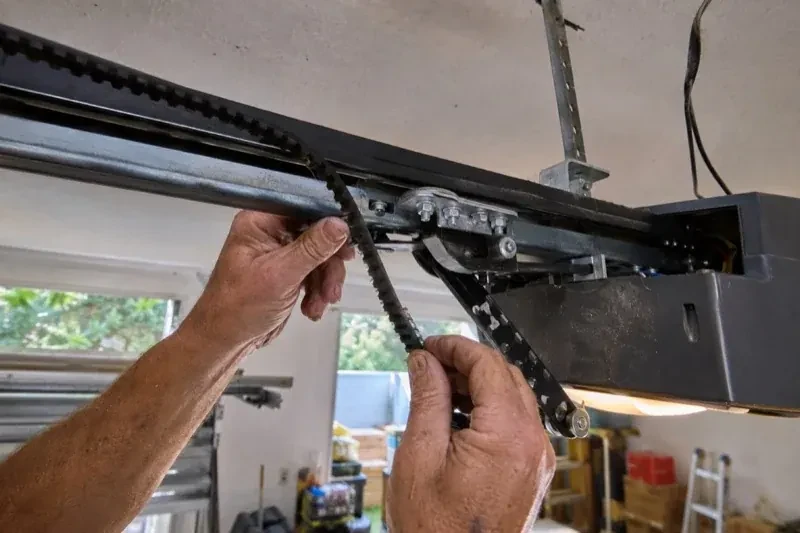
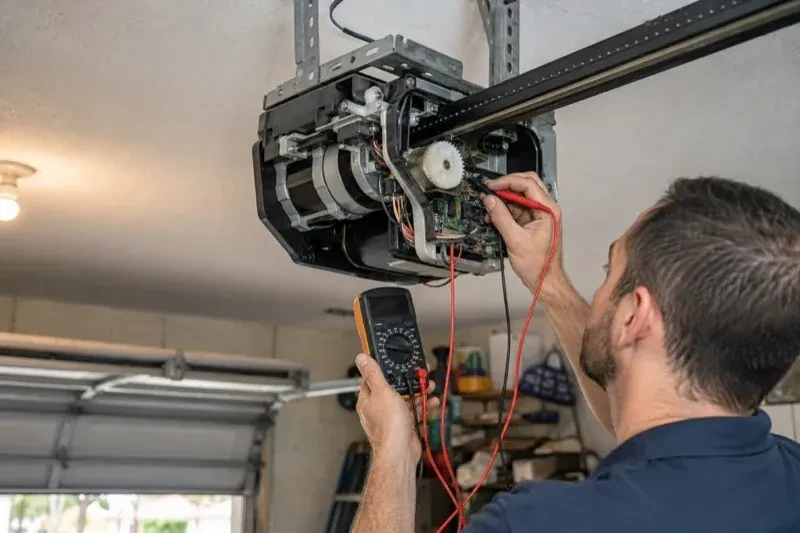
Press the remote and the motor runs its full cycle, lights on, the usual whir, but the door does not move a centimetre. Up at the trolley, the belt is hanging loose where a small plastic clip used to hold it.
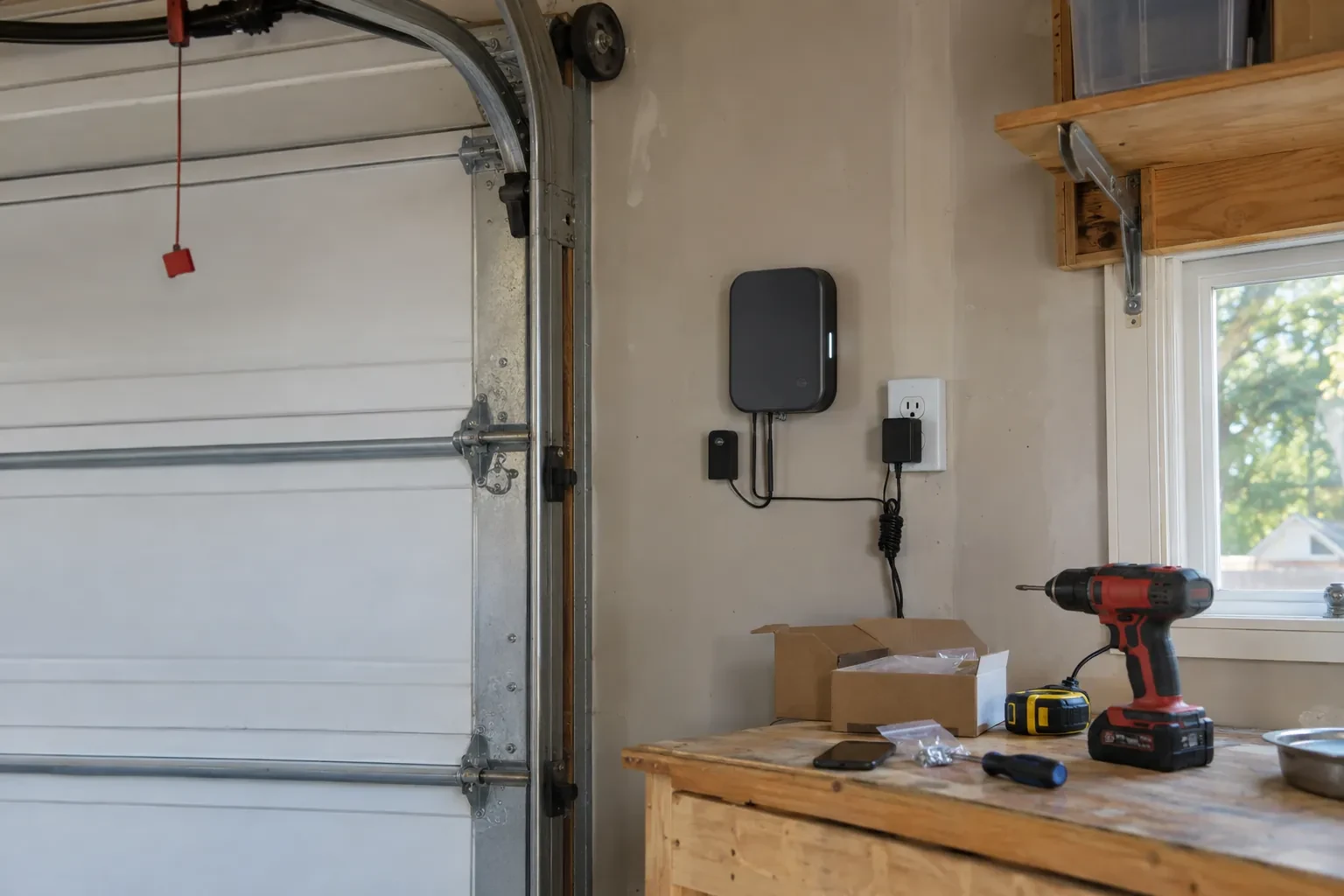
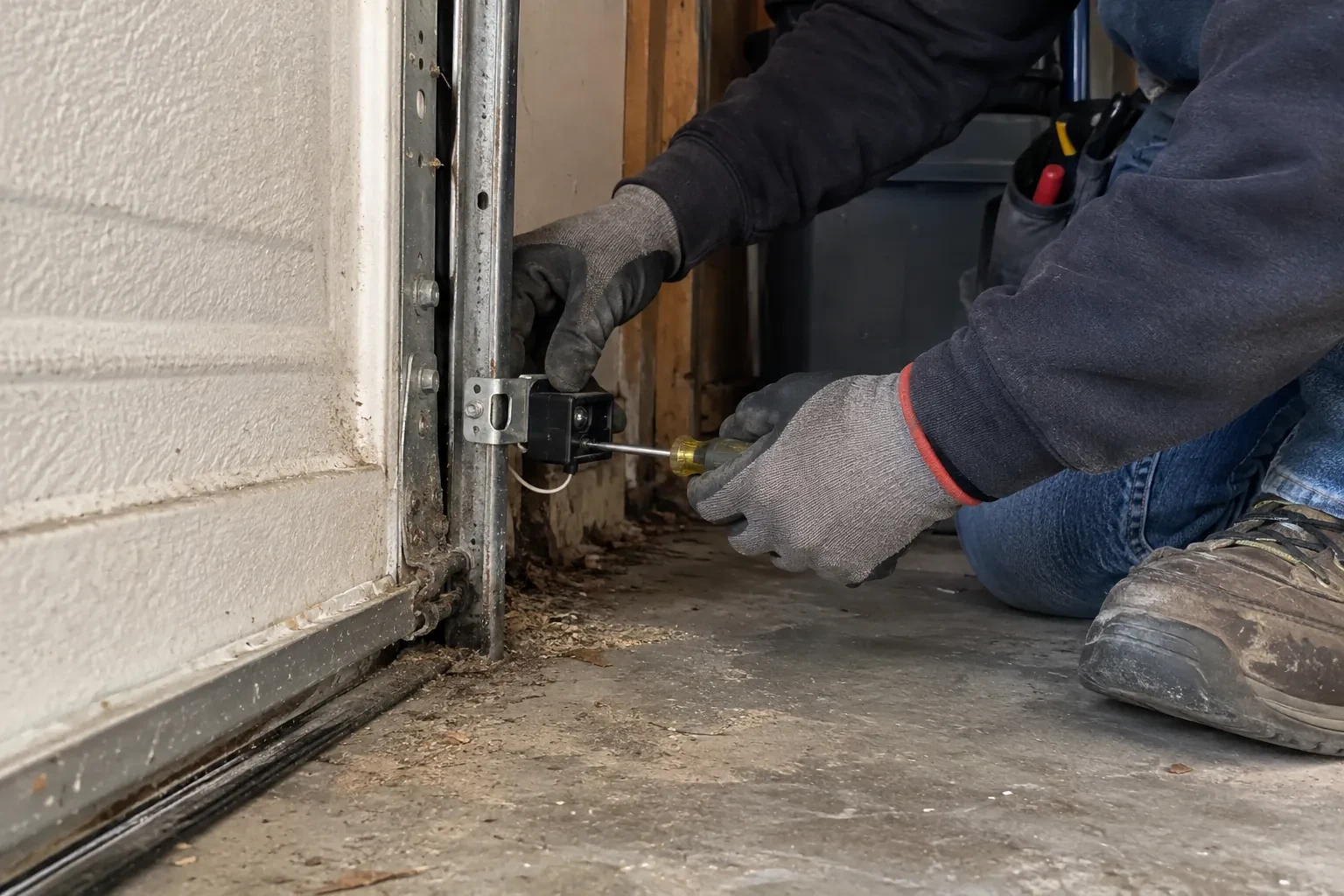
Since shelving went up along the garage wall, the door will not close and both sensor lights are dead. A screw or staple may have gone through the thin wire that runs from the opener to the sensors.
Since the new door went in, the red handle has hung just below the ceiling, a stepladder's height above anyone in the household. During last week's blackout your daughter stood under it with a broom, unable to hook it down.
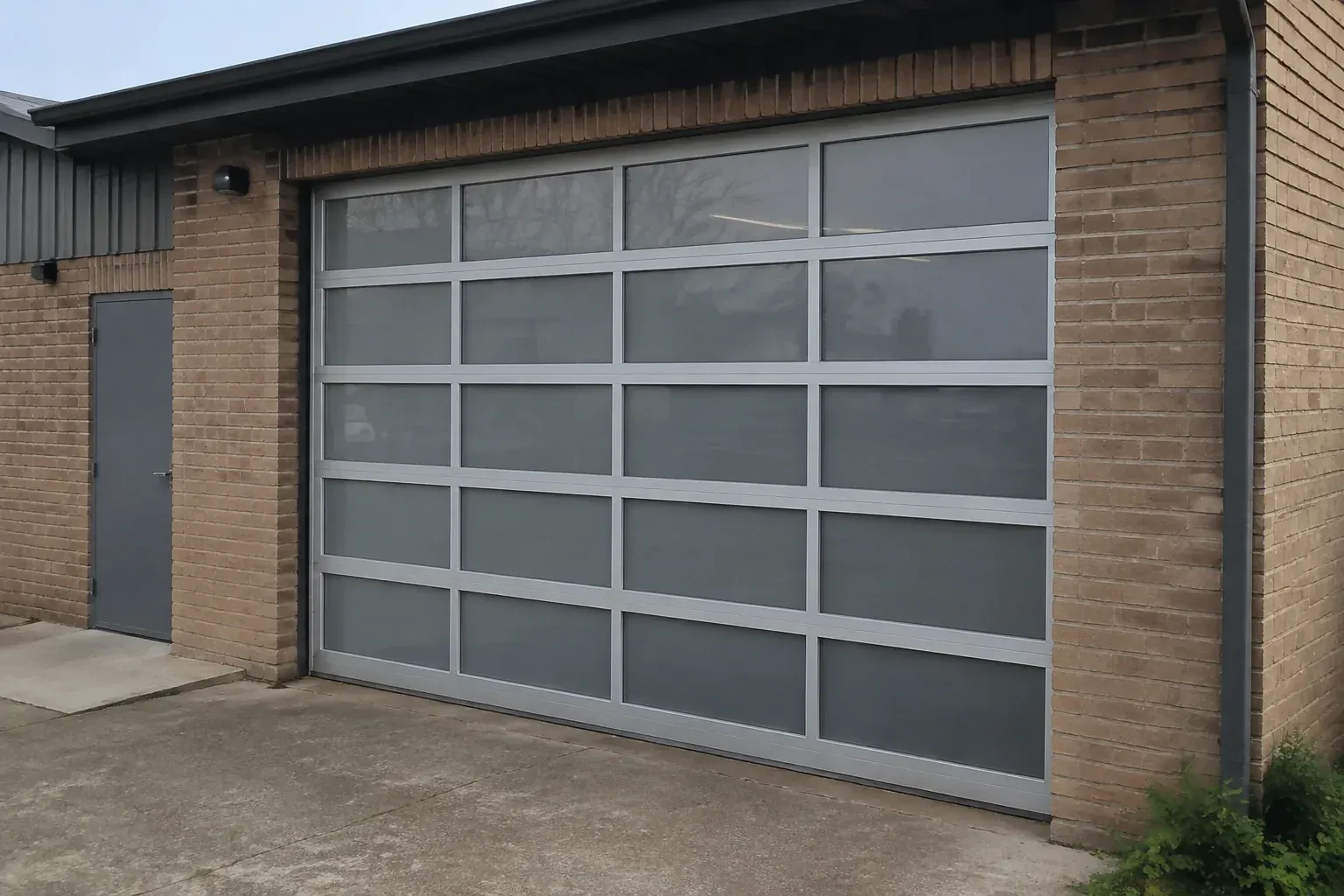
A heated garage feels cold beside its ageing door each winter. You are considering insulated glazing, improved seals and a frame option suited to the room rather than choosing on appearance alone.
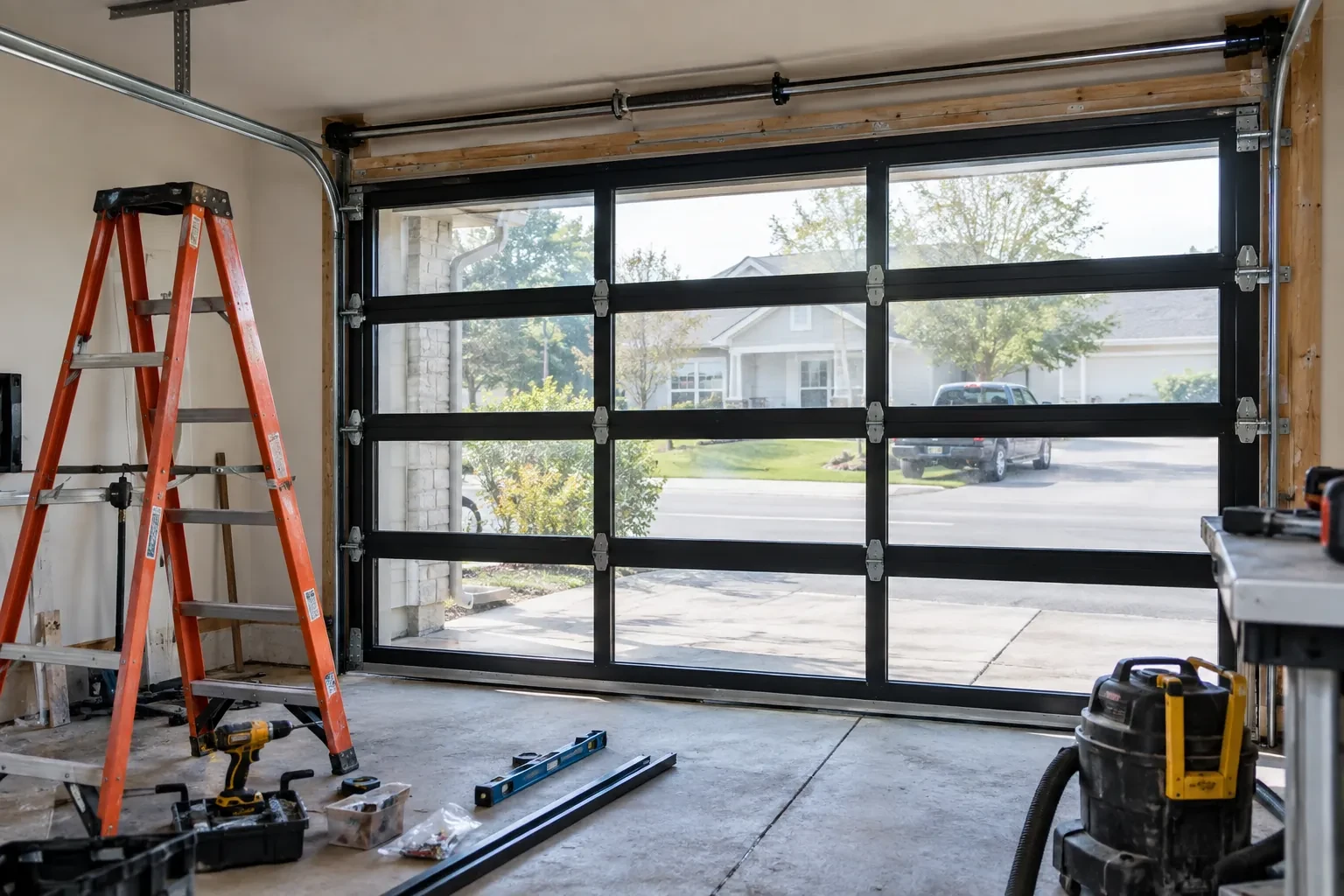
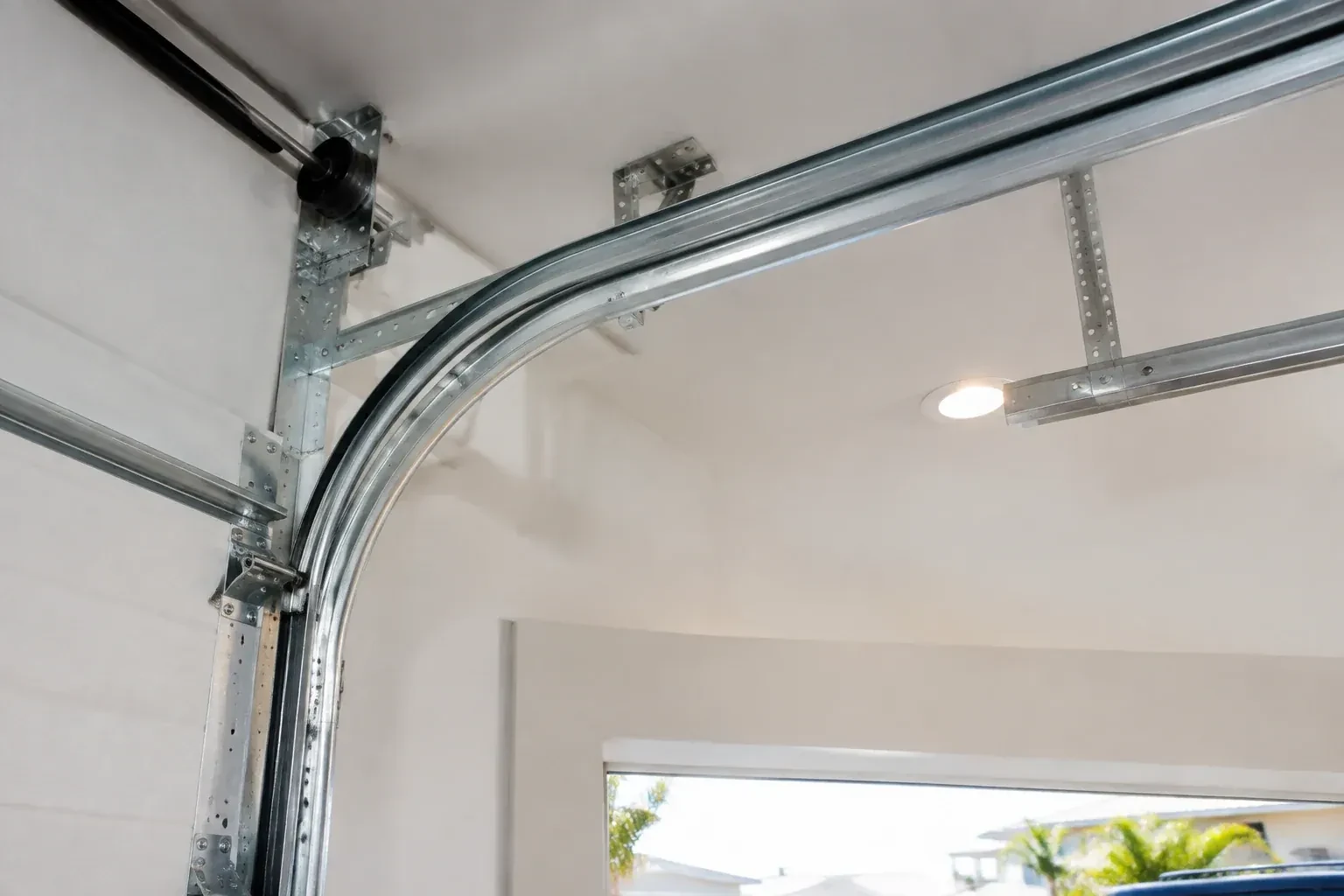
Storage racks were planned near the ceiling, but the existing tracks and centre-mounted opener divide the only practical zone. The wall above the door appears tall enough to move the turning point upward.
Can I just push the roller back into the track myself?
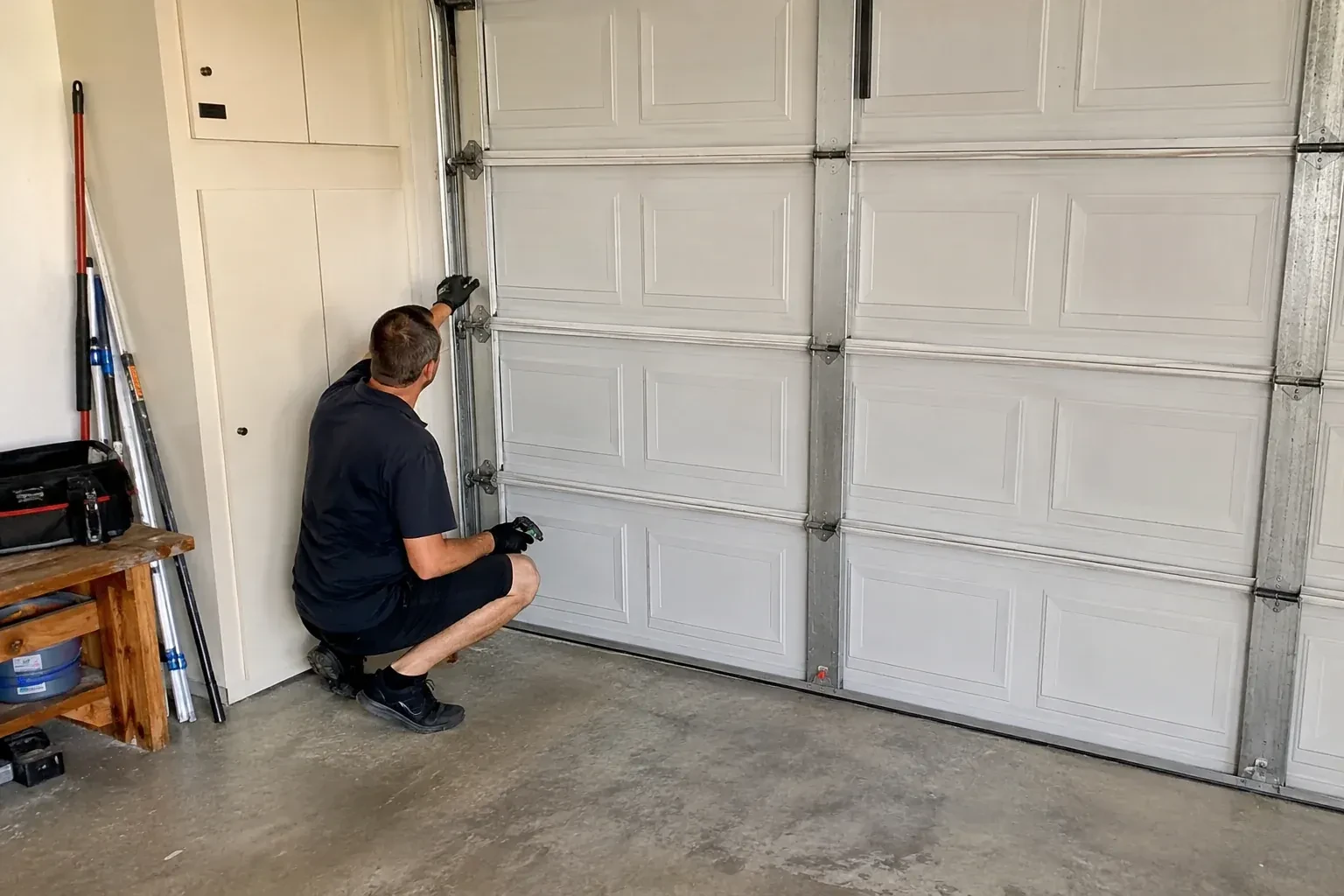
The roller is only the visible part of the problem. Behind it are cables and springs holding the door's weight unevenly, and a door can drop or swing when a section is moved without the load taken off first. A trained technician clamps the door, releases the tension in a controlled way and seats the rollers in order. Leaving it to that process protects both you and the sections themselves.
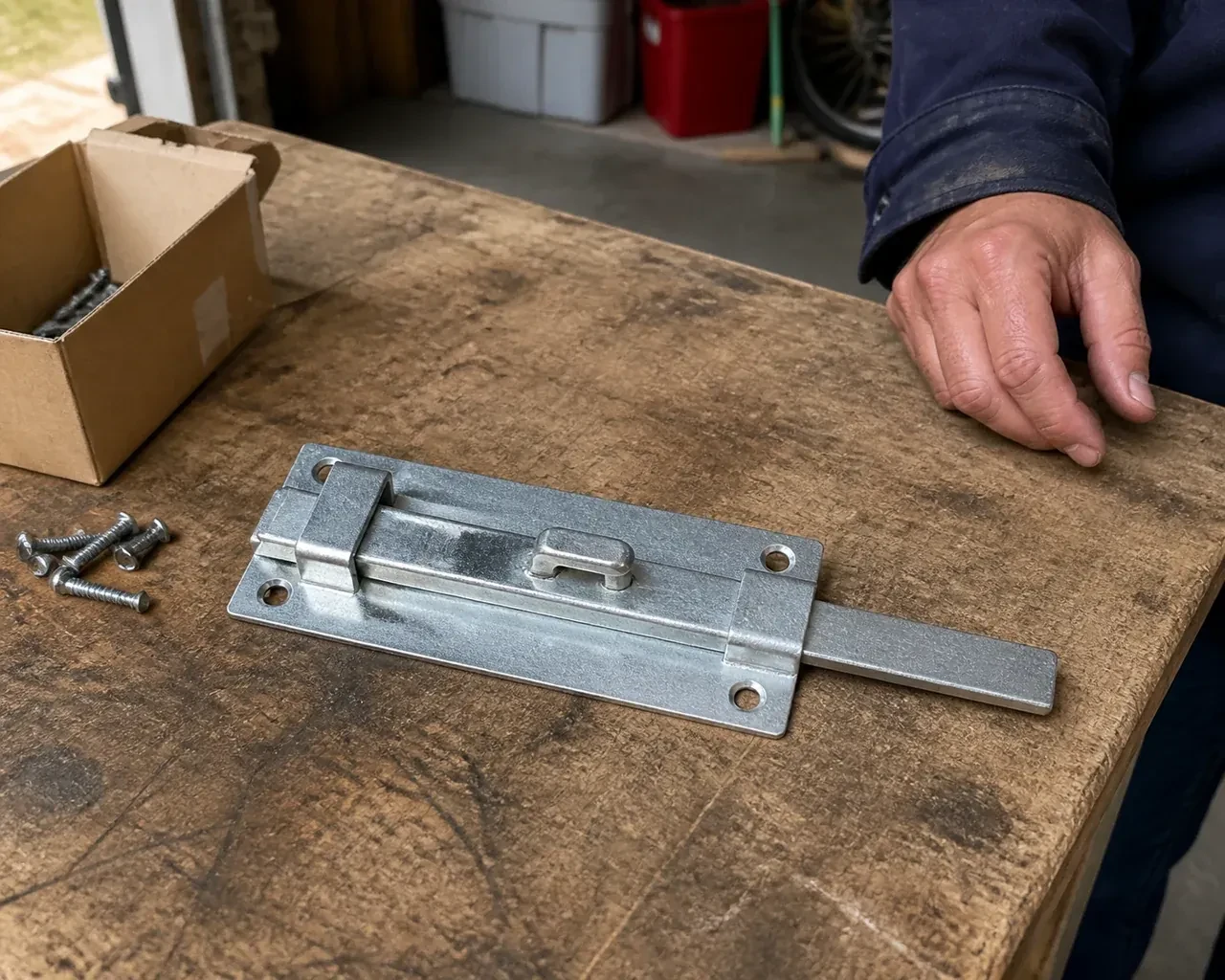
How do I lock the garage door during a power outage?
With the door closed, pull the opener's release cord so the trolley lets go of the door, then throw the slide bolt or turn the T-handle to lock. When power returns, unlock first, check both bars are clear of the track, and then re-engage the opener as its manual describes, usually by running it once. Keeping to that order is what protects the lock and the opener.
Should the track be lubricated too?
No. The track is meant to be clean and dry so the wheels roll rather than slide. Grease or spray in the raceway collects dust, sand and, in winter, salt and slush, forming a paste that grinds the wheels and can let a roller skid instead of turn. The technician cleans the track and leaves it dry; at home, a wipe with a cloth and an occasional sweep of the bottom few inches is all the track wants.
Why does the door pop or click at the same spot every time?
A noise at a fixed height points at the joint passing through the curve at that moment. A cracked hinge leaf flexing open and snapping back, a pin rocking in a worn hole, or a roller stem shifting in a loose hinge all make a sharp report as the load transfers. Because it always happens at one place, the technician can go straight to that joint and usually finds the hinge or roller responsible.
Can you turn the force up so the door closes on cold mornings?
Force is set to the lightest level that moves the door reliably, and it is raised only a little for a cold garage. Turning it up further to overcome a heavy door or a seal frozen to the slab is not done, because too much force interferes with the safety reversal and can bend the top section. If the door is hard to move in the cold, the springs, rollers or the frozen seal are dealt with instead.
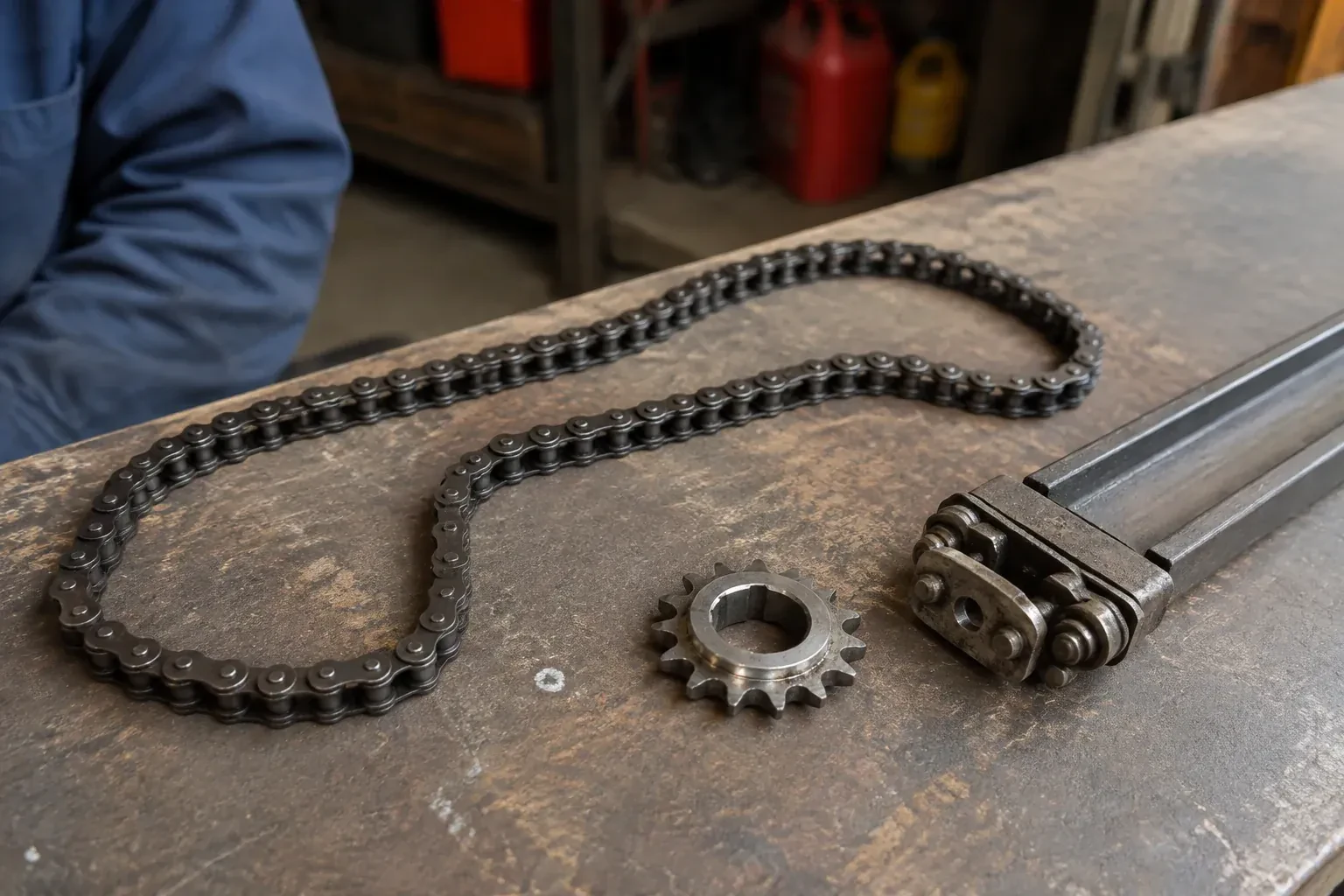
Is a belt drive harder to repair than a chain drive?
No, just different. The belt is lighter, runs dry and is replaced as one length with a clip, where a chain has links and takes grease. The tensioning at the trolley works the same way on both, and the sprocket, idler and trolley are similar parts. What a belt drive rewards is care with tension and a straight rail, because it is chosen for quiet and shows any fault as noise.
Do both sensors get replaced together?
Yes. The sending and receiving sensors are made and sold as a matched pair for a given opener family, and the head unit expects both to be from the same generation. Fitting a pair also means both lenses, both indicators and both mounting points are fresh at the same time, so the alignment holds and the next check is simpler. A single sensor from an unrelated kit is where mystery faults come from.
The door is stuck shut, the opener is dead and there is no other door. Can you still get in?
Usually. If the door has an outside key release, a small round lock near the top panel, that is what it is for: the key pulls a cable that frees the trolley from outside so the door can be lifted by hand. If there is no such release, the technician has other methods to reach the lever from outside, and once inside the fault is dealt with. Fitting an outside release afterwards is a sensible follow-up for a garage with a single door.
Can the panel layout mix clear and opaque sections?
Many door families allow a planned mix of compatible glass, polymer or solid panels. That can screen storage and work areas at eye level while bringing more daylight through upper rows. The layout is confirmed through the product options for the ordered size and construction, since panel weight, insulation and available finishes must remain compatible across the complete door.
How much ceiling height does the conversion need?
There is no single ceiling figure because the useful dimension depends on the opening height, desired clearance, track transition, shaft and spring space, opener arrangement and nearby obstructions. A technician measures the whole bay and calculates the high-lift rise that fits those boundaries. The result should be expressed as a proposed open-door clearance before the component set is ordered.
Request a visit
We keep the van stocked for Parkway East so a single visit covers most repairs, and we book a time you can hold us to rather than a window that swallows your morning. If a part must be ordered, you hear that on the spot, along with when the second visit will be.