Springs · Parkway East
Garage Door Roller Replacement in Parkway East
A roller near the top corner is riding on the lip of the track rather than inside it, and the section above leans back a little more each week.
In plain words
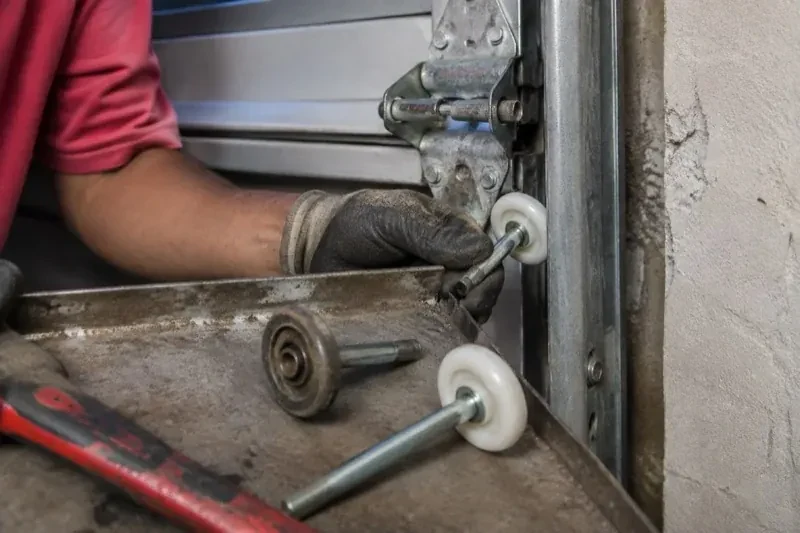
Not every roller suits every door. Wheel diameter has to match the track: two inches on residential track, and either two or three inches on commercial track, so the installed track is measured, not assumed. Stem length has to match the hinges: four inches through a single hinge, seven or ten inches where two hinges stack at the end of a heavier door. Bearing count and load rating have to suit the door's weight, with insulated steel and wood doors needing more than a light single-skin door. Measuring all of that before a set is chosen is part of the service, so the new rollers sit properly and last.
How the visit goesEvery morning the door announces itself: a rattle on the way up, a grinding squeal on the way down, loud enough that the neighbours know when you leave. A spray of lubricant settled it for a day or two, then the racket came back.
Garage Door Roller Replacement
How the visit goes
Listening to a full cycle
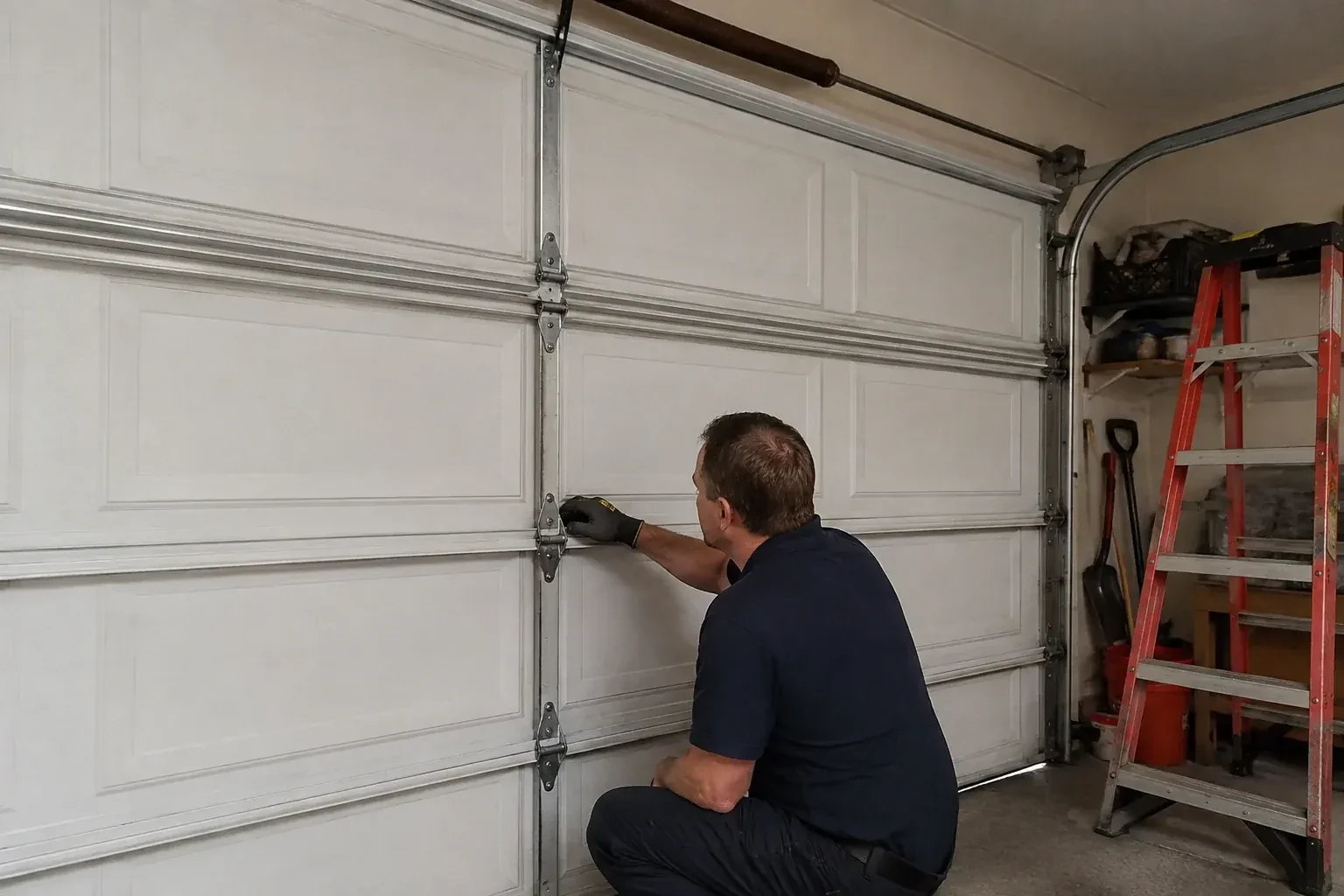
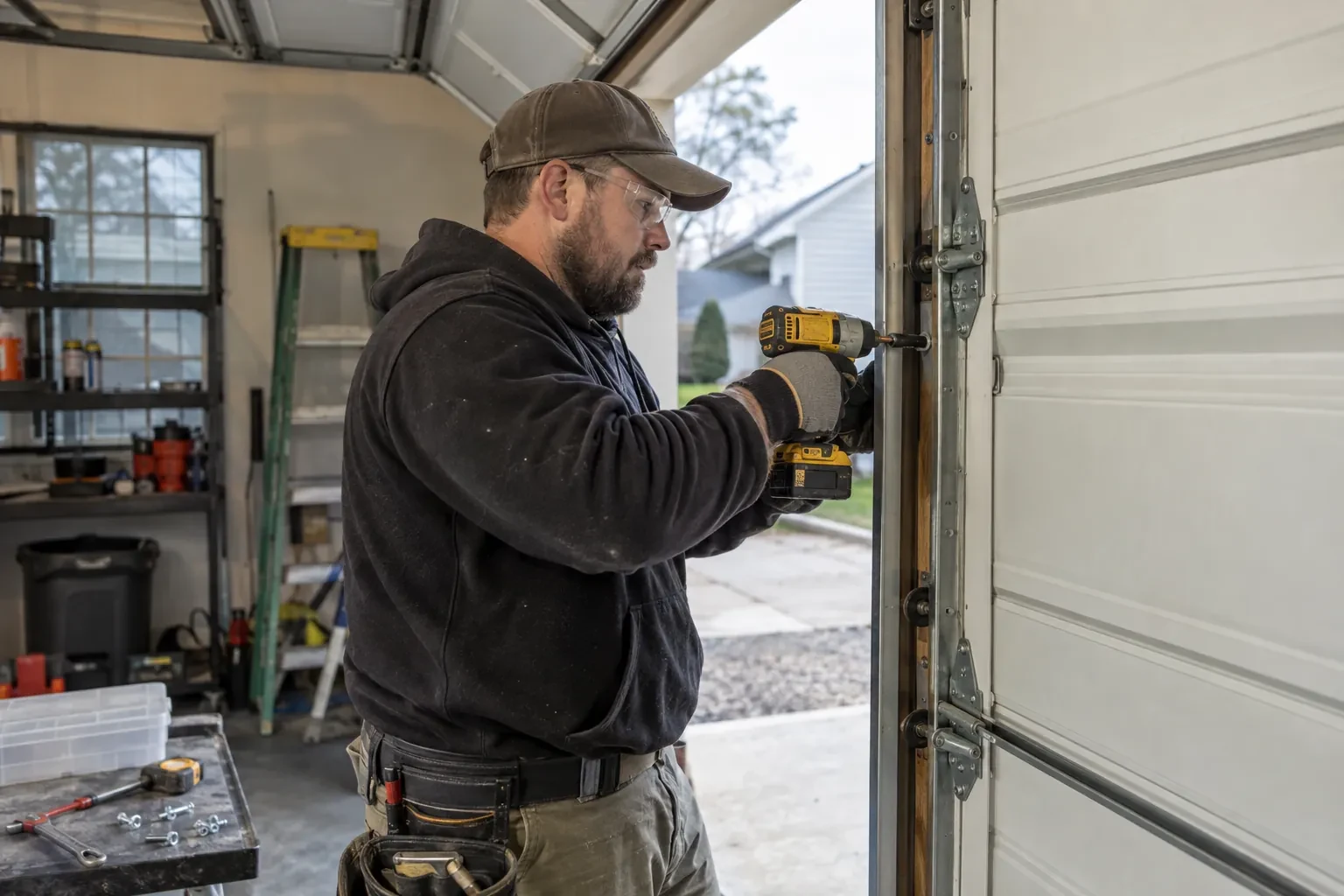
The assessment begins with the door in motion. The technician runs it up and down on the opener, then releases the opener and moves it by hand, because a hand on the door feels what an ear alone misses: a catch at one height, a wheel that drags rather than turns, a section that rocks as it rounds the curve into the horizontal track. Where the sound or shake happens narrows the search. Trouble at the curve usually points to worn or oval wheels, a rhythmic click travelling with the door points to a failed bearing, and a shudder near the floor often traces to the lowest rollers and whatever the winter left in that end of the track.
The bottom rollers and the cable brackets
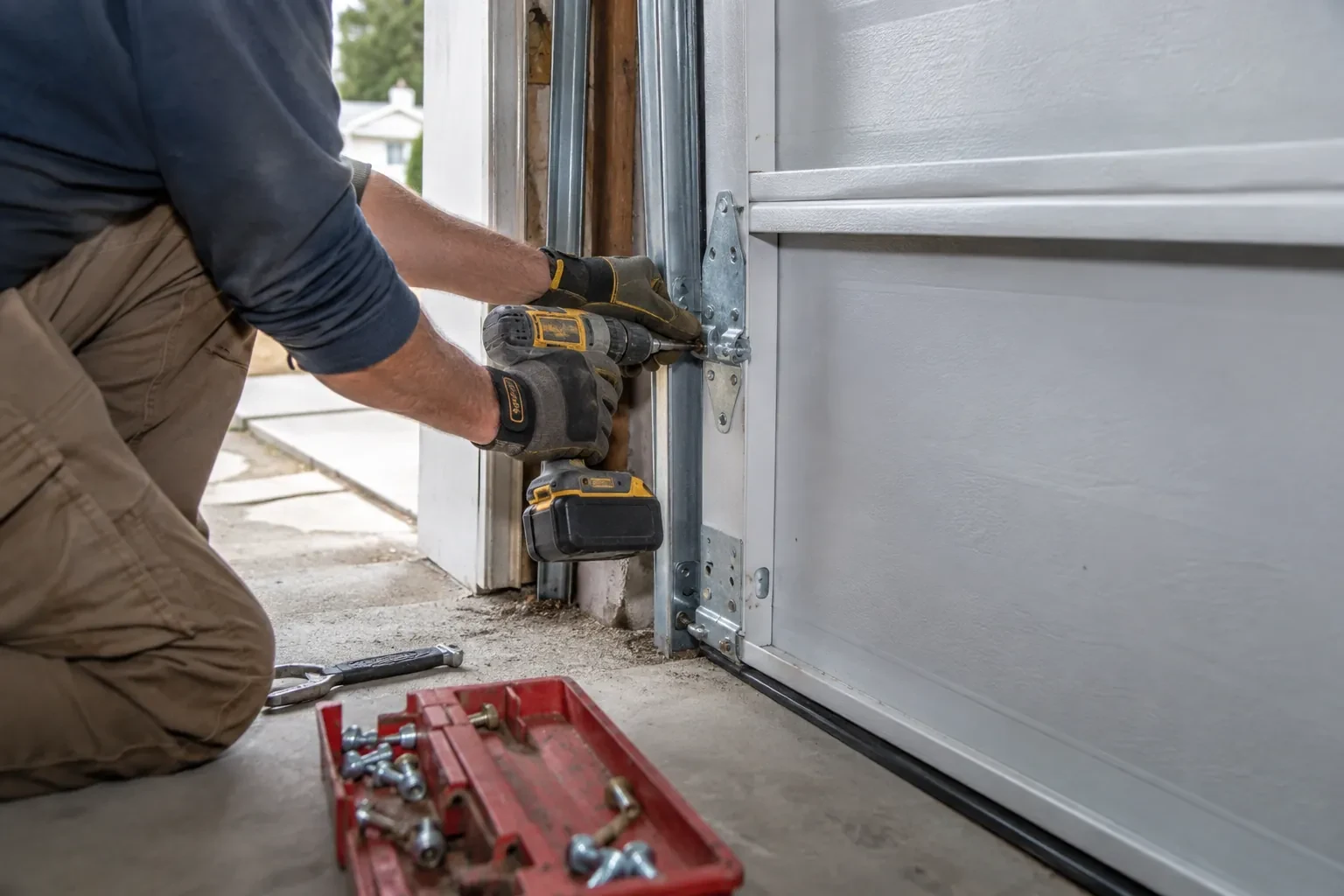
The lowest rollers live in the bottom brackets, and those brackets also anchor the lifting cables, which means they carry the counterbalance load whenever the door is closed. This is the one roller position that is never approached casually. Depending on the door, the technician either exchanges the roller while the bracket stays fastened and the cable stays put, or first takes the spring tension off with winding bars so the bracket can be unbolted and inspected. Either way the bracket, the cable end and the fastening into the section are examined, and a corroded or bent bracket is replaced while the door is already secured.
Planning the next set
New ball-bearing nylon rollers on a residential door typically give seven to ten years of ordinary use before they are due again, and sealed-bearing types often longer, while a door that cycles many times a day wears everything sooner. A sensible rule is to have the rollers looked at whenever the door is serviced and to replace them as a set when the springs are next changed, since both wear on a similar timeline and the door is already secured for the work. Industry guidance suggests a professional look at the whole door once a year, with rollers on the list.
Garage Door Roller Replacement
In the van
Garage door lubricant
Bottom brackets
Adjustable top fixtures
1-1/2 inch reversal test block
Sealed-bearing nylon rollers
Garage Door Roller Replacement
What affects the quote
Top fixtures and bottom brackets
A top fixture that no longer adjusts, or a bottom bracket that has corroded or bent, is changed while the door is secured, and the quote names each piece.
Track alignment and repair
Realigning jamb brackets, straightening a dented lip or replacing a damaged length of track is separate from the roller work and quoted as such when the inspection finds it.
Salt and rust in the lower track
A track full of brine, scale and grit needs cleaning before new wheels go in, and heavy corrosion can extend to the brackets and cables, adding to the scope of the visit.
What to have ready
- Are there two hinges stacked at the ends of each section, or one?
- Does the door stay put at halfway when the opener is released?
- Can we reach both tracks, or is there shelving or a car in the way?
Garage Door Roller Replacement: questions
QuestionsHow do worn rollers affect the opener?
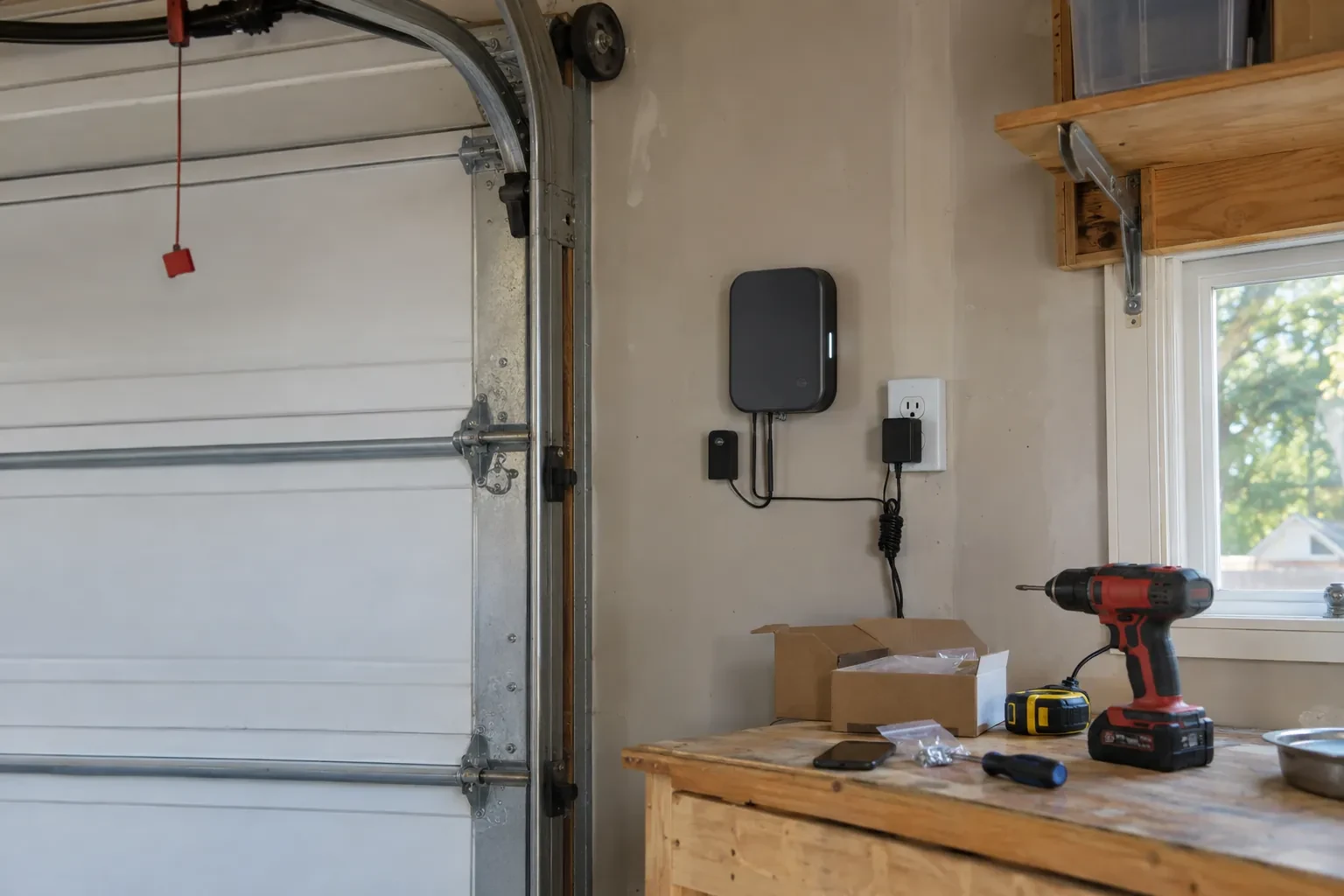
An opener is built to guide a balanced door, and every wheel that binds, wobbles or grinds adds resistance it has to overcome across the whole travel. It works harder, runs hotter, and may trip its force limit or reverse partway through a cycle. After roller replacement the technician confirms the door holds its own weight with the opener released, then checks the opener's force setting and its reversal on a test block, since a door that moves freely often needs those settings reduced.
Should the track be lubricated too?
No. The track is meant to be clean and dry so the wheels roll rather than slide. Grease or spray in the raceway collects dust, sand and, in winter, salt and slush, forming a paste that grinds the wheels and can let a roller skid instead of turn. The technician cleans the track and leaves it dry; at home, a wipe with a cloth and an occasional sweep of the bottom few inches is all the track wants.
How do winter and road salt affect rollers?
Slush carried in on the tires collects in the foot of the track and refreezes overnight, so wheels skid across ice ridges instead of turning and wear flat spots; cold thickens old grease so bearings stiffen and the opener strains; and the salt in that slush corrodes steel stems, bearings and the bottom brackets first. This is why the lowest rollers often look the worst and why sealed-bearing nylon rollers, and a clear, dry lower track, are recommended for garages that see a car every winter day.
Related services
- Garage Door Track Repair or ReplacementBacking out this morning, the mirror caught the track beside the door.
- Garage Door Cable ReplacementSomeone left the snow shovel leaning in the opening and the door came down on it.
- Torsion Spring ReplacementYou heard a sharp bang from the garage, and now the opener hums for a second and gives up.