Repairs · Parkway East
Garage Door Manual Lock Repair in Parkway East
Someone slid the inside lock across before bed, and in the morning someone else pressed the remote.
In plain words
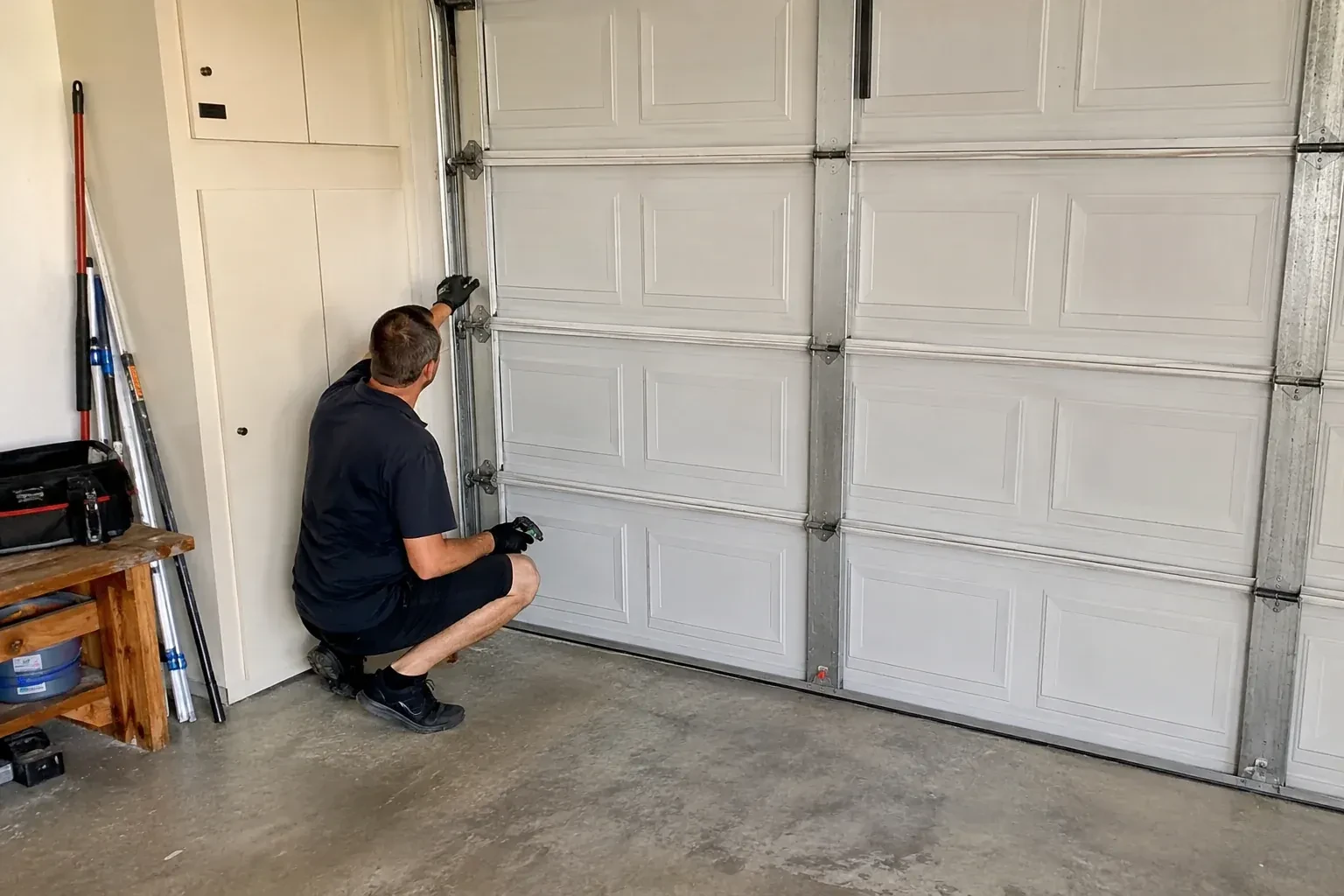
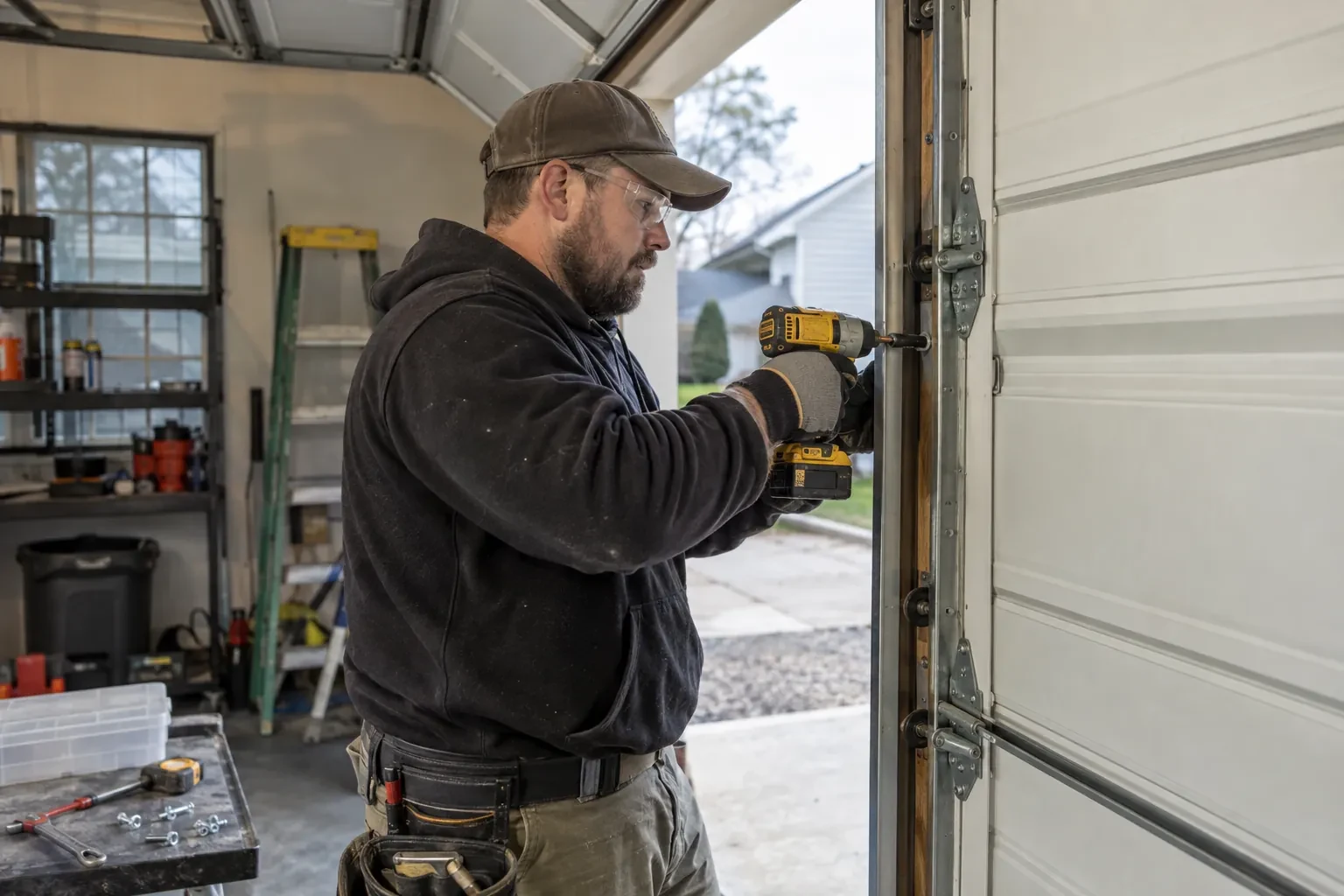
The visit runs in a settled order. On the phone you describe the lock, the door, whether an opener is fitted and whether the lock is currently jammed. On site the opener is disconnected, the door is closed by hand and checked for level. The lock is then examined piece by piece: handle, spindle, centre mechanism, bars, guides, cylinder, fasteners and the track slots. Adjustments are made first, worn parts replaced second, and the lock is cycled from both sides with the door shut. Finally the opener is reconnected, the door runs full cycles, and you are shown how the lock and the opener are meant to be used together.
How the visit goesSomeone slid the inside lock across before bed, and in the morning someone else pressed the remote. The opener groaned, the door jumped and shuddered, and now the lock bar is bent, the section is creased and the door hangs crooked at the top.
Garage Door Manual Lock Repair
How the visit goes
Signs the opener and the lock have met
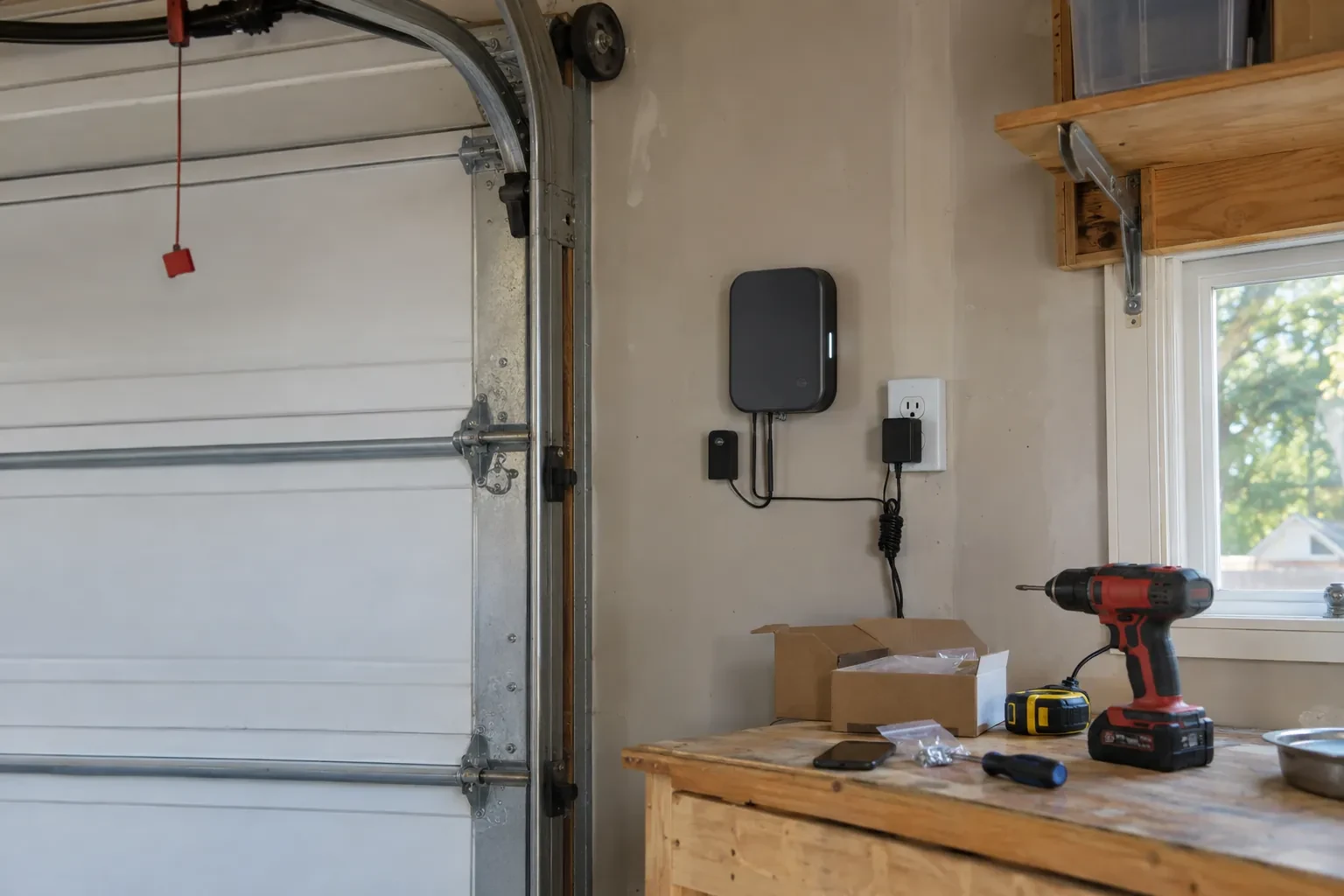
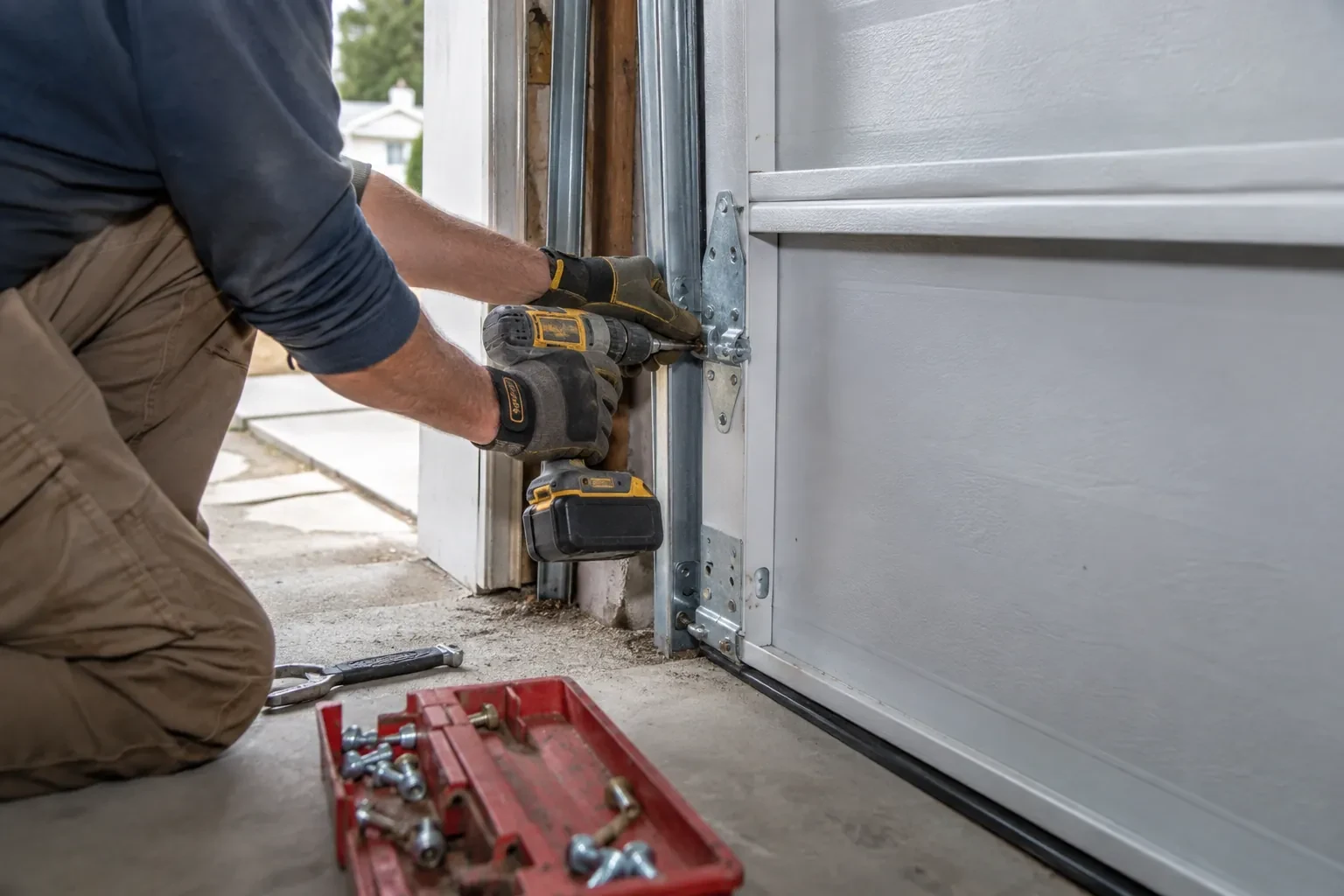
When an automatic opener shares the door, the technician looks for evidence that the two have collided: a bar bent at the track, a lock body pulled part-way from the section, a crease above the lock, a bent opener arm or a bracket strained at the top panel, and an opener that labours or reverses. The current arrangement is noted as well. Has the lock been disabled as opener makers direct, left live with no reminder, or removed altogether? Does the wall console have a lock-out feature the household knows about? These observations decide what is repaired and, just as importantly, how the door will be set up so the same thing does not happen again.
Freeing and renewing the bars and guides
Bars that have stiffened are worked loose with penetrating oil and then cleaned back to bare metal, while guides packed with rust are removed, cleaned or replaced with new ones fixed into sound material. A bar that has kinked is replaced rather than straightened, since spring steel that has been bent once takes a set and binds forever after; the new bar is cut to suit the door's width so it reaches through the track with a comfortable margin and retracts fully clear. Both bars are set to the same throw so the door locks evenly on both sides. A light film of silicone on the bars, not grease, finishes the job.
Getting the cylinder and bars through winter
The outside cylinder sits on a cold steel face where meltwater runs, so it gets a dry graphite or PTFE lubricant rather than oil, which would trap moisture and grit. A puff at the start of the cold season and another after the first thaw keeps the pins moving. A small tube of lock de-icer in the car is the answer to a keyway that has frozen; hot water is never poured on it. The bars and their guides, which live where salt spray collects, take a light silicone film in late autumn. Keep the threshold clear of packed snow so the door closes to its full depth and the bolt still finds its slot.
Garage Door Manual Lock Repair
In the van
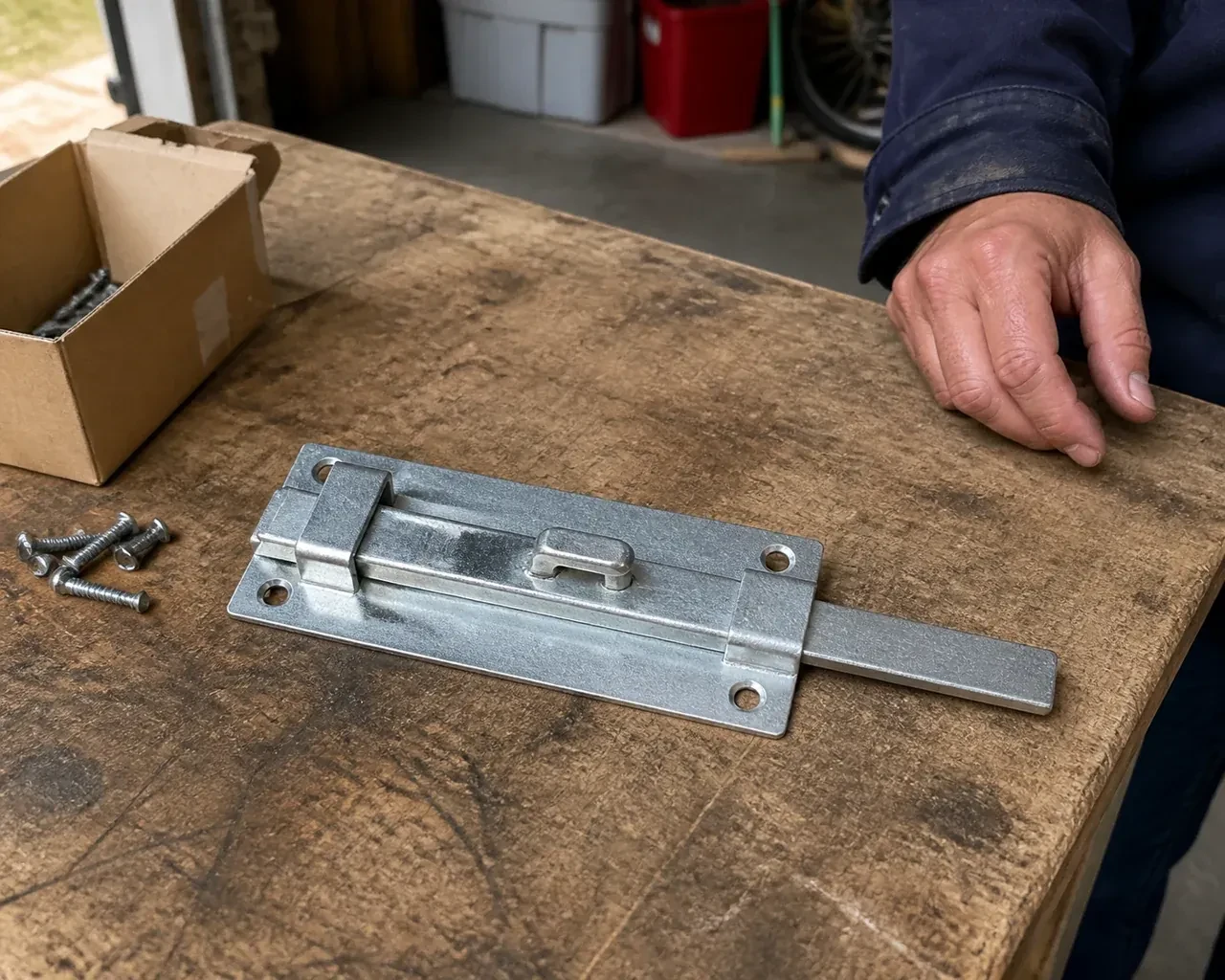
Inside slide bolt or snap latch
Spring-steel lock bars
Lock cylinder with tailpiece
Inside turn handle and spindle
Track lock-slot punch
Garage Door Manual Lock Repair
What affects the quote
Adding a lock where none existed
Fitting a new slide bolt or a keyed handle to a door that never had one includes punching track slots, a section cutout for a handle and running bars to both tracks.
Door thickness and insulation
Insulated and thicker doors take longer spindles, longer through-bolts and sometimes a sleeve through the foam. Matching those parts to the door affects the parts list.
Adjust, repair or replace
A guide reset or a cylinder rekey is a small job; a new mechanism or a complete handle set with bars is a larger one. The inspection settles which is needed before anything is quoted.
What to have ready
- Does the key go in and turn, or is it stiff or spinning freely?
- Is there an automatic opener on this door?
- Would you like the garage lock keyed to match your house key?
Garage Door Manual Lock Repair: questions
QuestionsThe handle turns but the bars stay put. What has broken?
Something in the short chain between the handle and the bars. The square spindle may have twisted or sheared, the set screw holding the inside knob may have let it spin free, the cam inside the centre body may have worn round, or the return spring may have snapped. The inside cover comes off to see which, and the failed part or the whole mechanism is replaced to suit.
How do I lock the garage door during a power outage?
With the door closed, pull the opener's release cord so the trolley lets go of the door, then throw the slide bolt or turn the T-handle to lock. When power returns, unlock first, check both bars are clear of the track, and then re-engage the opener as its manual describes, usually by running it once. Keeping to that order is what protects the lock and the opener.
Does lock work involve the springs or cables?
The lock, its bars and its guides all live on the door sections and the tracks, well away from the counterbalance, so the visit involves no winding or unloading of springs. Where a lock misses its slot because the door hangs crooked or sits high, the door's balance or a cable may be part of the story, and the technician points that out so it can be dealt with properly.
Related services
- Garage Door Tune-UpThe door lands with a thud you can feel through the kitchen floor, and sometimes it bounces back up a few centimetres before settling.
- Off-Track Garage Door ResetA delivery van backed into the shop's overhead door this afternoon.
- Garage Door Panel ReplacementA stray ball went through one of the window panes in the top section.