Openers · Toronto
Garage Door Opener Replacement
During the ice storm the power was off for two days.
In plain words
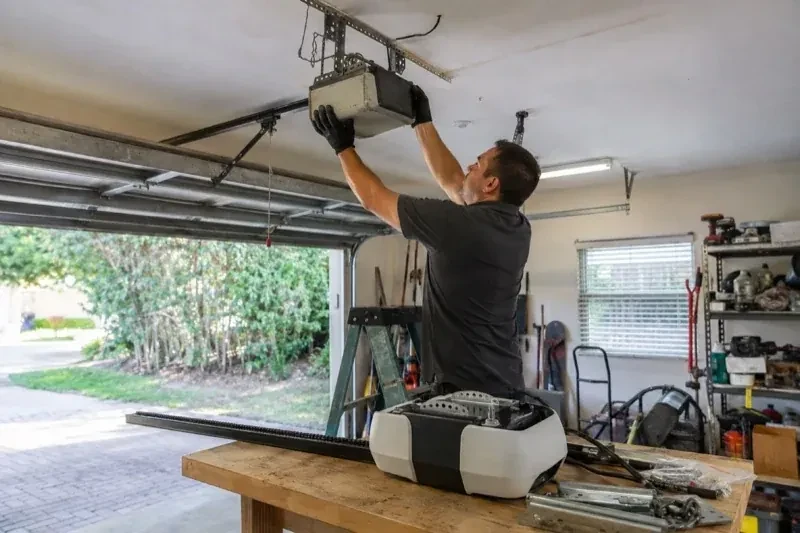
Winter is hard on an old opener and a good reason to renew one. Cold thickens grease in a worn chain drive, a tired motor stalls on a door whose seal has stuck to the slab, and an ice storm that cuts the power leaves the door dead when you least want to be outside. A current operator handles all three better: it is rated for detached-garage temperatures, its force limit reverses off a frozen seal instead of straining, and a backup battery runs it through an outage. The technician fits it, tunes it for the cold and shows you the manual release for the rare day it is needed.
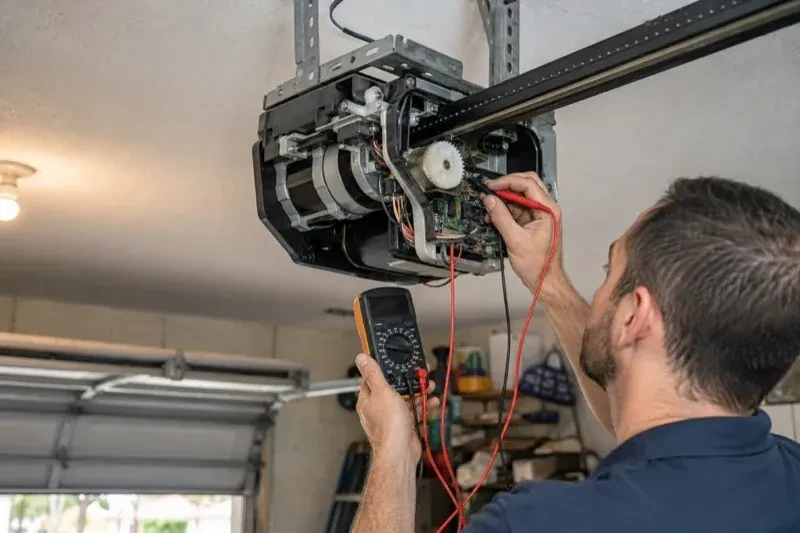
How the visit goesSince the storm the door behaves oddly: it reverses halfway down for no reason, the light flickers, and the travel limits drift so it either slams or stops short. The board inside is discontinued and the last repair only bought a few months.
Garage Door Opener Replacement
How the visit goes
Lifting the door by hand first
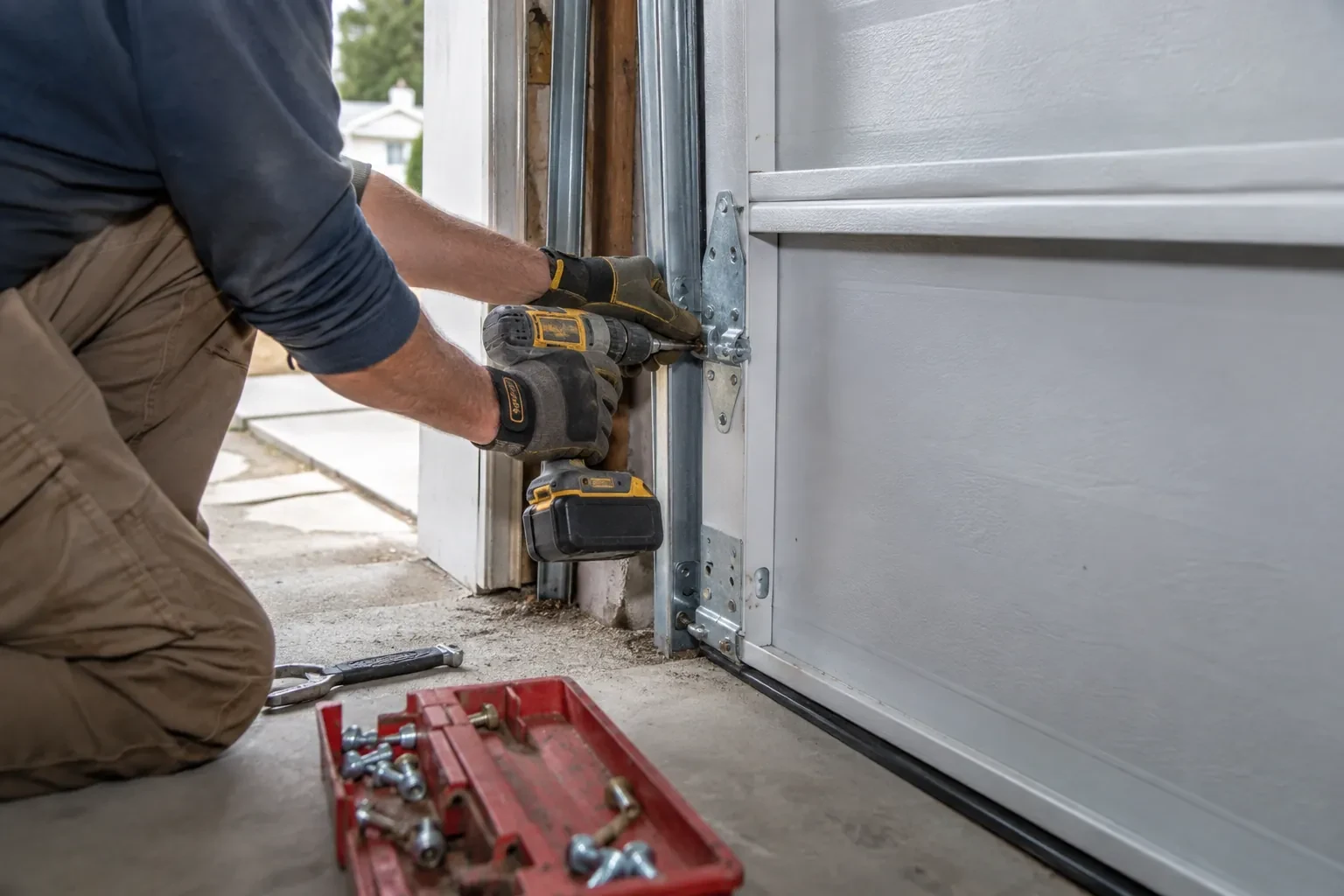
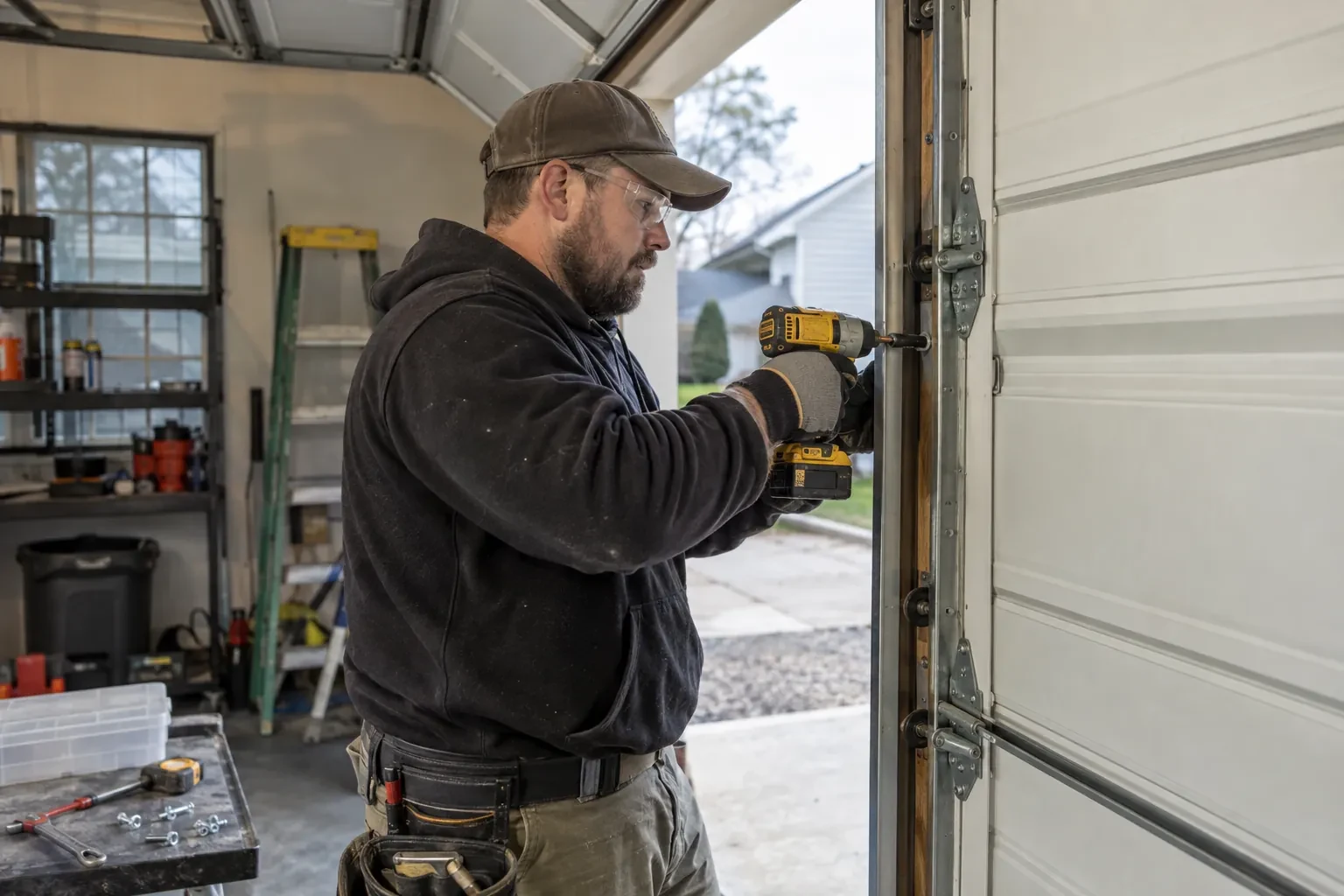
The first check has nothing to do with the opener. The technician unplugs the old unit, pulls the red release so the trolley lets go of the door, and lifts the door by hand. A healthy door rises with moderate effort, stays where it is left about a metre off the floor and comes to rest gently at the top and bottom. That balance is what the new opener depends on, because it moves the door rather than carrying it. If the door is heavy in the hands or drifts down, the springs need attention before any operator is chosen, and that conversation happens now rather than after the new unit is hanging from the ceiling.
Proving the safety reversal
Two tests are performed while you watch, before the job is called finished. A 2x4 is laid flat under the centre of the door and the door is closed from the wall console; on touching the wood it must stop and return to fully open. Then the door is closed again while an object is waved through the photo-eye beam, and again it must reverse. The red release cord is checked to hang no higher than about 1.8 m so it stays reachable while clearing a vehicle roof. The door's manual slide lock is disabled or removed so it can never be thrown while the operator is connected. Any adjustment is made and the tests are repeated.
A door that stops for anything in its way
What you have when the technician leaves is a door that reverses on its own if it touches something or if the beam near the floor is broken. That protection is only as good as the last test, so keep a monthly habit: lay a 2x4 flat where the door meets the floor and run it down from the console, then separately swing a broom handle through the photo-eye beam while it closes. In both cases the door should return to fully open. If it ever hesitates or keeps closing, stop using the operator and have it looked at, since the cause can be a setting, the opener, or the door itself.
Garage Door Opener Replacement
In the van
Wall control console
Header bracket and lag screws
Backup battery
Perforated angle iron hangers
Remotes and wireless keypad
Garage Door Opener Replacement
What affects the quote
Door height and rail length
A standard rail suits a 7 ft door. An 8 ft door or a taller custom door needs a rail extension, and a very low ceiling may call for a low-headroom arrangement, each an item on its own.
Wall-mount accessories
A wall-mount operator is installed with a cable tension monitor and a powered track lock, and sometimes a separate light kit, since the unit itself hangs no lamp over the garage.
Connectivity and camera
Wi-Fi control from a phone, a built-in camera and a range extender for a detached garage with a weak signal are each optional items that the quote names individually.
What to have ready
- Can you send photographs of the opener, the top of the door and the ceiling?
- Is the garage attached and heated, or detached and unheated?
- Does the door lift easily by hand and stay put halfway when the opener is disconnected?
Garage Door Opener Replacement: questions
QuestionsHow many remotes and keypads can be added?
Capacity depends on the model: current operators hold anywhere from about eight to forty remote codes, so most households can pair every driver, a keypad, in-car buttons and a phone with room to spare. Remotes are added by holding the learn button on the head unit and pressing the remote; the console guide shows the steps and the technician leaves them written down. If a remote is lost later, clearing the memory and re-teaching the others takes only a few minutes.
How should I prepare the garage before the visit?
Move vehicles out onto the driveway, bring any car that needs its built-in buttons programmed, and clear the floor under the door's path and the area beneath the old opener and rail so ladders can stand safely. Take bikes and boxes off shelves that hang near the ceiling line. Know where the electrical panel is, and have the phones that will use the app on hand with your Wi-Fi password.
Can I keep my existing wall button?
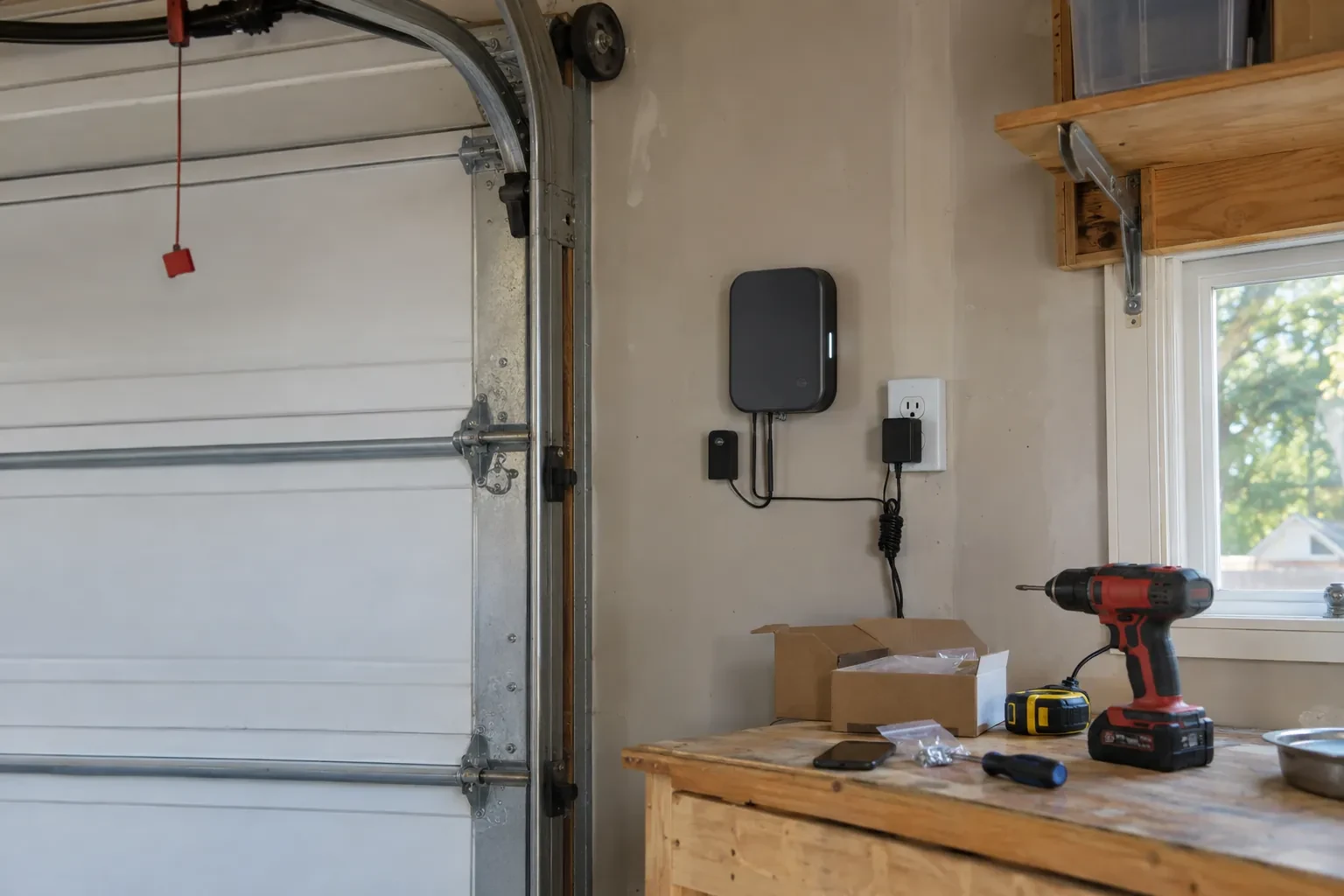
The new operator comes with its own console, and the two usually go together because the console is designed to speak to that board and adds a light button, a lock button and sometimes a timer or a battery indicator. The low-voltage wire running to the old button can often be reused if it is in good condition, which saves running a new line across the garage.
Related services
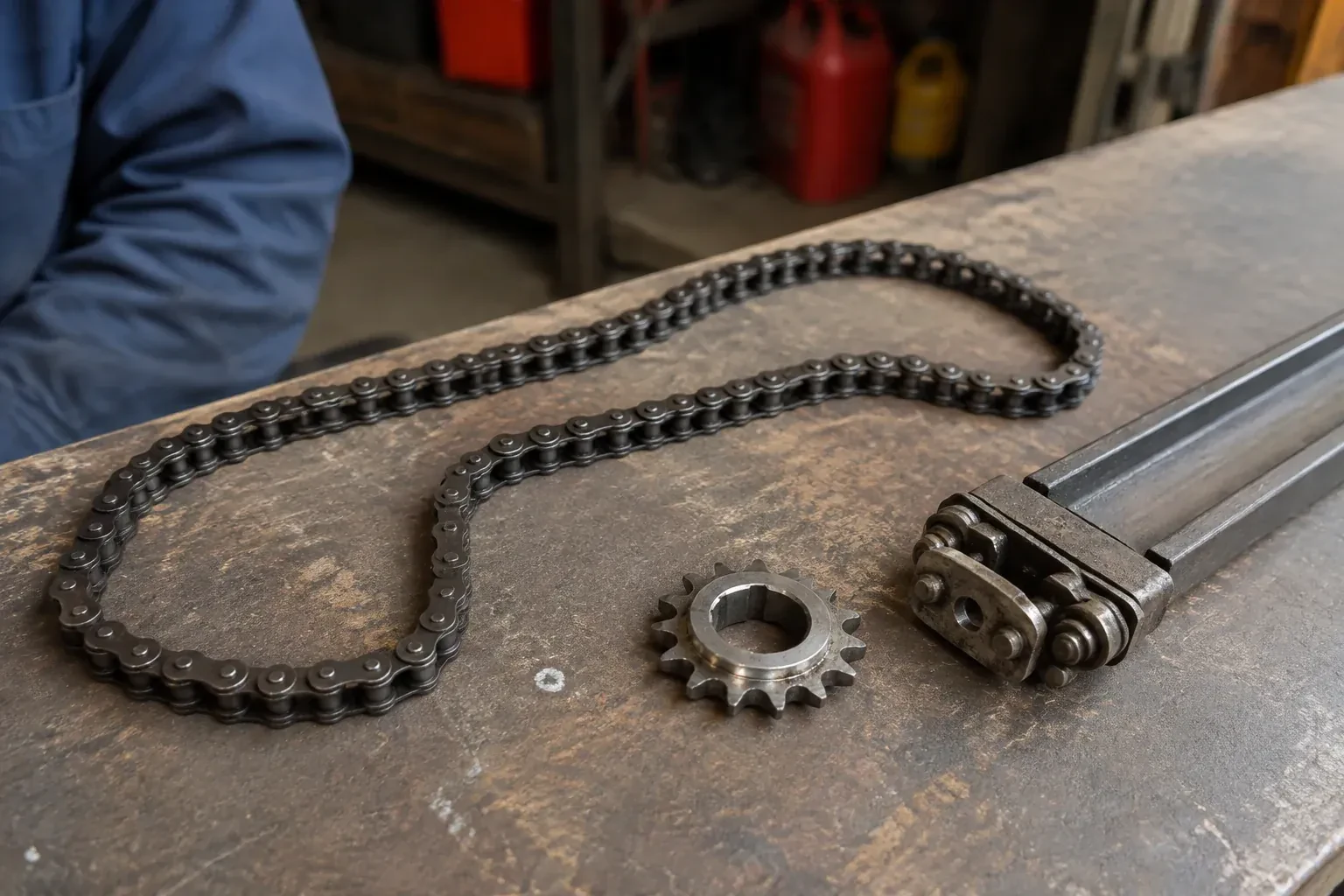
- Chain-Drive Opener RepairThe door opens about a third of the way and stops.
- Belt-Drive Opener RepairIt is minus twenty in the detached garage and the door climbs in jerks, the belt stiff as a board.
- Photo-Eye Sensor Alignment or ReplacementSomeone backed the car in a little too far, a bin or a bicycle brushed the track, and since then the door starts to close and comes back up.