Openers · Parkway East
Emergency Release Repair in Parkway East
Halfway up, the door lets go of the opener with a clunk and sinks back to the floor while the trolley carries on to the top alone.
In plain words
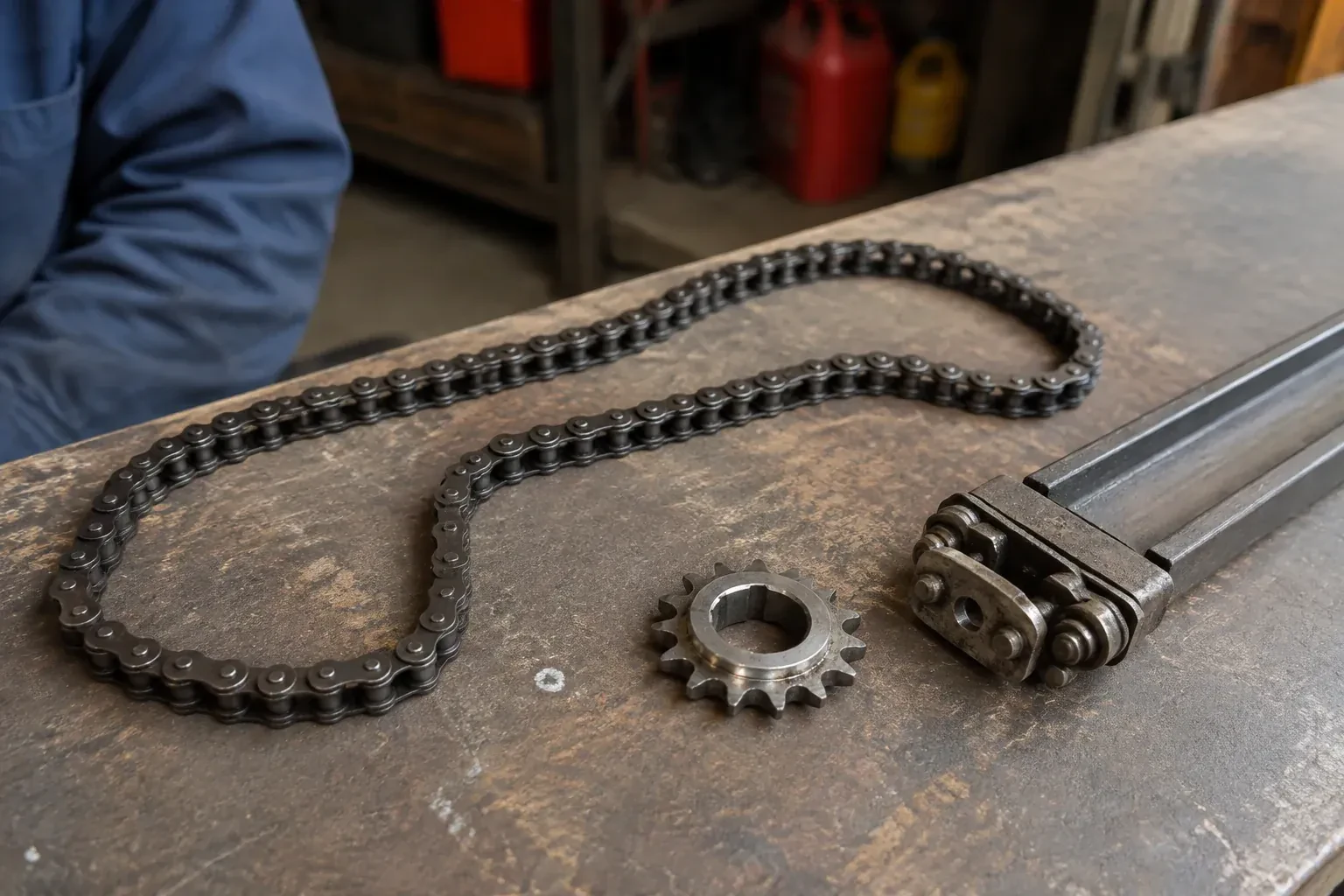
What gets repaired depends on which link failed. A cord that rotted or snapped is simplest: a new rope and red handle, cut so the handle hangs no higher than about 1.8 metres and clears the car roof. A lever that will not stay latched needs its spring or the lever itself replaced. A trolley with worn latch teeth, or one driven hard into the stop bolt, is freed, adjusted or swapped for the assembly made for that opener. On the outside key release, a seized cylinder, a stretched cable or a lost key each has its own fix. The technician names the part before work begins.
How the visit goesSince the new door went in, the red handle has hung just below the ceiling, a stepladder's height above anyone in the household. During last week's blackout your daughter stood under it with a broom, unable to hook it down.
Emergency Release Repair
How the visit goes
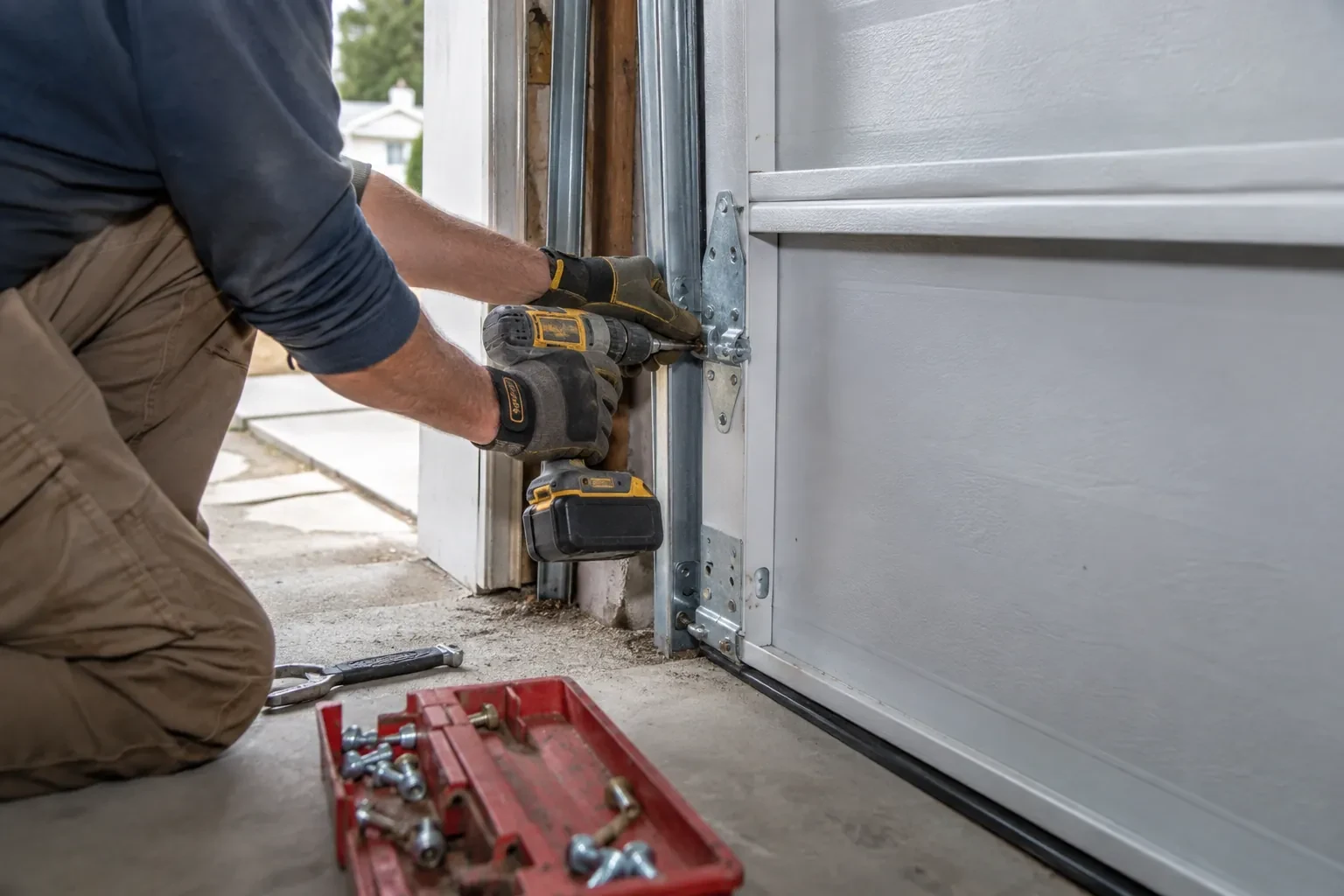
The outside key release, if there is one
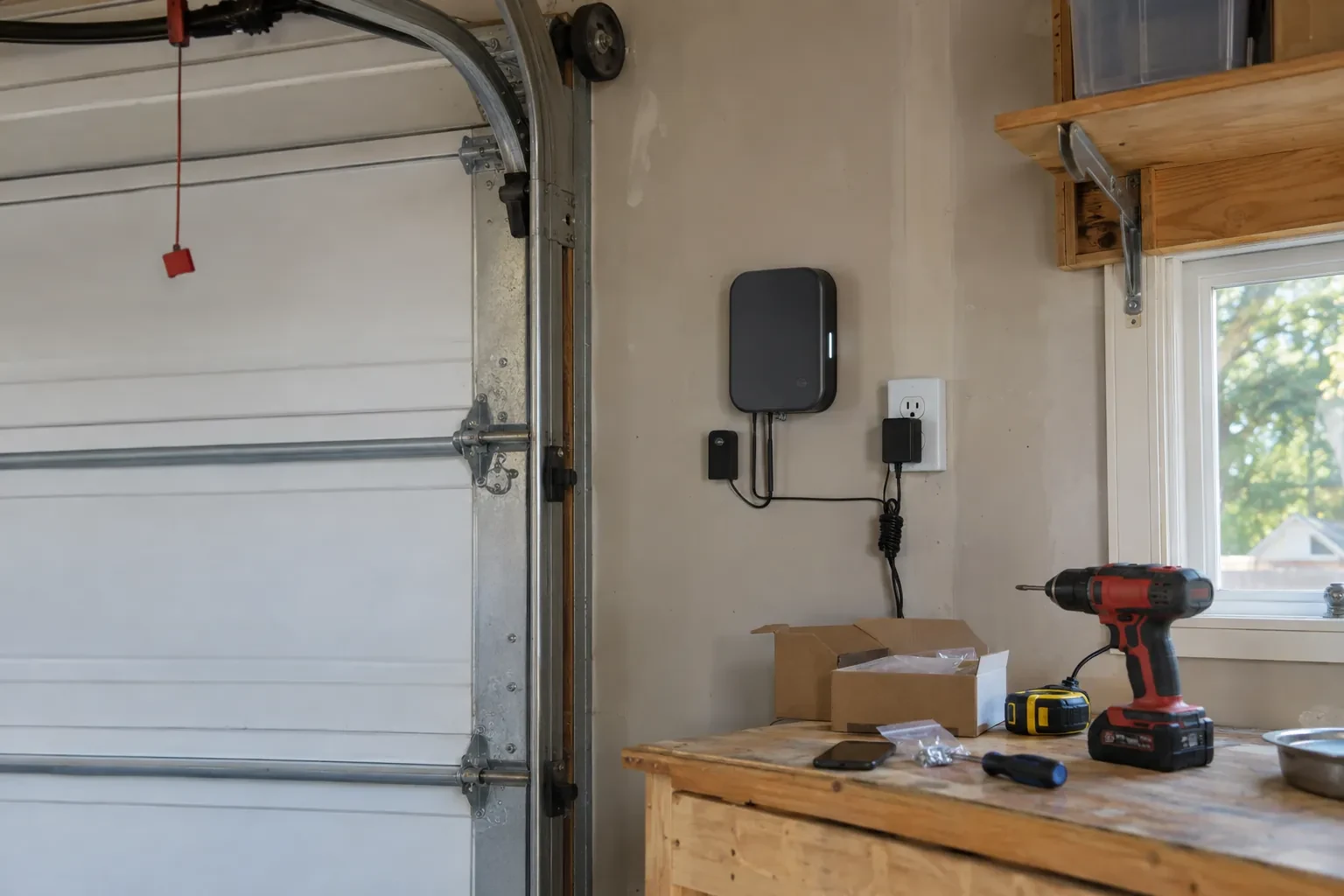
Many detached garages and some attached ones have a small keyed cylinder, set in the top section on a sectional door or at mid-height on others. The technician checks whether one is fitted, whether the key is available, and whether the cylinder turns and pulls out as designed. Behind it, a cable runs to the trolley lever; it is traced for kinks, stretch, a detached end or a route that snags on a section joint as the door bends. In winter the cylinder is checked for salt crust and ice. Where the garage has no other door, this release is the way in when the opener is silent, so its condition is treated as part of the same job.
Setup and safety tests after the work
Because the drive tension, travel limits or trolley were disturbed, the opener is set up again before the visit ends. Travel is adjusted so the door seals on the floor without hammering and stops clear of the header; force is left as low as reliably moves the door. Then the two reversal tests: a 2x4 laid flat under the centre of the door must send it back up on contact, and an object passed through the photo-eye beam while closing must do the same. The release cord is checked one last time for height and clearance, and the door is run from each control you own.
Through the winter
A release serviced in autumn is set up for the season the household is most likely to need it. The cord is rope that stays supple in the cold, the outside cylinder has been cleaned and lubricated, and the door has been proven to lift by hand with the bottom seal freed rather than frozen. Keep snow and ice cleared from the threshold so a manual lift is not working against a seal stuck to the slab, and keep the slide bolt or manual lock handy for nights when the door is in manual mode. A door that moves by hand is a door that gets you out.
Emergency Release Repair
In the van
Hole saw for the top section
2x4 offcut for the reversal test
Dry lock lubricant and de-icer
Outside key release kit (lock, cable, keys)
Chain or belt tension hardware
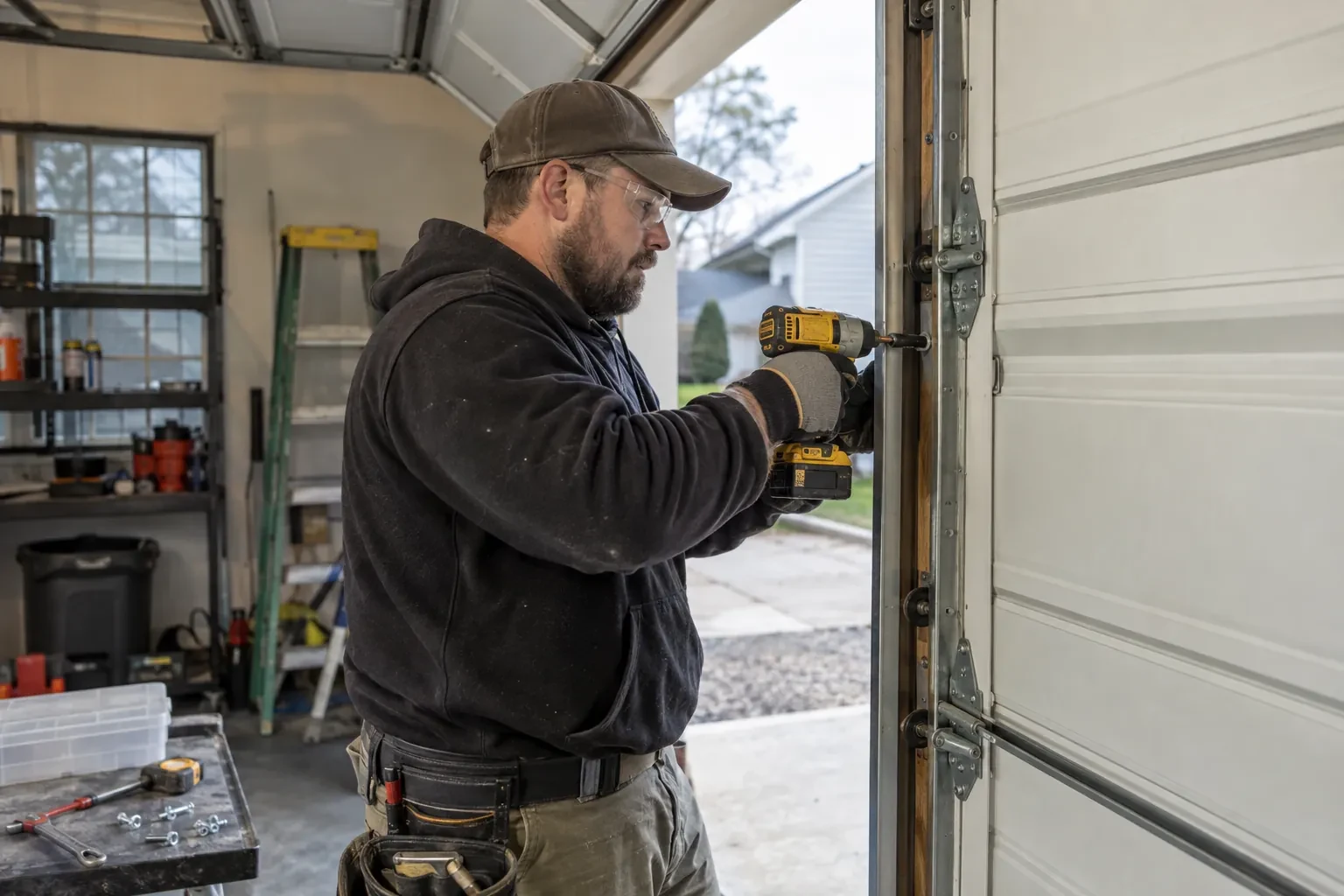
Emergency Release Repair
What affects the quote
Battery backup as an option
If outages are the reason you called, a battery backup pack for a compatible opener may be offered alongside the release repair. It is optional and appears as its own item.
Door work found by the balance test
If the disconnected door proves heavy or drifting, spring, cable or roller work comes before the release is put back into use, and that door-side work is quoted as its own item.
Ceiling height and access
A standard garage puts the trolley in easy reach from a step ladder. High ceilings, a storage loft, a high-lift track or a car that cannot be moved add setup time.
What to have ready
- Is the red handle still there, or is only the cord left?
- How does the door feel when you lift it by hand: light, heavy, or does it drift?
- Has the door or the opener been replaced since the release was last used?
Emergency Release Repair: questions
QuestionsWhere should I grip the door when lifting it by hand?
Use the door's own handles or the gripping points built into the panel face, on the inside and outside of the door. Sectional doors are meant to have them near the bottom section and again on the second or third section. Never take hold at the joint between two sections, which closes as the door bends around the track. If your door has no handles or they have been removed, the technician can fit a pair during the visit.
The door is stuck shut, the opener is dead and there is no other door. Can you still get in?
Usually. If the door has an outside key release, a small round lock near the top panel, that is what it is for: the key pulls a cable that frees the trolley from outside so the door can be lifted by hand. If there is no such release, the technician has other methods to reach the lever from outside, and once inside the fault is dealt with. Fitting an outside release afterwards is a sensible follow-up for a garage with a single door.
My opener is old. Is the release worth repairing, or should the opener go?
The release itself is a simple mechanical part and is usually worth repairing on any opener that still has parts available. What changes the answer is the opener as a whole: a unit with no photo-eye sensors near the floor predates the current safety standard, and the industry recommends replacing it rather than patching. The technician tells you which case you have, and a new opener comes with a fresh release, cord and handle already set up.