Repairs · Parkway East
Off-Track Garage Door Reset in Parkway East
A delivery van backed into the shop's overhead door this afternoon.
In plain words
Winter produces a particular version of this call. Slush melts under the door during the day, freezes overnight and glues the bottom seal to the slab. In the morning the opener pulls against a door that will not lift, the cables go slack and slip off their drums, and when the ice finally releases the door lurches up crooked and jams. The reset restores the cables to their drums, rewinds the springs, seats the rollers and trues the track. It also comes with practical advice on keeping the threshold clear of ice so the same morning does not happen again in February.
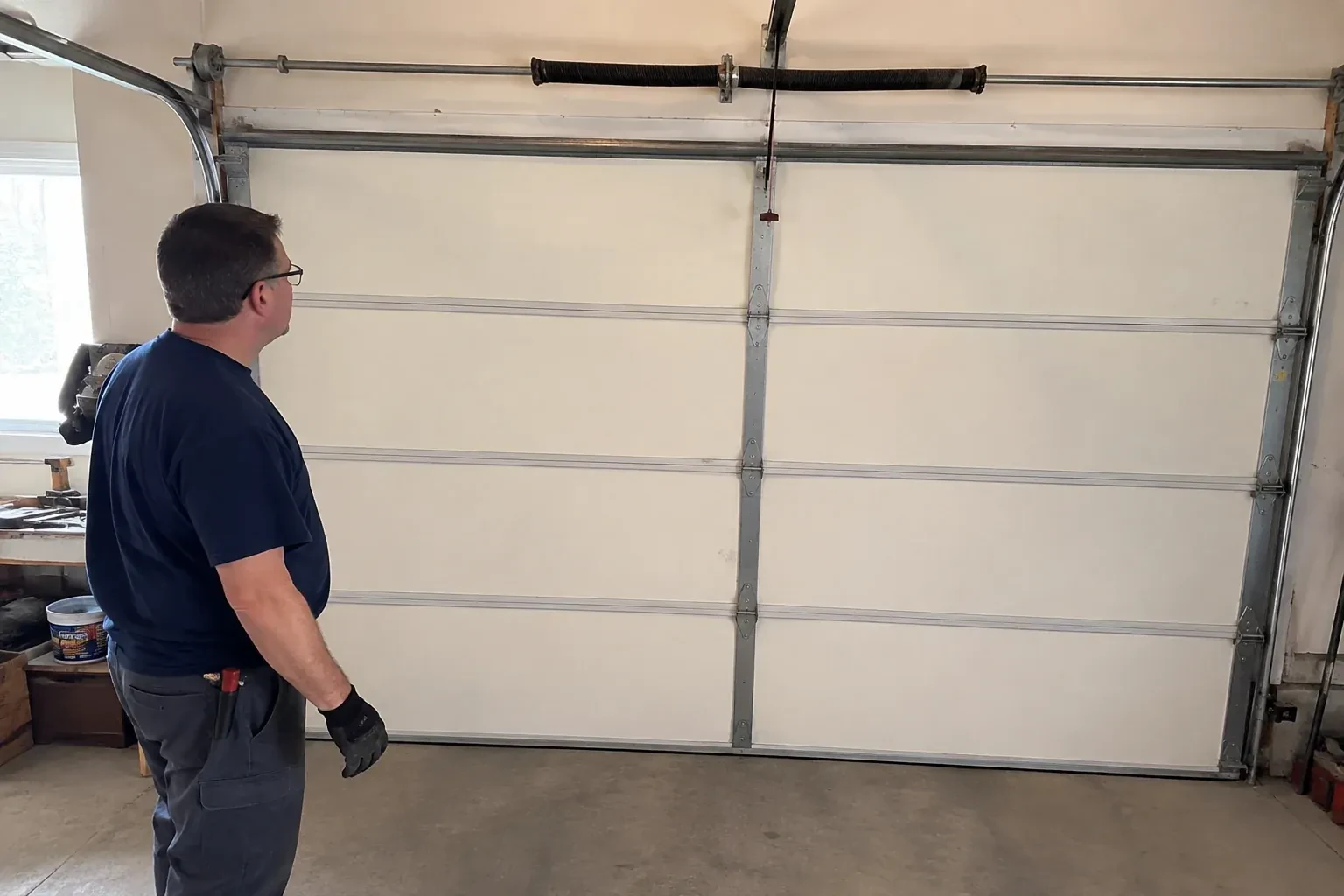
How the visit goesThe morning after a thaw the opener groaned, the door stayed stuck to the icy floor for a second, then lurched up crooked. It stopped halfway with a grinding scrape and has not moved since.
Off-Track Garage Door Reset
How the visit goes
Which rollers left, and at what point in the travel
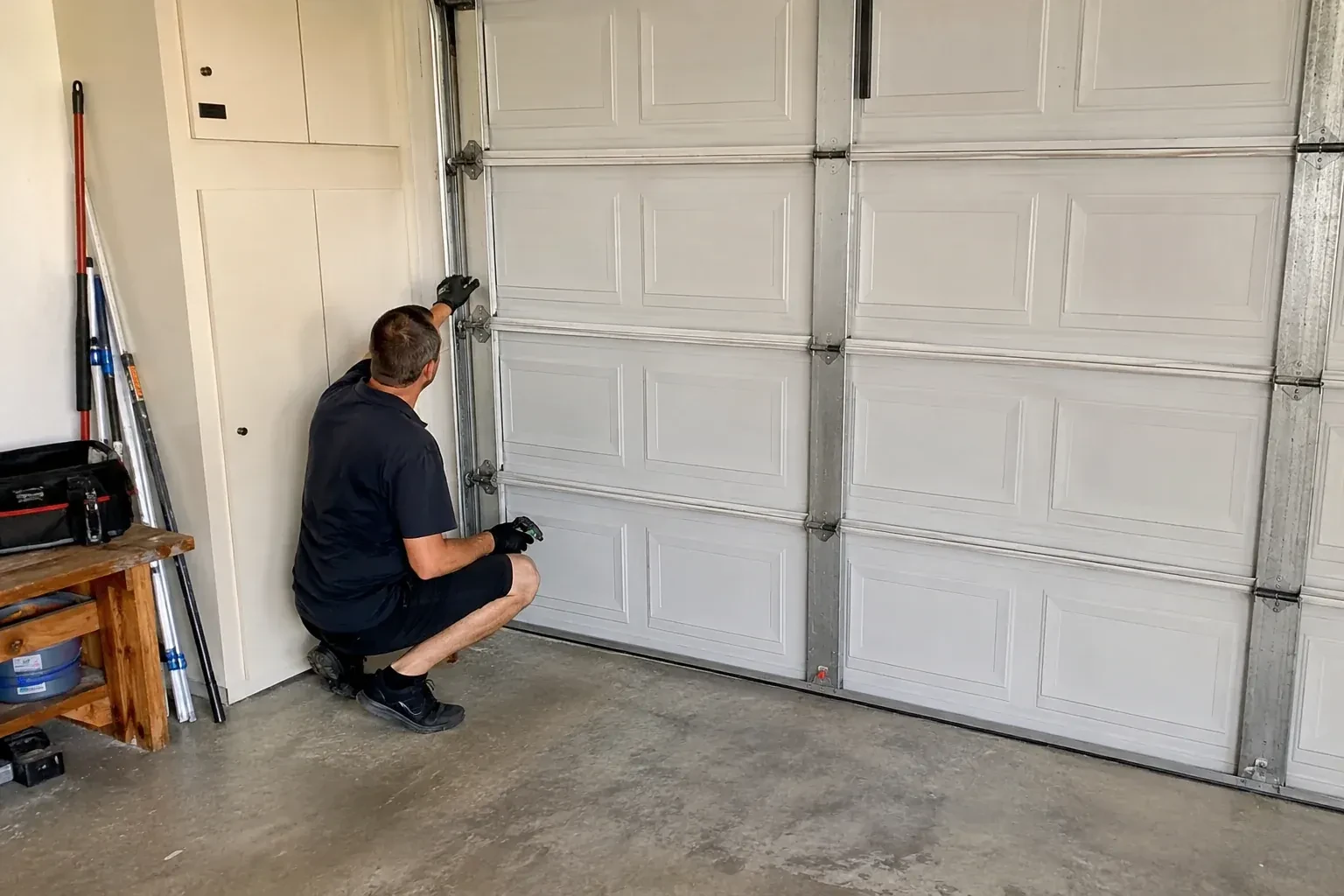
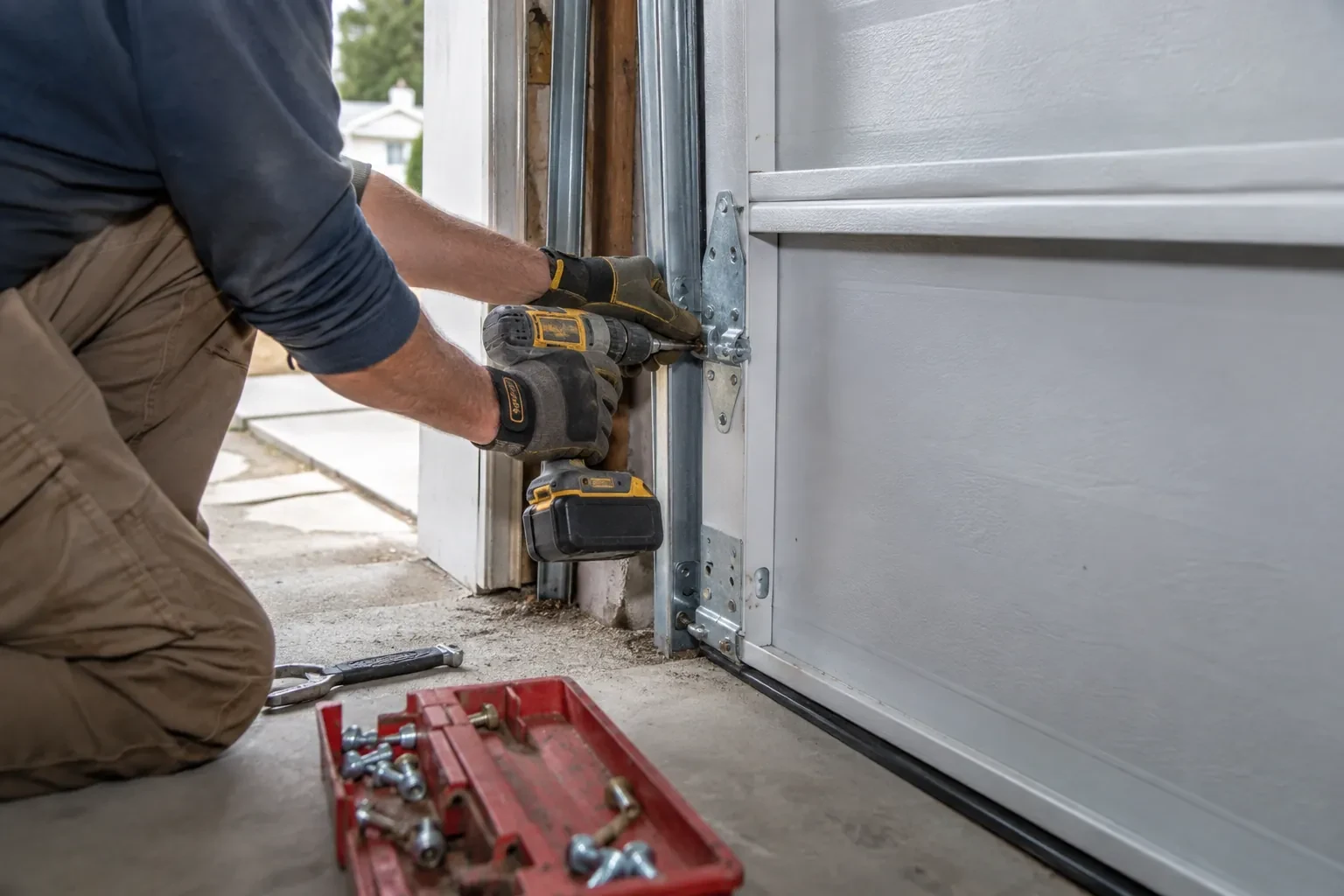
Where a roller escaped tells a story. A bottom roller pushed out of the vertical track usually means an impact or a jamb bracket that let go. A roller that left at the curve points to worn wheels, a splayed radius or a horizontal track hanging out of line. A top roller out of the horizontal rail often follows a door that racked because one cable dropped. The technician counts the rollers outside their rails, notes which side and which section, and checks whether the sections themselves are still square to each other. That map decides the order in which things are put back.
Putting the cables back on their drums
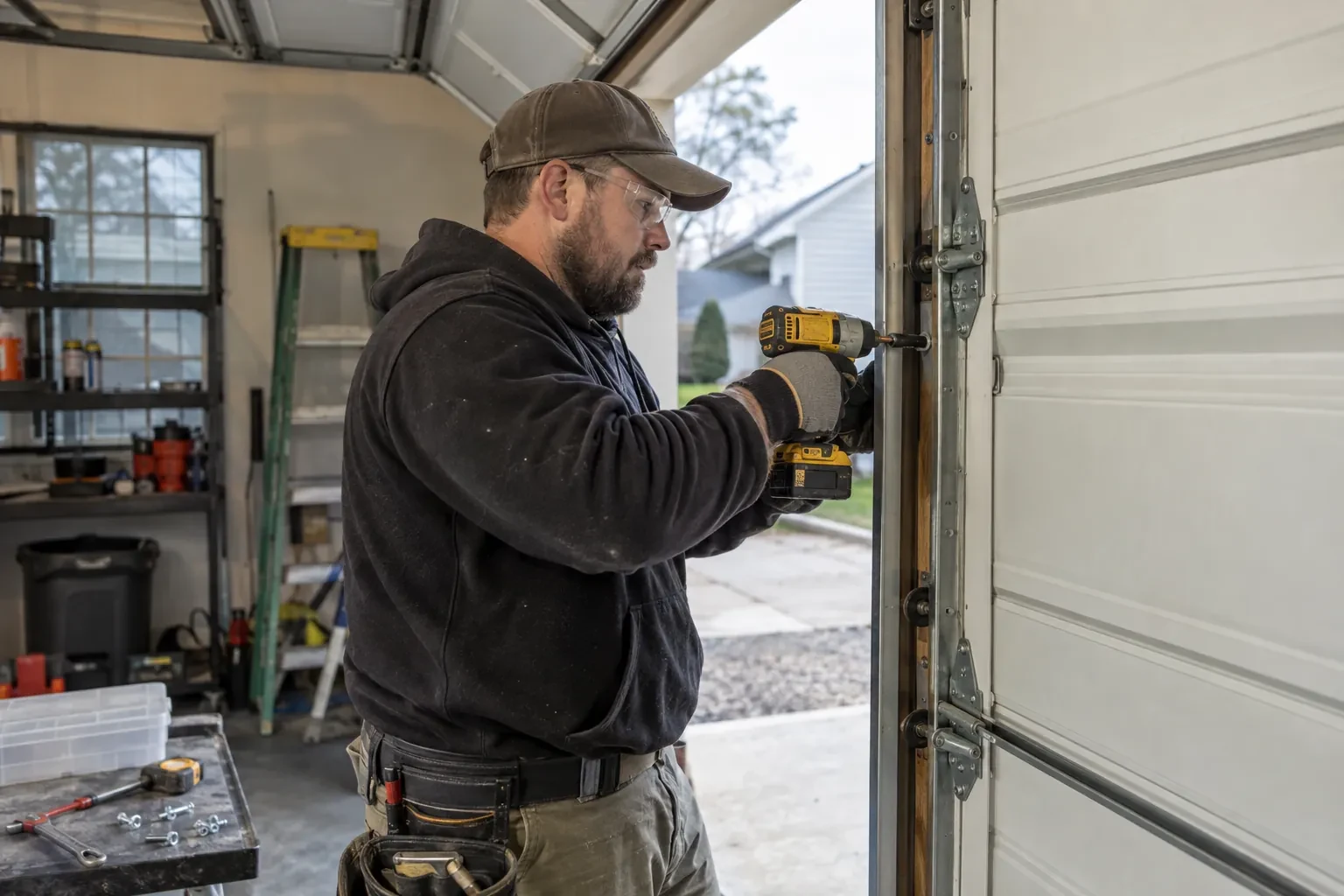
A cable that unwound or crossed on its drum is stripped back and rewound in its groove, beginning at the cable stop and laying each turn beside the last. Both cables are set to equal length so the bottom section hangs level, then the drums are locked to the shaft and the springs are rewound to the door's weight. A cable with kinks, rust or broken strands is replaced along with its partner so the two sides age together. This part of the work is done with the door clamped fully closed and the sections held, because a cable coming under tension is exactly when a door wants to move.
Keeping the opener honest
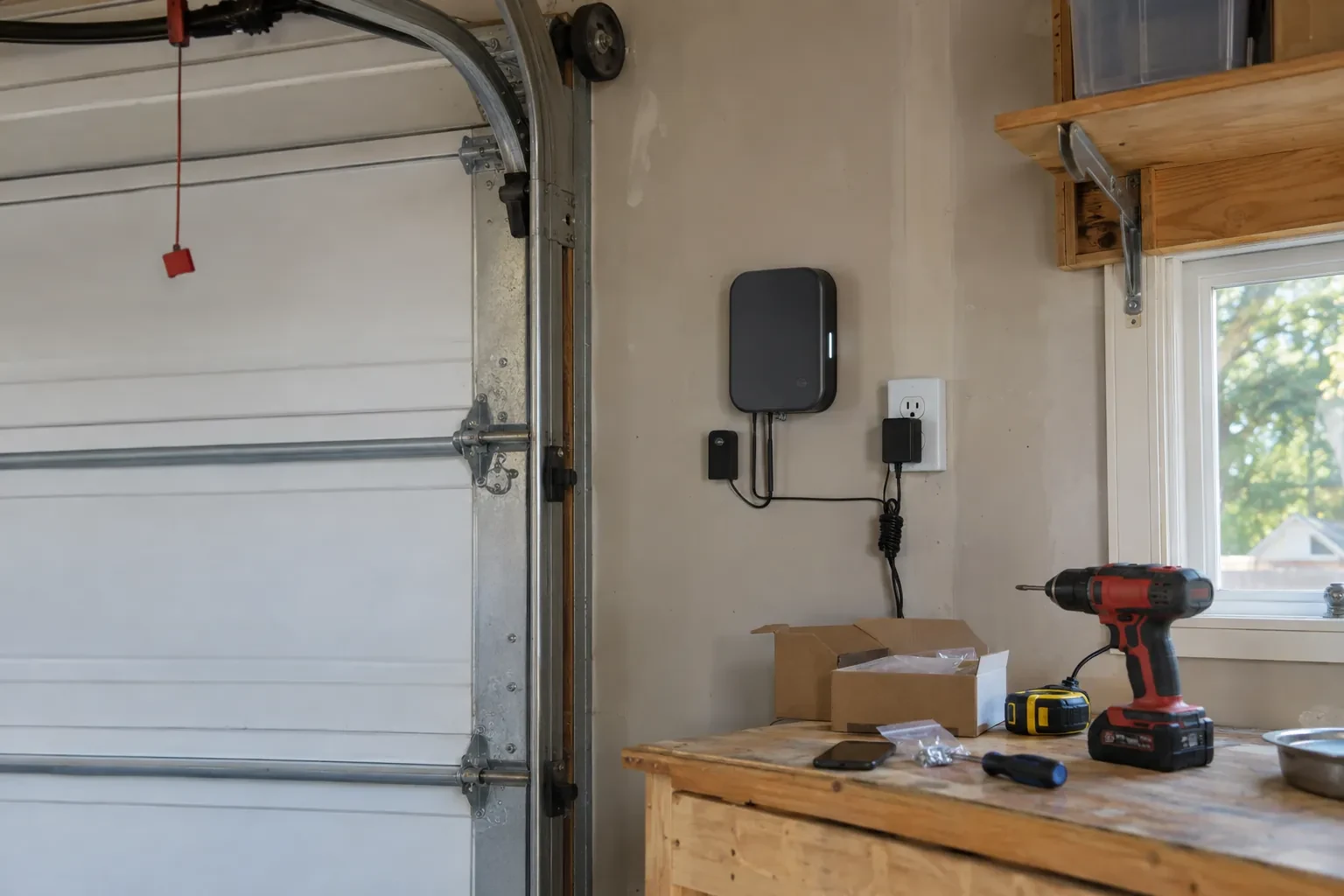
The opener leaves the visit re-taught to the trued door, and a monthly test keeps it that way. Lay a piece of wood about 1.5 inches thick flat on the floor in the door's path and close the door from the wall button: it must touch the block and reverse. Then start the door closing again and pass an object through the photo-eye beam near the floor: it must stop and go back up. If either test fails, unhook the door from the opener and operate it by hand until it has been looked at. A door that reverses properly is one that stops before it can rack itself against an obstruction.
Off-Track Garage Door Reset
In the van
Graduated edge hinges
Garage-door silicone lubricant
Lifting cables, matched pair
Jamb and flag brackets
Replacement rollers, steel or nylon
Off-Track Garage Door Reset
What affects the quote
Access and a trapped vehicle
A car inside, a tight garage with shelving beside the tracks or a low ceiling around the horizontal rails all slow the work of supporting and moving the door, and the estimate allows for the working space available.
Condition of the jamb and fasteners
Lag screws that spin in dry or split wood are moved to sound framing or replaced with longer fasteners or through-bolts. If the jamb itself needs a repair or a sister piece, that is named as an extra item.
Older or unusual hardware
Low-headroom track, high-lift track, an old wood door with obsolete hinges or a commercial door with heavy-gauge rail may need parts that are ordered or adapted, which is explained in the estimate.
What to have ready
- Roughly how old is the door, and when was it last serviced?
- Is a vehicle trapped inside the garage right now?
- Is the door a single or a double, and is it steel, wood or insulated?
Off-Track Garage Door Reset: questions
QuestionsWill the track have to be replaced?
Often not. A track that is simply out of plumb, spread at the lip or loose on its brackets is re-formed and re-fixed. Replacement is for rail that has been crushed, kinked or torn by an impact, because a roller passing a tight spot will pop out again. The technician measures the damaged length against the door's roller size and tells you which case you have before any track is ordered or cut.
Can I just push the roller back into the track myself?
The roller is only the visible part of the problem. Behind it are cables and springs holding the door's weight unevenly, and a door can drop or swing when a section is moved without the load taken off first. A trained technician clamps the door, releases the tension in a controlled way and seats the rollers in order. Leaving it to that process protects both you and the sections themselves.
Why do rollers wear out, and how would I know?
Rollers turn thousands of times a year while carrying part of the door's weight, and their small ball bearings wear, fill with grit or fall out. Nylon tires can crack and steel wheels can wear flat spots or grind down to the stem. A worn roller squeals, wobbles in the rail or lets the door shudder at the curve. Replacing them as a set restores a quiet door and removes a common cause of a roller dropping out.
Related services
- Garage Door Tune-UpThe door lands with a thud you can feel through the kitchen floor, and sometimes it bounces back up a few centimetres before settling.
- Garage Door Panel ReplacementA stray ball went through one of the window panes in the top section.
- Garage Door Bottom Seal ReplacementAfter a spring rain there is a puddle inside the door that reaches the tires.