New Doors · Victoria Village
Commercial Rolling Door Repair in Victoria Village
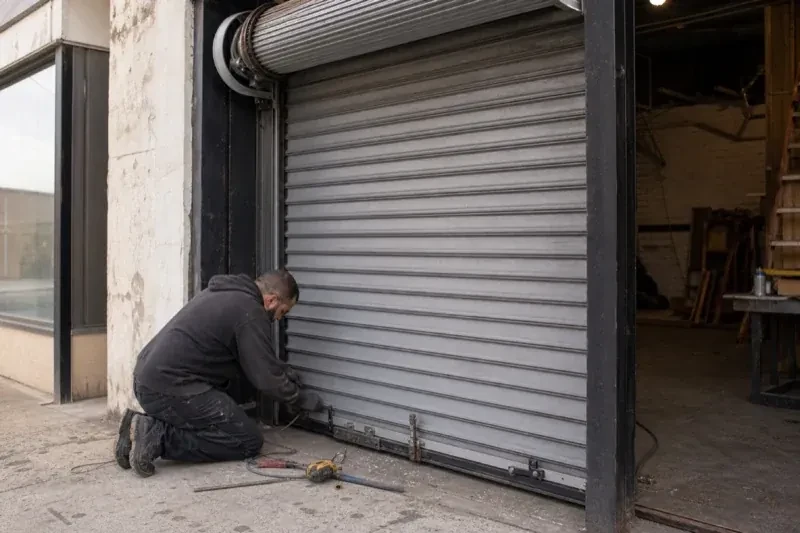
At closing time, the bottom bar reaches the floor on one end while daylight remains under the other.
In plain words
Exterior rolling doors work at the boundary between indoor operations and winter weather. Hardened bottom seals leave daylight, ice holds the bar to the sill, and salt-laden grit can collect where the curtain enters its guides. Service separates weather effects from alignment or balance faults, cleans the travel path and renews damaged sealing parts where included. The curtain is then checked for even contact at the floor and smooth entry into the coil. Care guidance focuses on keeping drains, guides, sensor faces and the threshold clear while using only the lubricant named for the door.
How the visit goesCold-weather moisture has frozen the bottom seal to the sill, and salty grit has collected along the guide entrances. The door chatters during its first cycle and leaves a visible gap after it reaches the closed limit.
Commercial Rolling Door Repair
How the visit goes
Start with the operating story
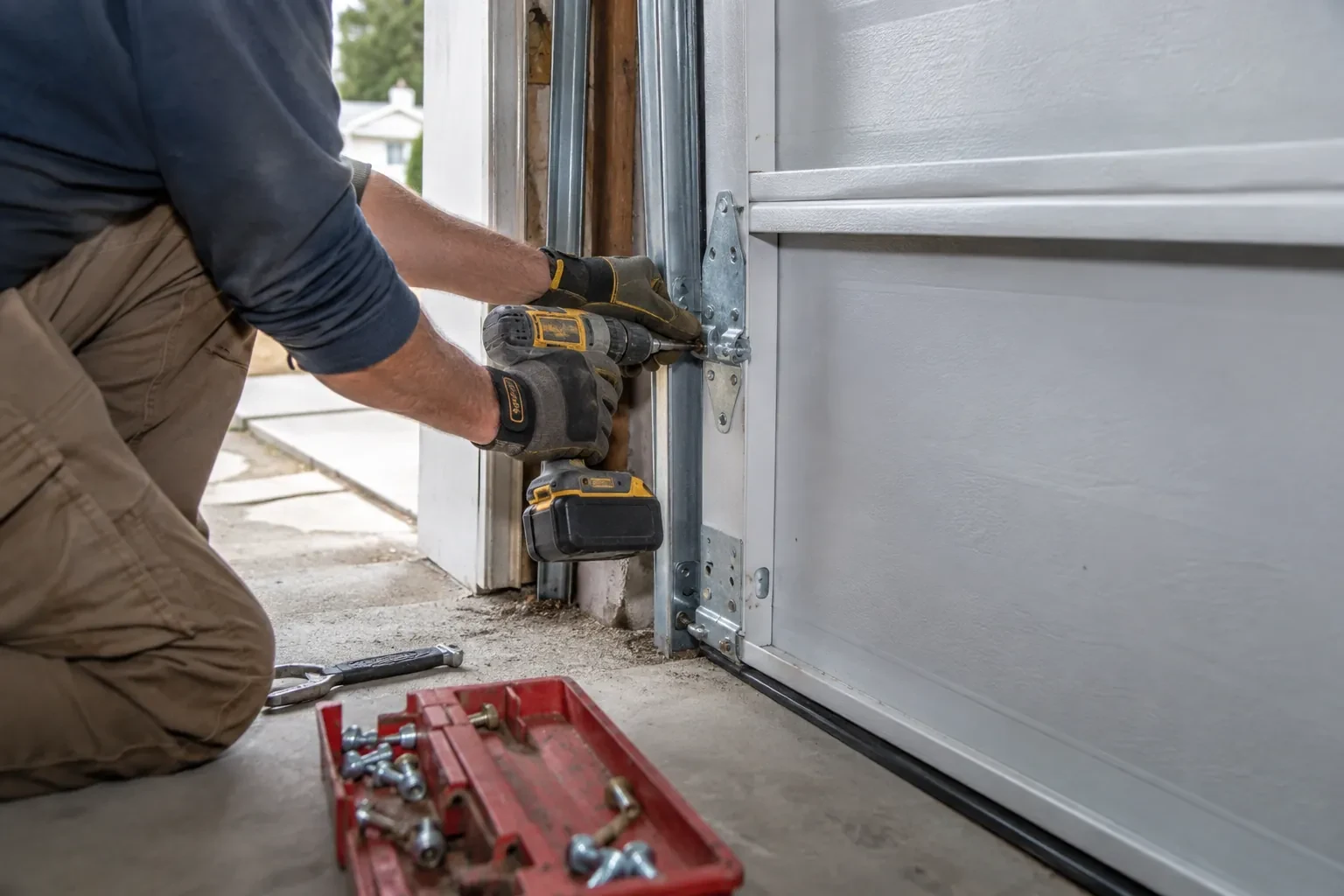
The first clues come from the people who use the opening. The technician asks whether the change appeared after an impact, power interruption, cold night or gradual increase in noise; where the curtain stops; which control was used; and how many cycles the door normally sees. Staff can also point out a lock that sticks, a manual chain that has become heavy or a sensor that needs repeated cleaning. That history narrows the inspection before any cycling begins and distinguishes a one-time obstruction from wear that has been developing across the whole assembly.
Cycle, observe and document the result
The repaired door is returned to service through a measured test sequence. Initial movement is slow and closely observed at the guides, coil, bottom bar, brackets and drive. Several full cycles follow, using the normal control and the manual method where applicable, while the technician listens for repeatable noise and checks stopping positions. Locks, interlocks and protective devices are tested at their proper stage. The handover record identifies parts changed, settings established, functional checks completed and any connected condition assigned to another scope, giving facility staff a practical baseline for future inspections.
Manual operation that staff understand
A repaired hand-chain or emergency-hoist system comes with a simple operating walkthrough. Staff learn where the chain is stored, which direction opens or closes, how the keeper is used and how the powered operator changes over to manual mode for that particular assembly. They are also shown the normal effort and stopping behaviour, useful reference points if balance or a bearing changes later. The chain stays gathered and clear of traffic after use. Facility procedures can name the people authorised to operate it, keeping manual movement deliberate during a power interruption or control-service event.
Commercial Rolling Door Repair
In the van
Sensing edge and controls
Curtain slats and endlocks
Photoelectric sensors
Bearings and tension wheel
Guides and bellmouths
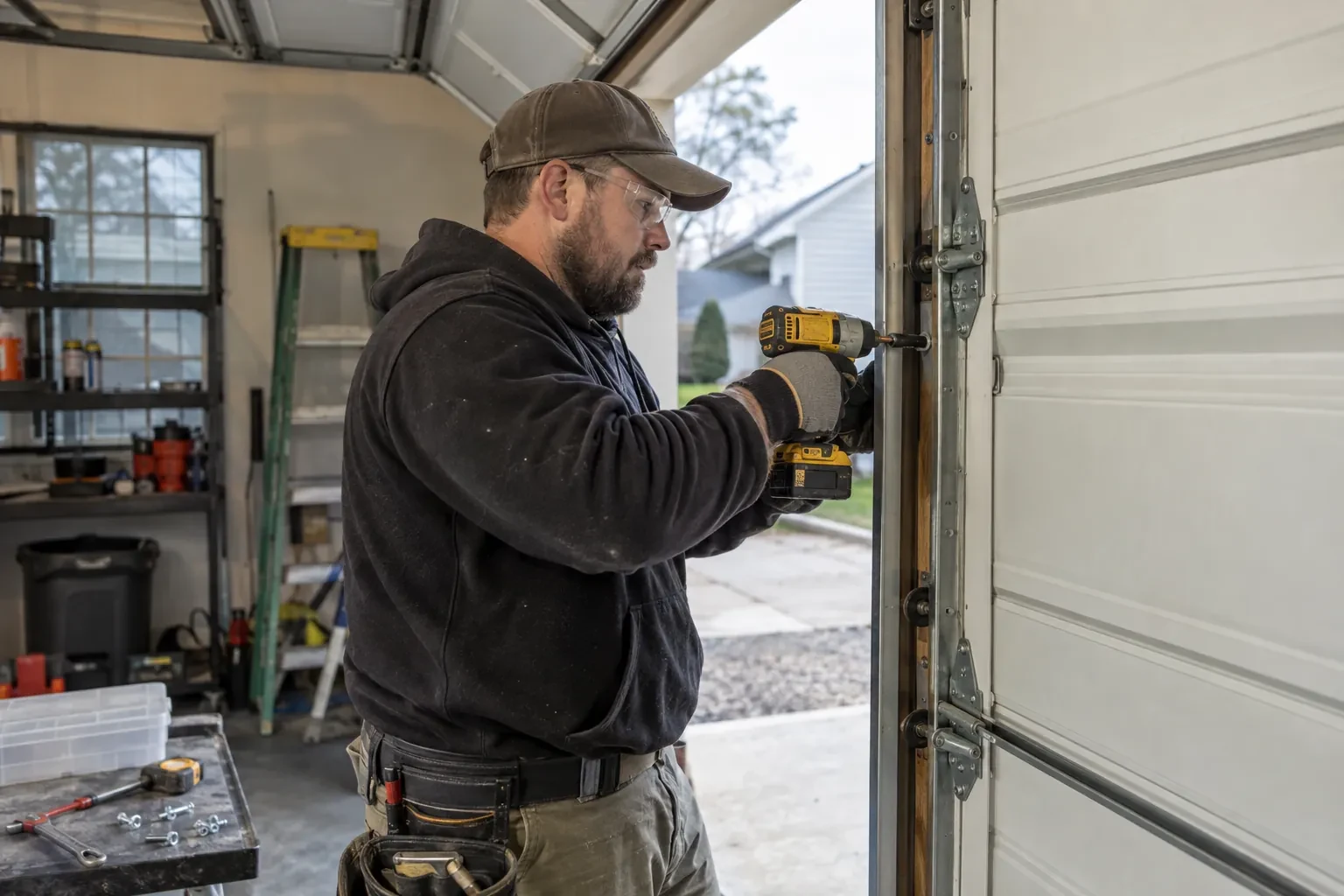
Commercial Rolling Door Repair
What affects the quote
Curtain position when work begins
A curtain resting closed, stopped mid-travel or held near the hood presents a different securing and access plan. Its position affects how components can be reached and supported.
Protective device scope
Photoelectric sensors, sensing edges, light arrays and vehicle-detection accessories serve defined roles. Quantity, mounting, wiring condition and operator requirements determine repair and test work.
Door construction and size
A coiling slat curtain, rolling sheet door, insulated assembly or labelled fire door uses different components and procedures. Opening width and height also shape curtain weight, access and handling equipment.
What to have ready
- Does winter moisture, ice or salt collect at the sill?
- Does the curtain carry a visible fire-protection label?
- Are door, operator or previous service records available?
Commercial Rolling Door Repair: questions
QuestionsCan guide damage be straightened instead of replaced?
Some local bends can be corrected when the guide retains its strength, fastening points and required profile. Creased, torn, heavily corroded or repeatedly struck sections may call for compatible replacement. The choice also depends on guide gap, endlock or windlock arrangement, mounting construction and whether the door is part of a labelled fire-protection assembly.
Why is there a grinding or clattering sound near the hood?
Noise at the head can come from worn barrel bearings, loose brackets, misaligned drive chain or sprockets, shifting slats, an uneven coil or hardware contacting the hood. The pattern matters: once per revolution suggests something different from continuous guide scrape. Controlled observation locates the source before a specific part is selected.
Does a forklift strike always require a new curtain?
The decision follows measurements and the spread of damage. A localised group of serviceable slats, endlocks or a bottom bar may support component replacement, while extensive distortion can affect the coil, guides, brackets and reliable alignment. The jamb and anchors are checked too, since a straight-looking curtain can still bind in an opening moved by impact.
Related services
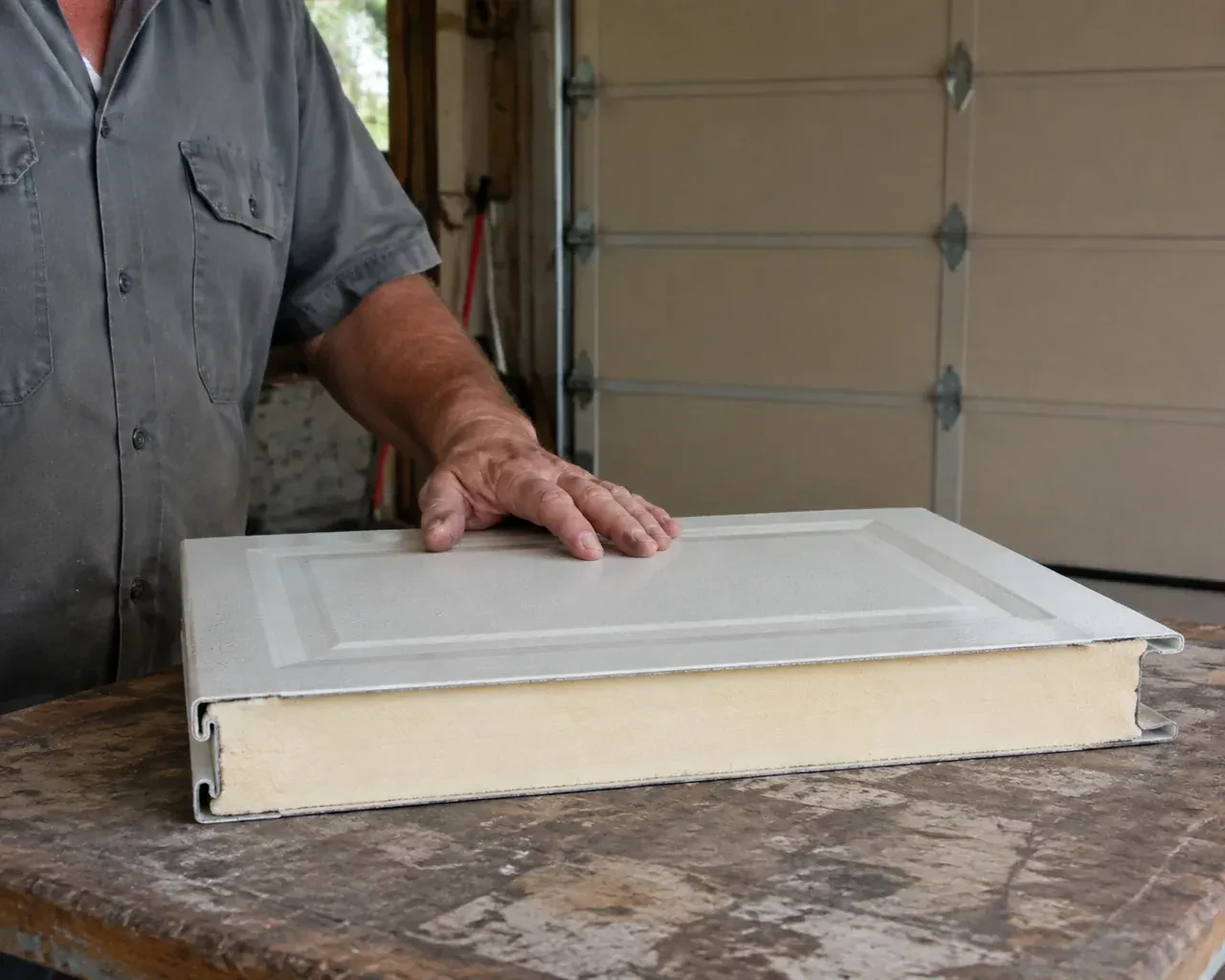
- Insulated Steel Garage Door InstallationThe opener strains as the heavy older door starts upward, and manual movement feels uneven.
- Wind-Rated Garage Door ReplacementNew windows would improve the door's appearance, but they also change the section layout and reinforcement pattern.
- Carriage-House Garage Door InstallationTwo garage openings sit side by side, and small differences in window spacing or decorative hardware would be obvious.