Springs · Don Mills
Torsion Spring Replacement in Don Mills
You heard a sharp bang from the garage, and now the opener hums for a second and gives up.
In plain words
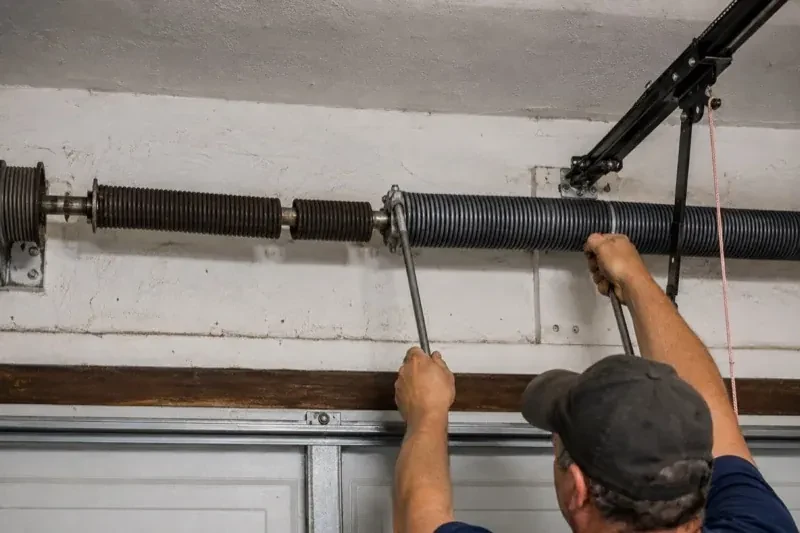
Torsion spring replacement restores the counterweight that makes a garage door light enough to lift. A sectional door often weighs more than a fridge, and the spring above the opening carries nearly all of that load, storing energy as the door closes and releasing it as it opens. When a spring breaks or wears out, the technician removes it, fits a spring matched to the door's weight and height, winds it to the correct number of turns and checks that the door balances at every point of travel. The opener returns to doing its light share of the work, and the door moves smoothly and evenly again.
How the visit goesLooking up at the coil above the door, you can see a clean split with a gap of several centimetres between the two halves. The rest of the spring looks fine, but the door has become almost impossible to move by hand.
Torsion Spring Replacement
How the visit goes
Weighing the door honestly
A spring is chosen for a specific load, so the technician establishes what the door actually weighs rather than guessing from its appearance. With the opener released and any remaining tension safely removed, a scale under the bottom section gives a real figure. Construction is recorded alongside it: single-skin steel, insulated steel sandwich, solid wood, glass panels or an aluminum frame all sit at very different weights for the same size. Extras count as well, including added windows, a heavy bottom seal or panels replaced over the years. That weight, with the door's height, is the basis for the spring specification.
Renewing the bearings while the shaft is out
Removing a spring frees the shaft, which is the moment to deal with bearings. The centre bearing, which sits in the bracket between the springs and carries the shaft under constant load, is pressed out and replaced if it grinds or has play. End bearings in the plates at each side are checked the same way. New bearings are seated square, and the shaft is slid back through them and turned by hand to confirm smooth rotation before any spring is wound. Smooth bearings reduce the effort the spring and opener have to overcome, which extends the life of both.
Your spring on record
The technician leaves you with the specification of what was installed: wire size, inside diameter, length, wind direction and the cycle rating chosen, along with notes on any bearings or cables replaced. Keep that record with the door's paperwork or photograph it. It means future service starts from known numbers rather than fresh measurement, and if a door section or opener is ever changed, the installer can confirm the springs still suit the door's weight. Many technicians also mark the installation date on the spring or centre bracket so the age of the system is easy to read later.
Torsion Spring Replacement
In the van
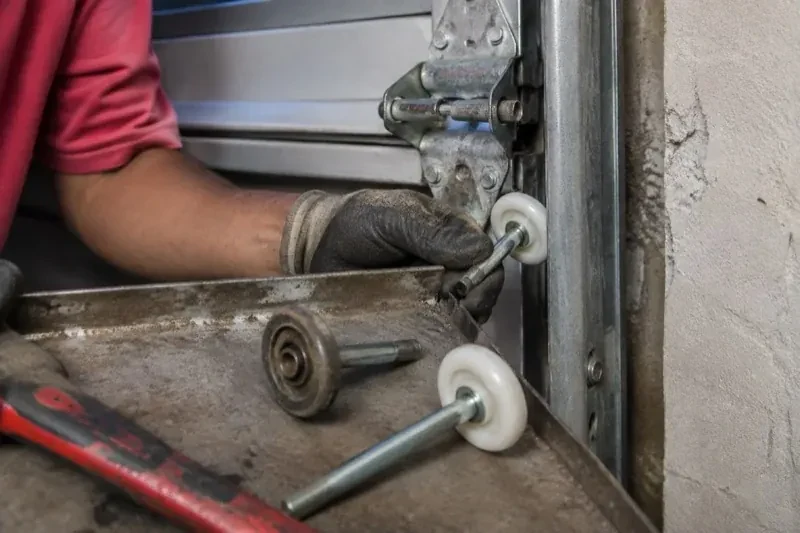
Locking pliers for the track
Centre bearing bracket and bearing
Garage-door spring lubricant
Stationary cone bolts and nuts
Torsion springs, oil-tempered or galvanized
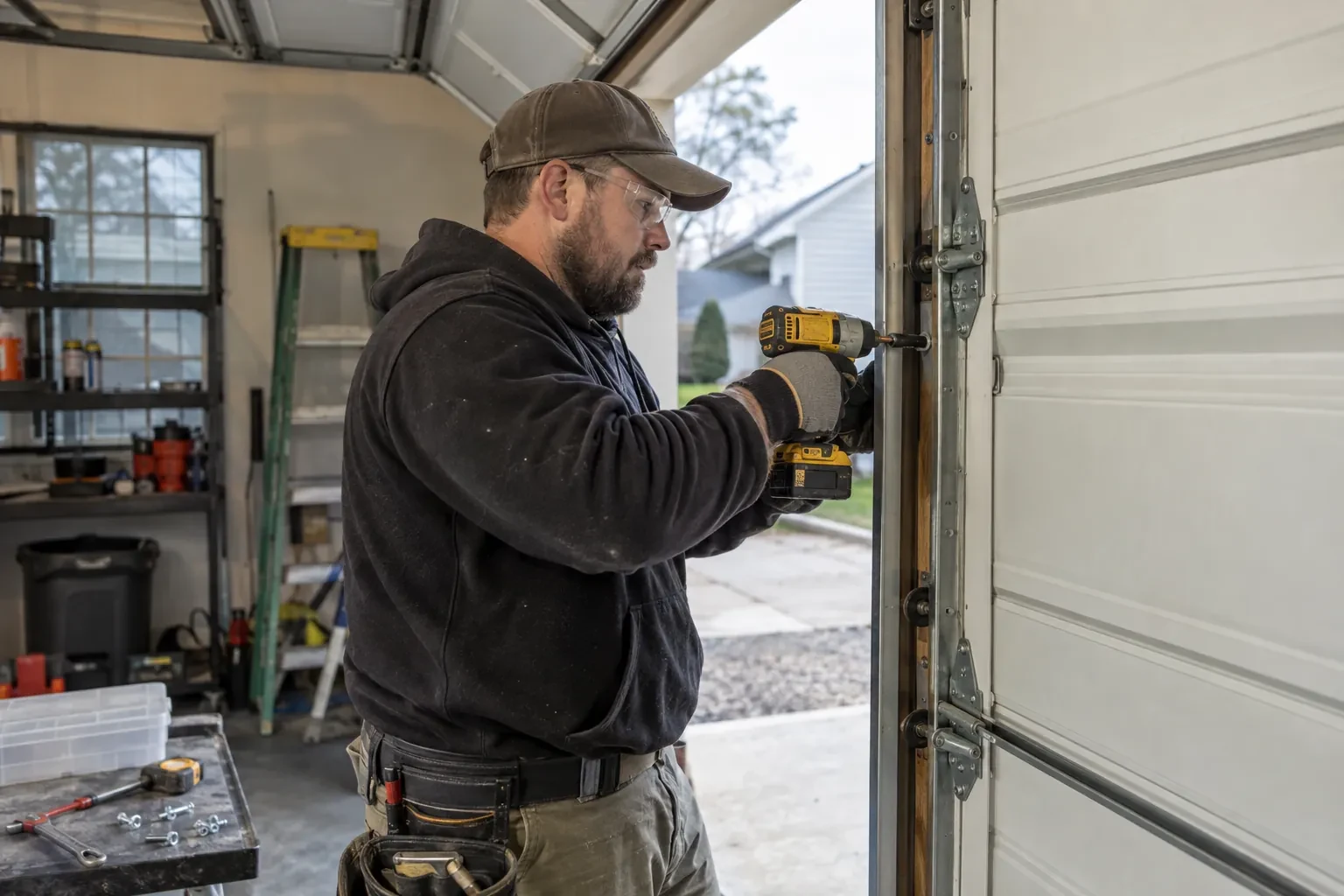
Torsion Spring Replacement
What affects the quote
Converting from extension springs
Moving a door from extension springs to a torsion system adds a shaft, bearings, drums and brackets, and removes the old pulleys, which is a broader job than replacing an existing torsion spring.
Door size and weight
A double-width door, a solid wood door or a thick insulated door weighs far more than a single-width steel panel, calling for heavier wire, longer coils or more springs to balance it.
Damage from the break
If the opener was run against a broken spring, the top section may be bowed, the trolley bent or a hinge strained. Correcting these so the balanced door runs on straight hardware adds to the scope.
What to have ready
- Is there a working power outlet near the opener and clear space under the shaft?
- Can you see a gap in the spring above the door?
- Are the cables on either side still tight, or hanging loose?
Torsion Spring Replacement: questions
QuestionsWhat happens if the header wood or centre bracket is damaged?
The centre bracket anchors the spring's reaction force to the framing above the door, so it has to be solid. If the header has split or softened, or the lag bolts have pulled, the technician can refasten into sound wood, add a reinforcing plate or replace the bracket before the new spring is wound. Dealing with this first keeps the shaft level and the spring pulling straight, which protects the bearings and the door.
What is the difference between galvanized and oil-tempered springs?
Oil-tempered springs are the traditional dark grey or black coil; they hold their tension well over time and are widely used. Galvanized springs have a zinc coating that resists rust, which is useful in damp garages, though they tend to relax slightly and may need a small adjustment after settling in. Both are available in standard and high-cycle ratings, and the technician can explain which suits your garage.
Can extension springs be converted to a torsion system?
In many garages, yes. A conversion adds a shaft, centre and end bearings, drums and torsion springs above the opening and removes the extension springs and pulleys from beside the tracks. It needs enough headroom above the door for the shaft and solid framing for the centre bracket. The technician measures the space and the door before recommending it, and the result is smoother, more even lifting with hardware kept clear of the sides.
Related services
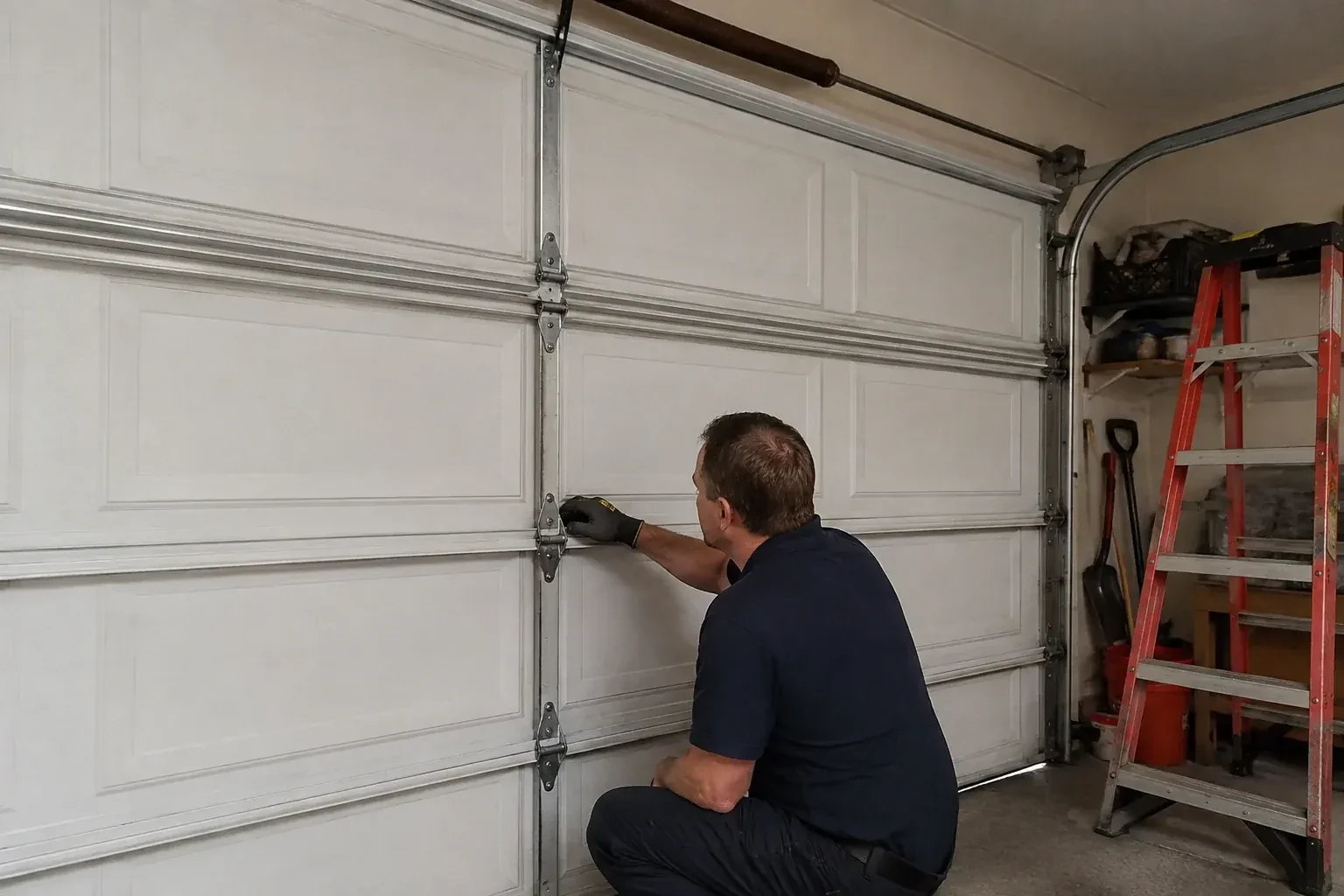
- Garage Door Hinge ReplacementOn the old wood door, one hinge has pulled away from the panel, dragging a screw and a chunk of soft timber with it.
- Garage Door Track Repair or ReplacementBacking out this morning, the mirror caught the track beside the door.
- Garage Door Cable ReplacementSomeone left the snow shovel leaning in the opening and the door came down on it.