New Doors · Toronto
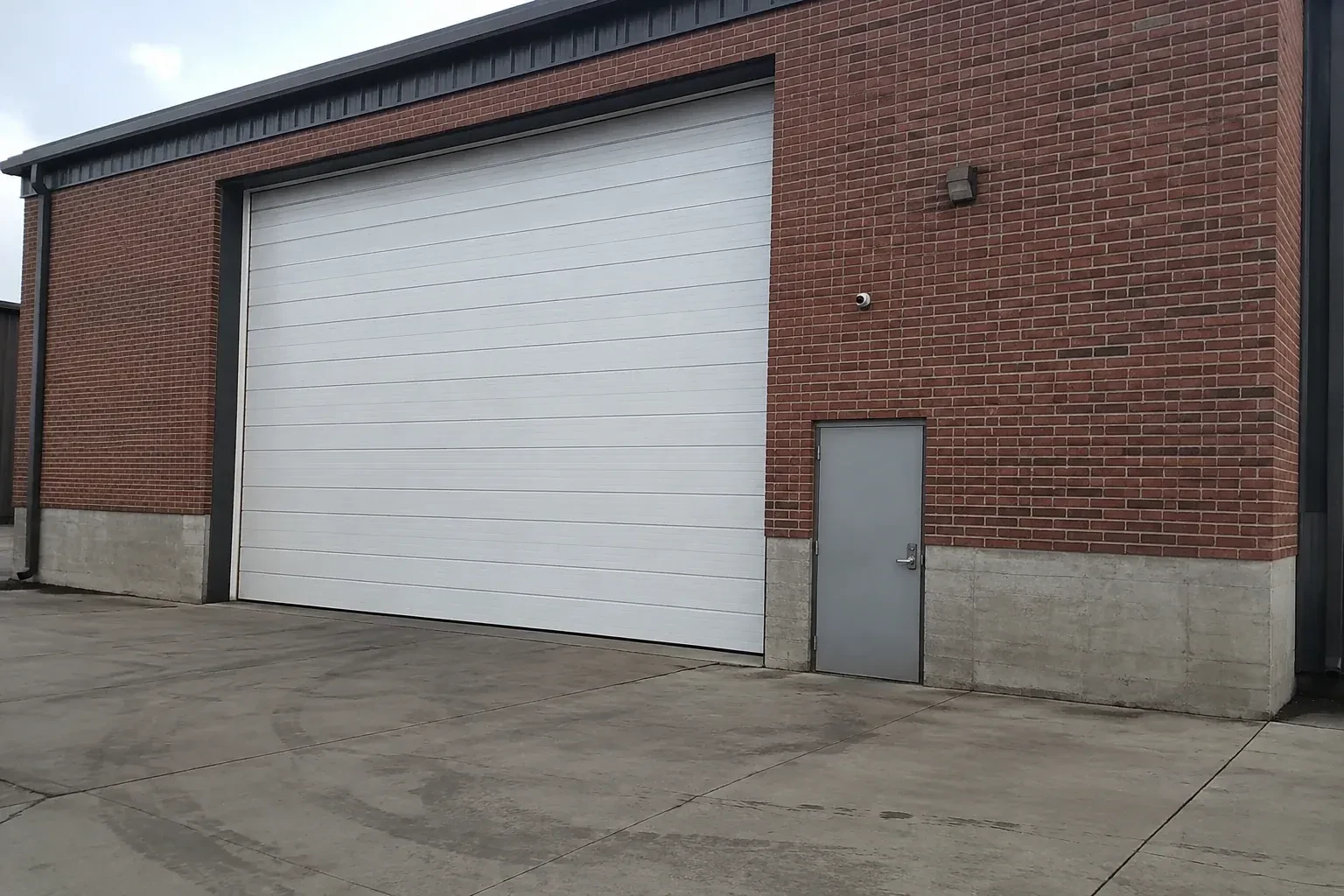
Commercial Sectional Door Repair in Toronto
A forklift clipped the bottom panel while backing through the bay.
In plain words
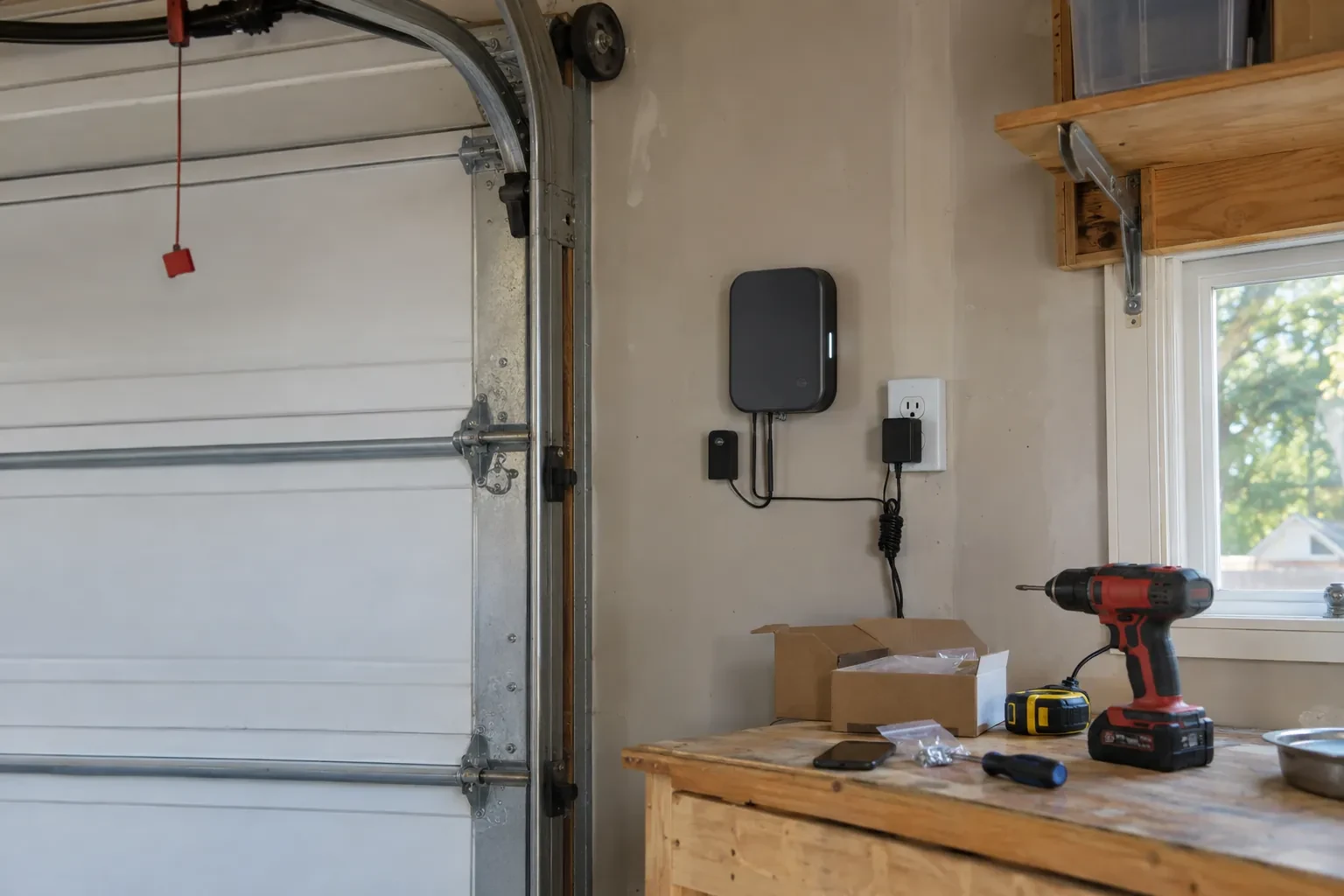
A powered door works properly only when its mechanical assembly and operator agree. Repair may involve restoring smooth manual movement first, then checking the drive connection, limits, brake or clutch, control station and entrapment-protection devices. This order keeps an operator adjustment from masking a heavy, binding or unbalanced door. After the underlying hardware moves freely, travel settings are brought back to the actual open and closed positions, sensors are aligned, and the system is tested from each normal control point.
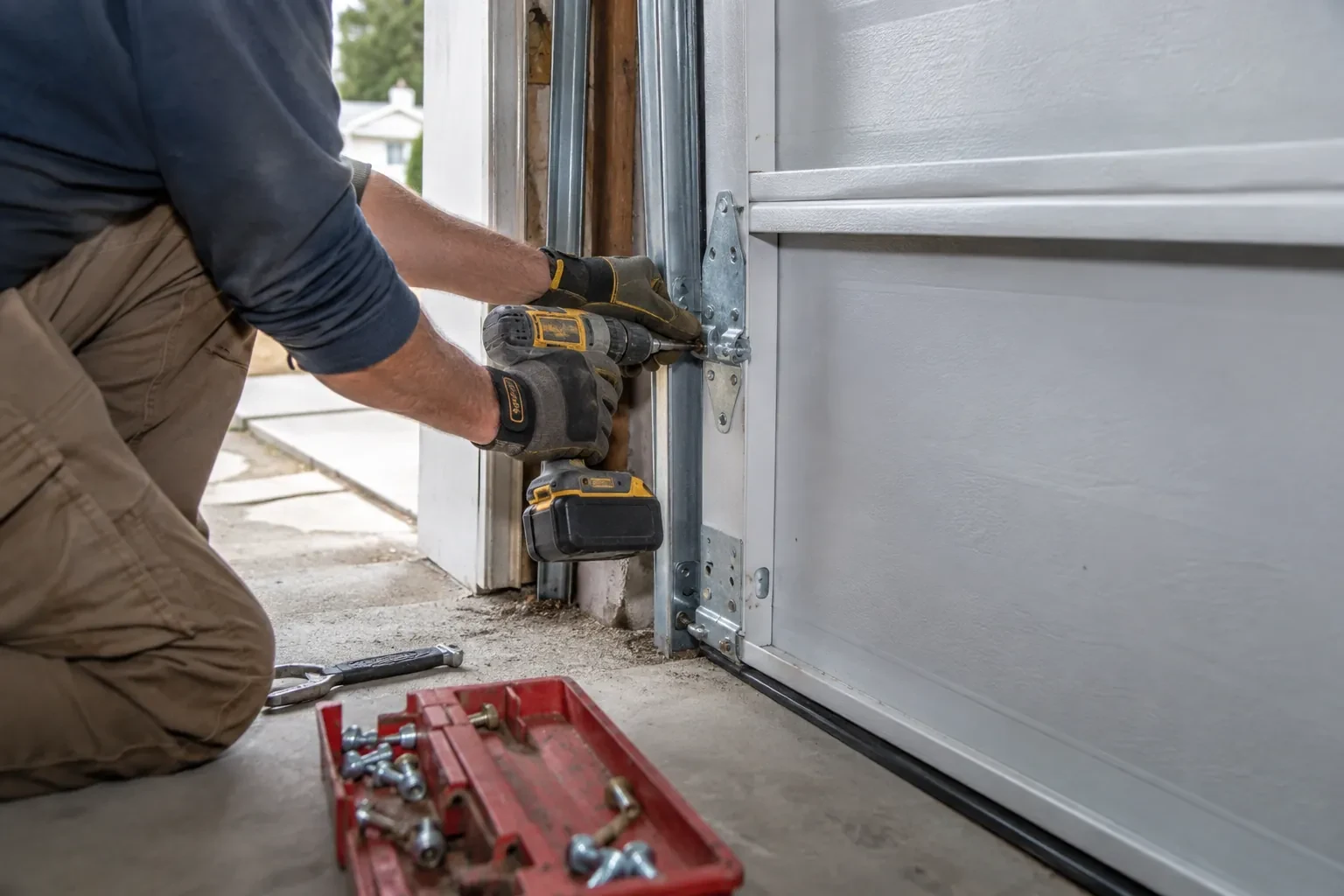
How the visit goesThe loading-bay door rises with one side several centimetres lower than the other. A lift cable looks slack, the bottom section sits crooked, and staff have stopped using the opening until the door can travel level again.
Commercial Sectional Door Repair
How the visit goes
Testing protective controls
A reversing complaint begins with the travel area and installed protection devices. Photoelectric sensors are checked for alignment, secure mounting, clean lenses and intact wiring. A sensing edge is examined for distortion, connection faults and consistent response along the bottom of the door. The control station, stop circuit and operator indicators add context to the behaviour. Mechanical resistance is checked as well, since a binding door can affect powered movement. This combined assessment identifies whether service belongs at a sensor, its circuit, an operator setting or the moving door itself.
Re-establishing the weather seal
A damaged bottom seal is removed from its retainer, and the retainer is straightened or replaced when impact has distorted it. The new seal is sized for the door and floor condition, then fed evenly so it reaches both corners without stretching. Side and header weatherstrip are positioned for continuous contact while leaving the door free to move. If an uneven landing caused the original gap, cable level or track position is corrected first. The final fit is viewed from both sides with the door closed and checked again after cycling.
A better seal at the threshold
The renewed bottom retainer and seal follow the floor more evenly, reducing the route for drafts, grit and slush. The threshold still benefits from regular clearing, especially when packed snow or ice changes where the door lands. Drainage near the opening should direct meltwater away instead of leaving it beneath the rubber. Staff can inspect the seal ends for shrinkage, tearing or displacement during cleaning. Catching a small gap early protects the lower panel and helps keep corrosive moisture away from nearby brackets and cable connections.
Commercial Sectional Door Repair
In the van
Numbered end hinges
Commercial door sections
Reinforcement struts
Photoelectric sensors and sensing edges
Commercial rollers
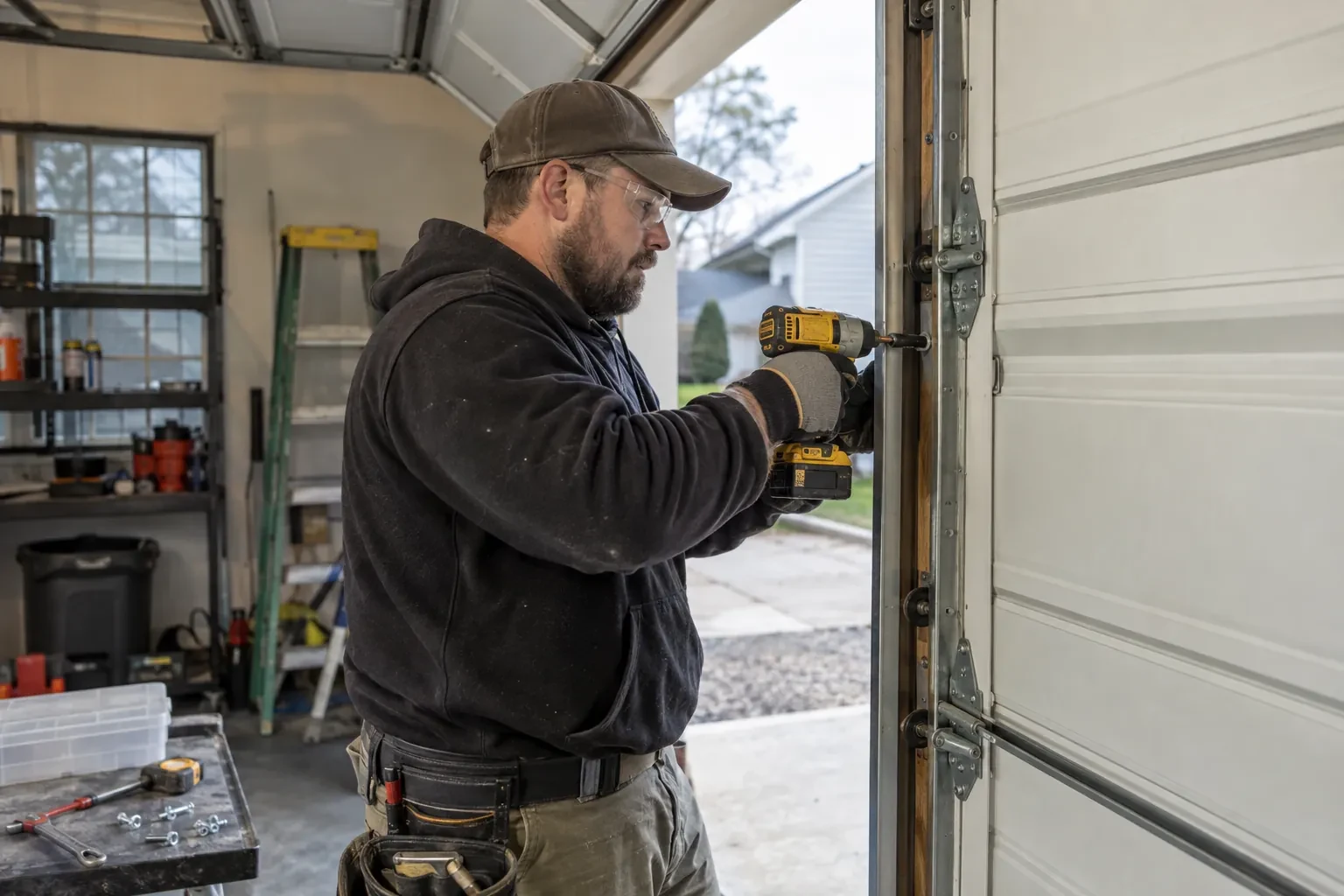
Commercial Sectional Door Repair
What affects the quote
Lift and track configuration
Standard, low-headroom, high-lift and vertical-lift arrangements use different track geometry, drums, cables and access methods, so the installed configuration shapes labour and parts.
Roller and hinge wear
One failed roller is a smaller scope than widespread bearing play, loose numbered hinges or damaged mounting holes across several door sections.
Counterbalance components involved
Spring count, shaft arrangement, drum type, cable dimensions, bearings and bottom fixtures determine which tensioned parts must be controlled, replaced and reset together.
What to have ready
- Is the door operated electrically, by hoist or by hand?
- Was there a vehicle, forklift or load impact?
- Can traffic use another opening during the work?
Commercial Sectional Door Repair: questions
QuestionsWhat causes a commercial sectional door to become noisy?
Common sources include roller-bearing wear, loose hinges, dry pivots, a rubbing panel, track movement, shaft-bearing wear and operator-chain vibration. The point in the cycle where the sound occurs helps isolate it. A technician watches and listens during controlled travel, looks for play or contact marks, and services the component creating the repeatable noise.
How does high-lift track change the repair?
High-lift doors keep travelling vertically above the opening before turning into horizontal track. That geometry changes cable length, drum type, track support and operator arrangement. Repairs therefore use the recorded lift dimensions and door weight, with cable tension observed through the transition and near the open position. Components from a standard-lift setup are not assumed to match.
What makes a sectional door different from a rolling door?
A sectional door is built from horizontal panels joined by hinges. Rollers guide those sections through vertical, curved and sometimes horizontal track. A rolling door uses narrow slats that coil around a barrel above the opening. Because the constructions differ, sectional repair centres on panels, hinges, rollers, tracks, lift cables and counterbalance components matched to that system.
Related services
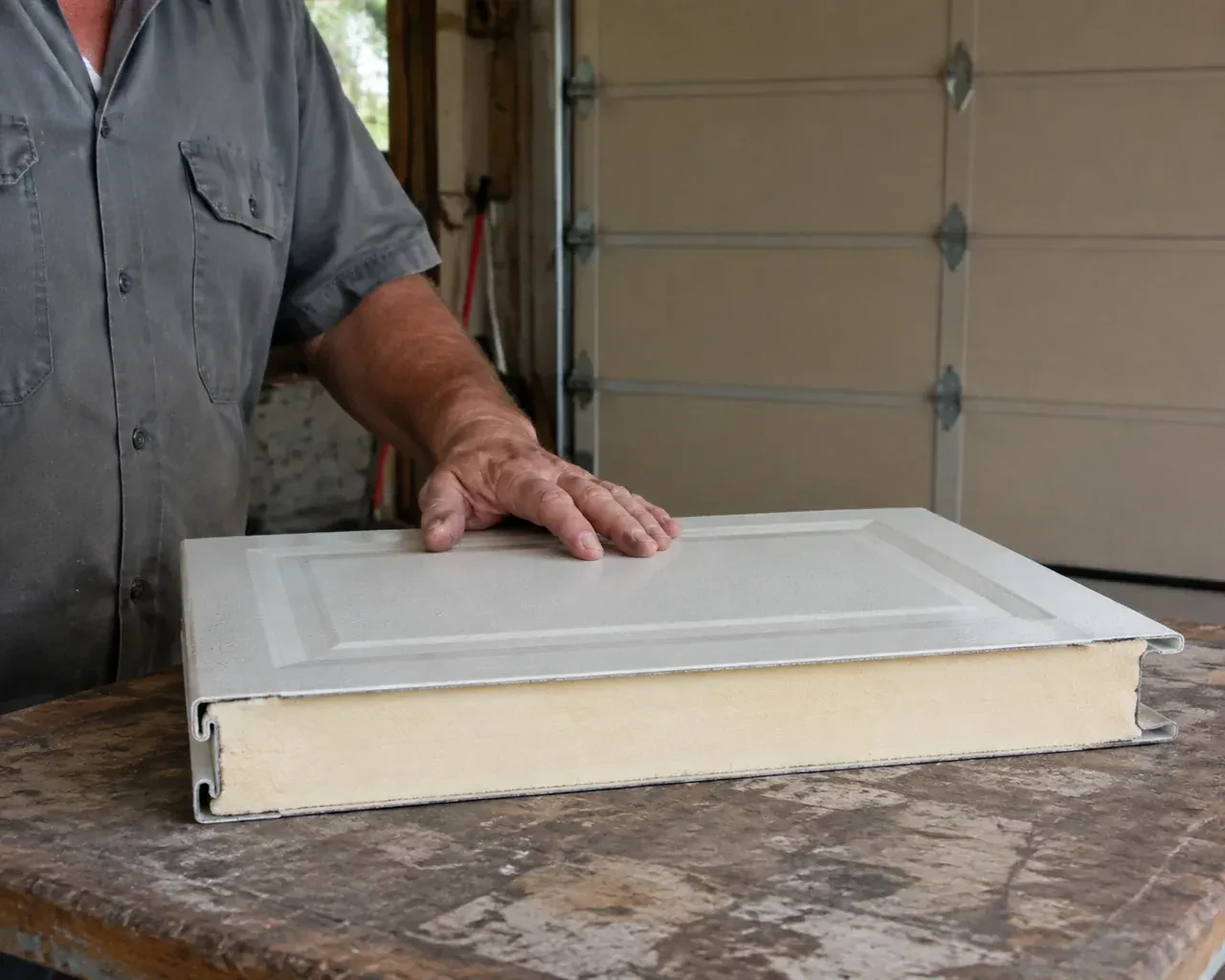
- Insulated Steel Garage Door InstallationThe opener strains as the heavy older door starts upward, and manual movement feels uneven.
- Wind-Rated Garage Door ReplacementNew windows would improve the door's appearance, but they also change the section layout and reinforcement pattern.
- Carriage-House Garage Door InstallationTwo garage openings sit side by side, and small differences in window spacing or decorative hardware would be obvious.